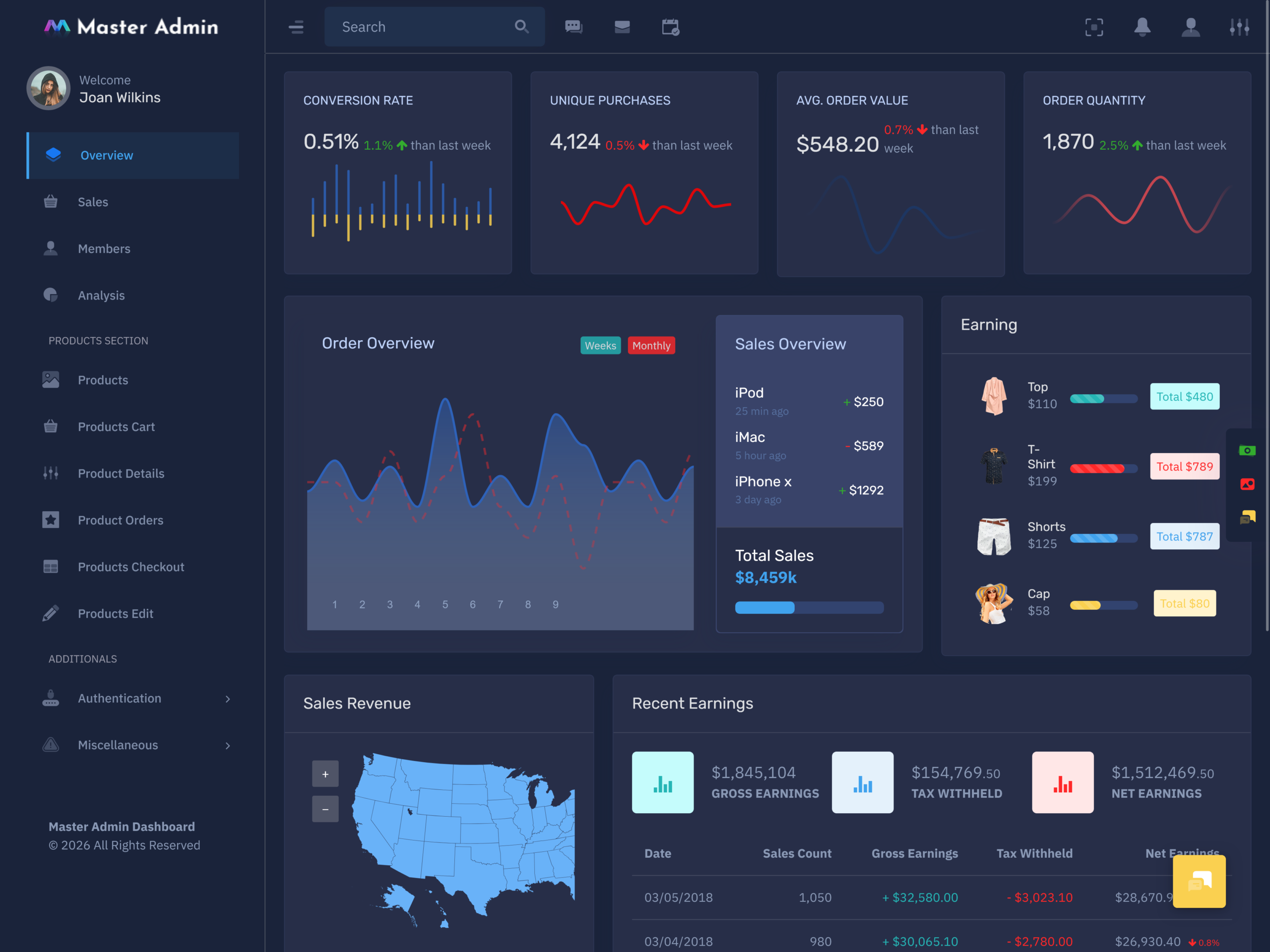
Understanding the E-commerce Dashboard For an expanding company, the management of such operations may become…
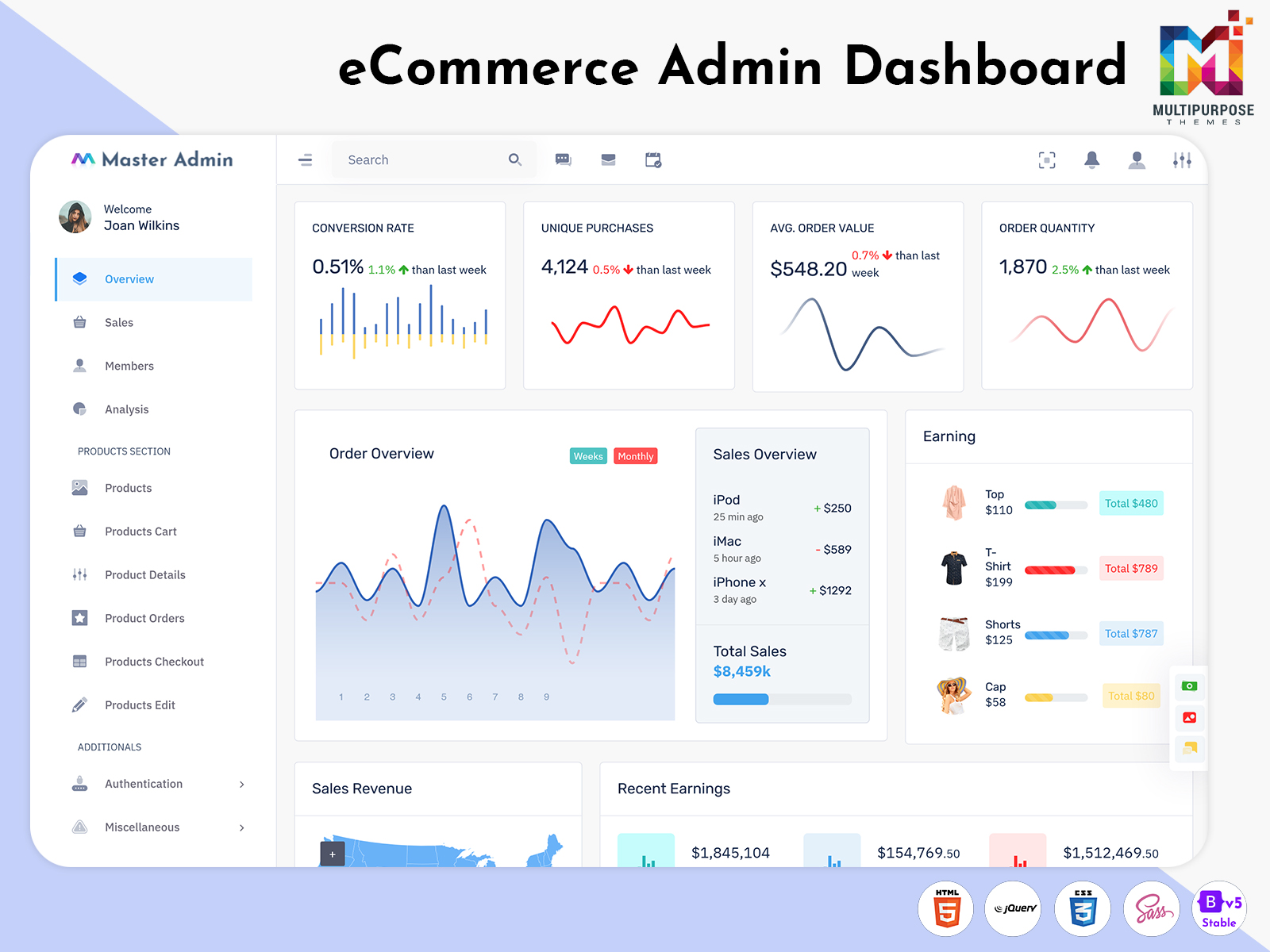
eCommerce Admin Dashboard: A Complete Guide for Modern Online Businesses
Reading Time: 7 minutes
What Is an E-Commerce Dashboard?
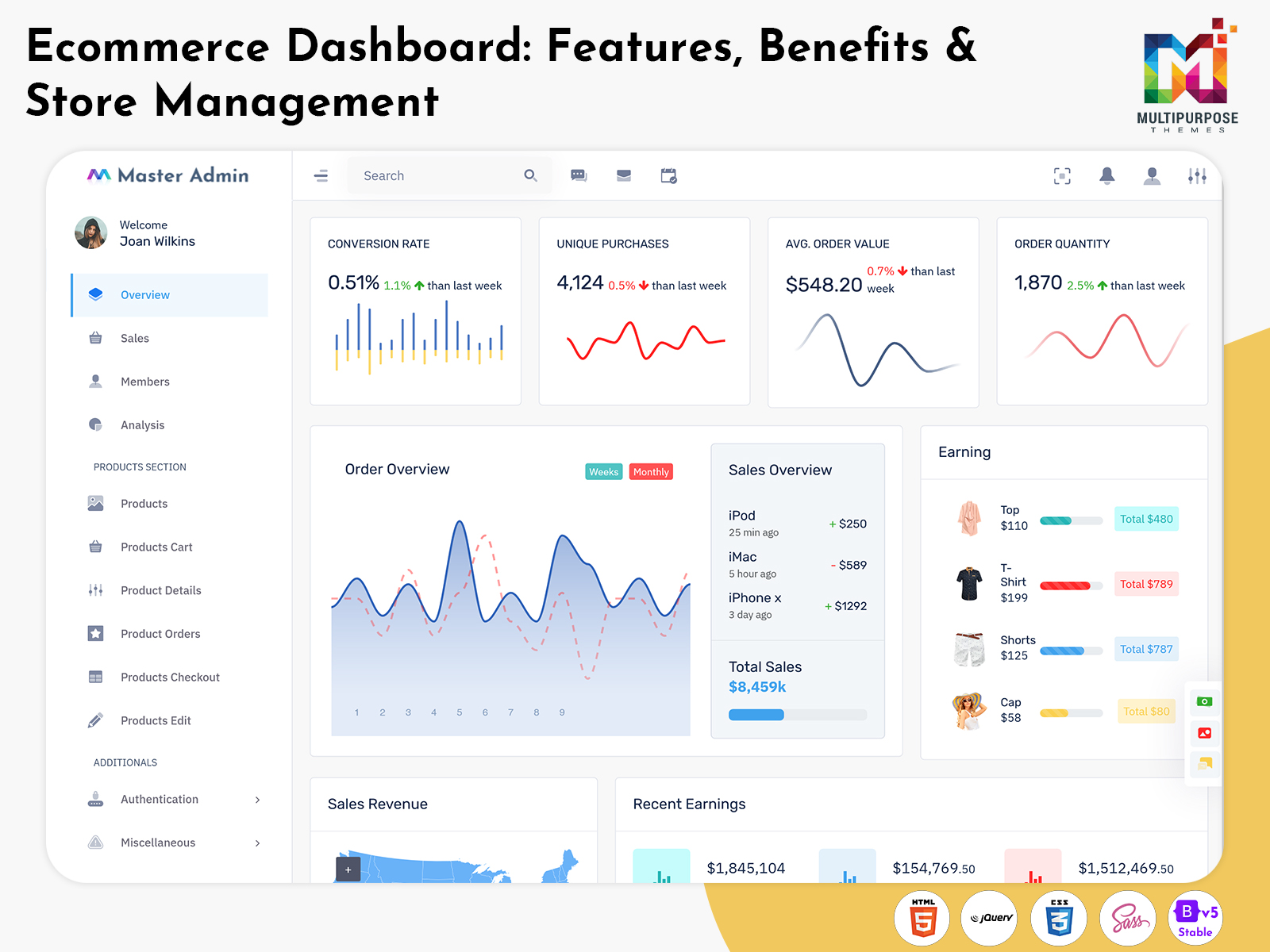
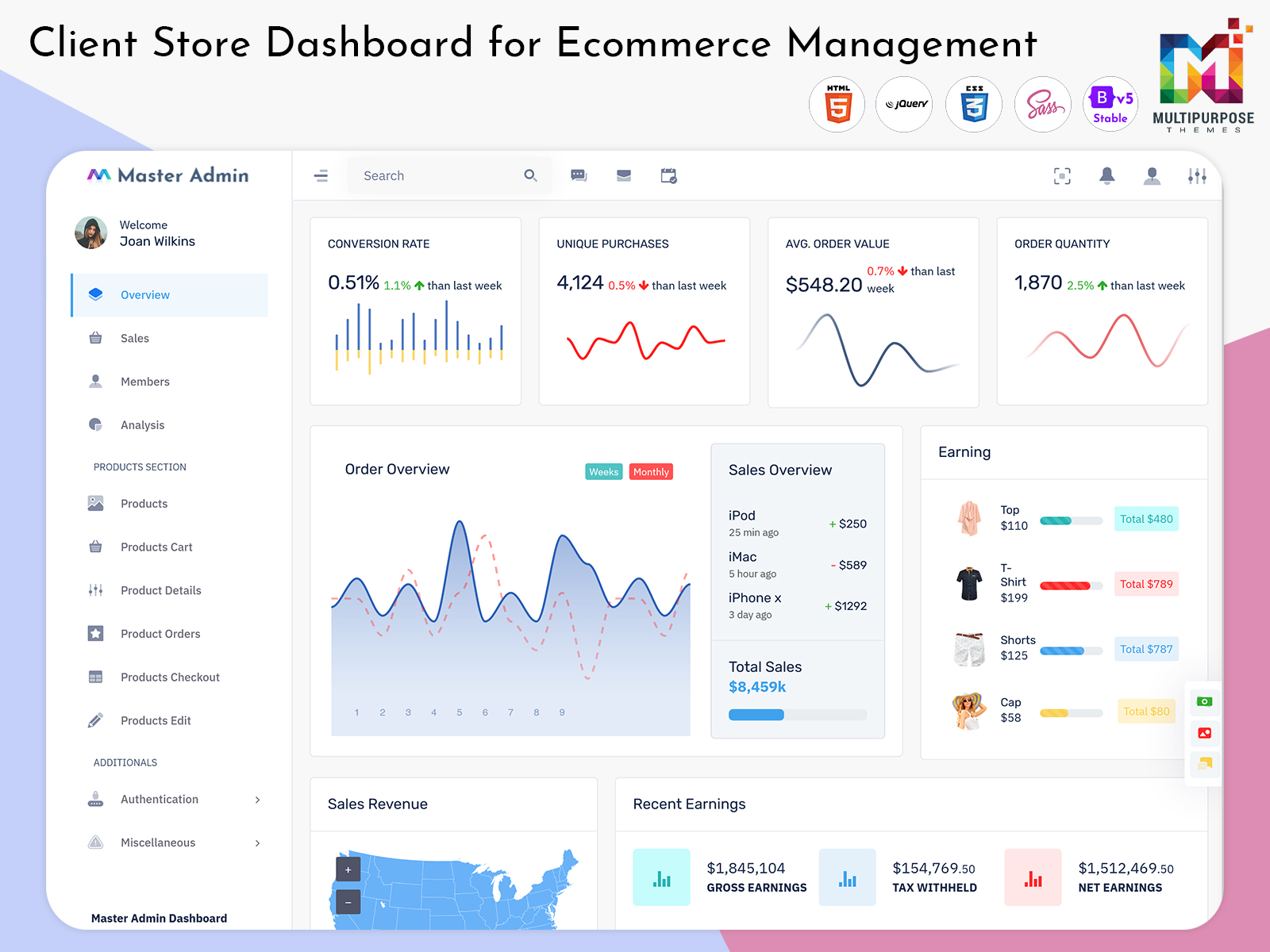
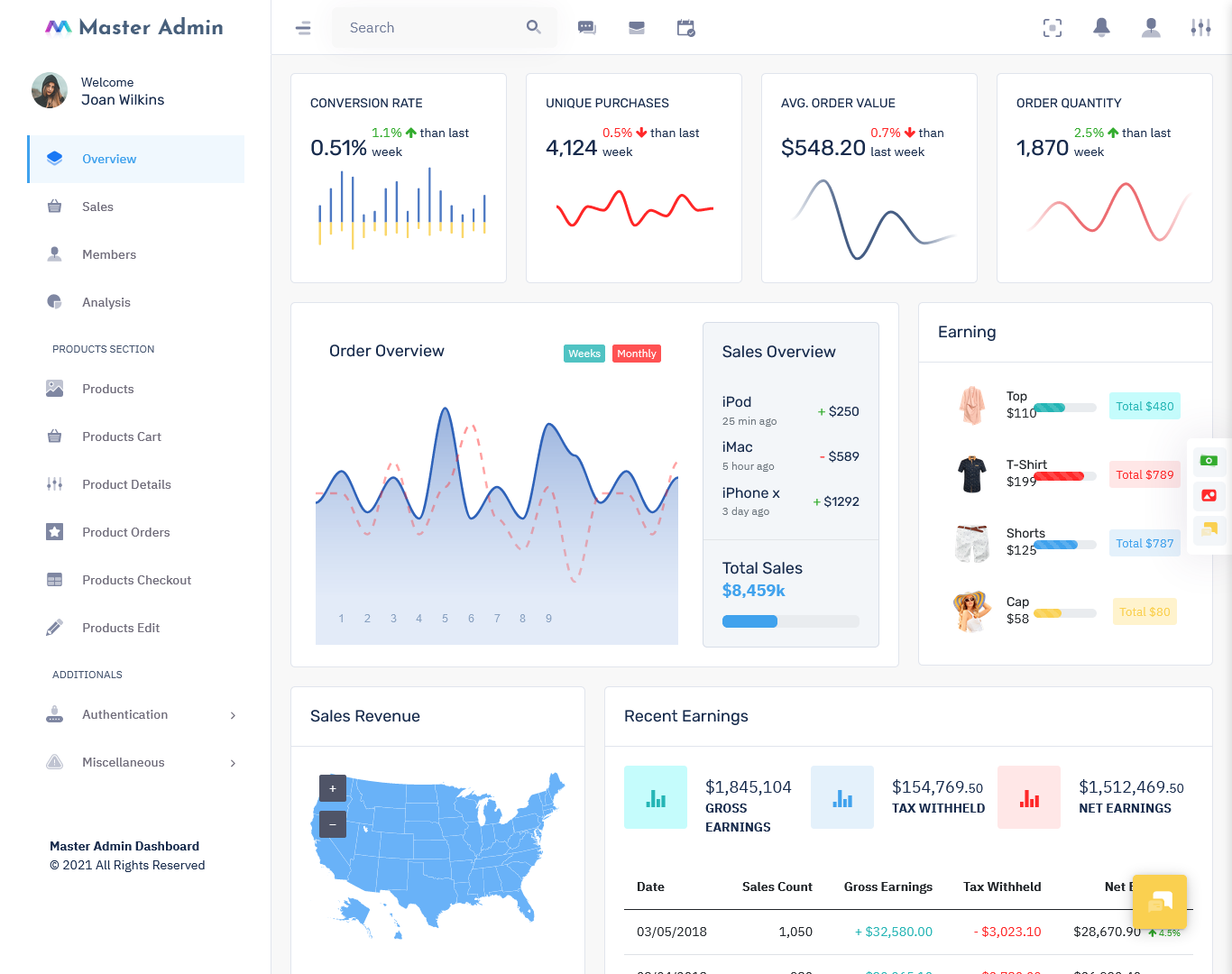
An e-commerce dashboard is a virtual workspace which allows businesses to analytic and manage their online tasks from one place. Instead of checking separate systems for orders,Total sales,Total inventory, and activity of customers, business owners can access everything through a single platform. This makes managing an online e-commerce store easier and more efficient.
Watch Full Video
In this era, businesses mainly depend on data to make decisions quickly. An e-commerce Admin Dashboard converts large amounts of information into simple visual reports, charts, and summaries so the viewer can understand complex data easily.so the team members stay updated about the business.
Many companies also use an ecommerce Admin Template to build customized dashboards according to their needs. Whether you are a startup, retailer, or enterprise business, an ecommerce Admin solution helps maintain visibility across every important area of operations.
How It Works
An e-commerce dashboard works as collecting data from multiple connected systems. It connected with online stores, payment gateways, inventory tools, shipping providers, and customer management software. Once connected, information is automatically synchronized and shows these all essential things on the dashboard.
Let’s understand with the example, when a customer places an order, the system immediately updates numbers of sales, then adjusts inventory counts, and changes the order status. Managers can analyse these activities in real time without waiting for manual reports.
Modern ecommerce Admin Dashboard platforms also provide filters and customization options. Users can view daily sales, compare monthly performance, or analyze customer behavior using interactive charts. This makes it easier to understand business trends and respond quickly to changing market conditions.
What Is the Purpose of an E-Commerce Dashboard?
The main aim of an e-commerce dashboard is to simplify business management and improve decision-making at the same time. Online businesses generate a bulk of data points every day, and dashboards help it to organize that information into meaningful analytics.
Another important objective is that it saves a lot of time. Instead of preparing reports manually, businesses can access important metrics quickly. Teams can focus more on improving their products, marketing campaigns, and customer experiences rather than collecting information.
Additionally, dashboards support business’s long-term growth. By tracking performance continuously , businesses can identify strengths, discover new opportunities, and address operational challenges before they become major problems. This is one reason why ecommerce Admin systems have become an important part of digital commerce.
Why Is an E-Commerce Dashboard Essential for Any Type of Business?
Every business requires access to accurate information. An e-commerce dashboard offers real-time visibility into sales, manages their inventory, customer activity, and operational performance. Having this information readily available allows businesses to make confident decisions immediately.
For Small businesses This dashboard is very beneficial for their business long term growth. It also reduces manual work.Medium-sized organizations gain better collaboration between departments, while larger enterprises can monitor multiple stores and teams through a centralized platform.
The increasing competition in online retail has also made dashboards more important than ever. Businesses need to understand customer expectations of customers, identify market trends, and respond faster than their competitors. An ecommerce Admin Dashboard helps achieve these goals by presenting valuable information in a simple and actionable format.
Furthermore, dashboards improve accountability. Team leaders can track departmental performance, monitor key objectives, and ensure that business targets are being achieved consistently. This level of transparency supports continuous improvement and sustainable growth across the organization.
VIEW DEMO BUY NOW
Explain Features of an E-Commerce Dashboard
1. Real-Time Business Monitoring
One of the most valuable eCommerce Admin Panel Features is real-time monitoring. Businesses can view live sales updates, active orders, and revenue changes as they occur. This enables managers to identify issues immediately and maintain better control over daily operations without relying on delayed reports.
2. Inventory Tracking
Inventory tracking helps businesses maintain accurate stock levels across all products. The dashboard automatically highlights low-stock items and inventory movement trends. This reduces the chances of overselling, prevents stock shortages, and ensures customers receive products without unnecessary delays or disappointments.
3. Customer Analytics
Customer analytics provides insights into buying habits, preferences, and purchasing frequency. Businesses can identify their most valuable customers and understand shopping behaviors more effectively. These insights help improve marketing strategies and create personalized experiences that encourage repeat business and customer loyalty.
4. Order Management
Order management tools allow businesses to monitor every order from placement to delivery. Users can quickly identify pending shipments, delayed deliveries, or completed transactions. This improves operational efficiency while helping support teams provide accurate updates to customers whenever needed.
5. Multi-Channel Integration
Modern ecommerce Admin platforms connect with multiple sales channels, including websites and marketplaces. This feature allows businesses to manage different stores from a single dashboard. It simplifies administration and ensures that data remains consistent across all connected platforms and business locations.
6. Performance Reporting
Performance reporting converts complex business data into easy-to-understand charts and summaries. Managers can evaluate revenue growth, conversion rates, and campaign performance in minutes. These reports support better planning and help businesses focus on areas that contribute directly to growth and profitability.
7. Custom Dashboard Settings
Many businesses have unique requirements. Customization options allow users to adjust layouts, select preferred metrics, and create personalized views. An ecommerce Admin Template with flexible settings ensures that businesses can build dashboards that align perfectly with their workflows and operational priorities.
VIEW DEMO BUY NOW
How to Use an E-Commerce Dashboard to Increase Sales
Businesses can use an e-commerce dashboard strategically to improve sales performance. The first step is monitoring product performance regularly. By identifying best-selling products, companies can focus their marketing efforts on items that generate the highest revenue.
Customer behavior analysis is another effective strategy. Dashboards help businesses understand when customers shop, which products they view, and where they abandon purchases. This information can be used to improve product pages and optimize checkout processes.
Marketing teams can also benefit significantly. By comparing campaign results across different channels, businesses can identify the most effective advertising methods. Investing more resources in successful campaigns often leads to better returns and increased sales.
Another important approach is monitoring inventory levels. Running out of popular products can lead to lost sales opportunities. An ecommerce Admin Dashboard helps businesses maintain sufficient stock and prepare for seasonal demand more effectively.
Finally, dashboards can highlight unusual patterns, such as declining conversion rates or sudden changes in customer activity. Identifying these issues early allows businesses to take corrective action and maintain consistent growth.
Benefits of an E-Commerce Dashboard
1. Improved Operational Efficiency
An e-commerce dashboard reduces the need for manual reporting and repetitive administrative tasks. Teams can access information instantly and focus on more valuable responsibilities. This improved efficiency helps businesses operate more smoothly while maintaining accuracy across multiple operational areas throughout the organization.
2. Better Decision-Making
Having access to real-time business analytics allows managers to make informed decisions faster. Instead of relying on assumptions, organisations can use actual performance data to guide the strategies. Better decisions often lead to improved productivity, stronger customer relationships, and sustainable business growth.
3. Increased Customer Satisfaction
Customers appreciate timely communication and efficient service. Dashboards help businesses track orders, monitor deliveries, and resolve issues quickly. By maintaining high service standards, organizations can improve customer experiences and encourage repeat purchases, which contribute significantly to long-term business success.
4. Greater Financial Visibility
Financial performance becomes easier to understand with centralized reporting. Businesses can monitor revenue trends, expenses, and profit margins from a single platform. This visibility supports budgeting efforts and helps organizations plan future investments with greater confidence and reduced financial uncertainty.
5. Enhanced Team Collaboration
A centralized dashboard ensures that every department works with the same information. Sales, marketing, operations, and support teams remain aligned on business objectives. Improved collaboration reduces communication gaps and helps organizations respond more effectively to both opportunities and operational challenges.
6. Better Inventory Management
Maintaining appropriate stock levels is critical for any online business. Dashboards provide inventory alerts and product movement reports that help businesses plan effectively. Better inventory management minimizes unnecessary costs while ensuring products remain available whenever customers are ready to purchase them.
7. Stronger Market Competitiveness
Businesses that understand their data can respond more quickly to market changes. Using advanced eCommerce Admin Panel Features enables organizations to identify trends early, adapt their strategies, and maintain a competitive advantage in increasingly crowded online marketplaces across different industries.
Conclusion
An e-commerce dashboard has become an essential business tool in today’s advanced virtual economy. It brings together important information like sales, inventory, customer activity, and financial performance with the help of a single platform. It makes business management significantly easier.
No matter if you are running a small online store or managing a large enterprise, it helps both types of organizations. an ecommerce Admin Dashboard provides the visibility needed to make better decisions and improve operational efficiency. It helps businesses remain organized, responsive, and prepared for future growth.
With the right ecommerce Admin Template and well-designed eCommerce Admin Panel Features, businesses can complete their daily tasks on time, improve customer experiences, and increase profitability. Investing in an effective ecommerce Admin solution is not simply about adopting technology—it is about creating a smarter and more data-driven business.
FAQ
1. What information should an e-commerce dashboard display?
A MultiPurpose Themes e-commerce dashboard should show necessary business metrics, which includes sales performance, order status, inventory levels, customer activity and revenue trends. Additional information like conversion rates, marketing performance, and financial summaries can also help businesses to gain a complete understanding of their tasks and make informed decisions more easily.
2. Is an ecommerce Admin Dashboard suitable for small businesses?
Yes, thisMultiPurpose Themes dashboard is suitable for small businesses. It gives a great benefit to the business because it reduces manual paperwork and improves visibility. It also helps owners to track essential activities without the requirement of multiple systems. And make the business management easier and more efficient while supporting long-term growth and scalability.
3. Can an ecommerce Admin Dashboard manage multiple online stores?
Absolutely.MultiPurpose Themes ecommerce Admin platforms support multi-store management. This allows businesses to monitor several online stores from one location, improving efficiency and reducing the time spent switching between different systems or administrative panels throughout the day.
4. How often should businesses review dashboard data?
Businesses should review dashboard information daily to stay informed about sales, inventory, and customer activity. Weekly and monthly reviews are also useful for identifying trends, evaluating performance, and planning future strategies. Regular monitoring helps organizations respond quickly to changes and maintain consistent growth.
5. Are eCommerce Admin Panel Features customizable?
Yes, most platforms offer customization options. Businesses can personalize layouts, select preferred metrics, and create reports that match their requirements. This flexibility allows organizations to build dashboards that support their unique workflows and operational objectives without unnecessary complexity or limitations.
6. Can an e-commerce dashboard help increase revenue?
Yes. By providing insights into customer behavior, sales trends, and product performance, an e-commerce dashboard helps businesses make smarter decisions. Better inventory management, improved marketing strategies, and faster responses to operational challenges often contribute directly to increased revenue and stronger overall business performance.

Related Posts