

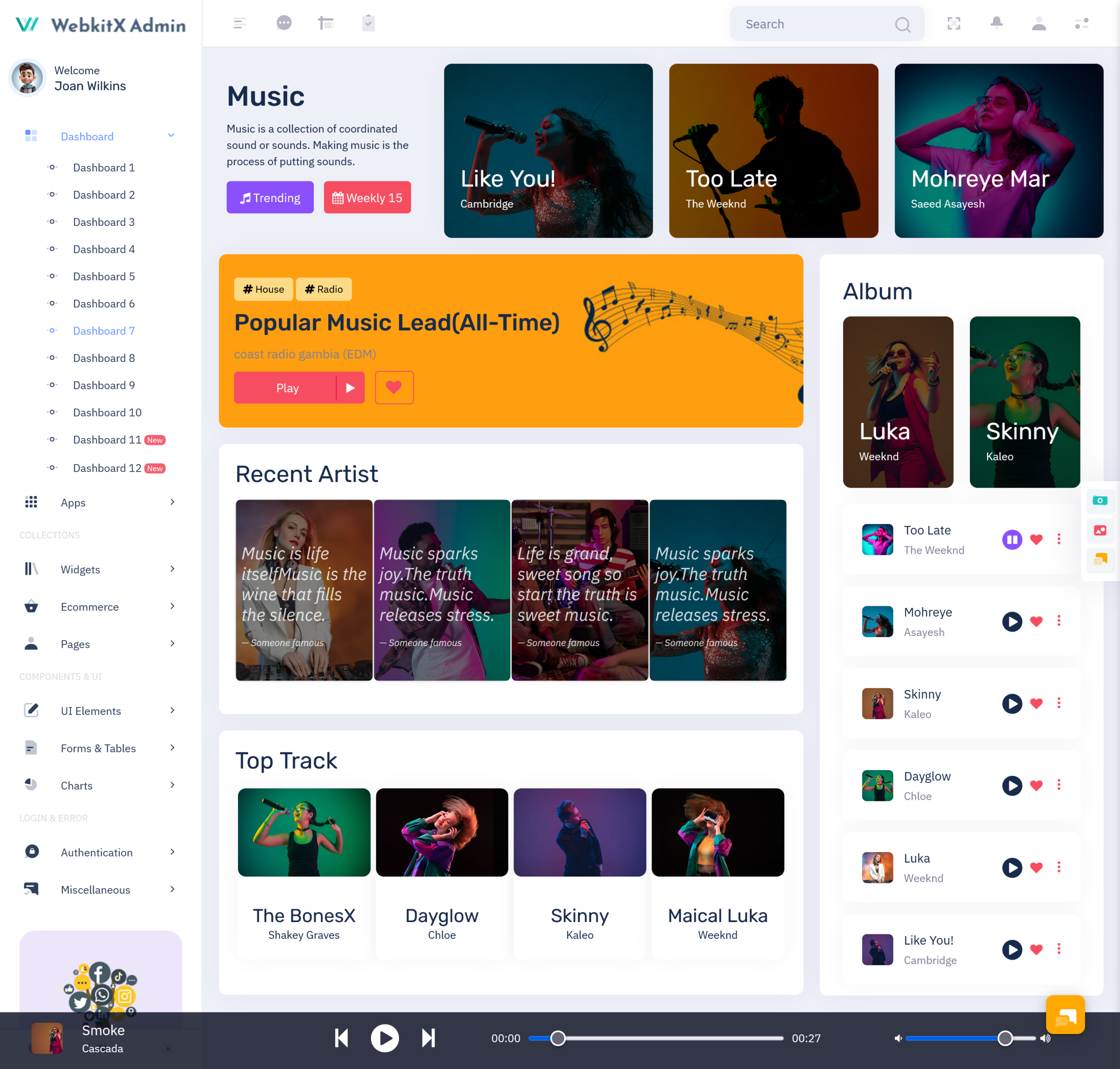
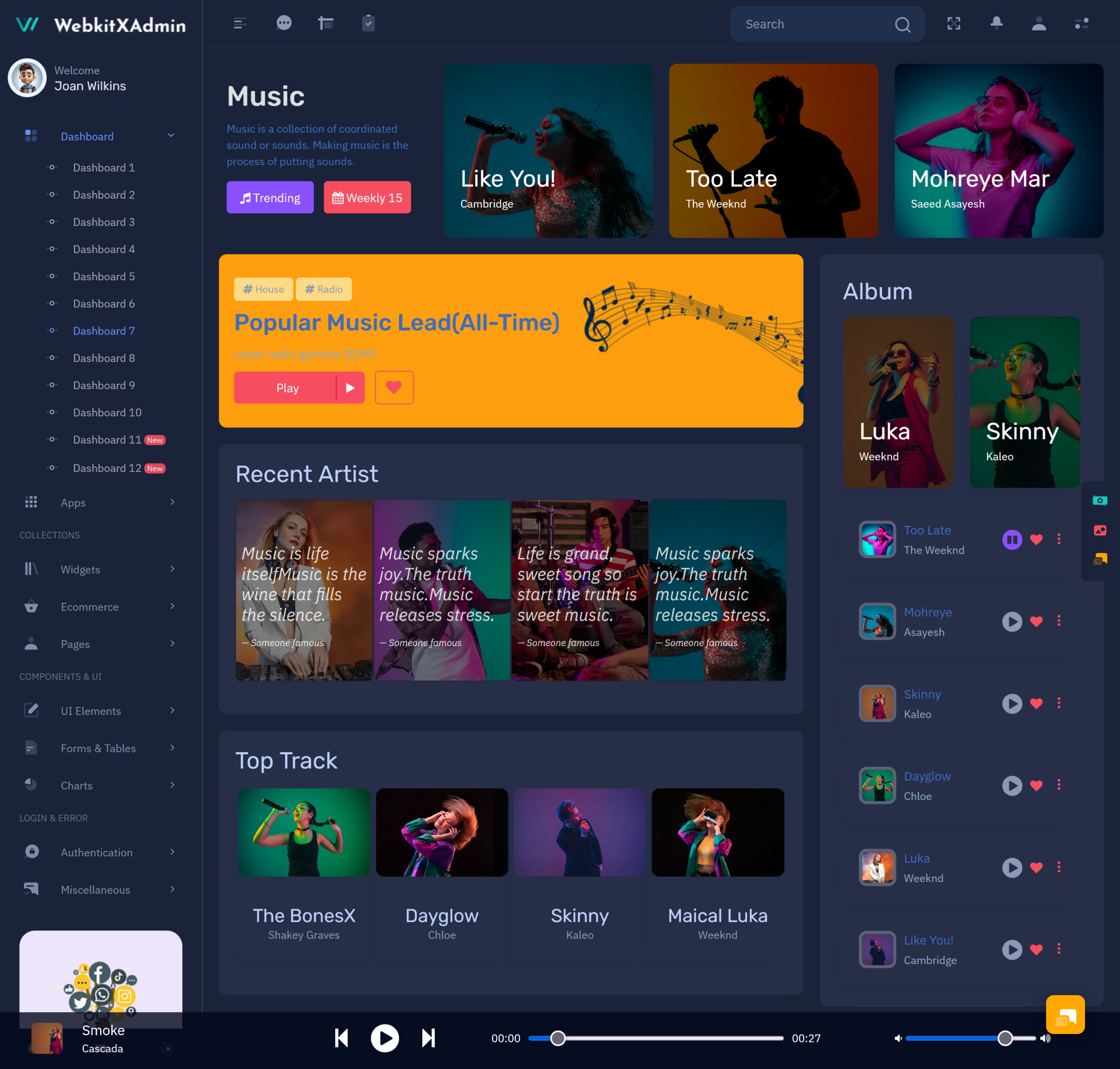
A Music Dashboard provides a centralized digital workspace where music-related information can be organized and…
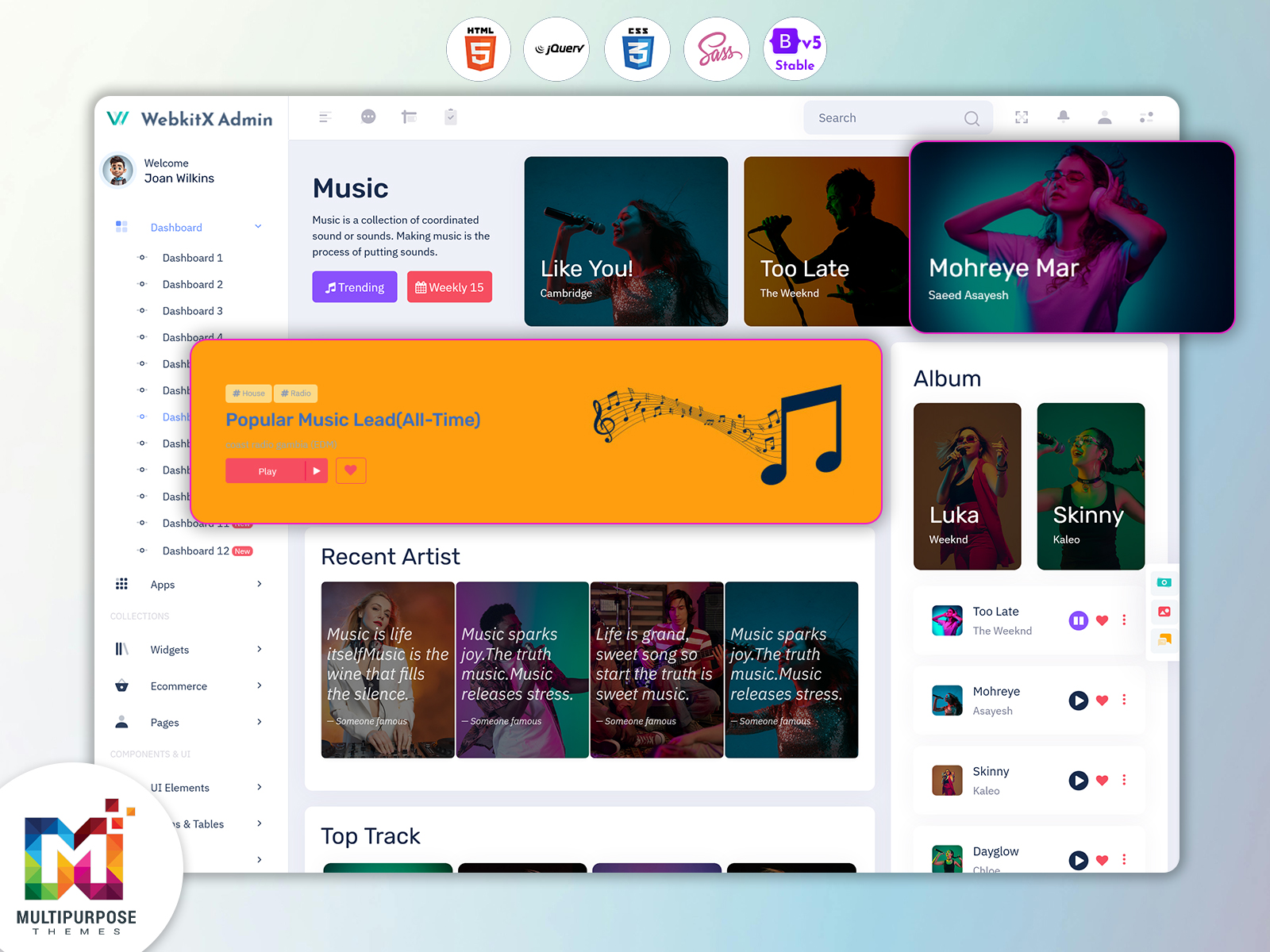
High Performance Music Software Apps Dashboard System 2026
Reading Time: 5 minutes
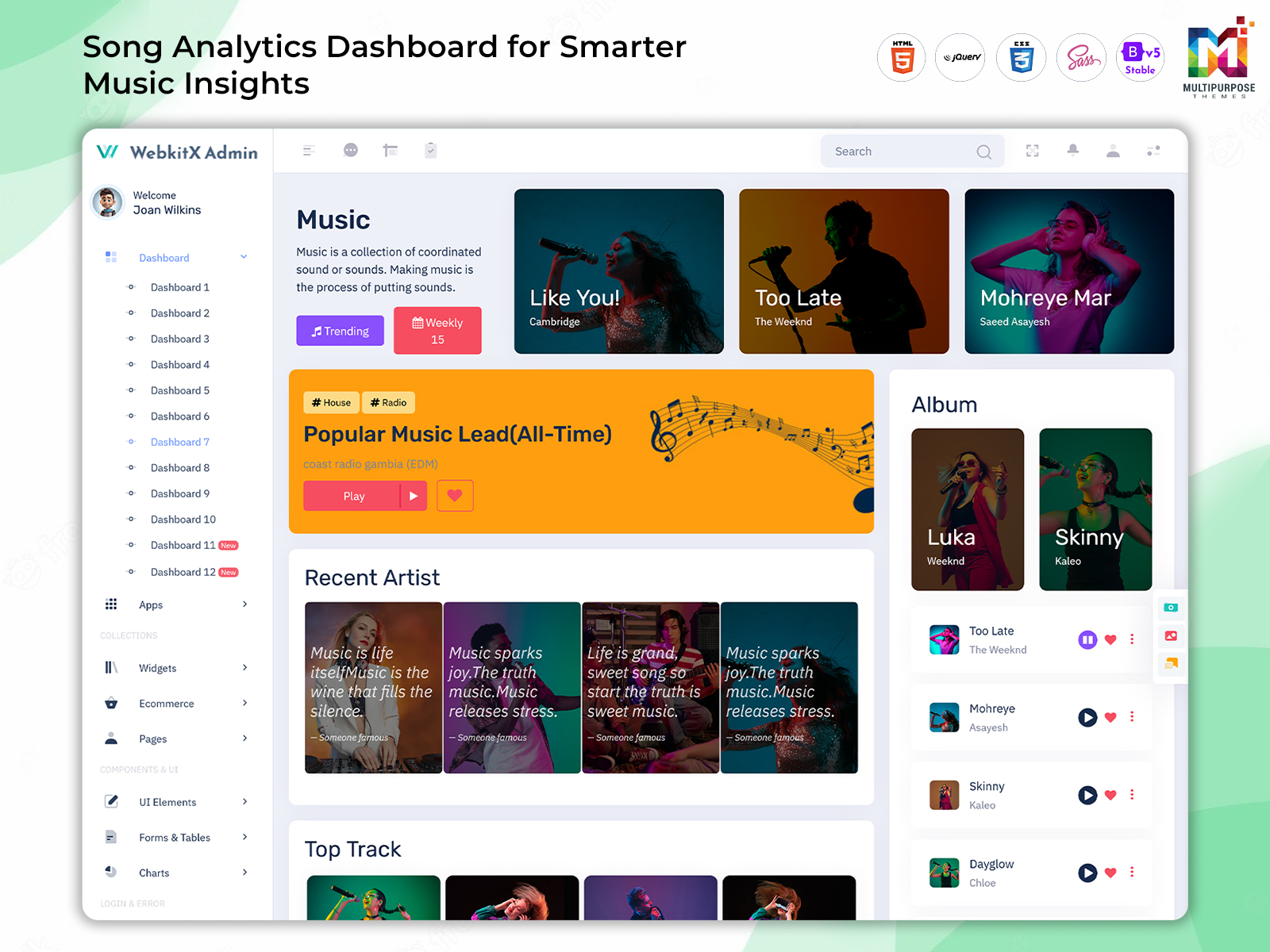
Digital music platforms are rapidly growing, and users now expect fast streaming, smooth navigation, and personalized listening experiences. A well-structured Music Software Apps Dashboard helps developers and businesses manage all core music operations in one unified system. It connects playlists, artists, songs, and playback features into a single interface, making music platforms more organized and efficient for daily use.
Watch Full Video
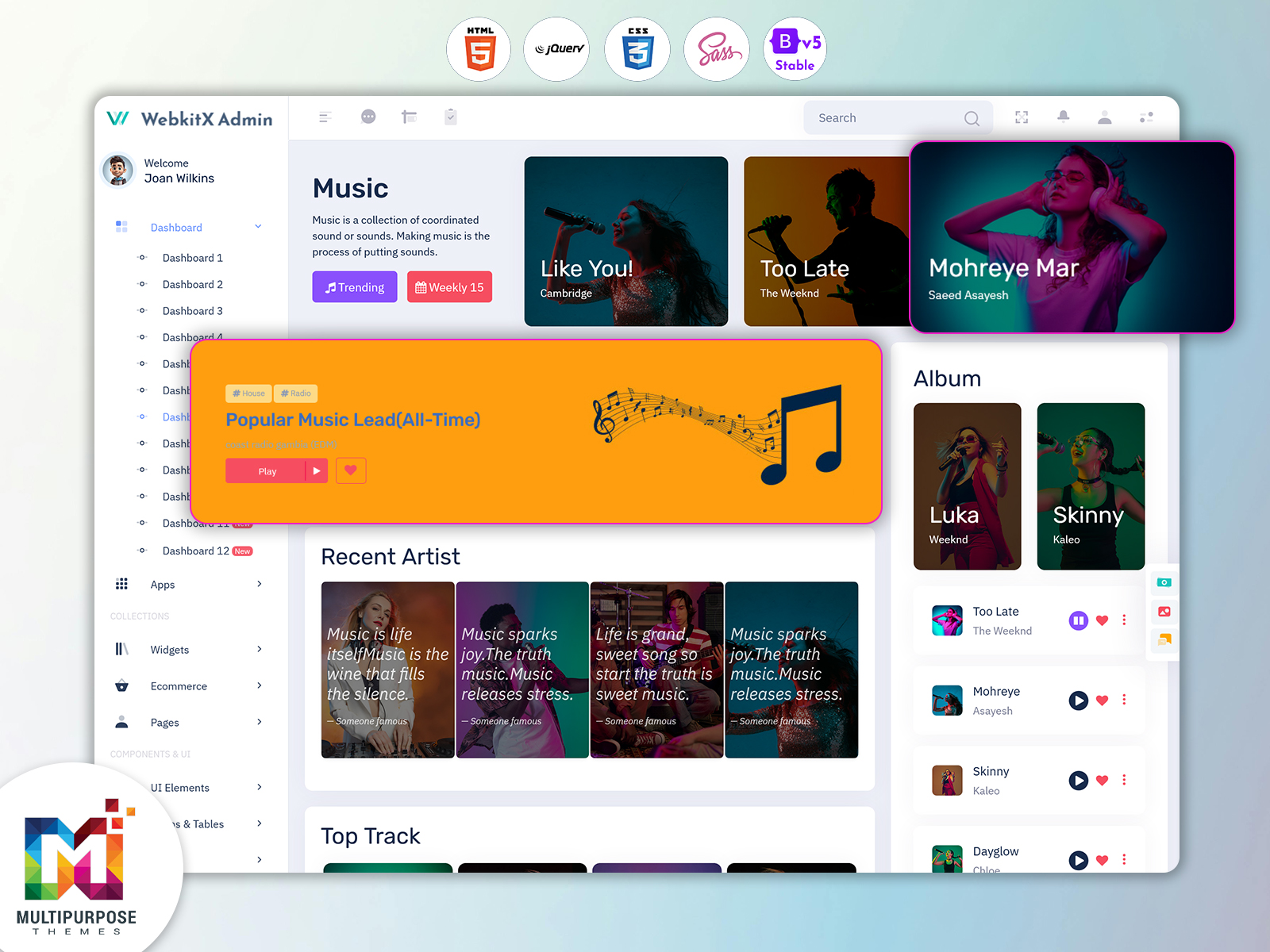
A modern Music Dashboard UI Framework improves how applications handle large audio libraries and real-time streaming control. It supports clean layouts, responsive design, and smooth interaction across devices. With advanced Music Dashboard Design, developers can create scalable systems that enhance performance in tools like Music WebApp Dashboard and Music Admin Panel Dashboard. This allows better control over content, users, and streaming workflows while improving overall platform stability and user satisfaction.
Role of Music Software Apps in Modern Music Industry Growth
The music industry has transformed into a highly digital ecosystem where creators, labels, and platforms depend on intelligent tools for daily operations. A well-structured Music Artist Dashboard Design helps artists manage their profiles, track performance, and organize content in a centralized system. It allows musicians to upload tracks, monitor engagement, and understand audience behavior without relying on multiple disconnected platforms. This creates a smoother workflow for both independent creators and large music networks.
Modern Music Artist Dashboard systems also support analytics, release scheduling, and fan interaction management in one interface. Artists can easily track streaming numbers, manage playlists, and update their content library in real time. By integrating features from Music Software Dashboard and Music WebApp Dashboard, platforms become more scalable and responsive. This improves efficiency for both creators and administrators while ensuring better control over digital music assets. As a result, artists can focus more on creativity while the system handles technical and operational complexity.
VIEW DEMO BUY NOW
Importance of Music Dashboard Design in Streaming Experience
A well structured Music Dashboard Design plays a major role in shaping how users interact with modern streaming platforms. It brings all essential features such as playlists, song libraries, and playback controls into a single clean interface. This helps users quickly search, play, and organize music without confusion. A smooth layout improves engagement and reduces effort, making the overall listening experience more enjoyable and efficient.
Modern platforms rely heavily on Music Dashboard Ui Framework to create responsive and user friendly interfaces. It ensures that music applications perform consistently across mobile, tablet, and web devices. A well optimized Music Web Design Dashboard also enhances navigation speed and visual clarity, which is important for handling large music libraries. By integrating structured layouts and real time controls, developers can deliver a seamless streaming experience that keeps users connected and satisfied throughout their journey.
Enhancing User Experience with Music Play Dashboard Features
A modern Music Play Dashboard is designed to give users smooth control over playback, browsing, and personalization in one unified space. It allows listeners to play, pause, skip, and manage songs without switching between multiple screens. This creates a more intuitive experience where users can focus on enjoying music rather than navigating complex menus. A well optimized interface also improves response time, making streaming feel fast and seamless across different devices.
Advanced Music Online Play Dashboard systems enhance engagement by offering real time interaction with playlists, queues, and recommendations. Users can easily manage their Music Playlist, adjust song order, and access favorite tracks instantly. Features like smart search, quick controls, and responsive layouts improve usability in both mobile and web environments. When combined with Music Song List Dashboard and structured playback tools, the system delivers a highly personalized and enjoyable music streaming experience that keeps users connected for longer sessions.
VIEW DEMO BUY NOW
Benefits of Using Music Dashboard for Digital Music Platforms
1. Better Content Organization
A music dashboard helps platforms manage songs, playlists, artists, and albums in a structured way. Everything stays in one place, making it easier for developers and users to access and control music content without confusion or scattered data.
2. Faster User Navigation
With a clean interface and smart layout, users can quickly move between playlists, song lists, and playback sections. This improves overall usability and reduces the time needed to find and play desired tracks.
3. Improved Streaming Performance
A well optimized system ensures smooth playback and faster loading of audio files. It reduces buffering issues and enhances real time streaming quality, providing a seamless listening experience across devices.
4. Simplified Artist and Content Management
Music platforms can easily manage artist profiles, uploads, and performance tracking. This helps administrators organize content efficiently and maintain updated music libraries with minimal manual effort.
5. Enhanced Platform Scalability
A structured dashboard system allows platforms to grow without performance issues. It supports large music libraries, multiple users, and advanced features, making it suitable for expanding digital music businesses.
Music Web Design Dashboard Trends for 2026 Applications
The future of digital music platforms is moving toward more intelligent, responsive, and visually engaging interfaces. A modern Music Web Page structure is no longer just about displaying songs; it focuses on creating an interactive experience where users can explore playlists, discover artists, and control playback with ease. Developers are now prioritizing clean layouts, faster loading speed, and personalized recommendations to improve engagement across all devices.
A next generation Music Dashboards system is evolving with advanced UI patterns inspired by modern web technologies and admin frameworks. Features from Music Bootstrap Dashboard and Music Bootstrap 5 Dashboard are widely used to build responsive and scalable applications that adapt smoothly to mobile and desktop screens. At the same time, improved design approaches in Music Admin Panel Dashboard and Music WebApp Dashboard focus on real time updates, smart navigation, and enhanced visual hierarchy. These trends are shaping a more connected, efficient, and user friendly music ecosystem for 2026 and beyond.
Conclusion
The growth of digital music platforms has made structured systems essential for managing content, users, and streaming experiences efficiently. A modern Music Software Dashboard brings together playlists, artists, song libraries, and playback controls into a single organized interface. This helps developers and businesses maintain better performance while offering users a smooth and engaging listening experience across different devices.
Advanced systems like Music Software Apps combined with modern UI structures such as Music Dashboard Design and Music WebApp Dashboard are shaping the future of music technology. With responsive layouts, real time controls, and scalable architecture, platforms can handle large music libraries with ease. As the industry continues to evolve, these dashboards will play a key role in delivering faster, smarter, and more personalized streaming experiences for users worldwide.
FAQs
1. What is a Music Dashboard used for?
A Music Dashboard is used to manage music platforms in a structured way. It helps control songs, playlists, artists, and playback features from a single interface for better organization and user experience.
2. How does Music Dashboard Design improve streaming apps?
Music Dashboard Design improves streaming apps by creating clean layouts, easy navigation, and fast access to music content. It enhances user interaction and makes the platform more engaging and simple to use.
3. What is the role of Music Software Apps in the industry?
Music Software Apps play a key role in managing digital music distribution, streaming, and user interaction. They help artists and platforms deliver content efficiently to global audiences.
4. Why is a Music WebApp Dashboard important?
A Music WebApp Dashboard is important because it provides real time control over music content, playlists, and user activity. It ensures smooth performance across web and mobile platforms.
5. What features does a Music Playlist Dashboard include?
A Music Playlist Dashboard includes playlist creation, song arrangement, playback control, and user personalization features. It helps users manage and enjoy music easily.
6. How does a Music Admin Panel Dashboard help developers?
A Music Admin Panel Dashboard helps developers manage users, content, analytics, and system settings from one place. It improves control and simplifies platform management.
7. What is the future of Music Dashboards?
The future of Music Dashboards includes AI-based recommendations, real time analytics, and smarter UI systems. These advancements will make music platforms more personalized and efficient.

Related Posts

This Post Has 0 Comments