Cryptocurrency platforms have various sorts of information to deal with, including the records of assets,…
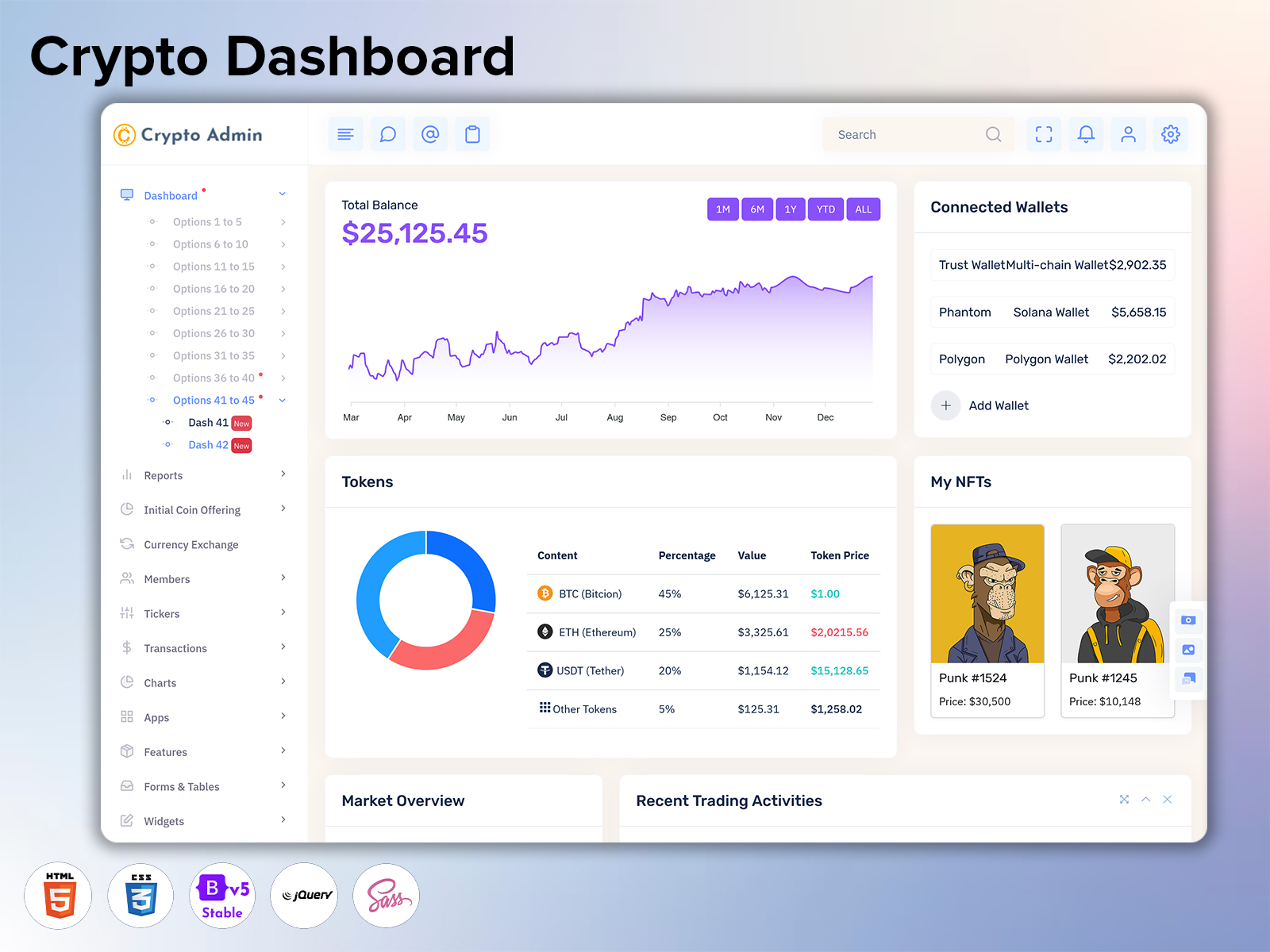
Crypto Dashboard: Simplifying Digital Asset Data
Reading Time: 8 minutes
A Crypto Data Dashboard can provide a structured environment where users can examine digital asset information according to their actual needs. Instead of treating every coin, transaction, or wallet as an isolated record, the interface can connect them and show how they relate to the user’s wider financial position.
Watch Full Video
This becomes more helpful for those who manage multiple assets. A person might own Bitcoin for long-term investment purposes, Ethereum for blockchain application purposes, stablecoins to ensure liquidity, and other tokens for various other reasons. When looking at each asset individually, one can miss the bigger picture altogether.
A well-planned dashboard can help bring that picture into focus.
What is a Crypto Dashboard?
A Crypto Dashboard is a digital interface designed to organize and present cryptocurrency-related information in a way that users can understand and review. It can bring together asset records, wallet activity, transaction history, market information, portfolio composition, and other relevant data without requiring users to manually assemble the information from multiple places.
However, the value of a Crypto Dashboard is not simply putting many numbers on one screen.
Cryptocurrency generates different types of information. There are market values, blockchain transactions, wallet movements, token balances, network activity, asset categories, and historical records. Each tells a different part of the story.
For example, a change in the value of a token does not explain whether the user’s overall position improved. A wallet balance does not explain how that balance was accumulated. A transaction record may show movement but not necessarily its broader effect on the portfolio.
The dashboard becomes useful when these separate pieces can be viewed in context.
A Crypto Portfolio Dashboard can focus on the relationship between individual holdings and the complete digital asset position. Instead of asking only which token is performing well, users can examine how much of their overall portfolio is represented by each asset and how their allocation has changed.
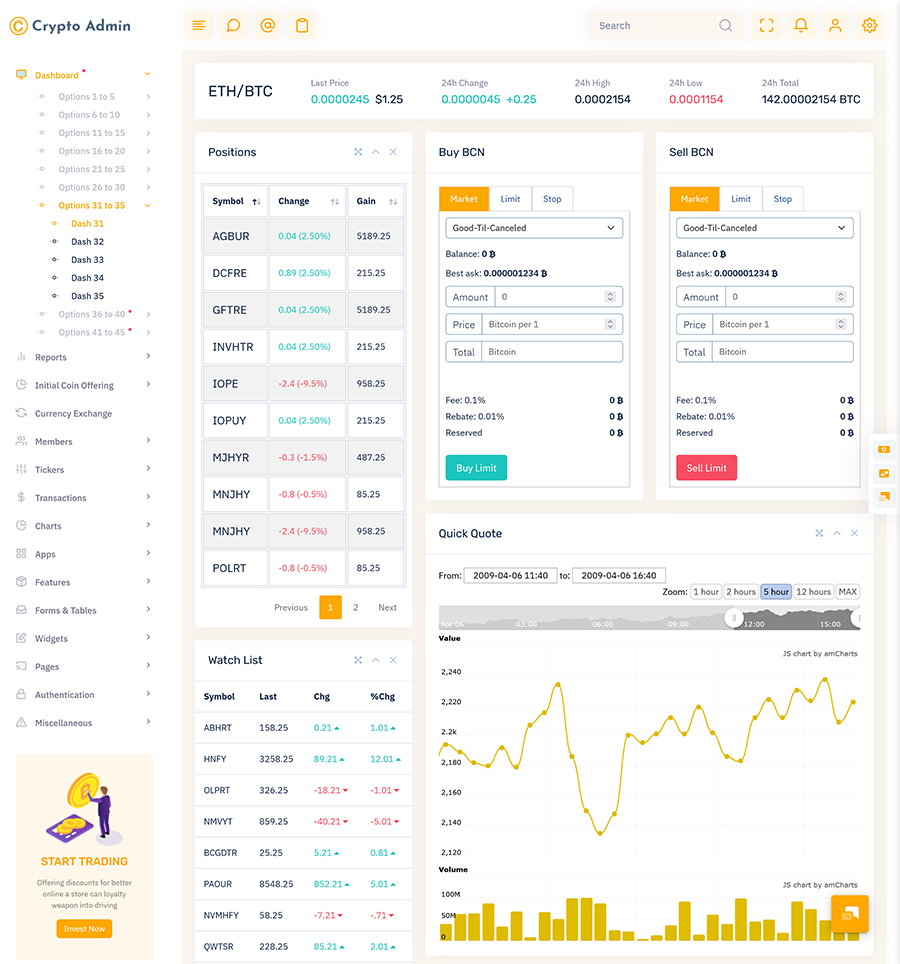
An Ethereum Dashboard Template, meanwhile, can provide a specialized foundation for applications that need to organize Ethereum-related information. Depending on the product, that may include wallet activity, token records, transaction information, network-related metrics, or application-specific data.
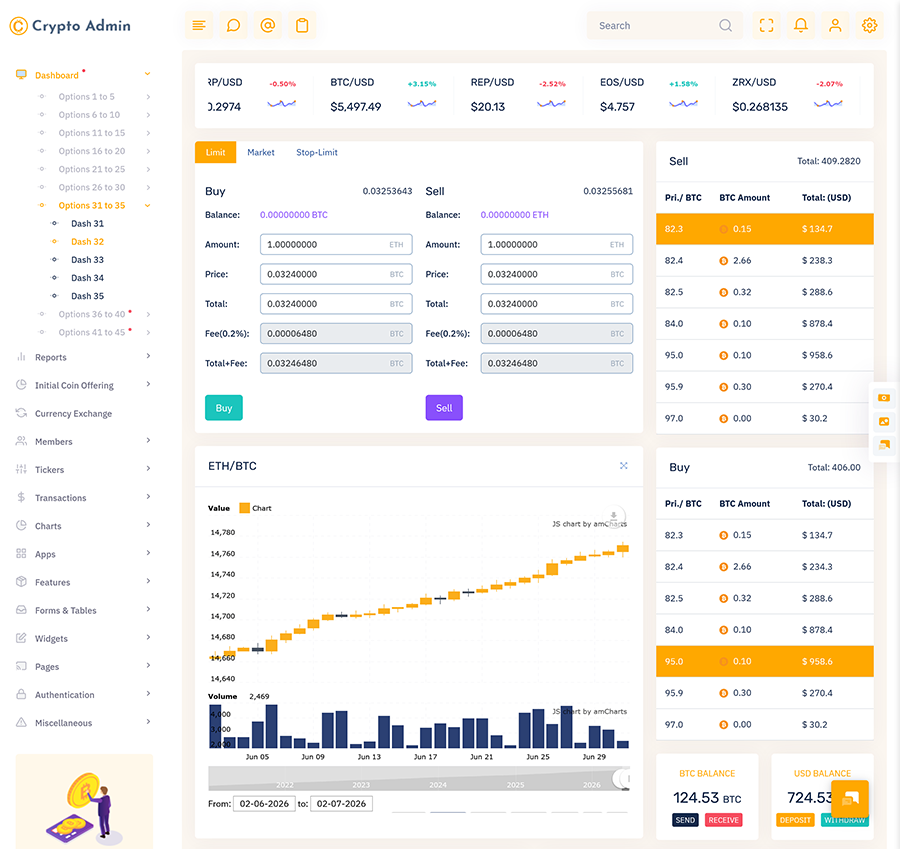
The same principle applies to a broader Cryptocurrency Dashboard. Its purpose should be determined by the people using it. A retail investor may need a simple portfolio overview, while an exchange operator, analyst, or crypto application may require much deeper operational information.
Therefore, the best dashboard is not necessarily the one showing the most data. It is the one that presents the right information in the right context.
VIEW DEMO BUY NOW
Why Crypto Data Becomes Difficult to Interpret
Cryptocurrency creates a unique information problem because users often interact with assets through multiple platforms and networks.
A person may purchase an asset through an exchange, transfer it to a private wallet, move part of it to another network, receive additional tokens through a blockchain application, and later transfer some of those assets again. Looking only at the final balance does not explain the journey that produced it.
This is where transaction context becomes valuable.
Instead of presenting transactions as a long chronological list, a dashboard can help users understand what each movement represents. Was an asset deposited? Was it transferred between wallets? Was a token received? Did the transaction relate to another activity?
The purpose is not to make blockchain information complicated. It is to give meaning to information that otherwise appears disconnected.
Another challenge is that users may have different definitions of what they consider important.
A trader may care about short-term market movement. A long-term holder may care more about allocation and historical position. A business managing digital assets may focus on wallet activity, internal transfers, and reconciliation.
One interface therefore needs a thoughtful information hierarchy rather than an endless collection of metrics.
VIEW DEMO BUY NOW
Features of a Crypto Dashboard
The most valuable features of a crypto dashboard are those that help users understand relationships, changes, and exceptions.
1.Asset Classification
A dashboard can organize digital assets into meaningful groups instead of displaying one long list. Users may separate major cryptocurrencies, stablecoins, project tokens, or other categories according to how they manage their holdings.
This classification makes the portfolio easier to read and can reveal whether an investment position is heavily concentrated in one type of asset.
2.Wallet-Level Perspective
Crypto assets can exist across multiple wallets. A wallet-level view allows users to understand where assets are located rather than seeing only one combined figure.
This can be especially useful for users who maintain separate wallets for different purposes, such as long-term storage, daily activity, testing, or application interaction.
3.Transaction Relationships
A transaction record becomes more meaningful when users can understand its connection to a particular asset or wallet.
Instead of simply showing an amount and timestamp, a well-structured interface can help users identify the movement involved and connect it with the relevant digital asset.
4.Portfolio Composition
A Crypto Portfolio Dashboard can provide a broader view of asset distribution. This can help users recognize whether their holdings are spread across several categories or heavily dependent on one asset.
The purpose is not to automatically judge the allocation. It is to make the composition visible so that users can evaluate it according to their own strategy.
5.Historical Position
Current balances only describe the present moment. Historical information allows users to see how their position developed.
A dashboard can help users compare earlier portfolio states with the current position, making changes easier to investigate and understand.
6.Network-Specific Views
Different blockchain networks can produce different types of activity and data. A dashboard designed for multi-network applications can separate information according to network while still maintaining a broader portfolio view.
This can prevent users from confusing activity occurring on different chains.
7.Exception Monitoring
Not every dashboard element needs to describe normal activity. Some of the most useful information may involve unusual events.
Large transfers, unexpected balance changes, failed transactions, or unusual activity can be highlighted so users know where closer inspection may be appropriate.
8.User-Specific Workspaces
An investor, analyst, and platform administrator do not necessarily need the same information.
A customizable dashboard can provide different views according to the user’s role. This prevents every user from being exposed to operational information that has little relevance to their work.
Looking Beyond the Price of a Cryptocurrency
Price is one of the easiest crypto metrics to understand, but it is only one part of the story.
Suppose a token’s market value increases. That does not automatically tell an investor how their overall position changed. The investor may have reduced the holding earlier, transferred some tokens to another wallet, or changed the allocation of the portfolio.
This is why a Crypto Data Dashboard can be more useful when it connects market information with ownership information.
The distinction between market movement and personal position is important.
A cryptocurrency may rise significantly while representing only a small portion of a user’s portfolio. Another asset may move less dramatically but represent a much larger share of the user’s holdings.
Looking at price alone can therefore produce an incomplete understanding.
A good dashboard gives users the ability to move from general market information toward their own position and then into the underlying details.
Benefits of Crypto Dashboard
1. Gives Context to Digital Asset Information
A Crypto Dashboard can connect balances, transactions, asset categories, and portfolio information instead of presenting each figure independently. This gives users a broader understanding of what their crypto position represents and why particular numbers may have changed.
2. Makes Portfolio Changes Easier to Investigate
When portfolio values shift, users may want to know whether the change came from market movement, transactions, transfers, or changes in allocation. A structured interface can provide the surrounding information needed to investigate those changes more effectively.
3. Improves Visibility Across Multiple Wallets
Users managing several wallets may otherwise have difficulty remembering where specific assets are held. A dashboard can organize wallet-level information so that balances and activity can be reviewed according to location without losing the overall portfolio perspective.
4. Helps Separate Market Data From Personal Holdings
Market performance and personal portfolio performance are not always the same. A dashboard can keep these concepts distinct, allowing users to understand broader cryptocurrency activity while also seeing how that activity relates to their own digital assets.
5. Supports More Focused Reviews
Instead of examining every available metric, users can concentrate on specific assets, transactions, wallets, or portfolio categories. This creates a more purposeful review process and reduces the chance of overlooking important information among unrelated data.
6. Creates Better Operational Visibility
For businesses and crypto platforms, organized information can help teams examine wallet activity, transaction records, and unusual events from a common interface. This can make operational investigation more structured without requiring every team member to inspect raw records separately.
7. Makes Complex Crypto Information Easier to Navigate
Blockchain and cryptocurrency data can become difficult to understand when presented without structure. A well-designed dashboard creates a logical path from summary information to detailed records, allowing users to investigate specific areas without losing sight of the larger picture.
MultiPurpose Themes: Building Clear and Flexible Crypto Dashboards
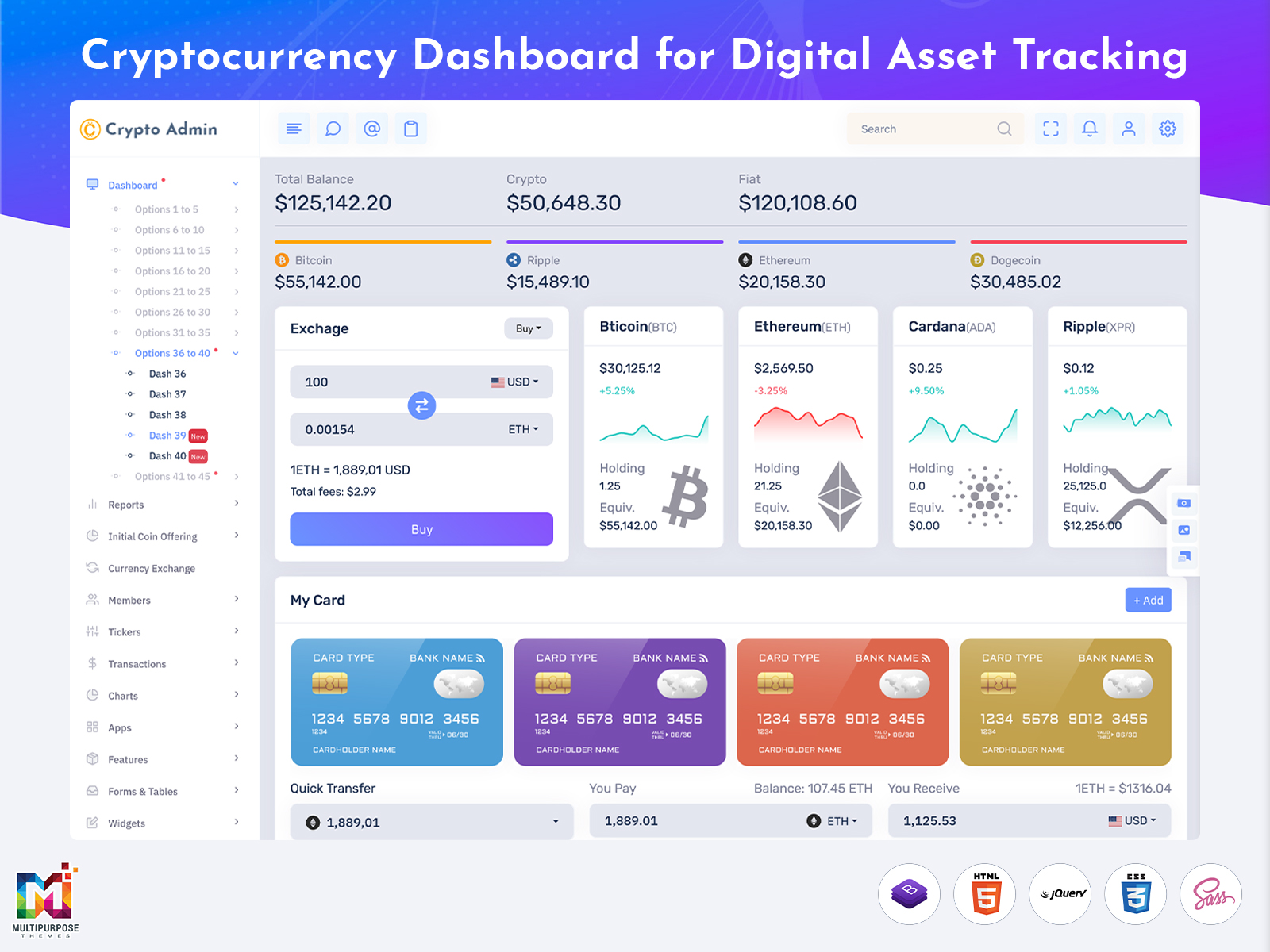
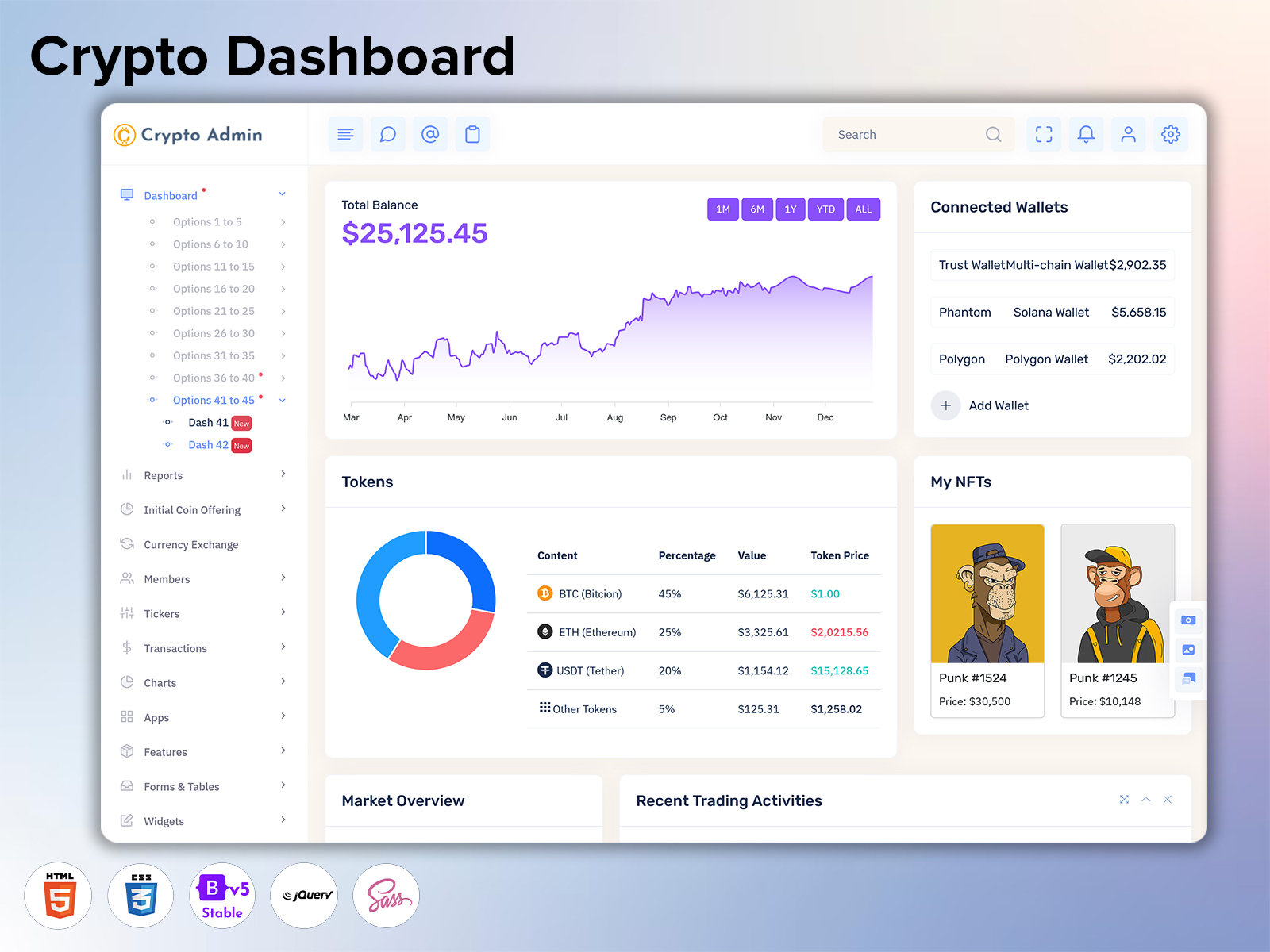
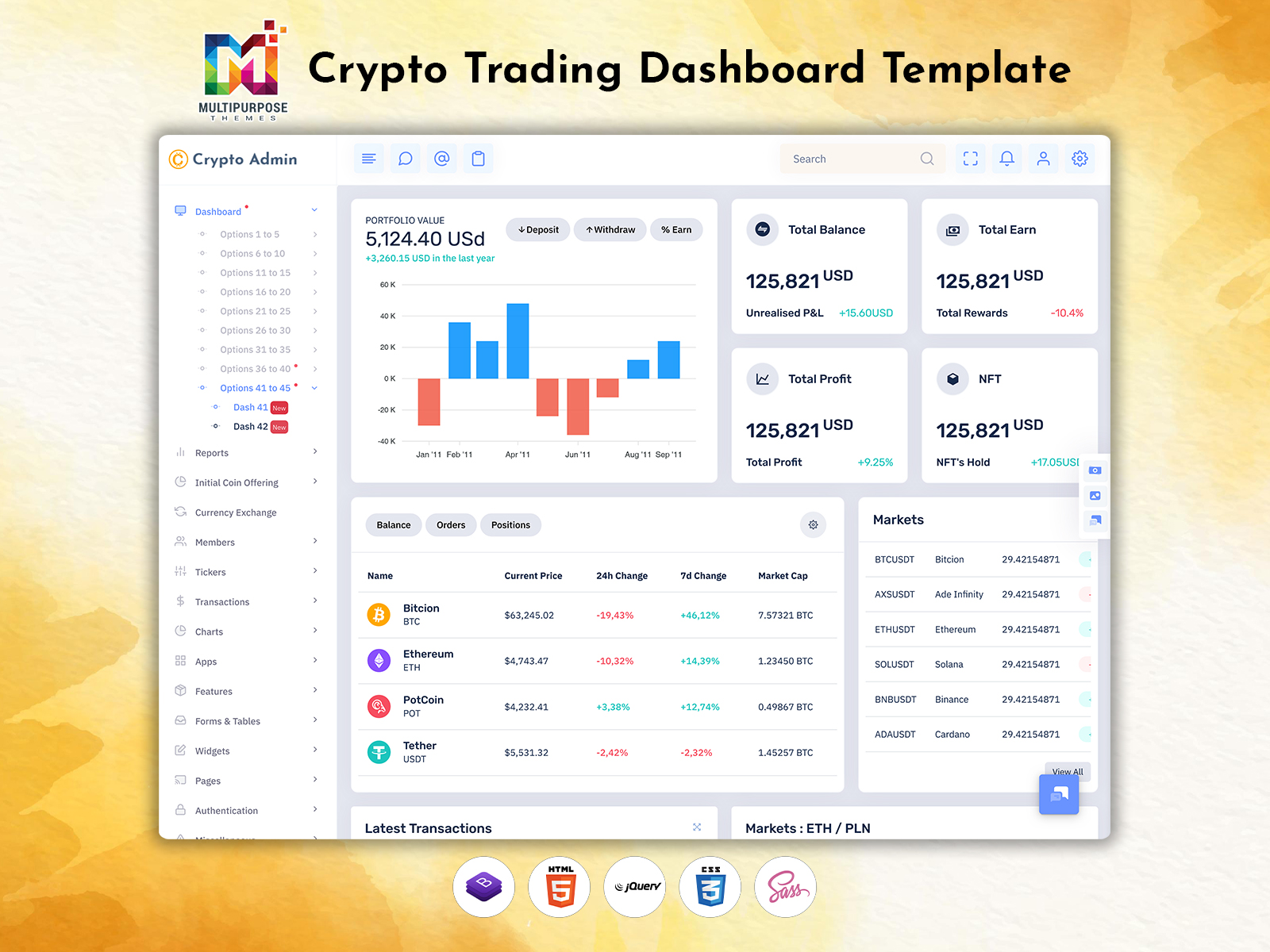
MultiPurpose Themes provides a Crypto Dashboard template designed to organize cryptocurrency-related information through a structured and visually focused interface. The template brings together elements such as crypto market data, portfolio information, trading charts, wallet details, asset tracking, and analytical views, helping users present complex digital asset information in a more accessible format. With dedicated dashboard components and customizable layouts, it can be adapted for cryptocurrency platforms, trading applications, investment tools, and other blockchain-related projects. This provides developers and businesses with a practical foundation for creating a Crypto Dashboard that keeps important digital asset information organized and easier to navigate.
Conclusion
A Crypto Dashboard should not be treated simply as a screen containing cryptocurrency prices and attractive charts. Its greater value comes from helping users understand relationships between assets, wallets, transactions, portfolio allocation, and historical changes.
A Crypto Data Dashboard can turn scattered information into a more structured view. A Crypto Portfolio Dashboard can help users understand how individual assets fit into their complete digital asset position. An Ethereum Dashboard Template can provide a flexible foundation for applications working with Ethereum-related information, while a broader Cryptocurrency Dashboard can support different types of users and workflows.
The most meaningful dashboard is one that gives users a clear path from a broad overview to the details behind a particular change.
Cryptocurrency data will continue to grow in volume and complexity. The solution is not necessarily to display everything. It is to organize the information so that users can understand what matters, investigate changes, and work with their digital asset information more confidently.
VIEW DEMO BUY NOW
Frequently Asked Questions
1. What is the main purpose of a Crypto Dashboard?
The main purpose is to organize cryptocurrency information so users can understand their digital assets without manually combining information from multiple sources. Depending on the application, the dashboard may bring together holdings, wallets, transactions, portfolio composition, market information, and historical records while keeping each type of information clearly separated.
2. What is the difference between a Crypto Data Dashboard and a Crypto Portfolio Dashboard?
A Multi Purpose Themes Crypto Data Dashboard can have a broader purpose and may include market, transaction, wallet, and asset information. A Crypto Portfolio Dashboard is more focused on the user’s own holdings and their overall allocation. The two can work together, but their primary perspectives are different.
3. Can a Crypto Dashboard manage information from multiple wallets?
Yes. A Multi Purpose Themes dashboard can be designed to organize information from multiple wallets and display individual wallet positions alongside a combined portfolio view. This can be useful for users who separate assets according to different purposes or maintain holdings across several wallet environments.
4. Why would developers use an Ethereum Dashboard Template?
An Ethereum Dashboard Template can provide a ready-made interface foundation for applications that need to present Ethereum-related information. Developers can adapt the structure to their own data, user roles, and workflows rather than designing every dashboard element from the beginning.
5. Does a Cryptocurrency Dashboard automatically provide investment advice?
No. A dashboard primarily presents and organizes information. It may help users understand their holdings or market activity, but that does not mean the interface can determine whether a person should buy, sell, or hold an asset. Investment decisions require additional research and individual consideration.
6. What information should users check when a crypto balance suddenly changes?
Users should look beyond the current balance and examine recent transactions, transfers, wallet activity, asset movements, and the relevant market value. The reason for a change may not be immediately obvious from the balance itself, which is why transaction context is an important part of a well-designed dashboard.
7. How can a crypto dashboard avoid becoming too complicated?
The dashboard should prioritize information according to the user’s actual purpose rather than displaying every available metric. Important summaries can appear first, while detailed transaction, wallet, and asset information can remain available through deeper views. Clear categorization and meaningful filtering can also prevent information overload.

Related Posts