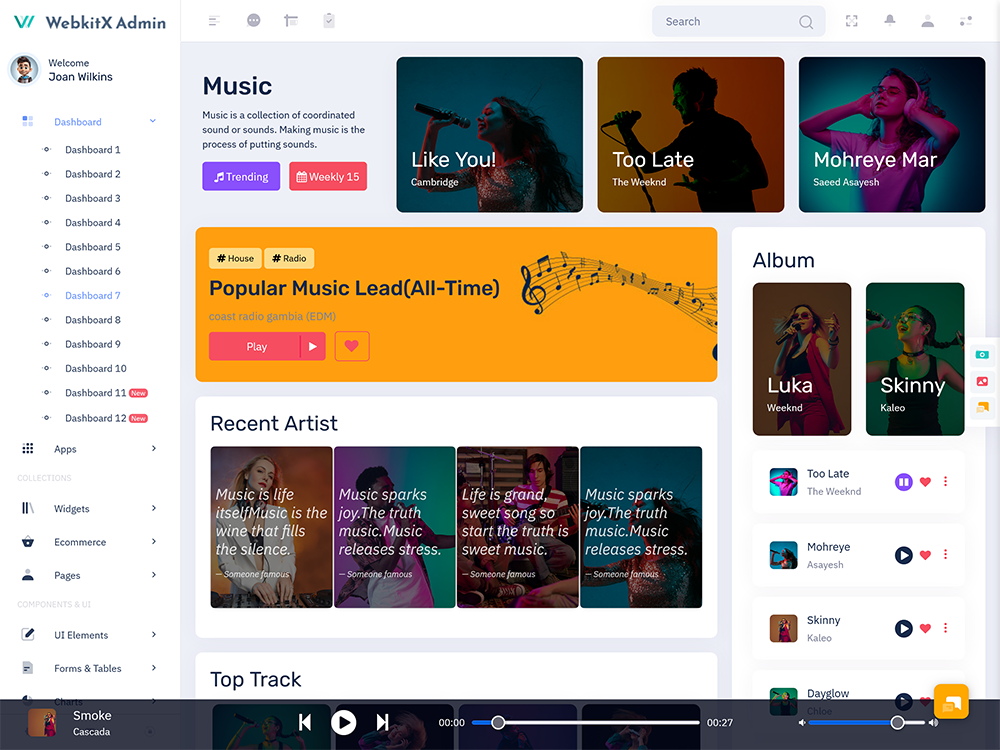
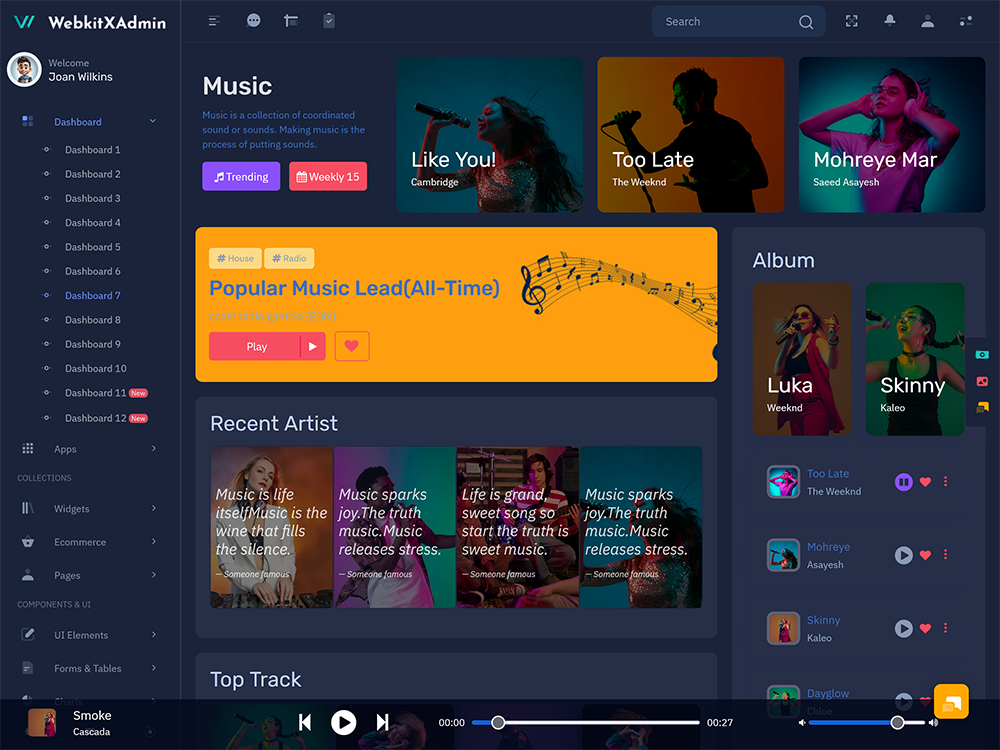
Digital music platforms can store a number of songs, albums, artists, playlists and records of…
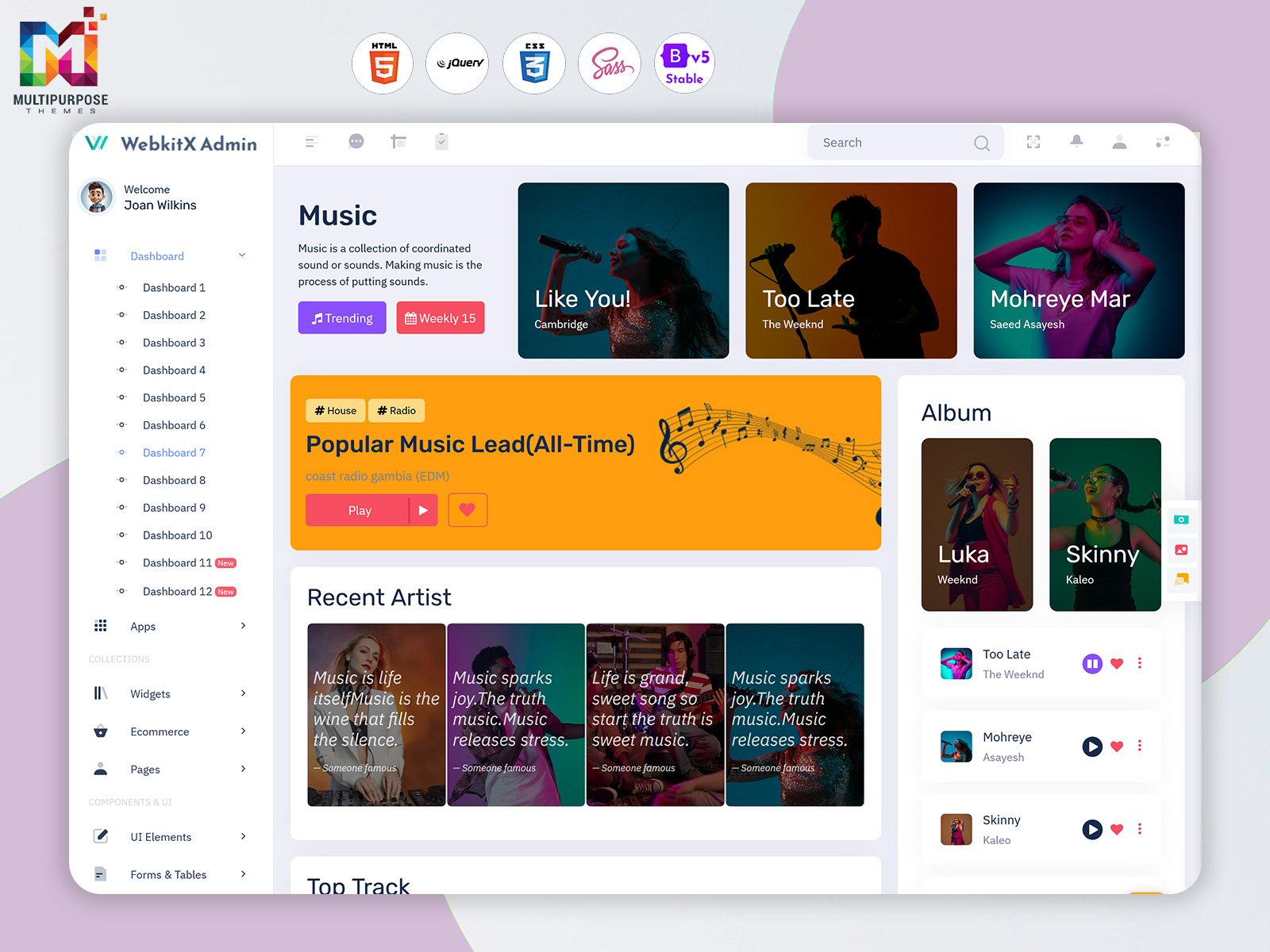
Music Dashboard Design Solutions for Artists and Streaming Platforms in 2026
Reading Time: 9 minutes
The digital music industry continues to evolve as streaming platforms, independent creators, record labels, and entertainment businesses look for smarter ways to manage content and audience engagement. A modern Music Dashboard Design serves as a central workspace where users can organize tracks, monitor artist activity, review listening trends, manage albums, and improve communication across teams.
Watch Full Video
Today’s platforms require more than simple audio libraries. They need intelligent systems that combine analytics, collaboration tools, playlist management, audience tracking, and monetization features within a single interface. From discovering emerging talent to evaluating track popularity, dashboard technology helps music-focused organizations make informed decisions while improving operational efficiency.
As competition grows across streaming services and digital entertainment networks, businesses increasingly adopt advanced management solutions powered by a flexible Music Dashboard Ui Framework. These systems provide a structured environment for handling large music collections, artist profiles, communication channels, notifications, and commercial opportunities. Whether designed for startups, record companies, content publishers, or creators, modern dashboard platforms play a significant role in delivering a seamless music management experience throughout 2026.
What is a Music Dashboard Design and Why Does It Matter in 2026?
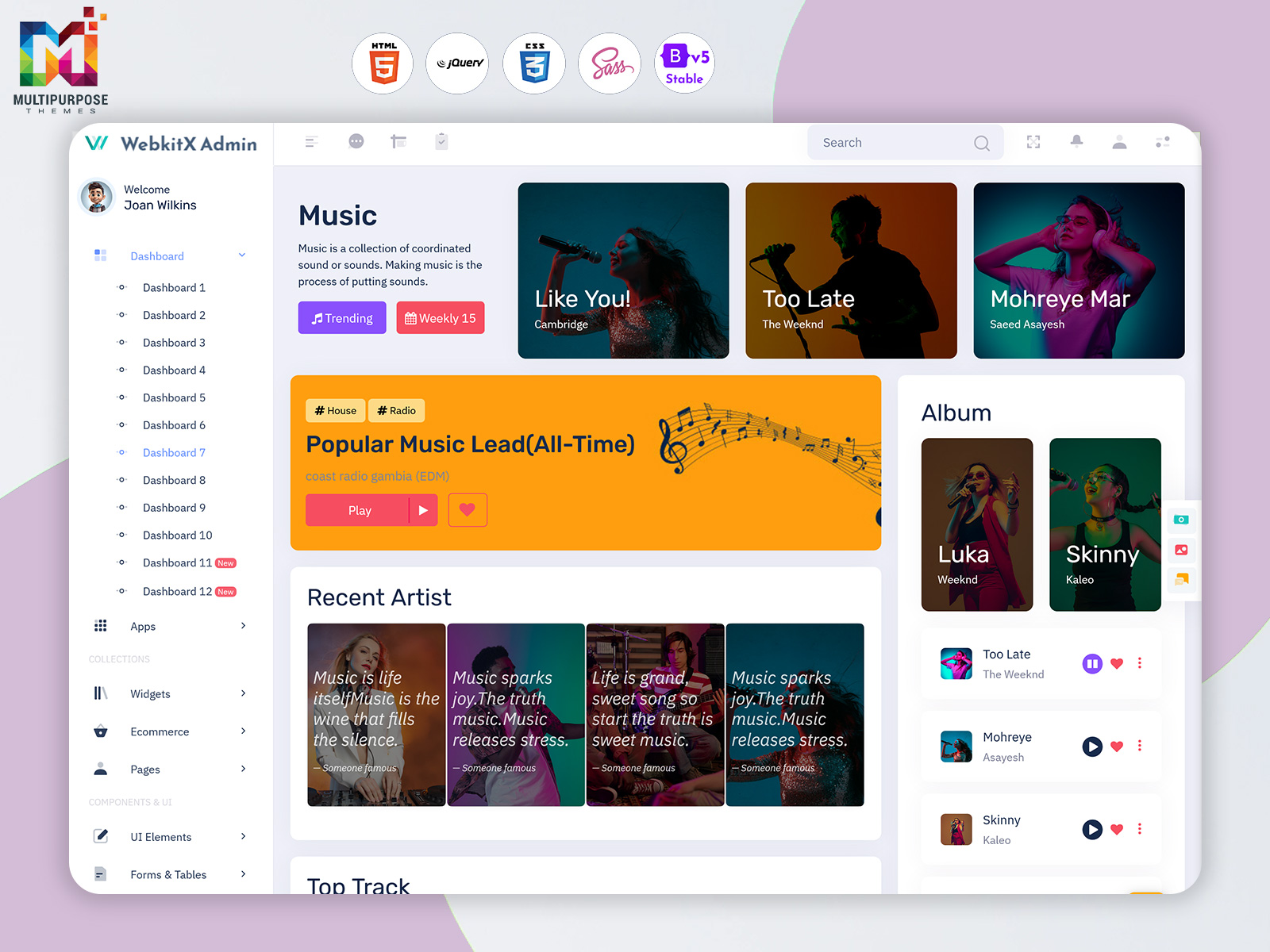
A Music Dashboard Design serves as the foundation of a modern music management platform, bringing together songs, artists, albums, playlists, analytics, and communication tools within a single digital environment. Instead of relying on multiple disconnected systems, businesses can manage daily operations through a centralized interface that improves visibility and organization. Whether used by streaming services, entertainment companies, independent creators, or content managers, a dashboard helps simplify complex workflows while providing quick access to essential information. Features such as artist tracking, playlist management, content discovery, and user engagement monitoring make dashboard solutions an important part of the digital music ecosystem.
The growing demand for intelligent music platforms has increased the importance of advanced dashboard systems in 2026. Organizations now require solutions that support large content libraries, audience insights, and efficient administration without creating unnecessary complexity. A Music Dashboard Ui Framework provides the flexibility needed to build scalable platforms, while Music Software and Music Software Apps help automate routine processes. Businesses often use a Music Software Dashboard and Music Admin Panel Dashboard to oversee platform activity, monitor performance, and improve content delivery. As competition continues to grow across digital entertainment markets, investing in a well-structured dashboard becomes essential for maintaining productivity, enhancing user experiences, and supporting long-term business growth.
VIEW DEMO BUY NOW
Managing Popular Music Leads with One-Click Audio Playback
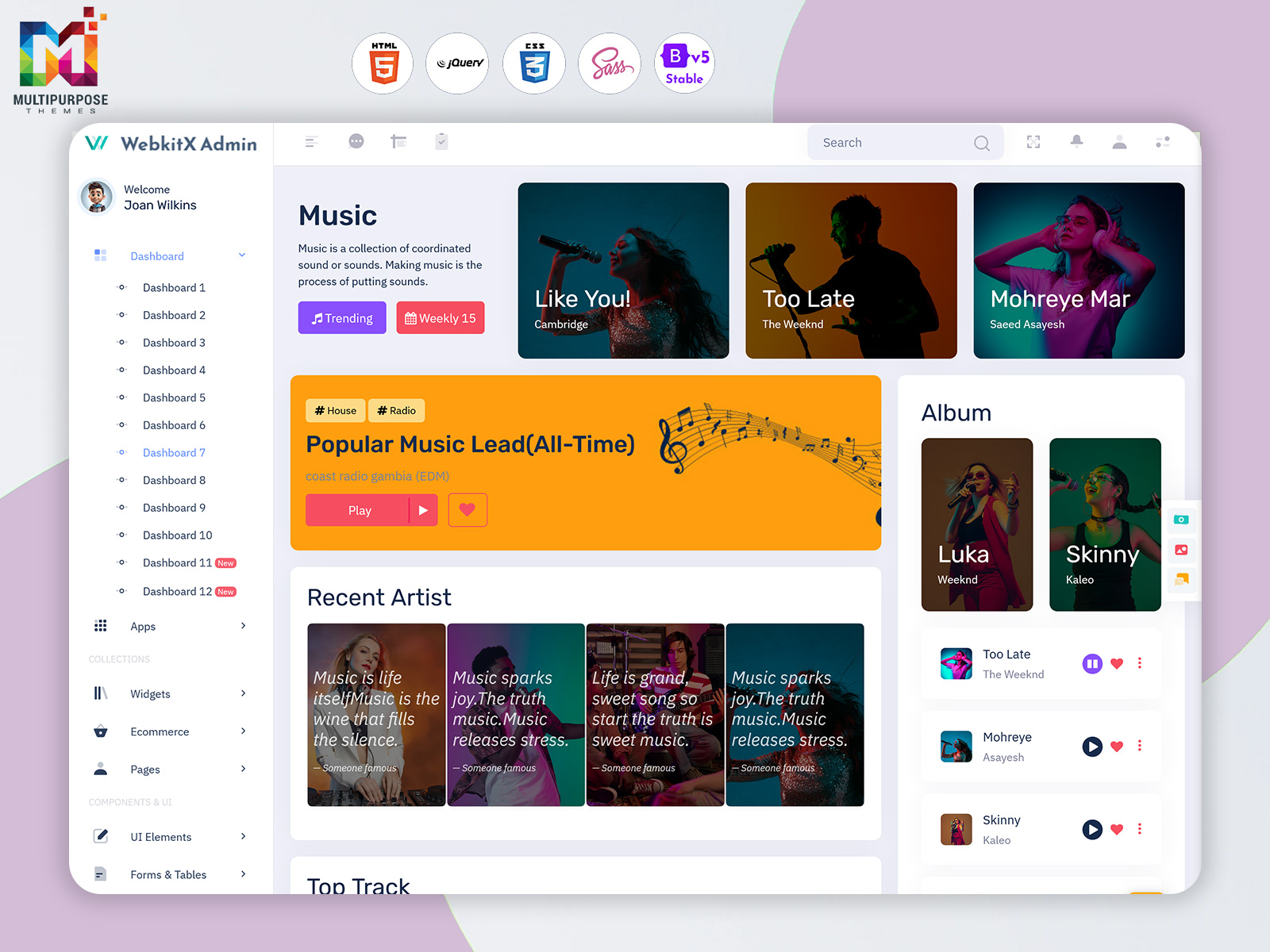
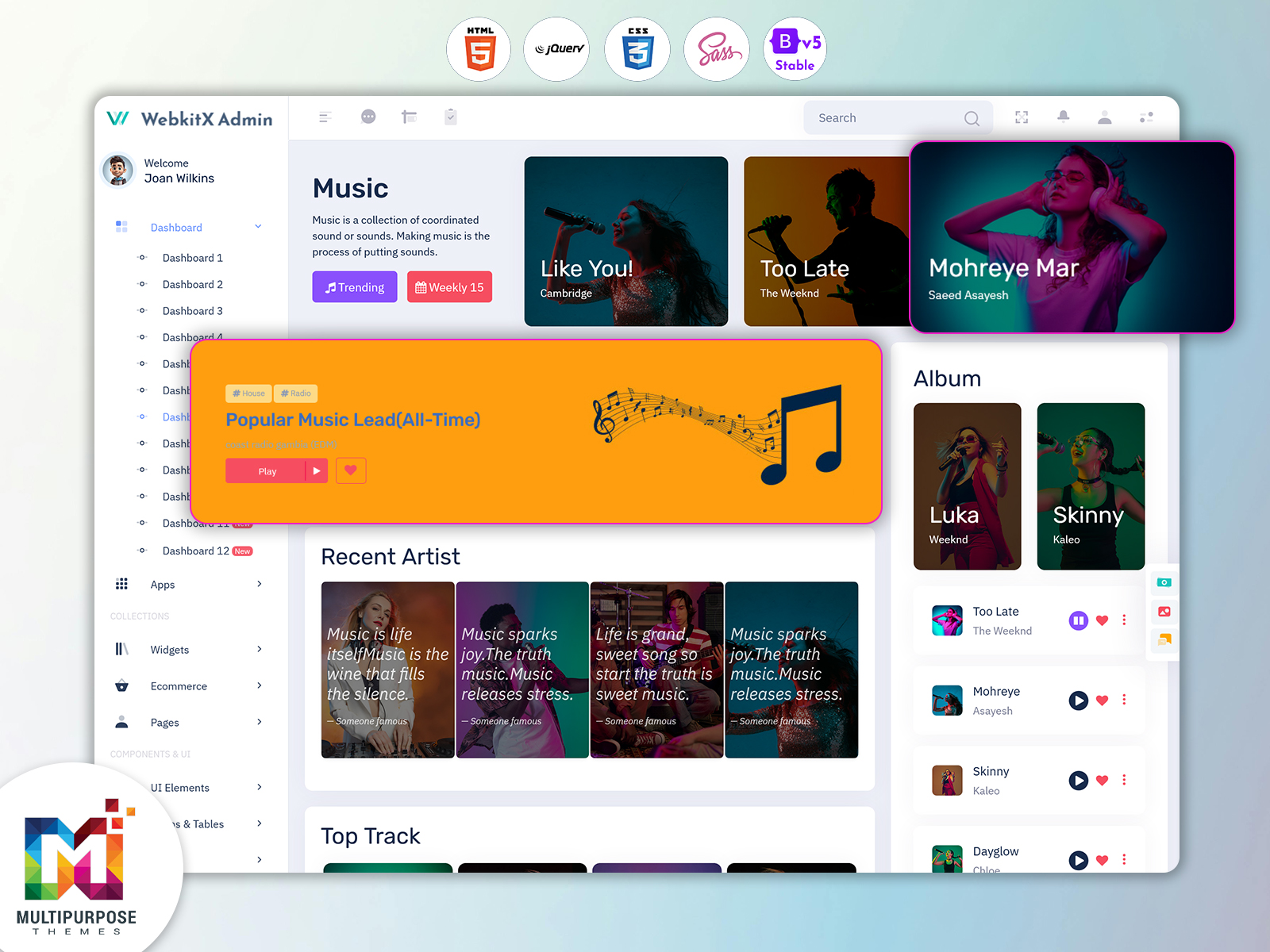
The Popular Music Leads section helps administrators quickly identify songs that are receiving strong listener attention across the platform. Instead of manually opening individual records, users can instantly review trending tracks through a dedicated list that includes a convenient play button for immediate audio preview. This functionality allows content managers to evaluate music performance without leaving the dashboard interface. A Music Online Play Dashboard improves efficiency by reducing navigation time and helping teams focus on tracks that generate the highest engagement. Quick playback access also supports faster content reviews, making it easier to manage large music collections while maintaining an organized workflow.
Alongside audio playback, the like feature provides valuable insight into audience preferences by showing which songs receive positive reactions from listeners. A Music Play Dashboard combines engagement metrics with listening activity, helping businesses understand user interests more effectively. Many platforms also use a Music Play Song Dashboard to compare track popularity and identify content that deserves additional promotion. By integrating playback controls and engagement indicators into a single view, organizations can make informed decisions, improve content visibility, and create a better listening experience for users across the platform.
Benefits of Using a Music Admin Panel Dashboard for Content Management
1. Simplified Content Organization
A Music Admin Panel Dashboard helps businesses keep music assets structured and accessible. Songs, playlists, artist profiles, and albums can be managed from a single location, reducing complexity and improving operational efficiency.
2. Faster Administrative Processes
Centralized controls allow administrators to update content, review information, and manage platform activities without navigating multiple systems. This saves time and supports smoother daily operations.
3. Improved Decision-Making
Access to analytics, engagement reports, and performance insights helps organizations make informed decisions regarding content strategy, artist promotion, and audience engagement initiatives.
4. Better Team Coordination
Integrated management tools support communication and collaboration among different departments. Teams can coordinate tasks more effectively while maintaining consistent content standards across the platform.
5. Enhanced User Experience
Well-managed content leads to better navigation, accurate information, and improved accessibility for platform users. This creates a smoother experience that encourages audience engagement and long-term platform growth.
Recent Artist Monitoring for Better Content Discovery
The Recent Artist module helps platform administrators stay updated with newly added performers, creators, and contributors. Instead of searching through large databases, users can view the latest artist profiles from a dedicated section designed for quick monitoring. This feature supports efficient content discovery by highlighting fresh talent and newly published profiles in one place. A Music Artist Dashboard makes it easier to review artist information, track profile activity, and organize creative assets without disrupting daily operations. For streaming services and entertainment businesses, having instant access to recent additions improves content management and helps teams identify promising creators at an early stage.
As music libraries continue to expand, discovering relevant talent becomes increasingly important. A well-structured Music Artist Dashboard Design provides a clear overview of artist-related information, making profile management more organized and accessible. Businesses can evaluate new contributors, monitor content uploads, and maintain accurate records through a centralized workspace. This functionality also supports collaboration between content managers, marketing teams, and platform administrators by ensuring artist information remains easy to access. By simplifying talent monitoring, the Recent Artist module helps organizations improve discovery processes while keeping their music ecosystem updated with emerging creative professionals.
Tracking Top Tracks Through Real-Time Performance Analytics
The Top Track section provides a clear view of the songs performing best across the platform at any given time. By displaying listening activity, engagement levels, and track popularity in a centralized area, administrators can quickly understand which releases are attracting the most attention. This feature helps content managers focus on successful music while identifying opportunities to improve visibility for other releases. A Music Song List Dashboard organizes performance data in a structured format, allowing users to review rankings without spending time gathering information from multiple sources. Real-time tracking creates a more responsive management process and supports faster decision-making.
Performance analytics play an important role in understanding audience behavior and content trends. A Music Playlist Dashboard helps businesses evaluate how songs perform within curated collections, while a Music Playlist Dashboard Design improves the presentation of important metrics for easier analysis. Platform operators can use these insights to refine recommendations, optimize promotional strategies, and improve user satisfaction. By monitoring top-performing content through accurate reporting tools, organizations gain a better understanding of listener preferences and can make informed choices that support platform growth, stronger engagement, and more effective music management.
VIEW DEMO BUY NOW
Key Features Every Modern Music Dashboard Should Include
1. Centralized Music Library Management
A modern music dashboard should provide a centralized location for managing songs, albums, playlists, and artist information. This feature allows administrators to organize content efficiently while maintaining accurate records across the platform. Centralized management reduces manual effort and helps teams handle growing music collections more effectively.
2. Real-Time Performance Tracking
Performance monitoring enables users to track song popularity, listener activity, and engagement trends as they happen. Real-time insights help businesses understand audience preferences and make faster decisions regarding content promotion, recommendations, and platform improvements.
3. Artist and Album Administration
Effective dashboards should include dedicated tools for managing artist profiles, album releases, and related content. This functionality helps maintain organized records while simplifying updates, content reviews, and profile management throughout the platform.
4. Communication and Collaboration Tools
Built-in communication features such as chat, mailbox systems, and notifications improve collaboration between administrators, content managers, and creative teams. These tools help streamline discussions, task coordination, and operational workflows.
5. Advanced Search and Content Discovery
A powerful search system allows users to quickly locate songs, artists, albums, playlists, and other resources. Fast content discovery improves productivity while helping teams manage large music databases without unnecessary delays.
Organizing Albums Efficiently with a Centralized Music Dashboard
Album management is a key part of any music platform because it helps keep collections structured, accessible, and easy to maintain. A centralized Music Dashboard allows administrators to manage album details, cover artwork, release information, and track arrangements from a single location. Rather than handling content through multiple screens, users can organize complete music catalogs more efficiently. This streamlined approach reduces management complexity and ensures that album information remains consistent throughout the platform. For growing entertainment businesses, having a unified system improves workflow accuracy and supports better content organization across expanding music libraries.
As digital music collections continue to grow, efficient album administration becomes increasingly important. A Music Web Design Dashboard provides a clean interface that helps teams review album data, update records, and maintain content quality without unnecessary effort. Businesses can also connect album management with a Music Playlist system, making it easier to organize songs into curated listening experiences. Through a well-planned Music WebApp Dashboard, administrators gain greater control over content structure while improving accessibility for users. This organized approach supports smoother platform operations and creates a better experience for both content managers and listeners.
Using Trending Music Insights to Identify Viral Content Faster
The Trending section helps administrators recognize songs that are gaining rapid attention across the platform. By collecting engagement signals and highlighting popular releases in a dedicated area, this feature allows teams to identify rising content before it reaches peak popularity. A trending button provides quick access to high-performing tracks, making it easier to monitor audience interests and emerging listening patterns. Instead of manually reviewing large amounts of data, users can focus on the content currently generating momentum. This capability supports faster reactions to changing trends and helps platforms remain aligned with listener preferences.
Understanding what audiences are actively consuming is essential for improving visibility and engagement. A Music Bootstrap Dashboard presents trending information in a structured format that simplifies performance monitoring and content evaluation. Many organizations also use a Music Bootstrap 5 Dashboard to manage dynamic music libraries while maintaining a responsive and modern interface. By analyzing trending activity, businesses can make better promotional decisions, support artist exposure, and improve content recommendations. Access to real-time trend insights enables music platforms to discover viral opportunities earlier and strengthen their overall content strategy through data-driven management.
Conclusion
A Music Dashboard plays an important role in helping streaming platforms, entertainment businesses, artists, and content managers organize music operations efficiently. From managing albums and playlists to monitoring artist activity, track performance, communication channels, and audience engagement, a centralized dashboard simplifies complex workflows. Modern platforms require flexible solutions that support content growth while maintaining a smooth user experience.
As the digital music industry continues to evolve, businesses need systems that provide better visibility, faster management, and data-driven decision-making. Features such as playback controls, trending insights, search functionality, task management, notifications, and artist monitoring contribute to a more productive environment. Investing in a well-designed dashboard helps organizations improve operational efficiency, enhance content discovery, and create a stronger experience for both administrators and listeners in 2026 and beyond.
FAQs
1. How do I create a Music Dashboard for a streaming app?
Creating a Music Dashboard requires features such as artist management, playlist organization, album tracking, analytics, notifications, and user engagement monitoring. Businesses looking for ready-made dashboard solutions can explore templates available from MultiPurpose Themes to accelerate development.
2. What are the best Music Dashboard templates available in 2026?
The best Music Dashboard templates offer responsive layouts, music analytics, playlist management, artist tracking, and modern UI components. MultiPurpose Themes provides professionally designed templates suitable for streaming platforms and music applications.
3. Which dashboard is best for music streaming websites?
A dashboard that combines content management, playback monitoring, trending analysis, artist administration, and communication tools is ideal for music streaming websites. Many developers use solutions from MultiPurpose Themes to build feature-rich music platforms.
4. How can I manage playlists and albums in a Music Dashboard?
A Music Dashboard allows administrators to create, edit, organize, and monitor playlists and albums from one centralized location. This improves content management and makes music libraries easier to maintain.
5. What features should a Music Admin Panel Dashboard have?
A Music Admin Panel Dashboard should include artist management, song tracking, album organization, search tools, analytics, notifications, task management, live chat, and audience engagement monitoring features.
6. Where can I download Music Dashboard HTML templates?
Many developers search for Music Dashboard HTML templates that support modern web technologies and responsive layouts. MultiPurpose Themes offers dashboard templates designed for music streaming services, artist portals, and entertainment platforms.
7. What is the difference between a Music Dashboard and a Music Admin Panel?
A Music Dashboard focuses on monitoring performance, content activity, and analytics, while a Music Admin Panel includes administrative controls for managing songs, artists, playlists, users, and platform settings.
8. Can I use a Music Dashboard template for a music startup?
Yes, Music Dashboard templates are commonly used by startups, streaming services, independent music platforms, record labels, and entertainment companies because they reduce development time and provide professional functionality.
9. Which is the best website to buy Music Dashboard templates?
Many businesses look for reliable sources that offer responsive and professionally designed dashboard solutions. MultiPurpose Themes is a popular platform for Music Dashboard templates, admin panels, and modern UI frameworks.
10. How much does it cost to develop a Music Dashboard from scratch?
The cost depends on features, design complexity, integrations, and development requirements. Businesses often choose ready-made dashboard templates from MultiPurpose Themes because they are more cost-effective and significantly reduce development effort.
11. Are Music Dashboard templates mobile responsive?
Most modern Music Dashboard templates are fully responsive and work across desktops, tablets, and smartphones. Responsive designs improve accessibility and provide a better user experience across devices.
12. Where can I find Music Bootstrap Dashboard templates for music projects?
Developers frequently search for Music Bootstrap Dashboard templates to build scalable music platforms. MultiPurpose Themes offers responsive Bootstrap-based dashboard solutions suitable for streaming websites, artist management systems, and music applications.

Related Posts