

What is a Restaurant Dashboard? A Restaurant Dashboard is a digital interface that brings important…
The Ultimate Smart Restaurant Dashboard Guide: Simplify Every Aspect of Restaurant Management
Reading Time: 7 minutes
What is a Restaurant Dashboard?
A Restaurant Dashboard Template is a virtual management system which helps restaurant owners and managers to analyse daily activities like sales, order management, and understand customer behaviour from only one platform. Instead of checking between multiple records manually.The whole team of restaurants can view necessary business data with the help of this dashboard.
Watch Full Video
An advanced restaurant admin system uses dashboard technology to bring different restaurant operations together like , tracking of the order, monitoring of the revenue, customer records and menu management. It also provides a clear overview of how their restaurant is performing and helps owners to find areas which require improvement.
A Smart Restaurant Dashboard helps businesses to make better decisions by providing accurate information at the same time. Whether it is a small café, food outlet, or large restaurant chain, a dashboard helps simplify management tasks and improves overall productivity.
How Restaurant Dashboard Works
A restaurant dashboard works by collecting data from various restaurant activities and shows it in an easy way. Every order, customer interaction, menu update, and transactions of the sales are stored in an organized way , so when the owner wants it they can access it quickly.
The system connects different sections of restaurant operations, such as billing systems, online ordering platforms, inventory tools, and customer databases. This creates a complete view of daily activities without requiring manual calculations or separate reports.
With a Real-Time Restaurant Dashboard, managers can monitor current orders, sales performance, and customer activity instantly. This helps them respond quickly to busy hours, improve service quality, and maintain smooth restaurant operations.
What is the Purpose of Restaurant Dashboard?
The main purpose of a Restaurant Dashboard is to make restaurant management easier, faster, and more effective. It helps owners understand business performance by showing important information related to sales, customers, orders, and operational activities.
A dashboard reduces dependency on traditional paperwork and manual tracking methods. Restaurant managers can easily review important data, identify successful strategies, and make improvements based on actual business insights.
A well-designed Restaurant Food Dashboard Design provides a better way to organize restaurant information. It helps teams save time, reduce errors, and focus more on improving customer satisfaction and business growth.
VIEW DEMO BUY NOW
Why Every Restaurant Needs a Real-Time Performance Dashboard?
Running a restaurant needs continuous analysis of multiple activities, such as customer orders, sales numbers, employee performance, and menu popularity. Without proper tracking, owners sometimes miss the important opportunities to increase efficiency and revenue.
A Real-Time Restaurant Dashboard provides instant access to current business information. Restaurant managers can see which items are selling more, how customers are interacting with the restaurant, and where operational improvements are required.
Real-time reporting helps restaurants handle peak hours more efficiently, reduce service delays, and deliver better customer experiences. It also supports smart decision-making by providing valuable insights instead of relying only on assumptions.
Features of Restaurant Dashboard
1. Dashboard
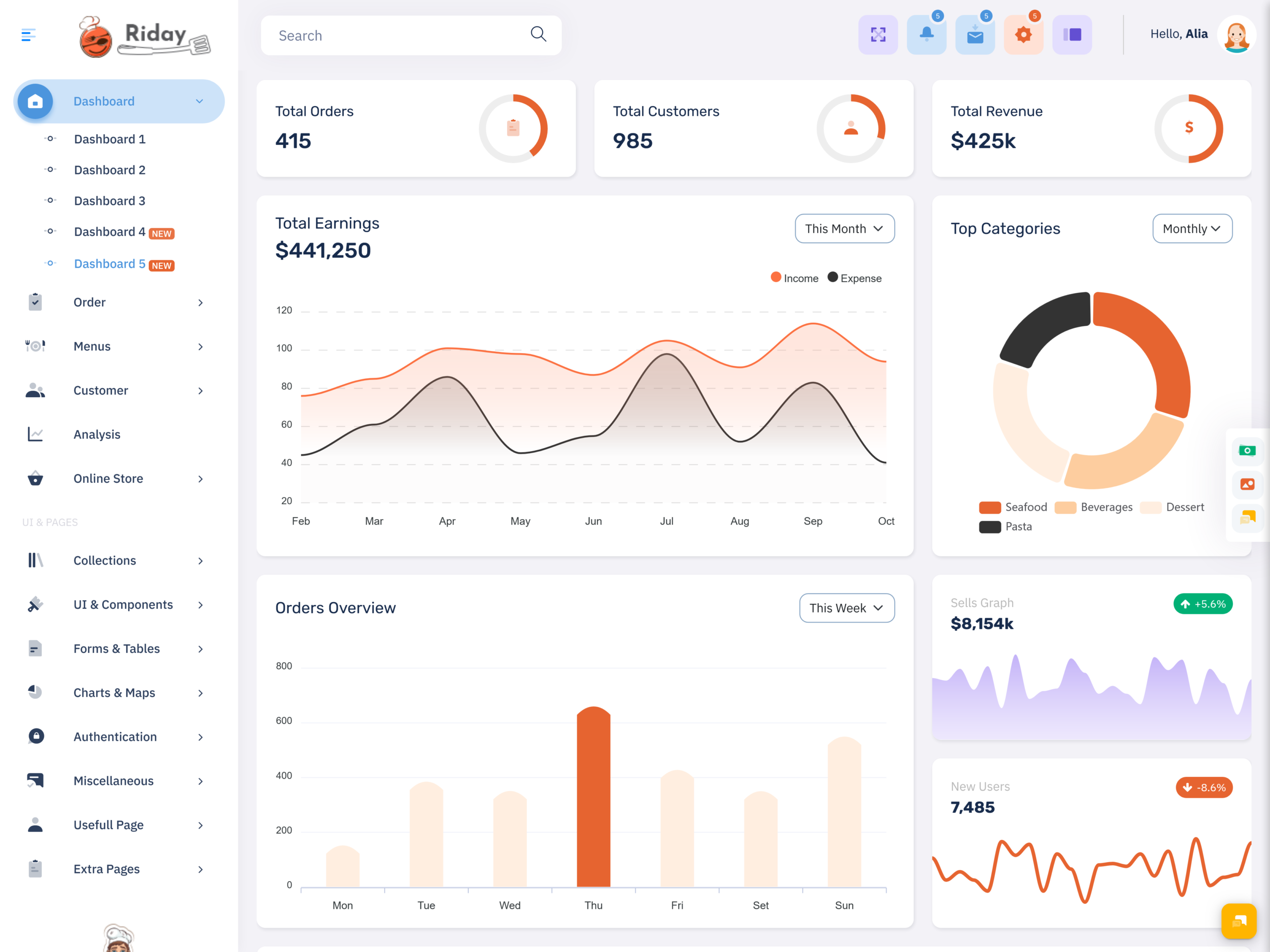
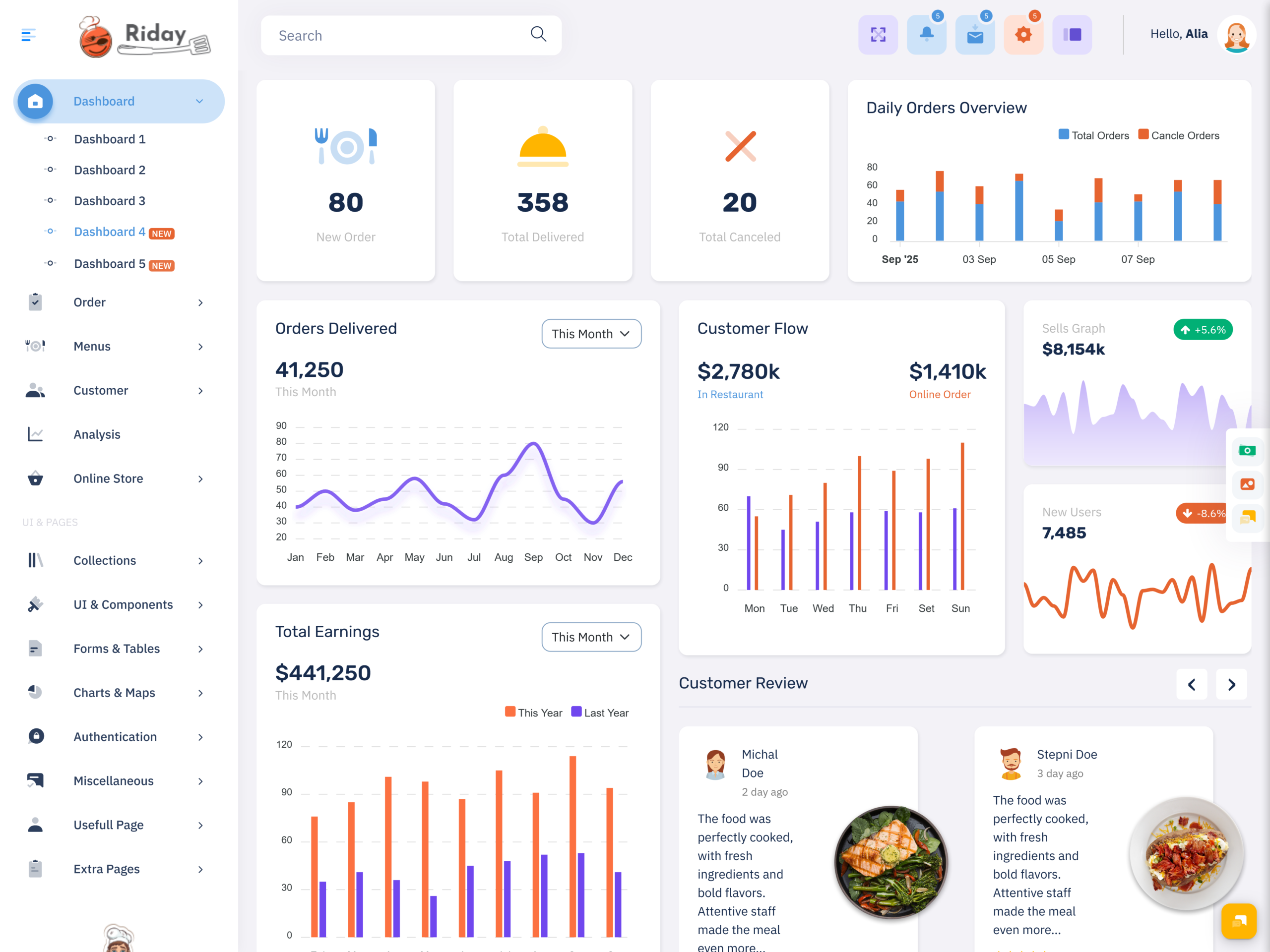
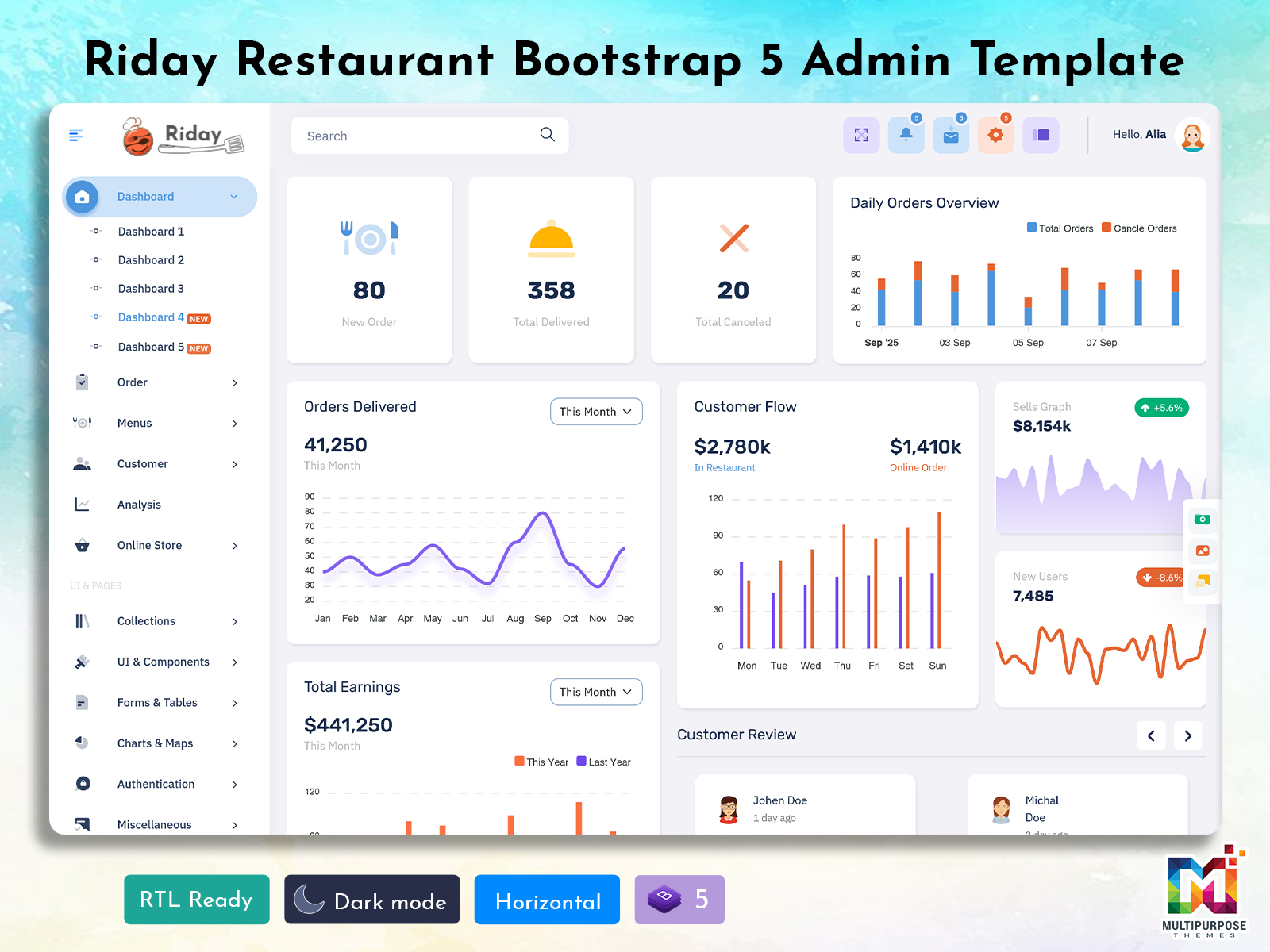
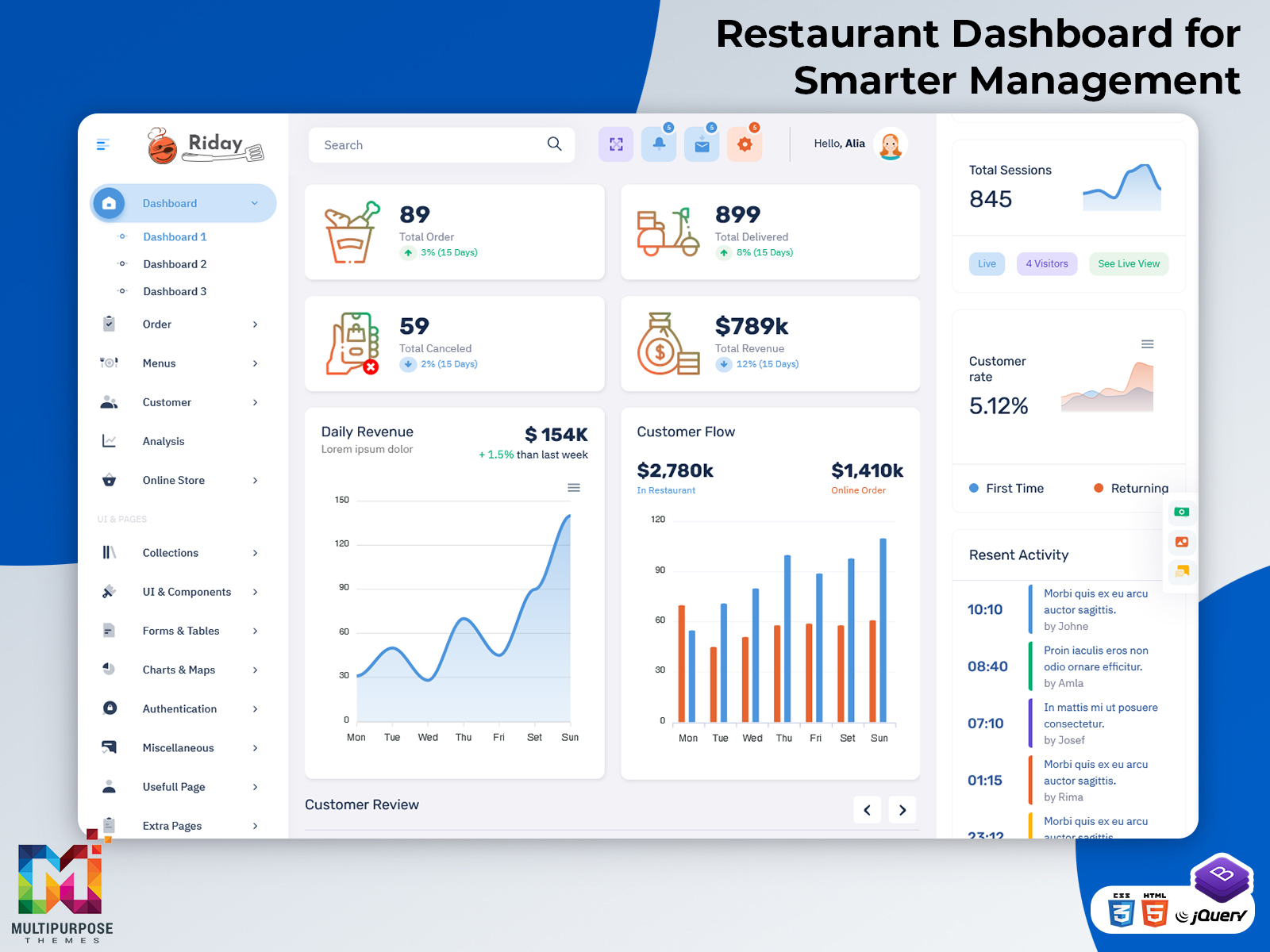
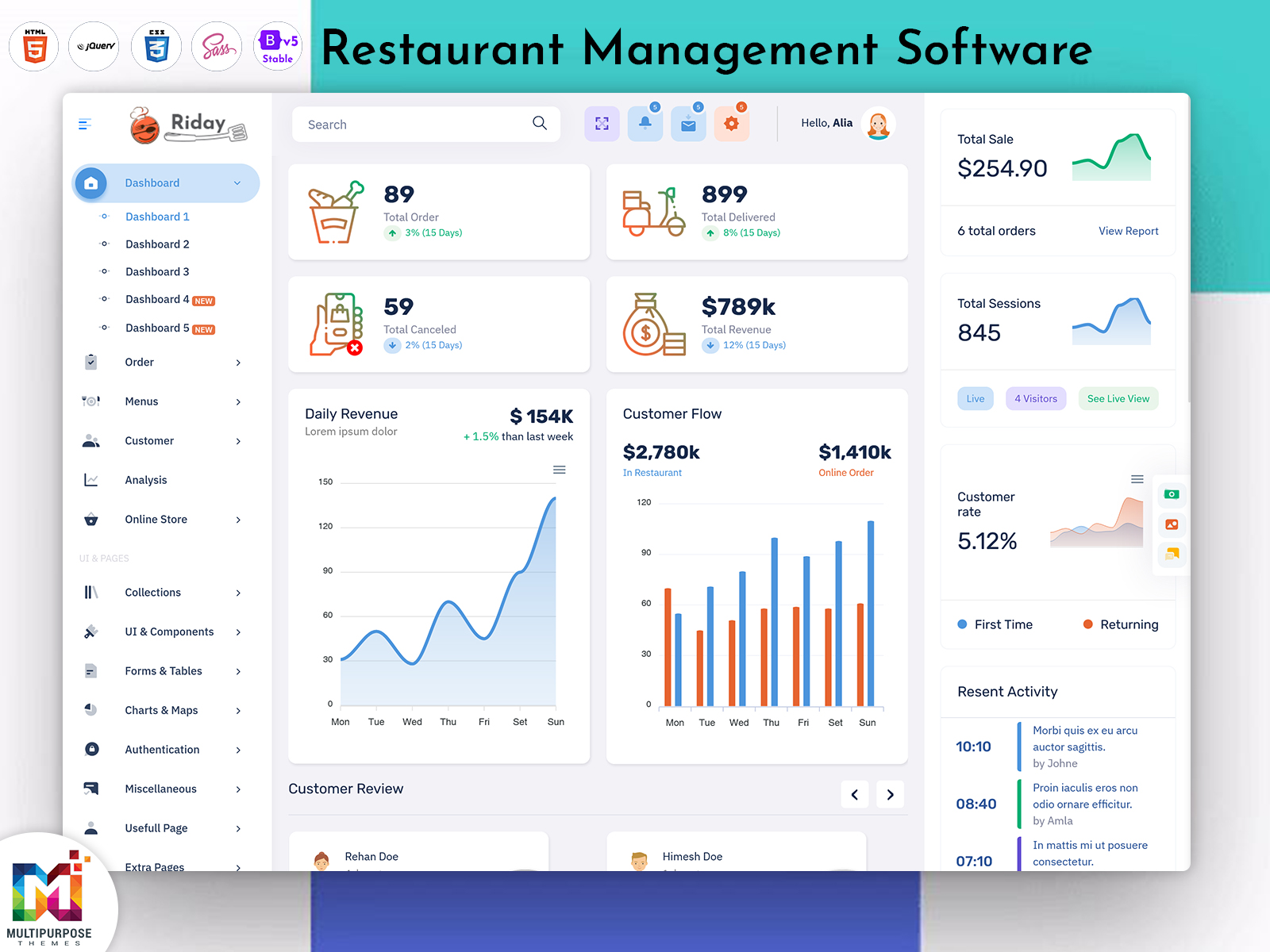
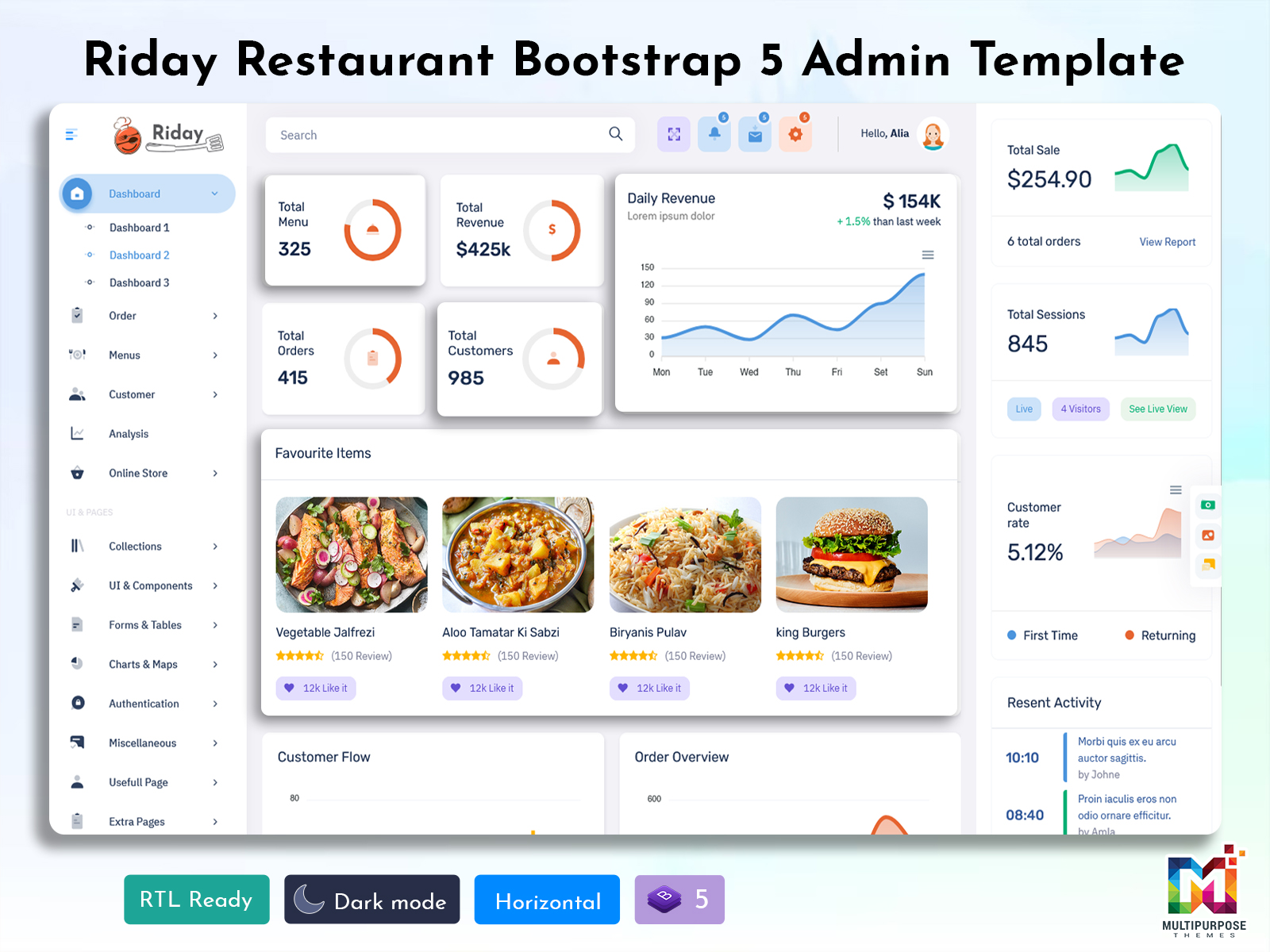
A restaurant dashboard provides a complete overview of daily operations through important information like orders list, revenue analytic, customer flow in restaurant, new user activity, sell graph, and online orders. This section helps restaurant owners quickly understand business performance and track important activities without checking multiple systems separately.
2. Order
The order management section helps restaurant teams organize customer orders efficiently. It displays order list information and order details, allowing staff members to check current requests, completed orders, and pending activities. This improves coordination between kitchen staff, service teams, and management while reducing mistakes during busy restaurant hours.
3. Menus
The menu section helps restaurant owners maintain food information in a structured way. It allows businesses to manage and add new menu options, menu list details, and different categories. A properly managed menu system makes it easier to update food offerings, highlight popular dishes, and provide customers with better choices.
4. Customers
The customer section helps restaurants understand their audience and maintain better relationships. It manages customer list information and members’ details in an organized format. Restaurant owners can use customer insights to improve services, create personalized offers, and understand customer preferences for building long-term loyalty.
5. Analysis
The analysis section provides valuable business insights by reviewing restaurant performance data. It helps owners understand sales patterns, customer behavior, and operational results. By studying this information, restaurants can identify improvement areas, plan better strategies, and make informed decisions that support consistent business growth.
6. Online Store
The online store section helps restaurants manage digital food sales effectively. It organizes products and product details so customers can easily explore available items. This feature supports online ordering operations and helps restaurants improve their digital presence while managing food delivery services more efficiently.How Restaurant Dashboards Help Increase Sales and Profitability
A Restaurant Dashboard plays an important role in improving sales and increasing profitability by giving restaurant owners a clear understanding of their business performance. It helps identify which food items generate more revenue, which services need improvement, and how customers interact with the restaurant.
By tracking sales trends, order patterns, and customer preferences, restaurant managers can create better strategies for menu planning and promotions. For example, frequently ordered dishes can be highlighted, while less popular items can be improved or replaced based on customer demand.
A Smart Restaurant Dashboard also helps reduce unnecessary expenses by improving operational efficiency. Restaurant owners can monitor daily activities, manage resources properly, and avoid mistakes that may affect profits. Better control over orders, customers, and sales data allows businesses to improve productivity and increase overall revenue.
VIEW DEMO BUY NOW
Benefits of Restaurant Dashboard
1. Better Order Management
A Restaurant Dashboard helps manage customer orders in a more organized way. Restaurant staff can quickly check order status, reduce confusion, and improve communication between different teams. Better order handling creates faster service, fewer mistakes, and a smoother dining experience for customers.
2. Improved Customer Experience
Understanding customer behavior helps restaurants provide better services. A dashboard allows businesses to monitor customer activities and preferences, making it easier to offer personalized experiences. Improved service quality encourages customer satisfaction, builds loyalty, and increases the chances of repeat visits.
3. Real-Time Business Tracking
A Real-Time Restaurant Dashboard allows owners and managers to monitor important restaurant activities instantly. They can track sales, orders, and performance without waiting for manual reports. Real-time information helps businesses respond quickly to changes and maintain better control over daily operations.
4. Faster Decision Making
Restaurant owners need accurate information to make effective decisions. A dashboard provides valuable business insights in a simple format, helping managers quickly understand current situations. This reduces dependency on guesswork and allows restaurants to create better strategies for improving performance and profitability.
5. Efficient Menu Management
A Restaurant Dashboard makes menu management easier by organizing food items and categories properly. Restaurants can analyze popular dishes, update offerings, and improve menu planning based on customer demand. Efficient menu control helps attract more customers and improves overall sales opportunities.
6. Increased Sales Opportunities
A dashboard helps restaurants discover new sales opportunities by analyzing customer trends and purchasing behavior. Owners can identify high-performing products, create targeted offers, and improve marketing strategies. These insights help businesses increase customer engagement and generate more revenue through better planning.
7. Better Restaurant Operations
A Restaurant Dashboard improves overall operational efficiency by bringing multiple activities into one system. From order monitoring to sales analysis, every important detail becomes easier to manage. Better organization helps restaurant teams save time, reduce workload, and maintain consistent service quality.
Conclusion
The restaurant industry is becoming more competitive day by day, so the businesses need smarter solutions to manage daily operations.This restaurant dashboard offers a simple and powerful way to analyse orders, sales, customers and overall performance from one place.
A modern Restaurant Admin system helps restaurant owners improve efficiency, reduce manual work, and make better decisions using accurate business information. With features like order management, menu control, customer tracking, and sales analysis, restaurants can create a more organized workflow.
FAQ
1.What is a Restaurant Dashboard?
A Multi Purpose themes Restaurant Dashboard is a digital management tool that helps restaurant owners and managers track important business activities from one platform. It provides information related to orders, revenue, customers, menu performance, and online operations. A Restaurant Dashboard makes daily management easier by displaying useful data in a simple and organized format.
2.Can a small food stall owner use this dashboard?
Yes, a small food stall owner can use a Multi Purpose themes Restaurant Dashboard to manage daily activities more efficiently. It helps track orders, understand customer preferences, monitor sales performance, and organize food items. Even small businesses can benefit from better data management and improved decision-making through a simple dashboard system.
3.Is a Restaurant Dashboard easy to use?
Yes, most Multi Purpose themes Restaurant Dashboard systems are designed with simple layouts and easy navigation. Restaurant owners and staff members can quickly understand important information without requiring advanced technical knowledge. A user-friendly dashboard helps teams manage operations smoothly and focus more on providing quality food and services.
4.Can a restaurant track online orders through this dashboard?
Yes, a Multi Purpose themes Restaurant Dashboard can help restaurants monitor online orders along with other business activities. It allows owners and managers to view order information, track customer requests, and manage online sales performance. This makes it easier to handle digital orders and provide faster service to customers.
5.Does a Restaurant Dashboard help manage customers?
Yes, a Restaurant Dashboard helps restaurants maintain customer information in an organized way. It allows businesses to understand customer preferences, track interactions, and improve customer relationships. These insights help restaurants create better experiences, offer suitable promotions, and increase customer loyalty over time.
6.Can restaurant owners analyze sales performance using this system?
Yes, restaurant owners can analyze sales performance using a dashboard. It provides valuable insights about revenue trends, popular food items, customer buying patterns, and overall business growth. These details help owners understand what strategies are working and where improvements are required to increase profitability.
7.How does a Smart Restaurant Dashboard improve daily operations?
A Smart Restaurant Dashboard improves daily operations by connecting different restaurant activities into one centralized system. It helps managers monitor orders, sales, customers, and service performance in real time. By reducing manual tasks and providing accurate information, it allows restaurant teams to work faster and deliver better customer experiences.

Related Posts

This Post Has 0 Comments