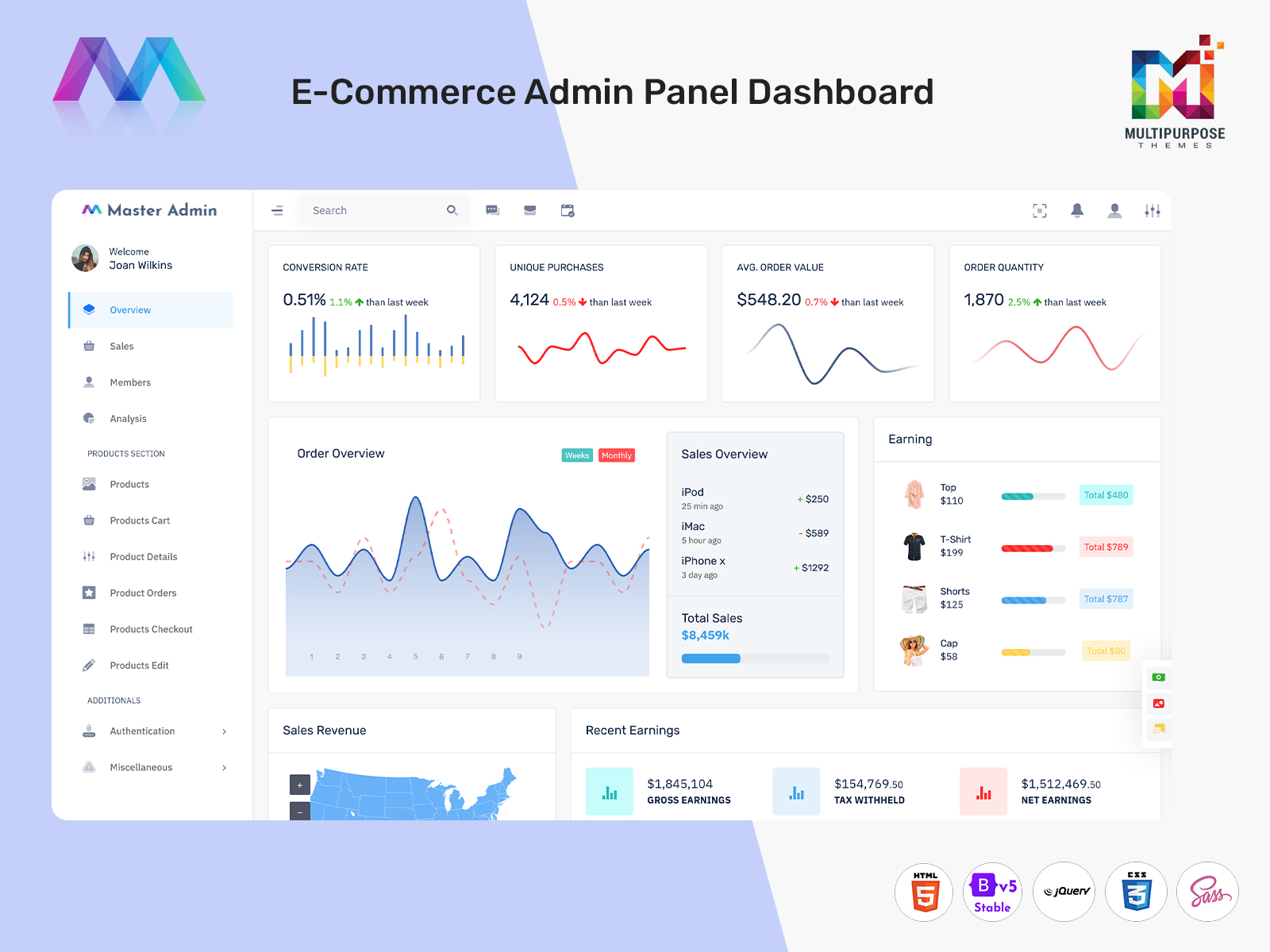
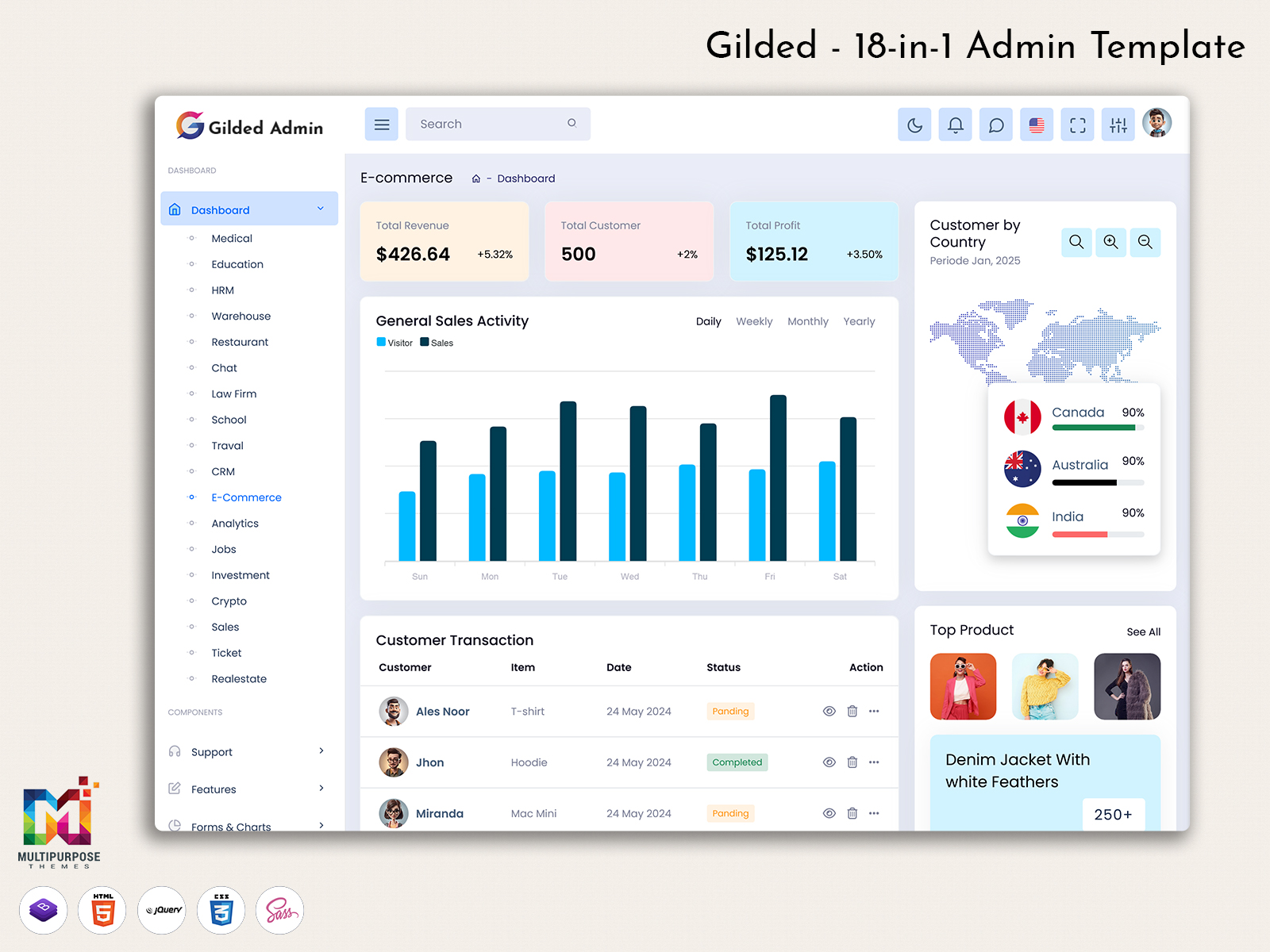
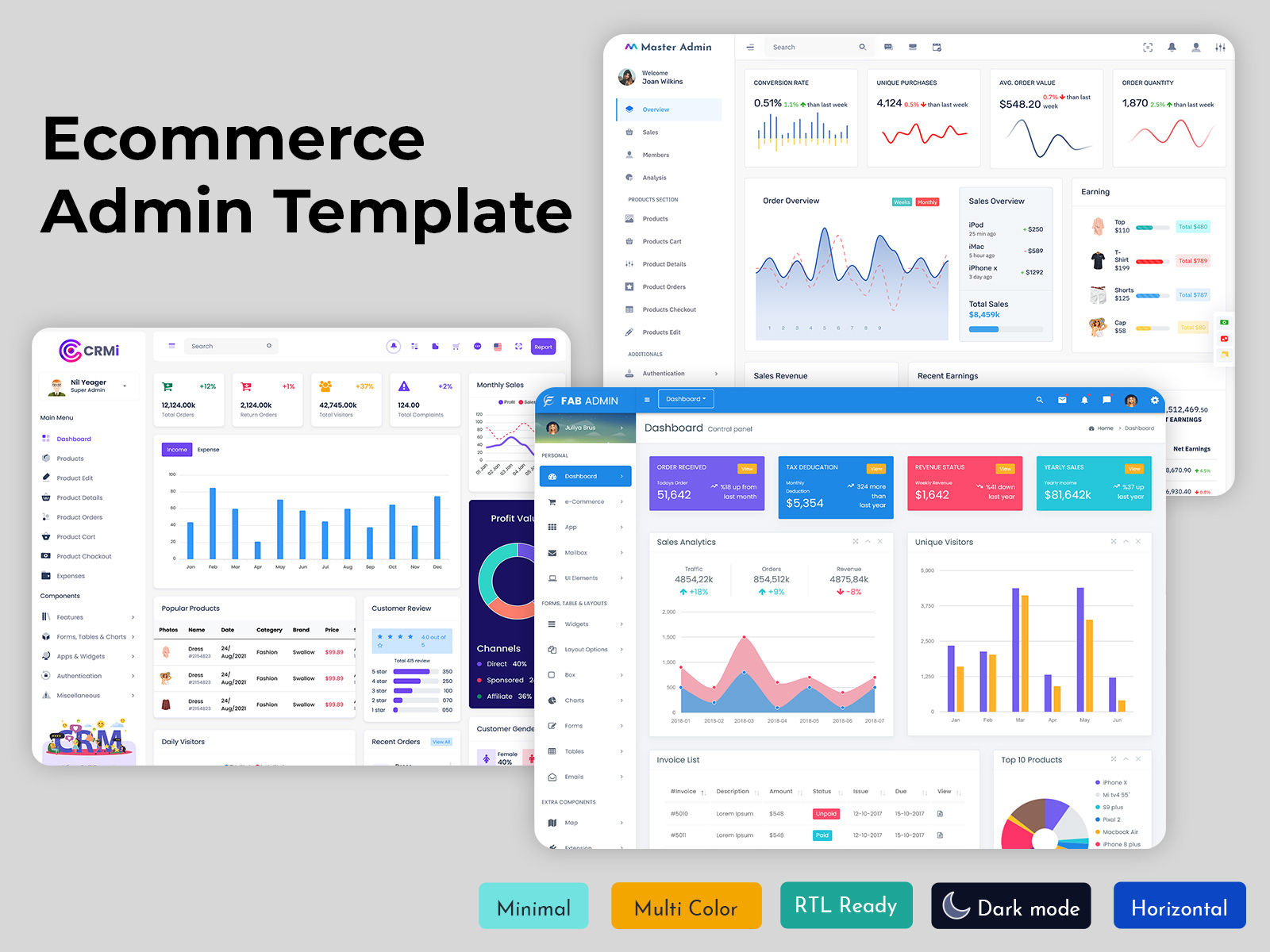
An ecommerce Admin Template plays an important role in building a smooth and organized online…

Powerful eCommerce Admin Panel for Digital Business Success
Reading Time: 6 minutes
The eCommerce industry is expanding quickly, and businesses now rely on smart digital systems to manage their online operations in a more structured way. A powerful ecommerce Admin Dashboard helps brands bring all important activities like orders, products, customers, and sales tracking into one unified system for better control and visibility.
Watch Full Video
As competition increases in the online market, companies need faster decision-making tools and real-time insights. With modern dashboard solutions, business owners can easily monitor performance and manage operations without confusion, which improves efficiency and accuracy in daily work.
Today’s digital platforms are designed to simplify complex business processes and provide a clear overview of everything in one place. This helps brands focus more on growth, customer experience, and long-term success while keeping operations smooth and well organized.
Direct-to-Consumer (D2C) Model in Modern Digital Business
The Direct-to-Consumer (D2C) Model in Modern Digital Business is a modern approach where brands sell their products directly to customers without depending on wholesalers, distributors, or retail stores. This model helps businesses build a direct connection with buyers, giving them better control over pricing, branding, and customer experience.
In today’s digital world, D2C brands rely heavily on online platforms and smart systems to manage operations efficiently. A strong eCommerce Admin Panel Features setup allows businesses to handle product listings, customer orders, and sales tracking in a centralized and organized way, improving overall business performance.
The D2C model also supports better customer insights because brands can directly analyze user behavior and purchase patterns. This helps in creating personalized marketing strategies, improving customer satisfaction, and increasing long-term brand loyalty in the competitive online market.
Role of Smart eCommerce Tools in Online Business Growth
Smart digital tools are transforming how online businesses operate by improving speed, accuracy, and overall efficiency. These systems help companies manage products, customers, and orders in a structured way, reducing manual effort and supporting better decision-making in daily operations.
Modern businesses also rely on advanced dashboards to analyze performance data and track real-time business activity. With improved visibility, brands can easily identify growth opportunities, optimize workflows, and deliver a better customer experience in a competitive online environment.
In addition, scalable digital platforms ensure smooth performance even as business demands increase. An eCommerce Bootstrap 5 Admin Dashboard provides a flexible and responsive structure that supports long-term growth while maintaining system stability and ease of use.
Core Features That Power Online Store Management
Modern online businesses depend on advanced digital systems that simplify complex operations and improve efficiency. These platforms bring together essential functions like product handling, order processing, customer management, and sales tracking into one centralized system. A strong eCommerce Admin Panel Features setup ensures that every activity is organized, accessible, and easy to control for smooth daily operations.
In addition, real-time insights and automation capabilities play a key role in improving decision-making and productivity. Businesses can quickly analyze performance data, manage inventory updates, and optimize workflows without delays. This helps reduce manual effort and supports faster growth in a highly competitive online market.
Why Admin Template is Important for D2C Brand Success
In a fast-growing digital marketplace, D2C brands need strong backend systems to manage operations smoothly and maintain direct customer relationships. A well-structured admin system helps businesses handle sales, inventory, and customer data in a more organized and efficient way. A powerful ecommerce Admin Dashboard ensures real-time visibility of business performance, helping brands make faster and smarter decisions.
Admin templates are also important because they reduce development complexity and improve workflow efficiency. Instead of building systems from scratch, businesses can use ready frameworks that support scalability, customization, and better user experience. This allows D2C brands to focus more on marketing, customer engagement, and growth while maintaining strong operational control.
Key Benefits of Modern eCommerce Business Systems
1. Improved Operational Efficiency
Modern platforms help streamline daily business tasks by centralizing product, order, and customer management. This reduces manual work and improves overall workflow speed, allowing businesses to operate more efficiently and focus on growth.
2. Better Decision-Making
With real-time insights and analytics, businesses can understand performance trends easily. This helps in making faster and more accurate decisions related to sales, marketing, and inventory planning.
3. Enhanced Accuracy and Control
Digital systems reduce human errors in order processing and data management. Businesses gain better control over operations, ensuring smooth and reliable performance across all departments.
4. Scalability for Business Growth
As demand increases, modern platforms can easily scale without affecting performance. This allows businesses to expand operations smoothly while maintaining stability and consistency.
5. Improved Customer Experience
Faster processing, accurate updates, and better service management lead to higher customer satisfaction. This strengthens trust and helps build long-term customer relationships.
How Admin Template Helps D2C Brands
A D2C brand needs complete control over its online operations to deliver a smooth and direct customer experience. An admin template helps centralize important functions like product management, order processing, and customer tracking into one system. A well-structured eCommerce Bootstrap 5 Admin Dashboard improves visibility and makes daily business operations more organized and efficient.
It also supports faster decision-making by providing real-time data and clear performance insights. Brands can easily analyze sales trends, monitor inventory levels, and understand customer behavior without switching between multiple tools. This improves accuracy and helps businesses respond quickly to market changes.
In addition, admin templates reduce operational complexity by automating repetitive tasks and improving workflow efficiency. This allows D2C brands to focus more on growth strategies, customer engagement, and branding while maintaining smooth backend operations and scalability.
Guide to Picking the Right Digital eCommerce Dashboard Solution
Choosing the right digital platform is an important step for any online business that wants better control over operations and improved performance. A well-planned system should support key functions like product management, order tracking, customer handling, and business analytics in a simple and organized way. A strong eCommerce Bootstrap 5 Admin Dashboard helps businesses manage everything from one central interface with improved speed and clarity.
Another important factor is usability and flexibility. The dashboard should be easy to navigate, responsive across devices, and designed to support smooth daily operations without complexity. This ensures that teams can quickly access data and manage tasks without delays, improving overall productivity.
Scalability and performance are also crucial when selecting a solution. As the business grows, the system should handle increasing data and traffic without affecting efficiency. A reliable dashboard ensures long-term stability while supporting expansion and consistent business growth.
Where eCommerce Dashboards Are Used in Real Business Operations
eCommerce dashboards are widely used across multiple industries to manage digital sales, track performance, and improve operational efficiency. These systems help businesses centralize data, monitor activity in real time, and make faster decisions. A well-structured Ecommerce Website Template supports different industries by providing flexible tools for managing online operations smoothly.
1. Retail & Fashion Industry
In retail and fashion businesses, dashboards are used to manage product catalogs, seasonal collections, inventory levels, and customer orders. They help brands track sales performance and understand customer preferences to improve marketing strategies and product planning.
2. Electronics & Consumer Goods Industry
This industry uses dashboards to handle large inventories, multiple product categories, and fast-moving stock. Businesses can monitor product demand, manage supply chains, and track order fulfillment more efficiently.
3. Grocery & FMCG Industry
In grocery and fast-moving consumer goods, dashboards help manage high-volume transactions, stock replenishment, and delivery tracking. Real-time updates ensure products are always available and supply chains remain efficient.
4. Healthcare & Pharmacy Industry
Pharmacy and healthcare eCommerce platforms use dashboards to manage medicine listings, prescription orders, and delivery tracking. They also help maintain compliance and ensure accurate order handling for sensitive products.
5. Electronics Marketplaces & Multi-Vendor Platforms
Large online marketplaces use dashboards to manage multiple sellers, track commissions, monitor product listings, and analyze platform-wide performance. This ensures smooth coordination between vendors and administrators.
Conclusion
eCommerce dashboards have become an essential part of modern digital businesses by simplifying operations and bringing everything into one centralized system. They help manage sales, inventory, customers, and performance tracking in a more organized and efficient way. A flexible eCommerce Bootstrap Ui Kit supports businesses in building scalable and user-friendly systems that improve overall workflow and control.
Across different industries like retail, fashion, electronics, FMCG, healthcare, and online marketplaces, these dashboards play a key role in improving productivity and decision-making. By providing real-time insights and reducing manual work, they help businesses grow faster, operate smoothly, and deliver a better customer experience in the competitive online market.
FAQs
1. What is an eCommerce dashboard used for?
An eCommerce dashboard is used to manage online store operations like orders, products, customers, and sales performance from a single centralized system.
2. Which industries use eCommerce dashboards the most?
Industries like retail, fashion, electronics, FMCG, healthcare, and online marketplaces widely use dashboards for managing digital operations.
3. How does an eCommerce dashboard help businesses?
It improves decision-making, reduces manual work, and provides real-time insights into sales, inventory, and customer behavior.
4. Can small businesses use eCommerce dashboards?
Yes, small businesses can use them to simplify operations, track performance, and scale their online presence efficiently.
5. Are eCommerce dashboards customizable?
Most modern dashboards are highly customizable, allowing businesses to adjust features based on their specific needs.

Related Posts