

A Crypto Data Dashboard can provide a structured environment where users can examine digital asset…
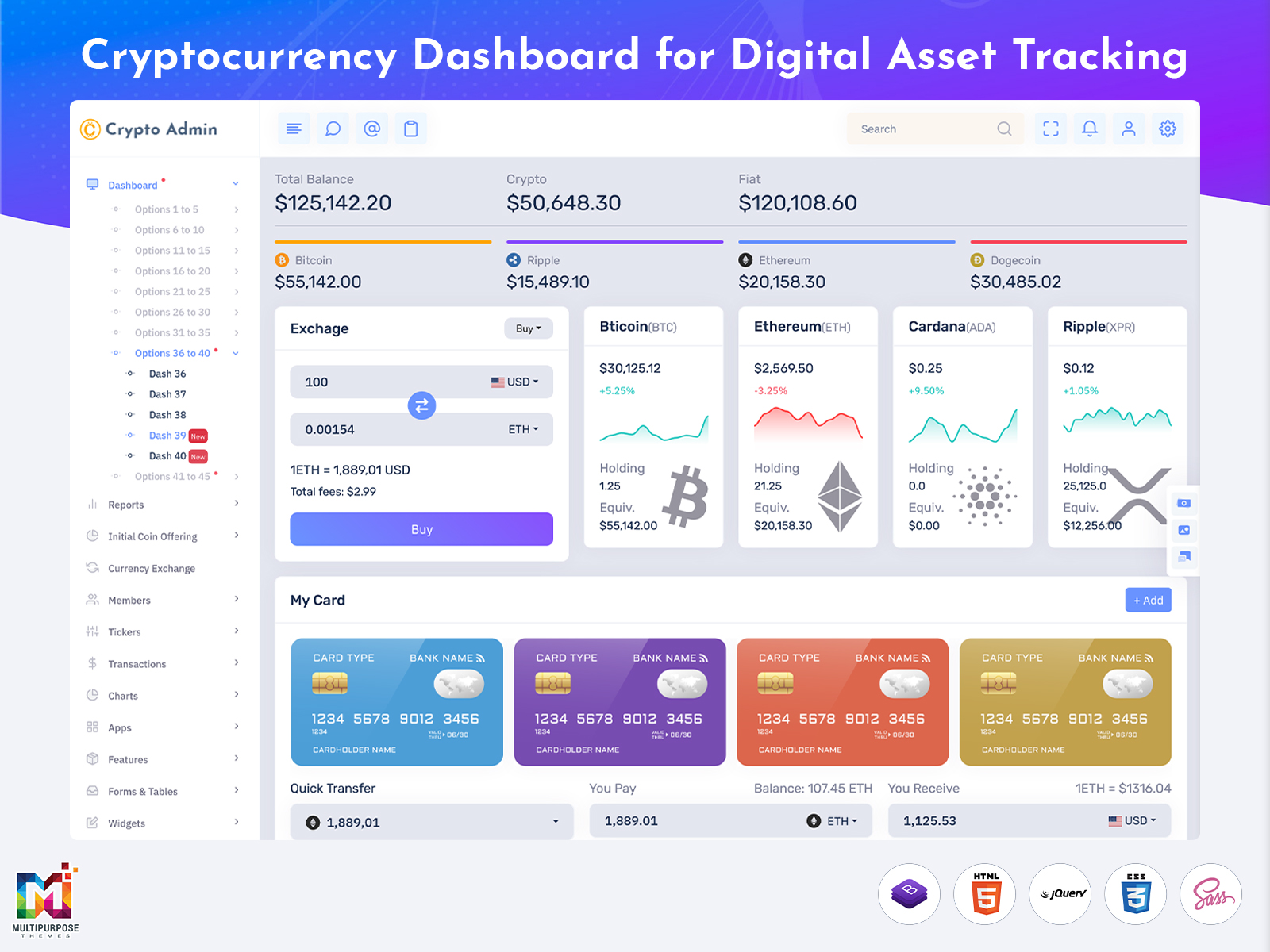
Crypto Dashboard: Cryptocurrency Management and Admin
Reading Time: 10 minutes
Cryptocurrency platforms have various sorts of information to deal with, including the records of assets, the accounts of users, transaction records, and tasks to perform for the platform. As the quantity of users and transactions increases, it might become increasingly difficult to juggle this information on separate screens. Having a Crypto Dashboard makes it possible to create a single space where this information may be gathered and managed.
Watch Full Video
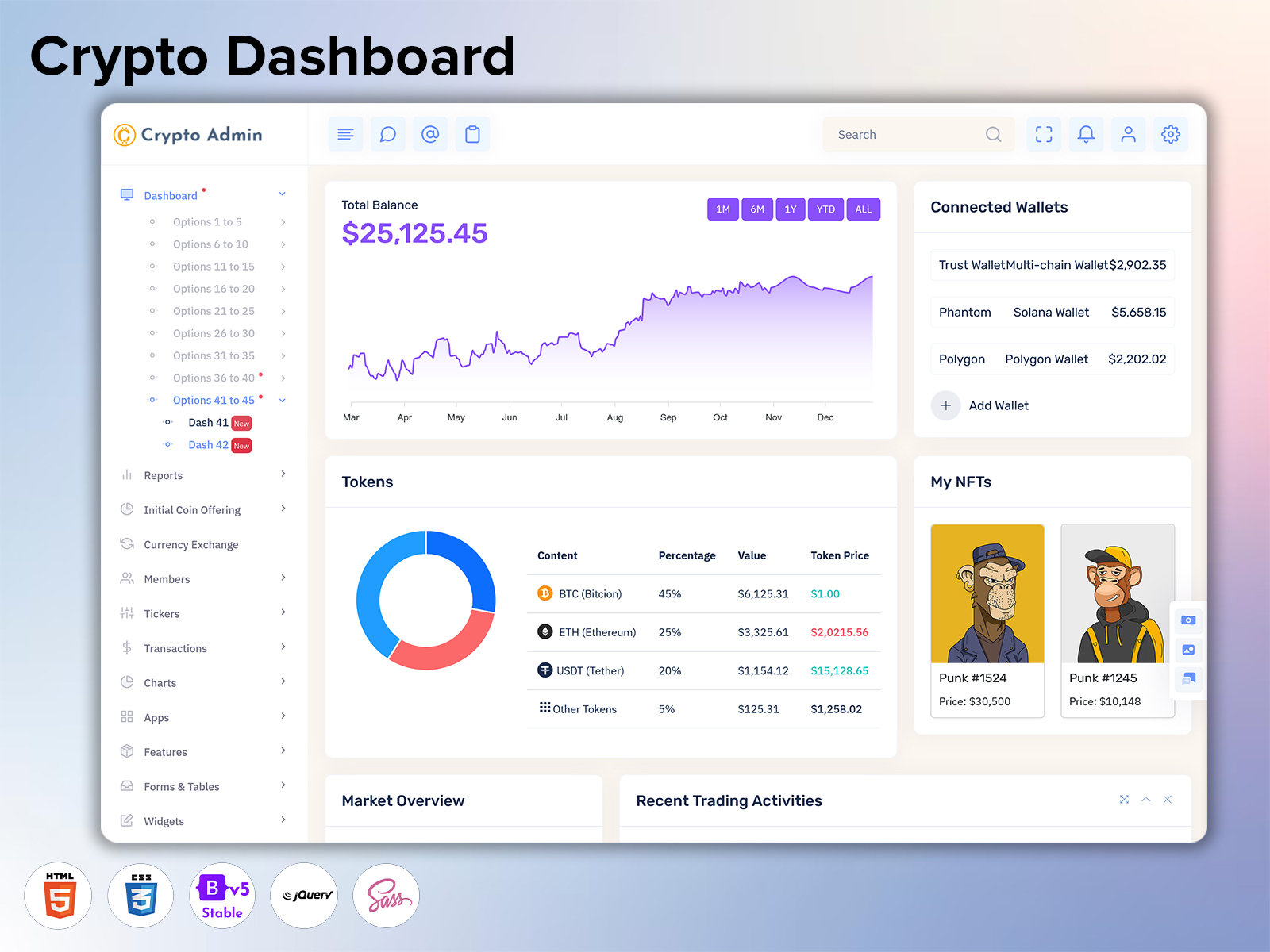
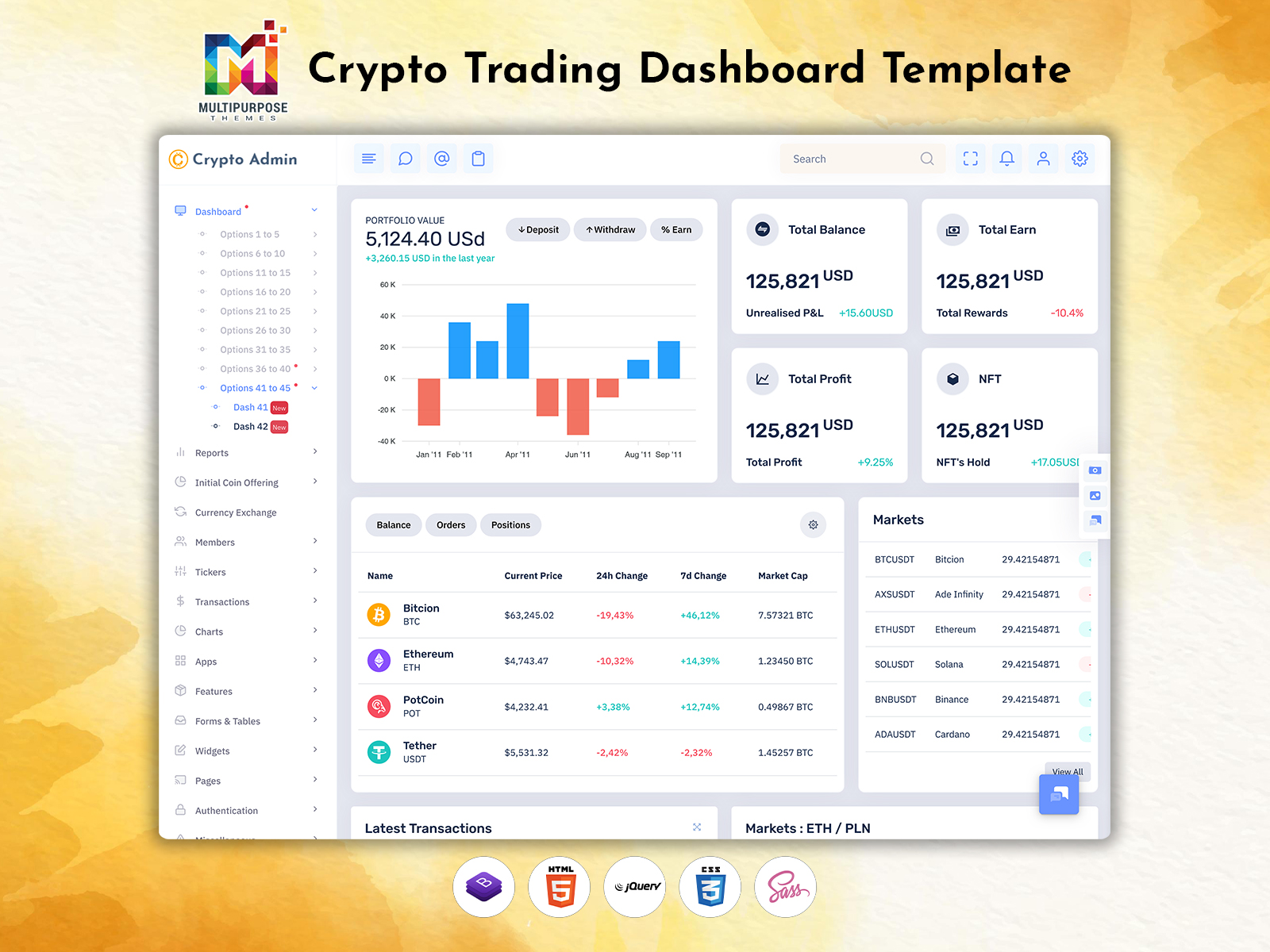
The Crypto Dashboard is not intended to be a place where cryptocurrency prices and market information are shown. In addition to providing an overview of the activities and data associated with a cryptocurrency platform, a dashboard can assist with obligations, users’ management, record management, monitoring of activities, and other tasks. The location of data and the relationship between them must be established in the Crypto Dashboard. If someone is developing a crypto website, exchange, wallet application, or digital asset platform, an Ethereum Dashboard Template or Bitcoin Dashboard Template could be utilized to present an initial design for the project. Developers may concentrate on the primary logic of their application while using a ready-made dashboard template.
What Is a Crypto Dashboard?
A Crypto Dashboard is a set of controls and displays that allow managing the information connected with cryptocurrency platforms. It may have several parts for the records of assets, users, transactions, activities, reports, and other tasks. The parts and controls of a Crypto Dashboard depend on the particular objectives of the application and its further development.
A Cryptocurrency Dashboard could be utilized for a trading platform or crypto wallet application, blockchain-related software, investment interface, or internal management system. In each case, the application has different goals, meaning that a Crypto Dashboard should be organized around the information that will be used.
For instance, for an administrator, a dashboard is a tool to view and manage user data and activities, while a trading platform user would be more concerned about their account and transaction records. A dashboard designed for a developer of a blockchain application would require more data structuring than a dashboard for a crypto portfolio management system.
A Crypto Admin interface represents the aspect of the application where operators can observe and control the activities of participants or perform their tasks. In this way, a Crypto Dashboard becomes a helpful tool for organizing and analyzing information as well as switching between various tasks in one interface.
An Ethereum Dashboard Template could be adapted to fit the needs of crypto-related applications that require synchronization with Ethereum services, token projects, and other digital assets. Similarly, a Bitcoin Dashboard Template could be considered as a basis for a Bitcoin-related platform. However, in both cases, the choice of the template depends on the tasks of the application. The template itself does not possess the required functionality for working with blockchain data — it has to be added by developers.
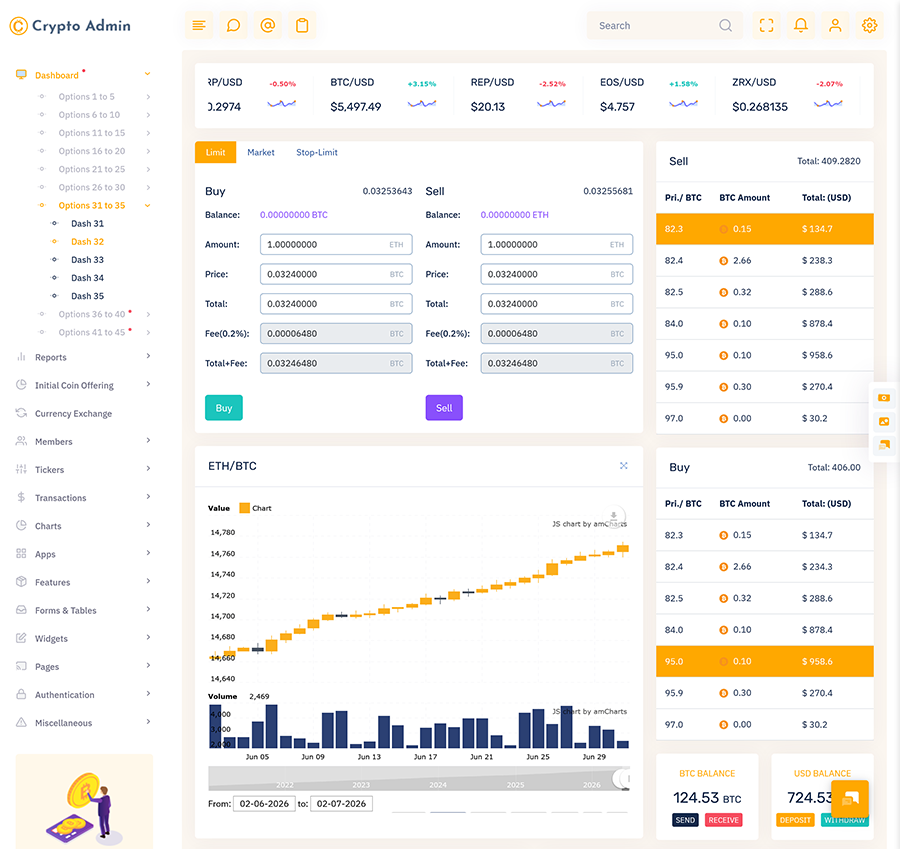
A Crypto Dashboard should also have an overview of data apart from the detailed data. In this way, one part of a Crypto Dashboard should provide a brief summary for the current session, while the other parts should have more statistics or data. Detailed data should also be available in the separate pages linked to the dashboard.
I think the main objective of a Crypto Dashboard is to create an interface where users can perform their tasks conveniently. A Crypto Dashboard also helps to bring the required data and allows users to switch between different parts of the application.
VIEW DEMO BUY NOW
Organizing Crypto Platform Information in a Practical Way
Cryptocurrency applications usually have a variety of data to track and manage. For instance, user data can be related to their accounts, digital assets or balances, transactions, activities, and other fields. Users also have different objectives when utilizing cryptocurrency platforms, such as making transactions, converting money, investing in assets, and performing other tasks. In this way, one user account might have multiple records and data to review and manage.
A structured Crypto Dashboard makes it hard to keep track of the information. I find that a clear Crypto Dashboard can bring the information together by putting the data in the same block or, by making it easy to switch between them.
For example, an administrator might need to review the data of a user account, while a platform manager should be able to review a specific area of their data without having to go through all the details. A Crypto Dashboard would make this process easier by arranging the data into blocks and providing navigation controls between them.
Additionally, a well-structured Crypto Dashboard would separate the data that a user might need to review in different capacities. For instance, apart from the data needed for the users, a dashboard should also have separate blocks for internal management activities. In this way, the dashboard would provide an interface where a user can perform their duties without having to navigate through irrelevant data.
A dashboard should also provide a layout that would allow adding new controls and displays without disrupting the current page. In this way, a user should be able to add a new section for displaying reports or statistics without requiring an update of the whole interface.
A Crypto Dashboard is a helpful tool for organizing information and managing tasks in one interface. Users can switch between the different parts of a dashboard and get an idea of the overall situation without having to review each record. A dashboard also makes it possible to review the details of a particular record separately.
Features of a Crypto Dashboard
1. Digital Assets Information
A dashboard may have a section for reviewing the information about the digital assets available on the platform. The section might include the records about the cryptocurrency or token name, identifiers, category, and other details.
2. User Accounts Management
A dashboard can also have a user accounts section that provides the basic data concerning the users of a platform. An administrator might need to view and edit the account information or details of a particular user.
3. Transaction Records
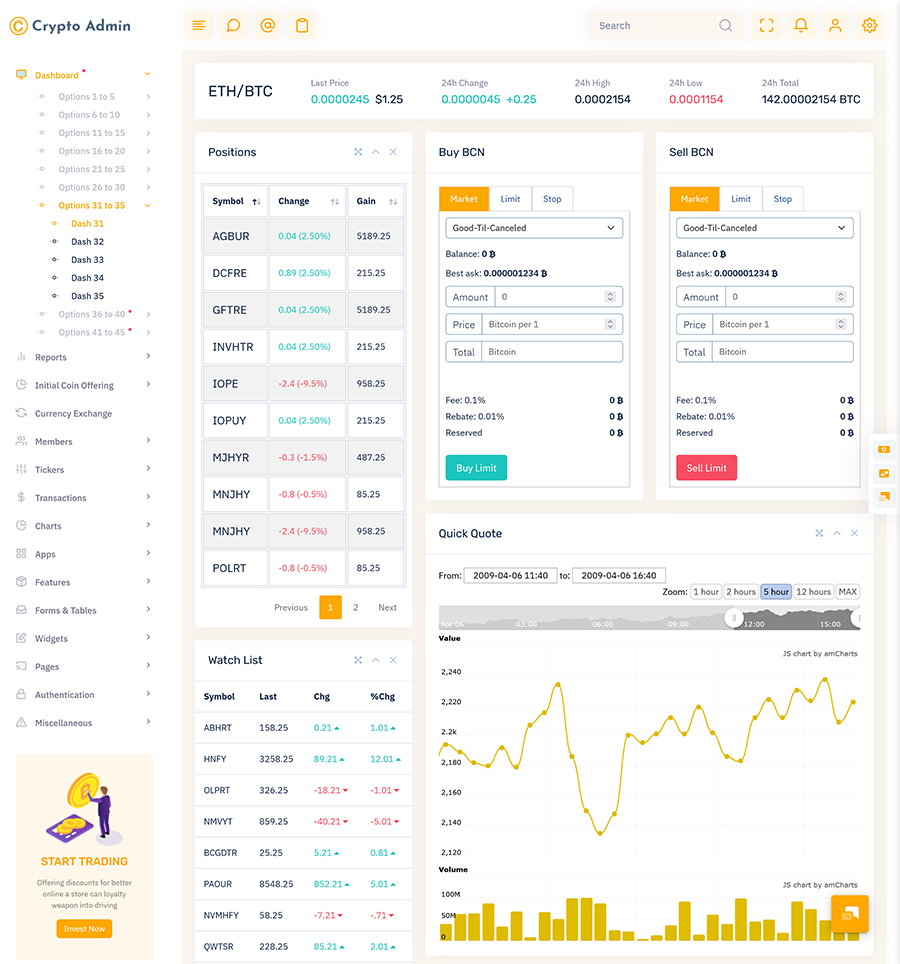
Users of crypto platforms usually perform transactions, which can be reviewed and managed by a dashboard. A Crypto Dashboard can have a section with controls to sort and review the transaction records and details.
4. Wallet Information
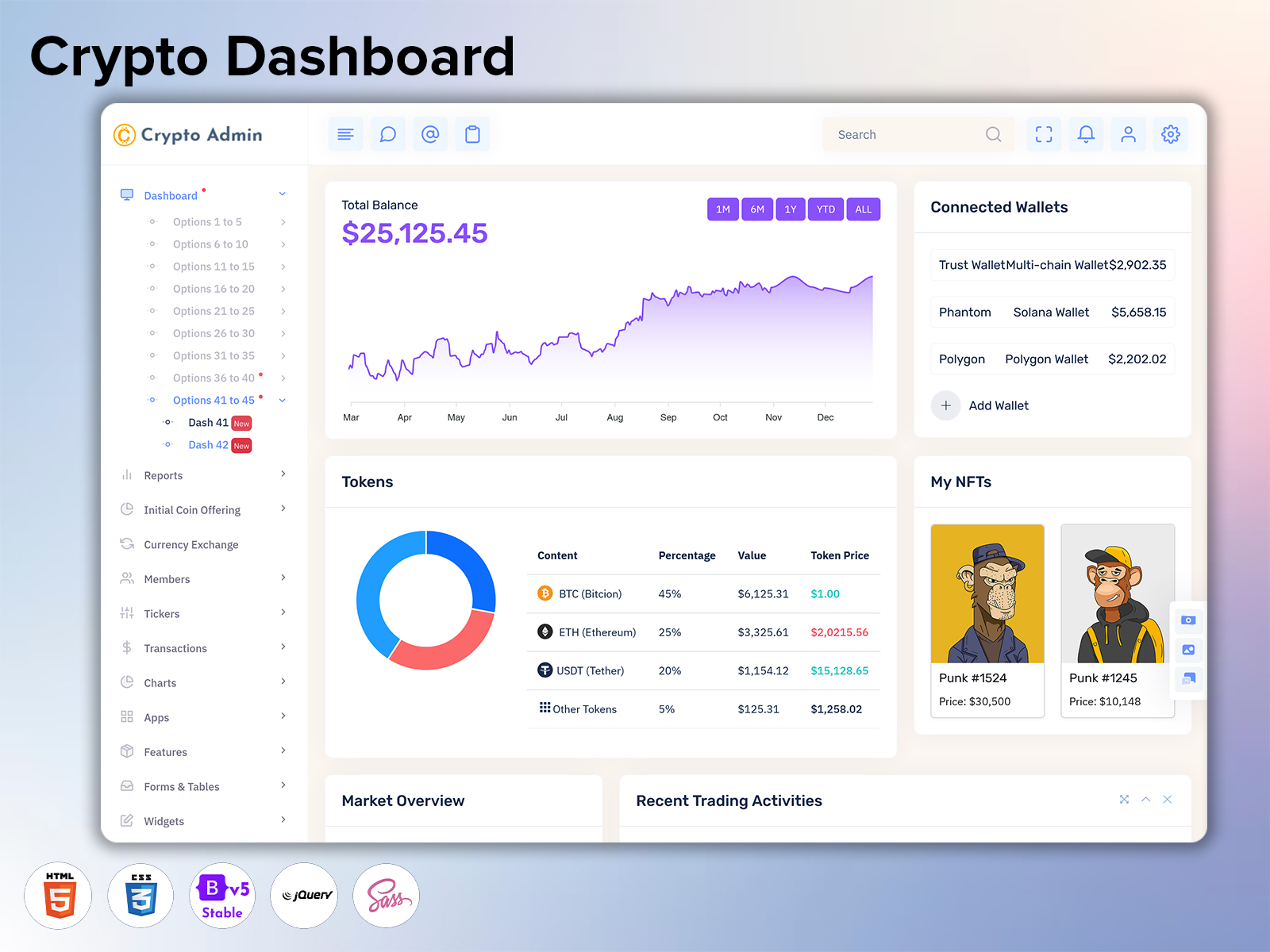
A dashboard can have a section for the information about supported wallet accounts or digital asset wallets. The section should also have proper security mechanisms since wallet data contains the data about users’ balances.
5. Activities
A dashboard can have a section for reviewing the activities of users or the operations performed in the application. The section might also have controls to sort and filter the activities.
6. Reports and Statistics
A dashboard can also have a section with reports and statistics about the data and activities performed in the application. It would be helpful if a user did not have to view each record but could see a summary of the data in a dashboard.
7. Responsive Design
A dashboard should also be responsive to different devices and operating systems. A responsive design would allow users to access the data contained in the dashboard without having to review the details or modify the interface.
VIEW DEMO BUY NOW
Designing a Crypto Dashboard for Different Platform Requirements
A crypto platform can be designed for different purposes. Some applications are focused on user accounts, some are about digital assets, and some are aimed at management and administration. A well-designed Crypto Dashboard would bring the data relevant to the application together and provide the tools for managing them. Using one uniform dashboard for all the purposes would be uncomfortable, especially if the data to be reviewed or managed differs significantly. An Ethereum Dashboard Template could be utilized for a project that requires displaying and organizing the Ethereum-related data. Depending on the application, the Ethereum Dashboard might need to have sections for records, user account data, and activity reviews or other functions. Basically, the final form of a dashboard depends on the data that the application dealing with.
A Bitcoin Dashboard Template might be utilized for a platform designed to manage Bitcoin-related data or user accounts. However, designing a dashboard would depend on the application’s requirements rather than using the same template on the basis of a cryptocurrency’s name. Similar considerations are required when designing a dashboard for multiple cryptocurrencies, such as a multi-asset crypto platform. In this case, a multi-currency dashboard would have sections for viewing different assets and switching between them.
The key aspect of designing a Crypto Dashboard is the priorities of a user. If an application requires more frequent utilization of a particular feature, it should be organized in a more accessible manner rather than hiding it behind multiple menus.
Another important consideration is the relationship between different aspects of the application. The user’s objectives, data to be reviewed, and tasks that a user has to perform should be taken into consideration when designing a dashboard. For instance, in a cryptocurrency application, there are administrators, users, and other types of operators with varying objectives and responsibilities.
In this way, a Crypto Admin dashboard should be able to separate the data relevant to each party. For instance, an administrator should not have to navigate through all users’ data, while a user may not need access to the management and analytical tools. An application’s data accuracy is another essential aspect of a dashboard. It should be possible to separate the data, which can be viewed or edited, from the data that only needs displaying or reviewing. It would be helpful if a dashboard displayed the information about the current state of data — whether it was updated or modified.
The security of the data that a dashboard displays and manages is also an essential consideration. Many cryptocurrency applications utilize accounts, which provide users with access to their data or funds. A dashboard might have to display this information or switch between data provided by different accounts.
A dashboard would typically have to store and process this data, which requires implementing proper security and access control mechanisms. While a template might provide the displays and controls for a dashboard, the security of the data would be designed and implemented by developers.
A dashboard can be utilized for organizing internal communications within the cryptocurrency platform. For instance, users might require assistance from the platform administrators, or users might need to review the requests they have made. In this way, a dashboard would provide sections for users, administrators, and support managers to manage the data and operations required for their tasks.
For developers, a Crypto Dashboard can be a helpful tool for organizing the application without having to create new interfaces. A ready-made template can provide the basic structure and components that developers could utilize or modify to fit their requirements. The main advantage of a dashboard template is the ability to structure the space on a page according to the application’s data without spending much time on the design and individual page creation.
The most useful Crypto Dashboard is not the one with more components but the one that provides the necessary information and tools. A simplified interface with a menu or navigation controls can be more useful rather than a complex arrangement of blocks and controls. On the one hand, the menu would make it possible to switch between different parts of the dashboard without having to refresh the page. On the other hand, the menu would require more space and attention, distracting a user.
Benefits of a Crypto Dashboard
A Crypto Dashboard allows gathering the relevant data into one interface, which is helpful in managing a platform. It can also be utilized to perform the required tasks more conveniently and ensure that the necessary tools are available for each page or section of the application.
- Organized Platform Information
- Easier User Management
- Clearer Data Navigation
- Flexible Project Development
- Better Administrative Coordination
- Supports Growing Applications
- Improved Information Presentation
Why Multipurpose Themes Can Be Considered for Crypto Dashboard Projects
Existing crypto templates can be utilized for developing cryptocurrency-related applications, such as an exchange, wallet, digital asset platform, or administration system. The templates can provide a front-end basis for the projects, while the back-end structure, data processing, security mechanisms, and other aspects would have to be designed and implemented by developers.
Conclusion
A Crypto Dashboard provides a convenient interface for reviewing the information related to a cryptocurrency platform. The dashboard can be utilized for user management, organization of digital assets, transaction records, and other operations.
An Ethereum Dashboard Template and Bitcoin Dashboard Template can be used as the basis for an Ethereum or Bitcoin-related cryptocurrency application. The templates could be modified to fit the requirements of the application, but the back-end processing, data integration, security mechanisms, and other aspects would have to be developed by developers.
The key consideration in dashboard design is not a large amount of data or the utilization of cryptocurrency-related controls and displays. Instead, a Crypto Dashboard should be designed in a way that would make it convenient for a user to review and utilize data without confusion.
With proper structuring and customization, a Crypto Admin dashboard can be a convenient tool for managing a cryptocurrency platform.
VIEW DEMO BUY NOW
Frequently Asked Questions (FAQs)
1. What Is a Crypto Dashboard Used For?
A Multipurpose Themes Crypto Dashboard is utilized for structuring and managing the relevant data for a cryptocurrency platform. Depending on the objectives of a platform, a Crypto Dashboard can be utilized for reviewing the user data, digital assets, transaction records, analytical reports, and other purposes.
2. Can an Ethereum Dashboard Template Be Used for a Blockchain Application?
An Ethereum Dashboard Template can be utilized for an Ethereum-related application, since it would provide the Ethereum-related data displays and controls. However, a blockchain-related application would require additional development for integrating the relevant functions.
3. Is a Bitcoin Dashboard Template Suitable for a Crypto Exchange?
A Bitcoin Multipurpose Themes Dashboard Template can be utilized for a crypto exchange, but additional development would be required for implementing the relevant features of an exchange application.
4. What Is the Role of Crypto Admin in a Cryptocurrency Platform?
Crypto admins are responsible for the management and control of a cryptocurrency platform. They perform various tasks, ranging from user management to system maintenance and security control, depending on the objectives of the application.
Crypto Admin is the interface that is utilized for managing the relevant data of a cryptocurrency platform. It typically provides the tools for user management, data review, reporting, permissions, and other tasks, depending on the application.
5. Can a Cryptocurrency Dashboard Support Multiple Digital Assets?
A Cryptocurrency Dashboard can be organized to support multiple digital assets, depending on the objectives of the application.
6. Does a Crypto Dashboard Template Include Complete Cryptocurrency Functionality?
A Multipurpose Themes Crypto Dashboard Template is a set of displays that provide a visual basis for a part of a website or application. It does not include cryptocurrency-related functionality, such as wallet applications or exchange-related features. These functions have to be programmed or integrated as separate solutions. Always review the documentation and description provided by the developer before selecting a dashboard template.
7. What Should Developers Check Before Choosing a Crypto Dashboard Template?
Developers should review the overall design and responsiveness of a dashboard, required components, degree of customization, and the functionality that would have to be programmed or integrated separately. Developers should also consider the audience that would be utilizing the dashboard, the tasks that they would be performing, and the extent to which the interface fits their objectives. Additionally, the security, integration with blockchain services, transaction processing, and other aspects would have to be reviewed before template selection.

Related Posts

This Post Has 0 Comments