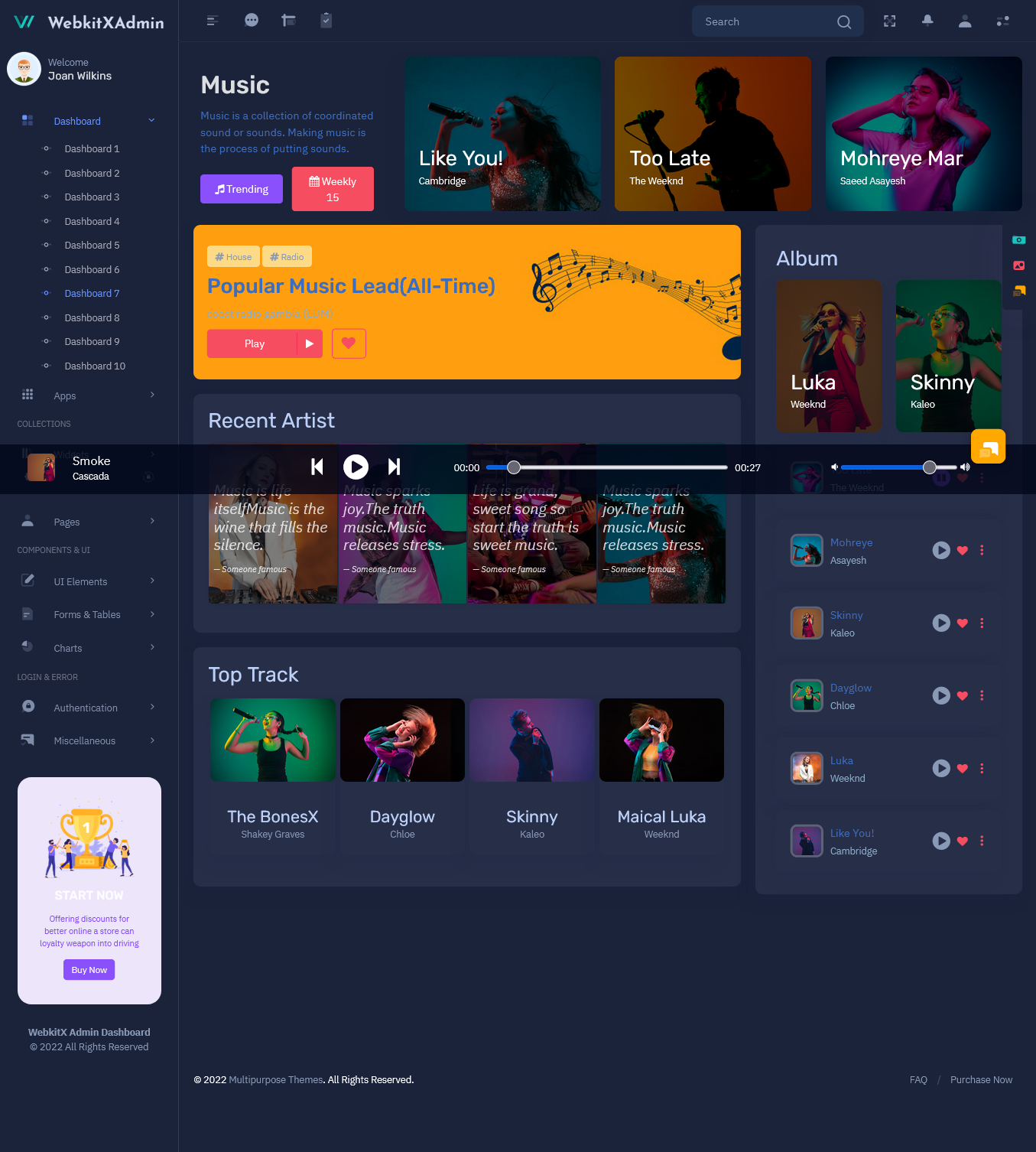
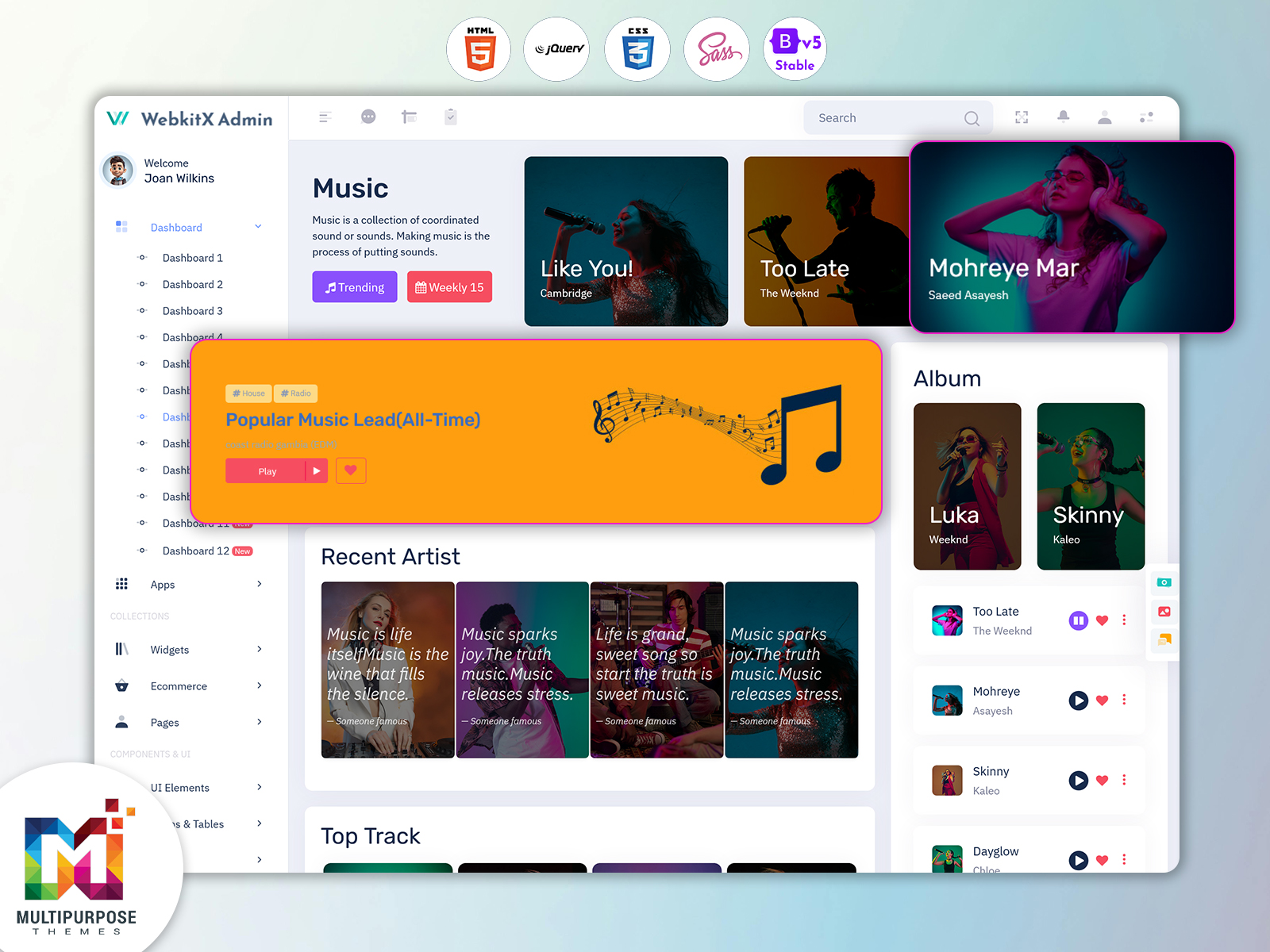
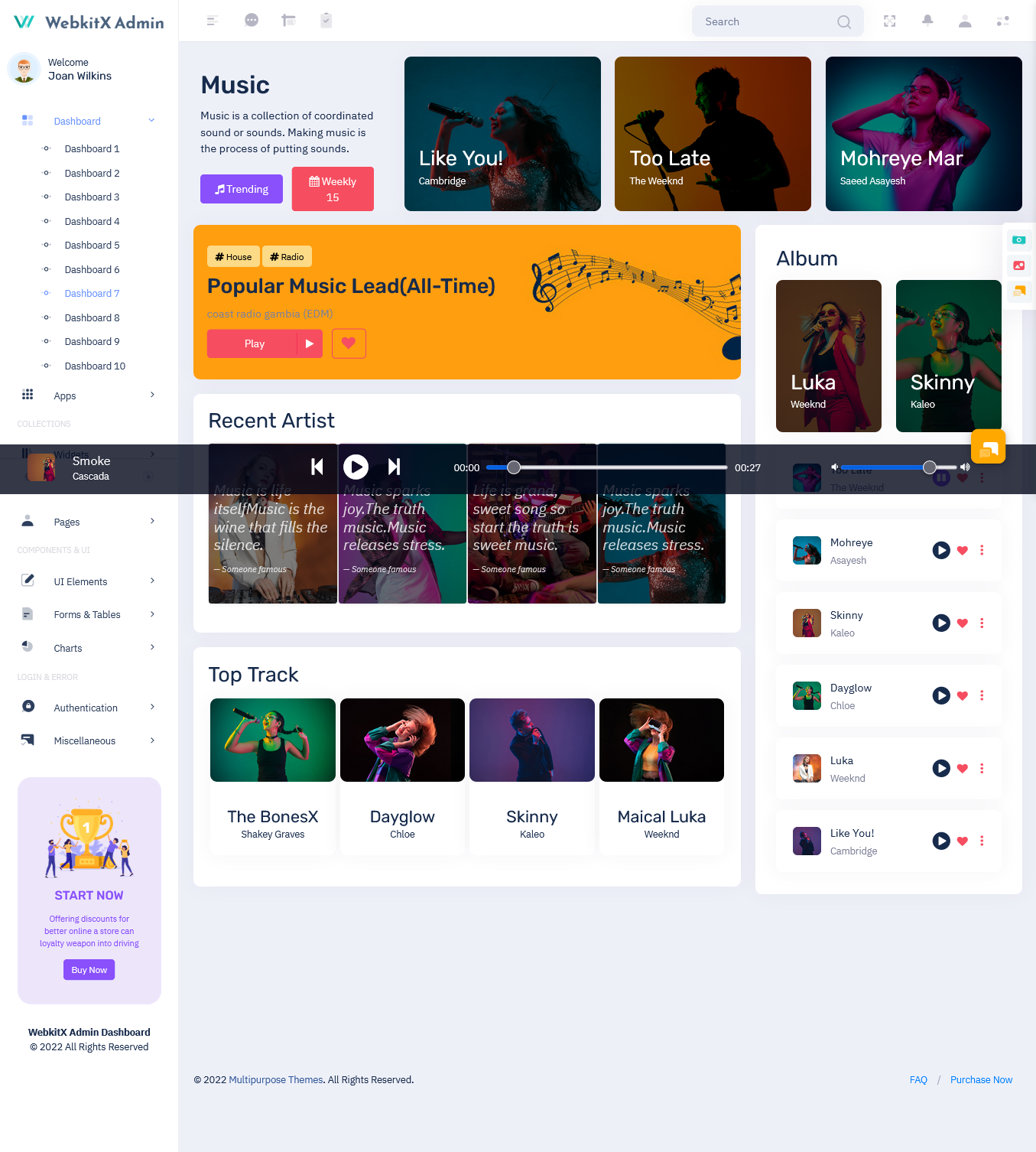
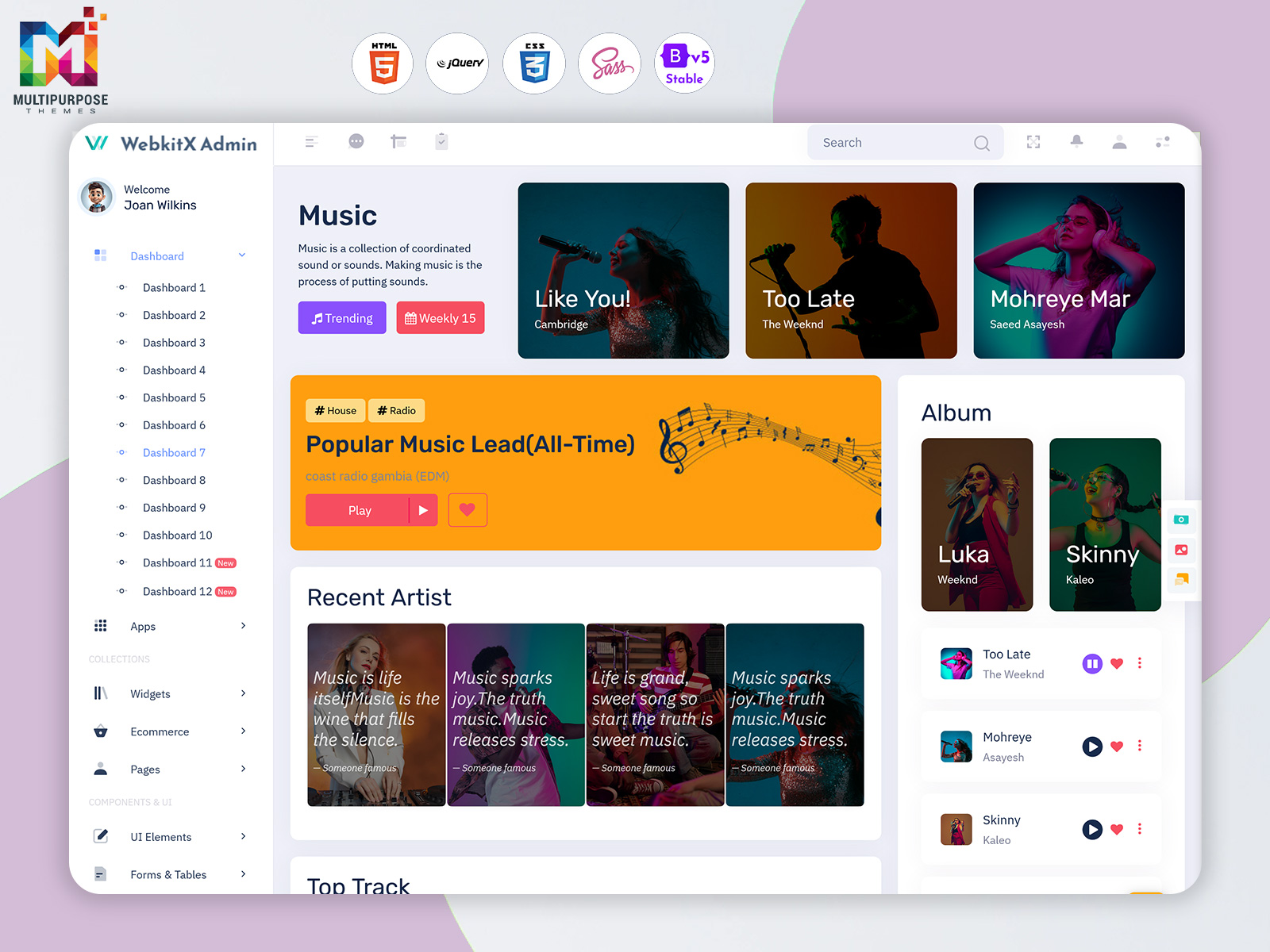
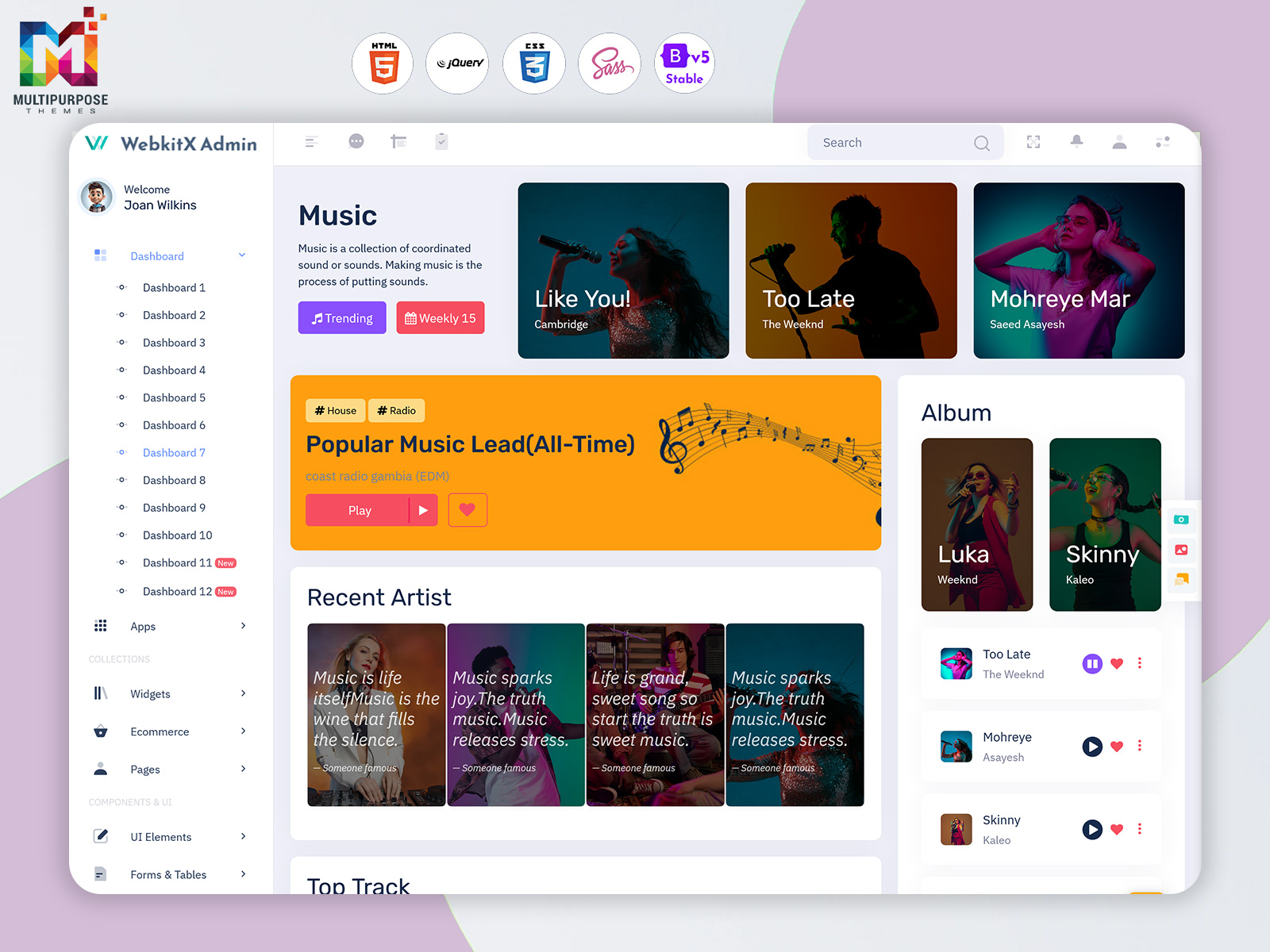
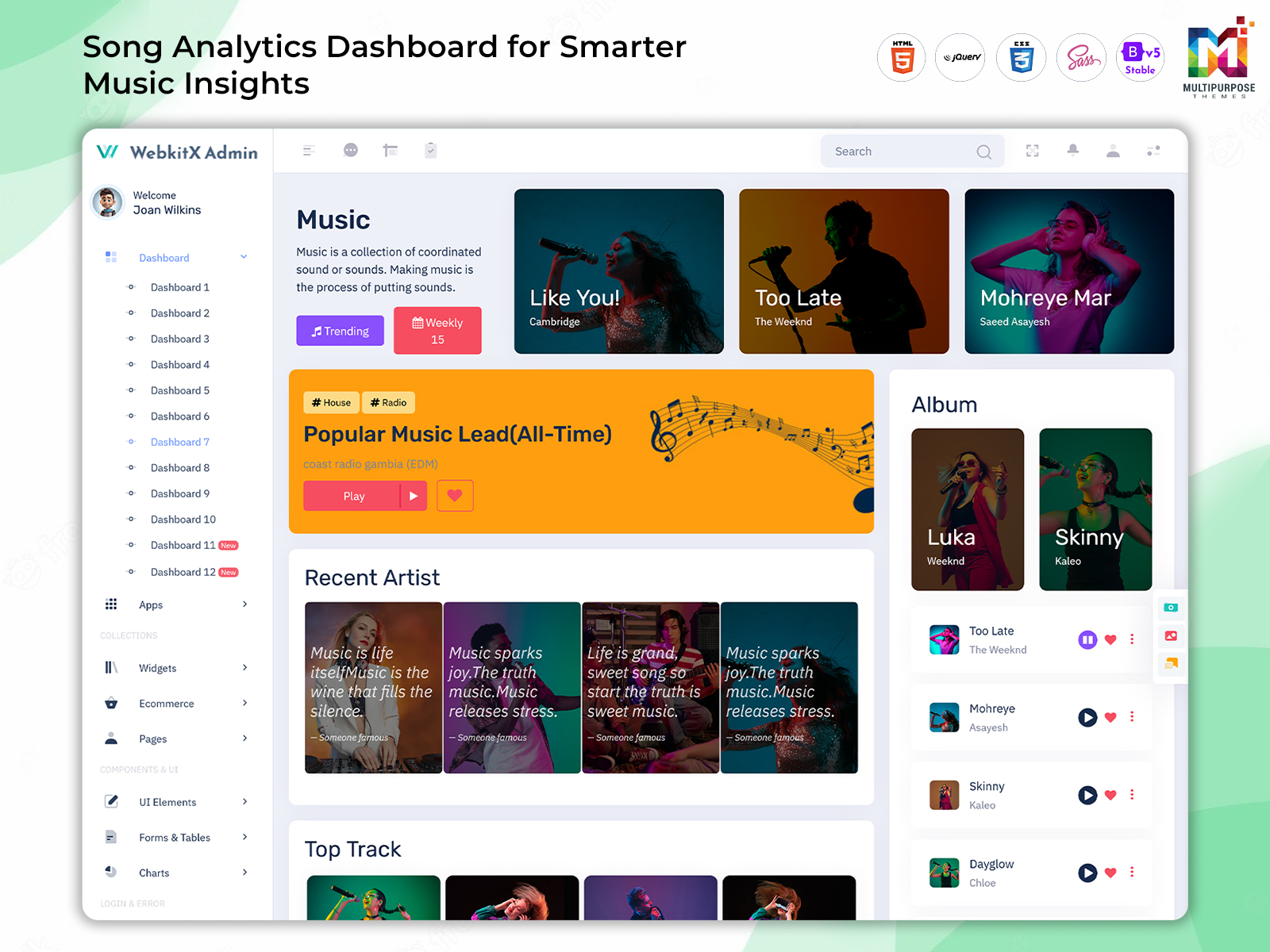
A Music Dashboardis a centralized digital interface designed to help music platforms, artists, content teams, and administrators organize different aspects of a music-based application. Instead of handling songs, artists, playlists, listeners, and platform information through separate systems, a dashboard brings relevant information together in one structured environment.
Modern music platforms involve several activities at the same time. Users may be listening to tracks, discovering new artists, creating playlists, or interacting with content, while administrators need to manage the platform behind the scenes. Without a well-organized management interface, keeping track of these activities can become complicated.
An Audio Player Dashboard can provide a focused environment for managing and presenting audio-related information. It can be designed around the way users interact with music, creating a more convenient digital experience for both listeners and platform teams.
A Music Management Dashboard serves a broader purpose by giving authorized administrators a place to organize music-related information and platform activities. Depending on the application, the dashboard can be customized around the needs of streaming services, music libraries, entertainment platforms, or independent music businesses.
For developers, a Music App Dashboard can provide the foundation for building a modern music application interface. The design can be adapted according to branding, user roles, platform requirements, and the type of music experience being developed.
An Artist Dashboard can also be part of the same ecosystem, providing artists with a dedicated environment to manage their presence and understand relevant information about their content.
The purpose of a music dashboard is not simply to display music data. It is about creating a practical interface that makes music-related management easier, clearer, and more organized.
Why is a Music Dashboard Important?
Managing a digital music platform requires more than storing audio files. Platforms may handle artists, albums, tracks, playlists, user interactions, content information, and administrative processes.
When these activities are managed separately, it becomes harder to maintain a clear picture of the platform.
A Music Dashboard creates a centralized environment where relevant information can be organized logically. This allows authorized users to access the information they need without depending on multiple disconnected interfaces.
For administrators, a Music Management Dashboard can provide a structured workspace for managing the platform. For musicians, an Artist Dashboard can create a more focused environment around their professional presence.
The dashboard can also help developers create a consistent experience across different areas of a music application. A Music App Dashboard can connect the application’s visual language and navigation patterns, making the overall product easier to understand.
A well-designed dashboard can therefore improve both usability and organization.
A Music Dashboard provides a structured digital workspace where authorized users can manage and review music-related information. Bringing different types of content into one environment can make administration more organized and reduce unnecessary movement between separate systems. The interface can be customized according to the platform’s workflow and intended audience.
2. Audio-Focused Interface
An Audio Player Dashboard can create a focused environment for presenting audio content in a clear and accessible way. Its interface can be designed around the listening experience while maintaining simple navigation. This makes the dashboard suitable for applications where audio playback is an important part of the overall product.
3. Music Content Management
A Music Management Dashboard can provide administrators with a dedicated environment for organizing music-related information. The structure can be adjusted according to the platform’s requirements, allowing teams to manage their digital music environment more consistently. This creates a practical workspace without requiring every activity to be handled through unrelated systems.
4. Artist-Focused Workspace
An Artist Dashboard can provide musicians with a dedicated digital environment within a larger music platform. Instead of mixing artist-related information with administrative controls, the interface can focus on the needs of creators. This separation can make the experience more relevant and easier for artists to understand and use.
5. Music Application Interface
A Music App Dashboard can bring together the visual and functional elements required for a modern music application. The interface can be customized around the application’s purpose, whether it is focused on streaming, music discovery, artist promotion, or digital content management. This creates a consistent environment for users and administrators.
6. Responsive User Experience
A Music Dashboard can be designed to remain usable across different supported screen sizes. This flexibility is important because users may interact with music platforms from desktops, tablets, and mobile devices. A responsive interface helps maintain consistent navigation and presentation while adapting the dashboard to different viewing environments.
7. Flexible Dashboard Structure
A Music Management Dashboard can be customized to match the workflow of a specific music platform. Different organizations have different content structures and management requirements, so flexibility is important. Developers can adjust the interface according to branding, user roles, navigation preferences, and application requirements rather than relying on one fixed design.
How a Music Dashboard Supports Modern Music Platforms
Digital music services involve multiple types of users. Listeners want a simple experience, artists need access to their professional information, and administrators require tools to manage the platform.
A single interface cannot always serve all these needs effectively.
A Music Dashboard can solve this challenge by creating separate but connected experiences for different users. The overall system can maintain a consistent design while providing different views based on user responsibilities.
An Artist Dashboard can help musicians interact with the platform without exposing unnecessary administrative controls. Similarly, a Music Management Dashboard can give administrators a broader view of platform operations.
The listening side can be supported through an Audio Player Dashboard, where the interface is centered around audio consumption and navigation.
This structure creates a more balanced digital environment. Each user receives a workspace that matches their purpose while the platform maintains a unified overall experience.
Creating a Better Audio Experience
Audio is the central part of a music application, so the interface around it should feel natural.
AnAudio Player Dashboard can be designed to make audio interaction straightforward while maintaining a clean visual structure. The interface should avoid unnecessary complexity that could distract users from the listening experience.
A well-organized audio environment can also help create stronger product identity. Music applications often rely heavily on visual presentation, so typography, spacing, navigation, and content organization all contribute to how users experience the platform.
A Music App Dashboard can connect the audio experience with the wider application. Instead of treating the player as an isolated component, developers can create an interface where audio and other platform areas work together naturally.
This creates a smoother journey for users as they move through the application.
A Music Dashboard brings relevant music-related information into a centralized environment. This can make it easier for authorized users to find and manage information without depending on several unrelated systems. A structured workspace also helps create a more consistent approach to managing a digital music platform.
2. Improves User Experience
An Audio Player Dashboard can provide a focused environment for interacting with audio content. A clean structure can make navigation more comfortable and help users stay focused on listening. This creates a better digital experience without adding unnecessary complexity to the music application.
3. Supports Artists
An Artist Dashboard gives musicians a dedicated environment that can be designed around their needs. Instead of presenting broad administrative information, the interface can remain focused on creator-related activities. This can make the platform easier for artists to understand and encourage more regular interaction with the application.
4. Simplifies Platform Administration
A Music Management Dashboard can bring administrative responsibilities into one structured workspace. This reduces the need for teams to depend on multiple interfaces and can make regular management more organized. A centralized system also provides a clearer environment for teams responsible for maintaining the music platform.
5. Creates Consistent Navigation
A well-designed Music App Dashboard can establish consistent navigation patterns across different areas of a music application. When users understand how the interface is organized, they can move between sections more comfortably. Consistency can make the product feel more professional while reducing confusion during everyday interaction.
6. Supports Platform Growth
A flexible Music Dashboard can be adapted as a music platform develops. New users, artists, content types, and workflows may require changes to the interface. A customizable dashboard gives developers room to make these adjustments without completely replacing the existing management environment.
7. Enables Role-Based Experiences
A Music Management Dashboard can be structured according to different user responsibilities. Administrators, artists, and other authorized users do not necessarily need identical interfaces. Providing relevant access for each role can make the system easier to use while keeping the overall platform organized.
Conclusion
A Music Dashboard provides a centralized environment for organizing music-related information and supporting the different users involved in a digital music platform. It can connect administration, artist management, audio interaction, and application workflows within a structured interface.
An Audio Player Dashboard can focus on creating a simple listening environment, while a Music Management Dashboard can support broader administrative responsibilities. An Artist Dashboard can provide musicians with a dedicated workspace that matches their needs.
A Music App Dashboard can bring these experiences together while maintaining a consistent visual and functional structure.
The real value of a music dashboard comes from its usability, flexibility, and ability to adapt to the platform. When designed around real user requirements, it can make music management more organized and create a better experience for both creators and listeners.
A Multi Purpose Themes Music Dashboard is used to organize and manage information associated with a digital music platform. Depending on its purpose, it can support administrators, artists, content teams, and listeners through different interfaces designed around their specific responsibilities.
2. What is an Audio Player Dashboard?
A Multi Purpose Themes Audio Player Dashboard is an interface focused on managing or presenting audio content. It can be designed around the listening experience, making it easier for users to interact with music while maintaining clear navigation and a simple visual structure.
3. Who can use an Artist Dashboard?
A Multi Purpose Themes Artist Dashboard is primarily designed for musicians, performers, and other creators who use a digital music platform. It can provide a dedicated workspace that focuses on creator-related information instead of exposing users to broader administrative controls.
4. Can a Music Management Dashboard be customized?
Yes. A Multi Purpose ThemesMusic Management Dashboard can be customized according to the requirements of a particular music platform. Developers can modify the interface, navigation, branding, user access, and overall structure so the dashboard fits the organization’s workflow and application requirements.
5. Can a Music App Dashboard support different types of users?
Yes. A Multi Purpose ThemesMusic App Dashboard can be designed with different user roles in mind. Artists, administrators, content teams, and other users can receive interfaces appropriate to their responsibilities. This approach keeps the experience more relevant and avoids presenting unnecessary information to each user.
6. Is a Music Dashboard useful for small music platforms?
Yes. A small music platform can benefit from a centralized dashboard because it creates an organized foundation from the beginning. As the platform grows, the interface can be expanded to accommodate more artists, users, content, and administrative requirements without changing the entire concept of the system.
7. Can Multi Purpose Themes be used to build a music dashboard?
Yes. Multi Purpose Themes can provide dashboard and admin template designs that developers may use as a starting point for music-related applications. The selected interface should be customized according to the application’s branding, music workflow, user roles, and technical requirements to create a suitable final product.