

What is a Medical Dashboard? A Medical Dashboard is a digital healthcare management solution that…
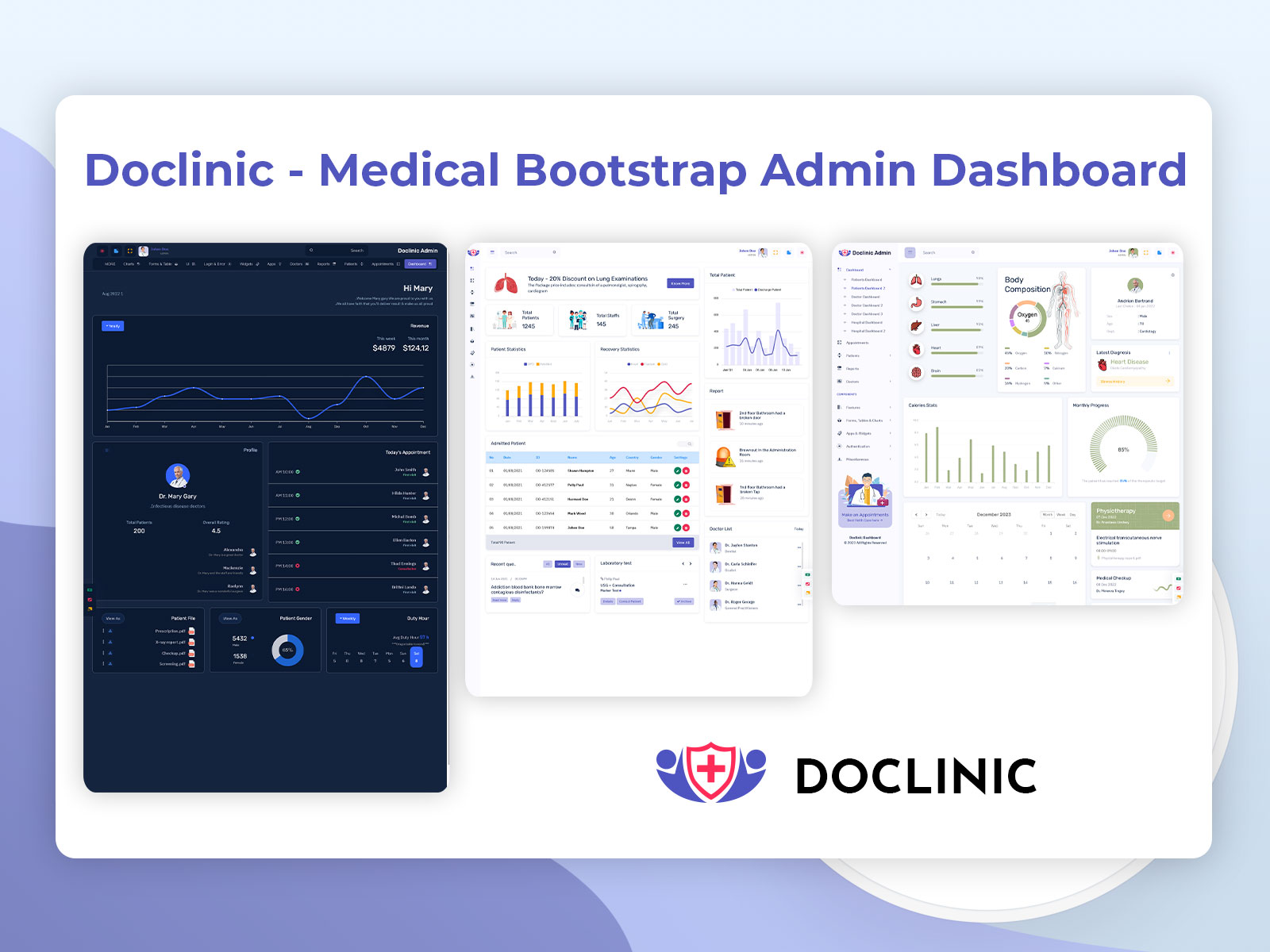
Medical Dashboard Systems Powering Modern Healthcare 2026
Reading Time: 6 minutes
The healthcare industry in 2026 is more advanced, more digital, and more data-driven than ever before. Hospitals are no longer managing records through paper files and manual registers. Today, patient information, appointment scheduling, laboratory results, billing, and treatment history are handled through smart digital systems. At the center of this digital transformation stands the Medical Dashboard.
A Medical Dashboard acts as the central control system of a hospital or healthcare organization. It connects doctors, patients, administrators, and management teams through one unified interface. Whether it is a Hospital Dashboard for administrators, a Doctor Dashboard for physicians, or a Patient Dashboard for individuals tracking their health, these systems are reshaping how healthcare works in 2026.
The growing demand for speed, accuracy, and better patient care makes a Hospital Admin Dashboard more important than ever. Healthcare providers now depend on real-time data and digital tools to deliver efficient and safe medical services.
Watch Full Video
What Is a Medical Dashboard?
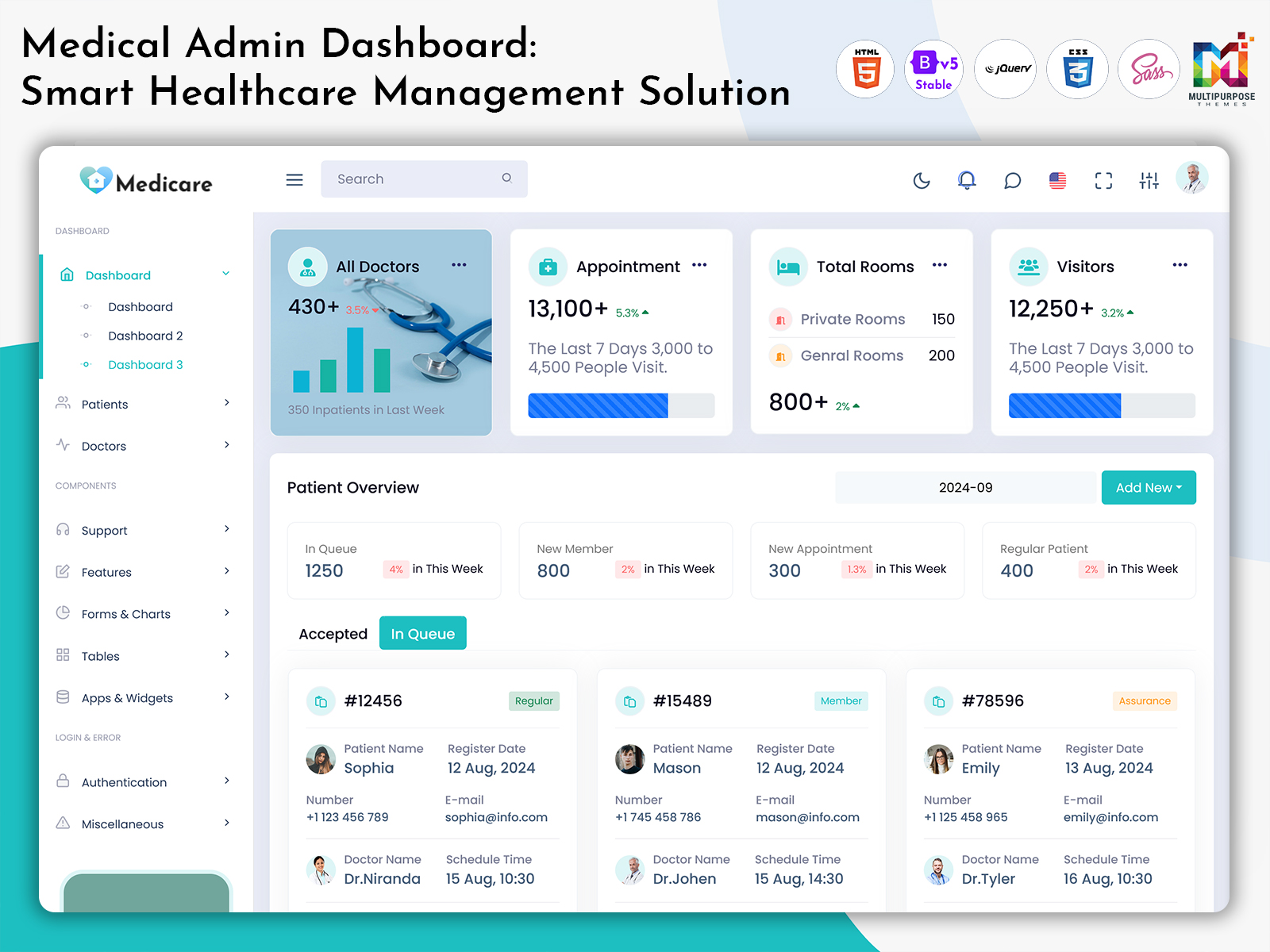
A Medical Dashboard is a digital interface that displays important healthcare data in an organized and easy-to-understand format. It collects information from different departments such as outpatient services, inpatient records, laboratories, pharmacies, and billing systems.
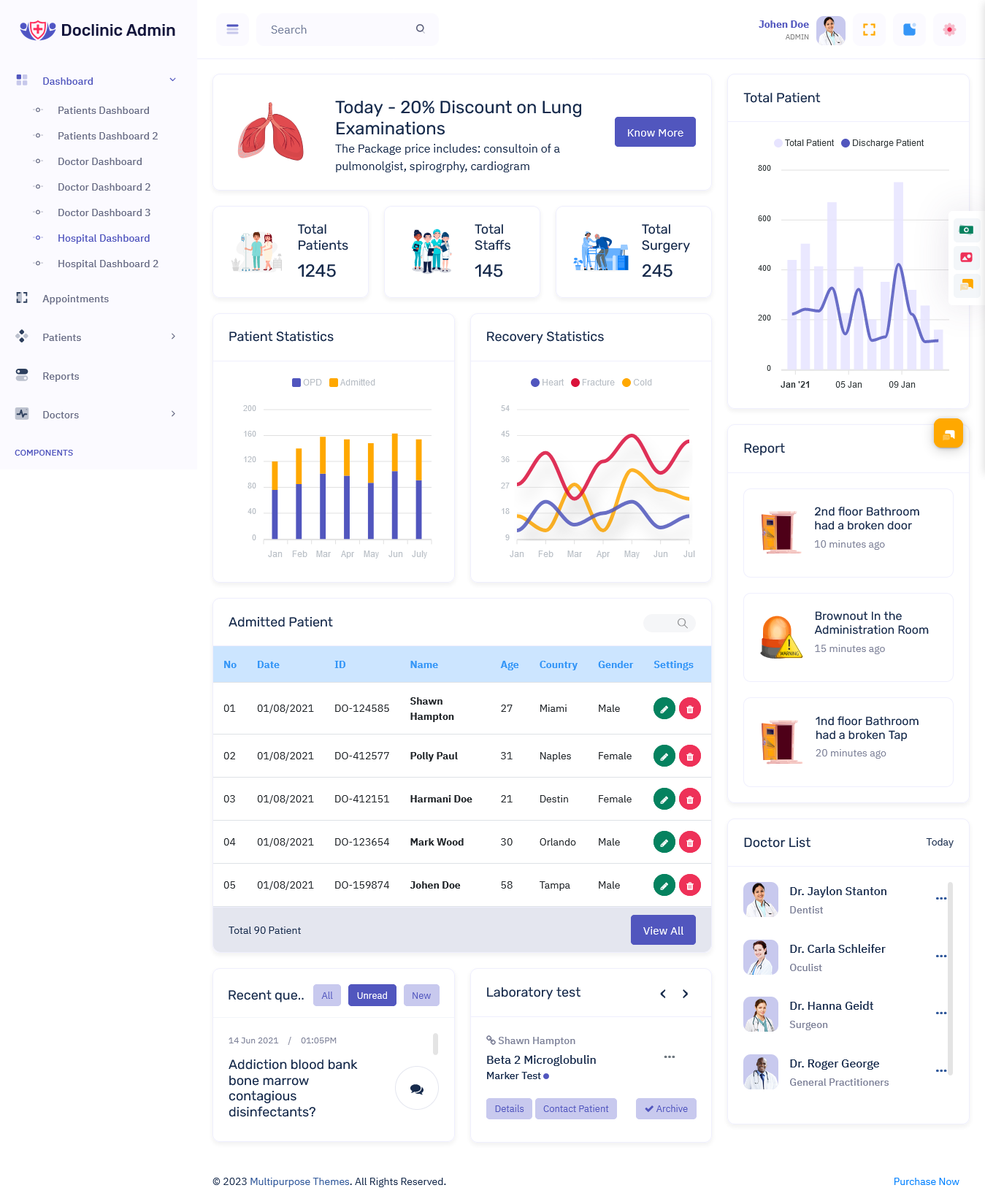
Instead of searching through multiple systems, hospital staff can access everything from one central screen. The Hospital Dashboard provides insights into bed occupancy, appointment schedules, patient admissions, emergency cases, and staff performance.
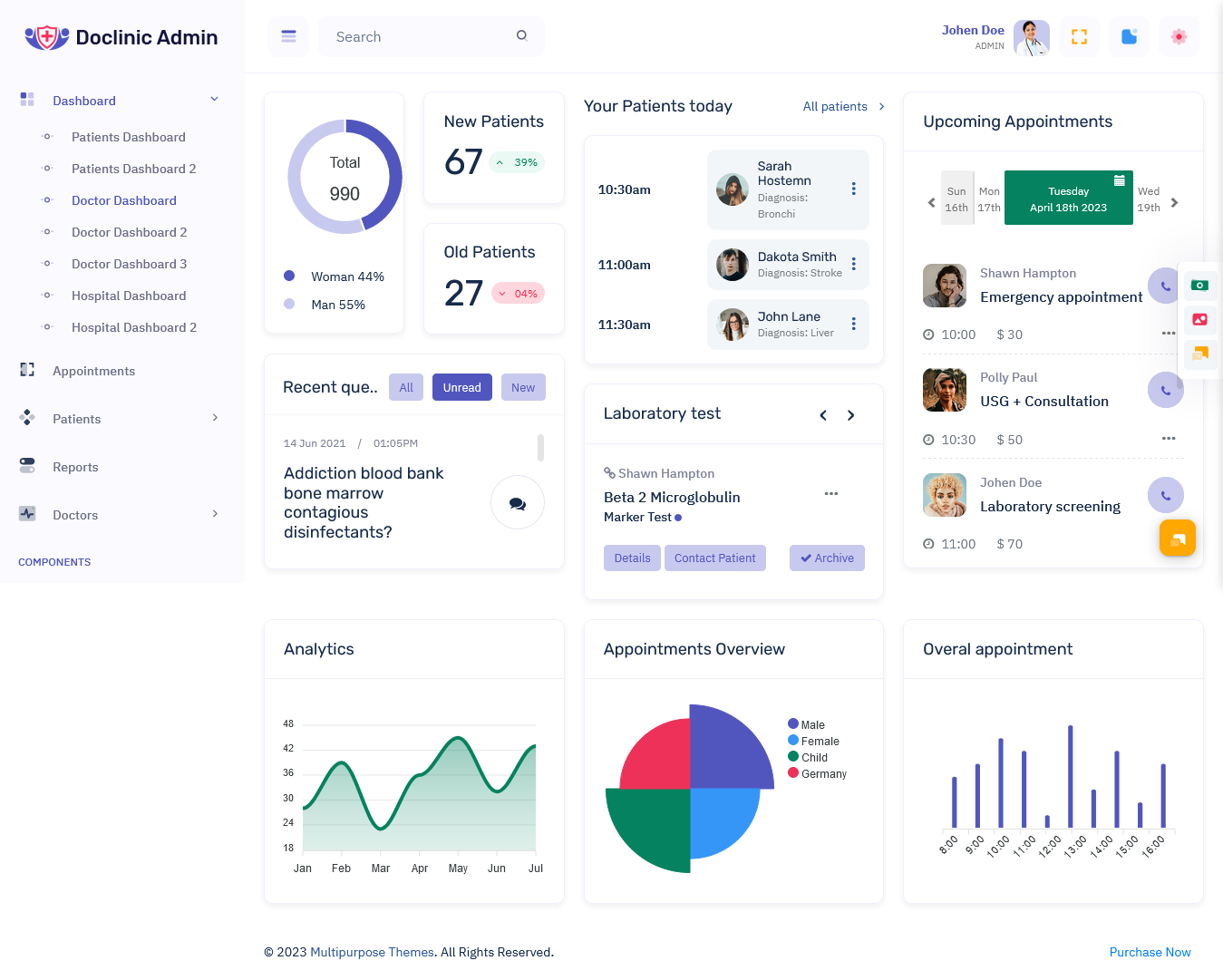
For doctors, a Doctor Dashboard offers quick access to patient medical history, lab reports, prescriptions, and treatment plans. This helps them make faster and more informed decisions.
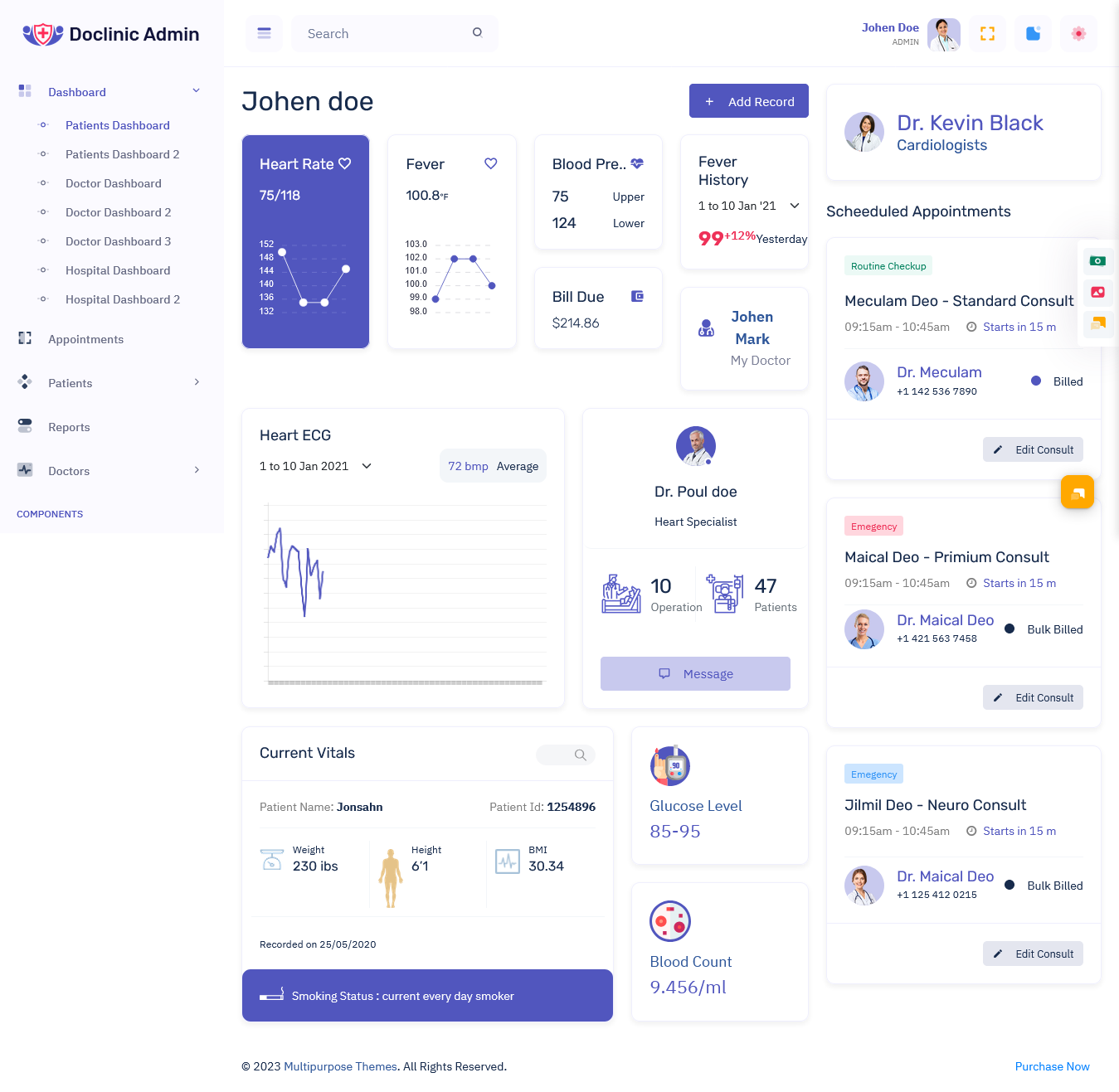
For patients, a Patient Dashboard allows them to view their medical records, appointment details, prescriptions, and payment history. In 2026, patients expect transparency and convenience, and digital dashboards make this possible.
The Hospital Admin Dashboard, on the other hand, focuses on management-level insights such as revenue tracking, resource allocation, staff management, and operational performance.
Explore Healthcare Dashboards
Patient Dashboard
BUY NOW DEMO
Doctor Dashboard
BUY NOW DEMO
Hospital Dashboard
BUY NOW DEMO
Why a Medical Dashboard Is Important in the 2026 Medical World
Healthcare in 2026 is fast-moving and highly demanding. Hospitals handle thousands of patients every day. Doctors need instant access to accurate information. Administrators must ensure smooth operations without delays. In such an environment, a Medical Dashboard becomes essential.
One major reason is real-time data access. Medical decisions often need to be made quickly. With a Hospital Dashboard, healthcare professionals can see updated patient data immediately. This reduces errors and improves patient safety.
Another reason is efficiency. Manual processes slow down hospital operations. A Doctor Dashboard helps physicians review patient data in seconds instead of minutes. This saves valuable time and allows them to focus more on patient care.
The Patient Dashboard also plays a big role in modern healthcare. In 2026, patients want to be actively involved in their treatment journey. By giving them access to their reports, prescriptions, and appointment schedules, hospitals improve patient engagement and satisfaction.
A Hospital Admin Dashboard is equally important because it helps management monitor performance metrics. From tracking daily revenue to analyzing department efficiency, administrators can make data-driven decisions that improve overall hospital performance.
The Role of Hospital Dashboard in Daily Operations
The Hospital Dashboard is like the command center of a medical institution. It provides an overview of the entire hospital’s activities. Administrators can check how many beds are available, how many surgeries are scheduled, and how many emergency cases are being handled.
In 2026, hospitals cannot afford delays or miscommunication. The Hospital Dashboard ensures smooth coordination between departments. For example, when a patient is admitted, the system automatically updates records in billing, pharmacy, and laboratory departments.
This integration reduces human errors and improves workflow efficiency. It also helps hospitals maintain compliance with healthcare regulations and standards.
The Hospital Admin Dashboard also provides performance insights such as average patient waiting time, treatment success rates, and staff productivity. These insights help hospital management improve service quality continuously.
How the Doctor Dashboard Improves Clinical Efficiency
The Doctor Dashboard is designed specifically for physicians and healthcare professionals. It provides quick access to patient details, previous diagnoses, medication history, and lab results.
In emergency situations, time is critical. A Doctor Dashboard allows doctors to retrieve patient information instantly. This helps them make accurate decisions without wasting time searching for records.
In 2026, many hospitals also integrate AI tools into the Medical Dashboard. These tools can highlight abnormal lab results, suggest possible diagnoses, and provide alerts for critical cases.
The Doctor Dashboard also helps manage appointments and follow-ups. Doctors can view their daily schedules, update prescriptions, and monitor patient recovery progress easily.
This digital support system reduces paperwork and administrative burden, allowing doctors to focus more on patient care rather than documentation.
The Growing Importance of the Patient Dashboard
Healthcare is becoming more patient-centered. In 2026, patients expect digital access to their medical information. A Patient Dashboard makes this possible.
Through the Patient Dashboard, individuals can book appointments, download medical reports, track prescriptions, and make online payments. This reduces the need to visit hospitals physically for minor administrative tasks.
Patients can also receive reminders for medication and follow-up appointments. This improves treatment adherence and overall health outcomes.
A well-designed Patient Dashboard also increases trust. When patients can see their own medical data, they feel more confident about the transparency of the healthcare provider.
In today’s digital world, convenience matters. A Medical Dashboard that includes a user-friendly Patient Dashboard improves the overall patient experience significantly.
Real-World Firms Using Medical Dashboards
Many global healthcare organizations use advanced Medical Dashboard systems to manage their digital healthcare platforms.
For example, Apollo Hospitals uses digital hospital management systems to connect doctors, patients, and administrators through centralized dashboards. Their Hospital Dashboard supports appointment management, patient records, and billing operations.
Similarly, Mayo Clinic uses advanced data-driven systems to manage patient care and hospital operations. Their internal Medical Dashboard solutions help doctors and administrators track treatment outcomes and operational performance.
Another example is Practo, which provides digital healthcare services. Their platform includes Doctor Dashboard and Patient Dashboard features that allow appointment booking, consultation management, and medical record access.
These examples show how important a Hospital Admin Dashboard is for modern healthcare organizations in 2026.
Advantages of Using a Medical Dashboard
One of the biggest advantages of a Medical Dashboard is centralized data management. All patient information, reports, and administrative details are stored in one system. This reduces confusion and improves accuracy.
Another major advantage is improved decision-making. With real-time insights from the Hospital Dashboard, administrators can identify problems quickly and take corrective action.
The Doctor Dashboard improves clinical efficiency by providing instant access to patient data. This reduces delays and enhances treatment quality.
The Patient Dashboard increases transparency and engagement. Patients feel more involved in their healthcare journey when they can access their medical records online.
Cost efficiency is another benefit. By reducing paperwork and manual processes, hospitals can lower operational expenses. Automation features in the Hospital Admin Dashboard save time and reduce administrative workload.
Security is also improved. Modern Medical Dashboard systems include secure login systems, encrypted data storage, and role-based access control to protect sensitive patient information.
Challenges and Future of Medical Dashboard Systems
While Medical Dashboard systems offer many benefits, they also come with challenges. Data security remains a top concern in 2026. Hospitals must ensure strong cybersecurity measures to protect patient information.
Another challenge is staff training. Doctors and administrative staff need proper training to use the Hospital Dashboard effectively.
Despite these challenges, the future of Medical Dashboard systems looks promising. Artificial Intelligence and predictive analytics are becoming more common. Future dashboards may predict patient admission rates, identify high-risk patients, and suggest preventive measures.
Wearable devices and remote monitoring tools are also being integrated into Patient Dashboard systems. This allows doctors to monitor patient health even outside the hospital.
As technology continues to evolve, the Hospital Admin Dashboard will become even smarter and more efficient.
Frequently Asked Questions (FAQs)
What is a Medical Dashboard?
A Medical Dashboard is a digital system that displays hospital data, patient records, and operational information in one centralized interface.
Why is a Medical Dashboard important in 2026?
In 2026, healthcare is highly digital and data-driven. A Medical Dashboard improves efficiency, accuracy, and patient care by providing real-time information.
What is a Hospital Dashboard?
A Hospital Dashboard is used by hospital management to monitor daily operations, bed availability, staff performance, and financial data.
How does a Doctor Dashboard help physicians?
A Doctor Dashboard provides quick access to patient history, lab results, prescriptions, and appointments, helping doctors make faster and better decisions.
What is a Patient Dashboard?
A Patient Dashboard allows patients to view medical records, book appointments, check prescriptions, and manage payments online.
What is a Hospital Admin Dashboard?
A Hospital Admin Dashboard focuses on management-level data such as revenue tracking, operational efficiency, and staff performance monitoring.
Conclusion
The Medical Dashboard has become an essential part of the 2026 medical world. As healthcare systems grow more complex, digital solutions are necessary to maintain efficiency and quality.
From the Hospital Dashboard to the Doctor Dashboard and Patient Dashboard, each system plays a crucial role in improving patient care and hospital operations. The Hospital Admin Dashboard ensures smooth management and data-driven decision-making.
In a world where speed, accuracy, and patient satisfaction matter more than ever, investing in a powerful Medical Dashboard is no longer optional. It is the foundation of modern healthcare success.

Related Posts



This Post Has 0 Comments