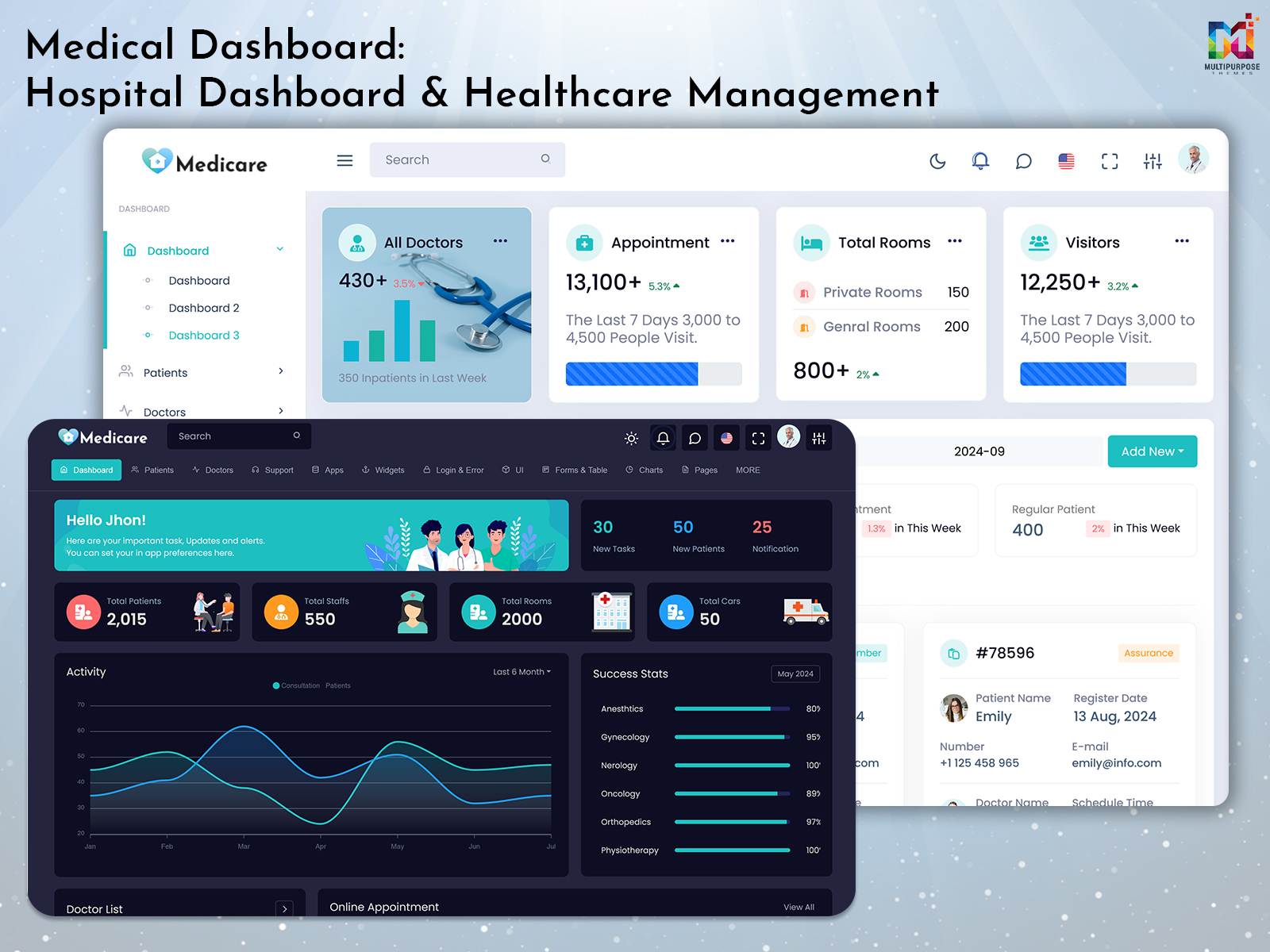
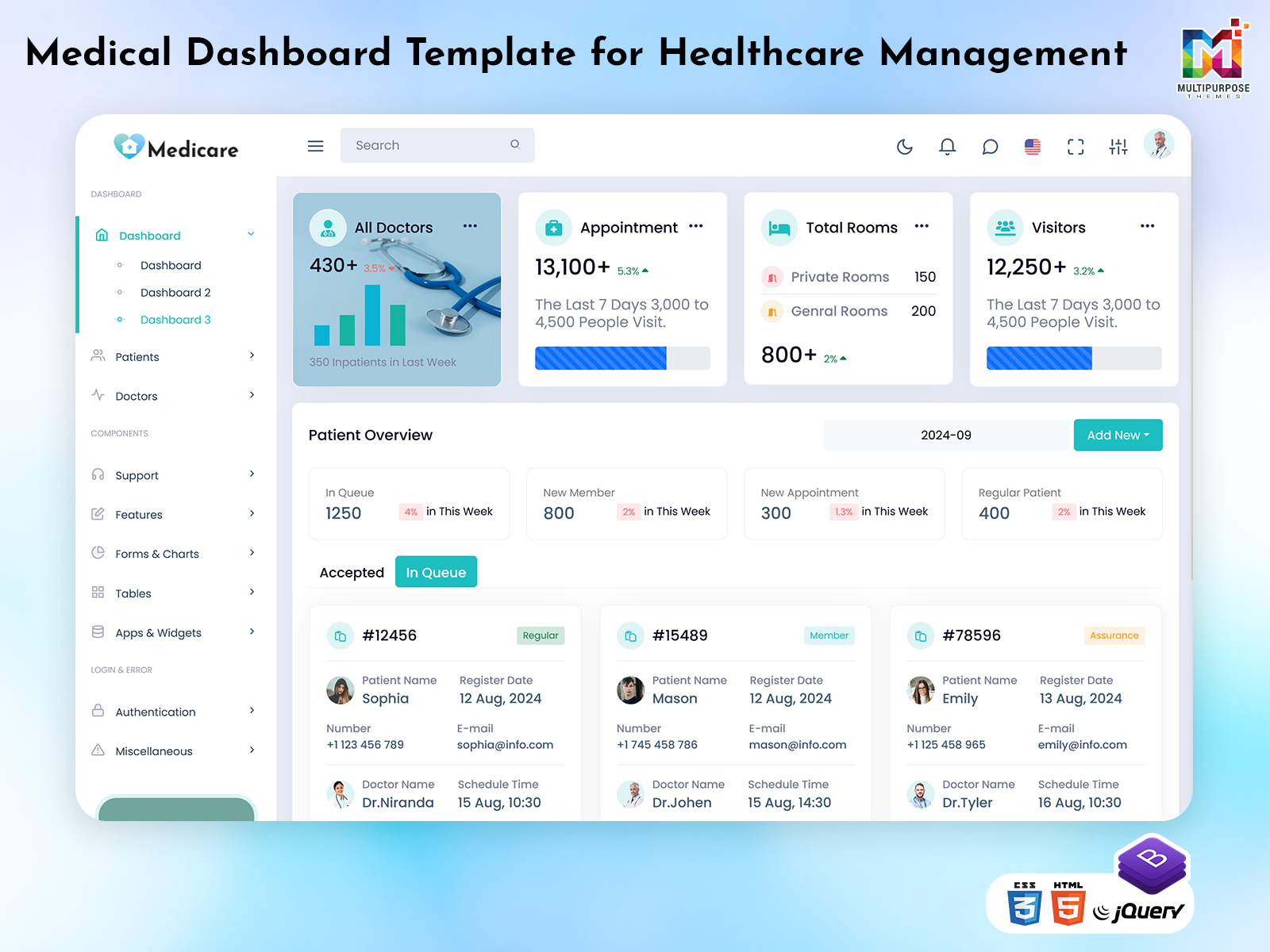
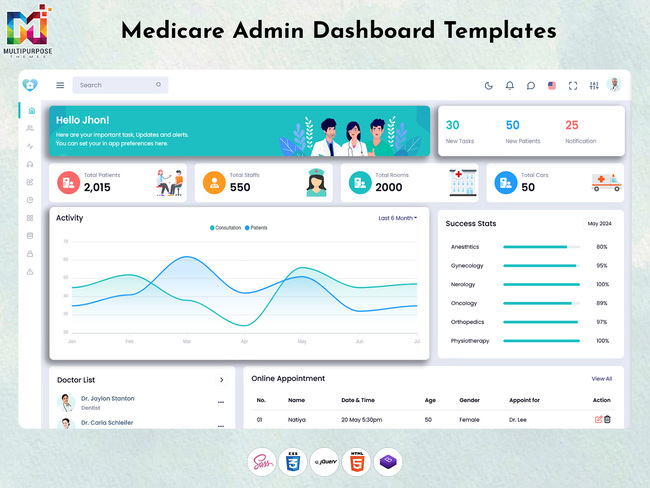
Running a hospital involves a flow of information. Patient details, appointments, doctors, admissions, billing, medical…
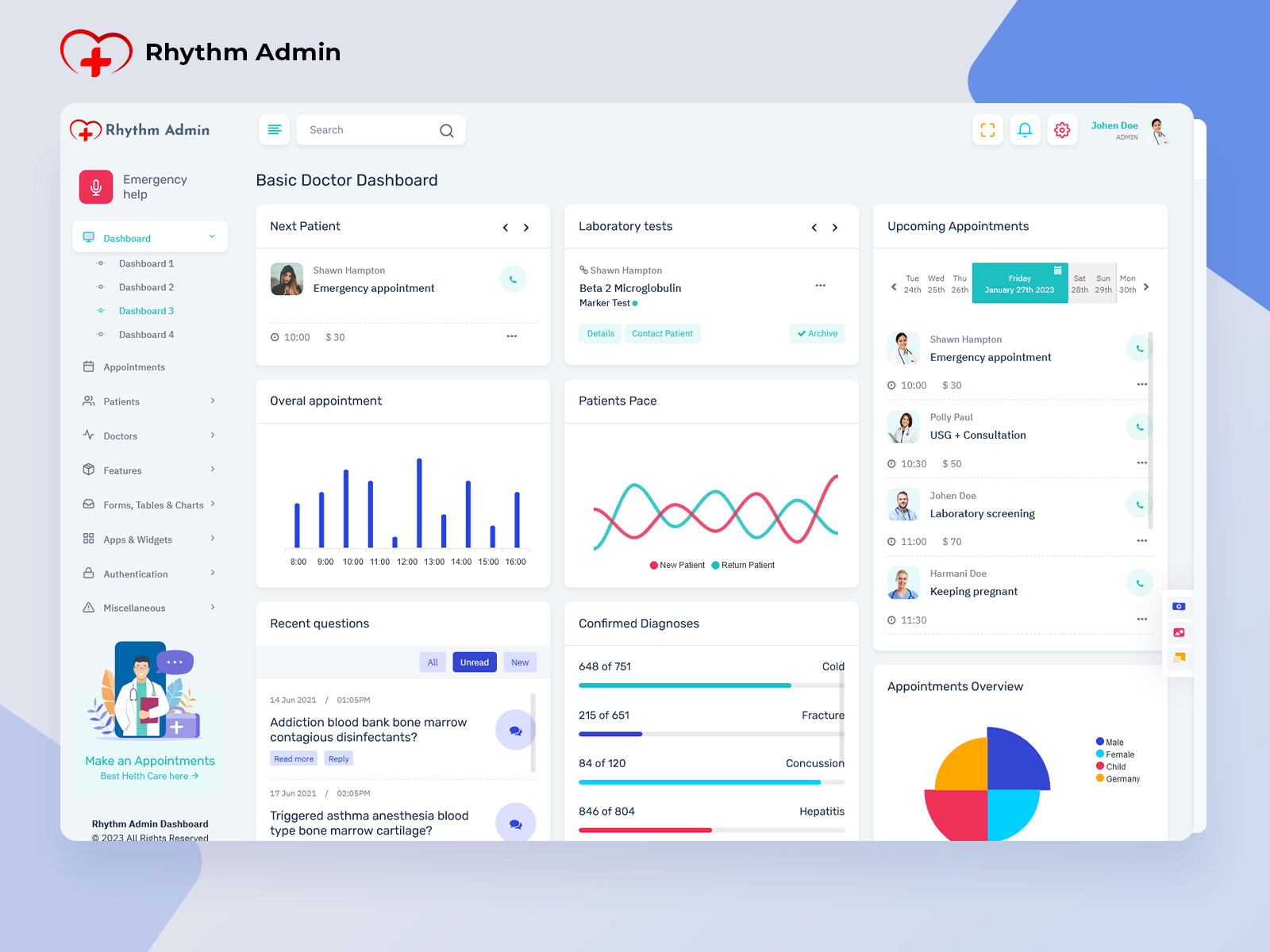
Medical Dashboard for Doctors Who Love Organized Chaos – 2026
Reading Time: 7 minutes
Healthcare systems today generate a huge amount of data every single day. Hospitals, clinics, doctors, and healthcare administrators deal with patient records, appointment schedules, treatment reports, medical inventory, billing information, and much more. Managing all this information efficiently can be a challenge without the right digital tools. This is where a Medical Dashboard becomes extremely valuable.
A modern Medical Dashboard helps healthcare professionals view and manage important medical data in one organized interface. Instead of manually checking different systems or reports, administrators and doctors can access critical information from a single screen. This improves workflow efficiency and helps healthcare teams make faster and more informed decisions.
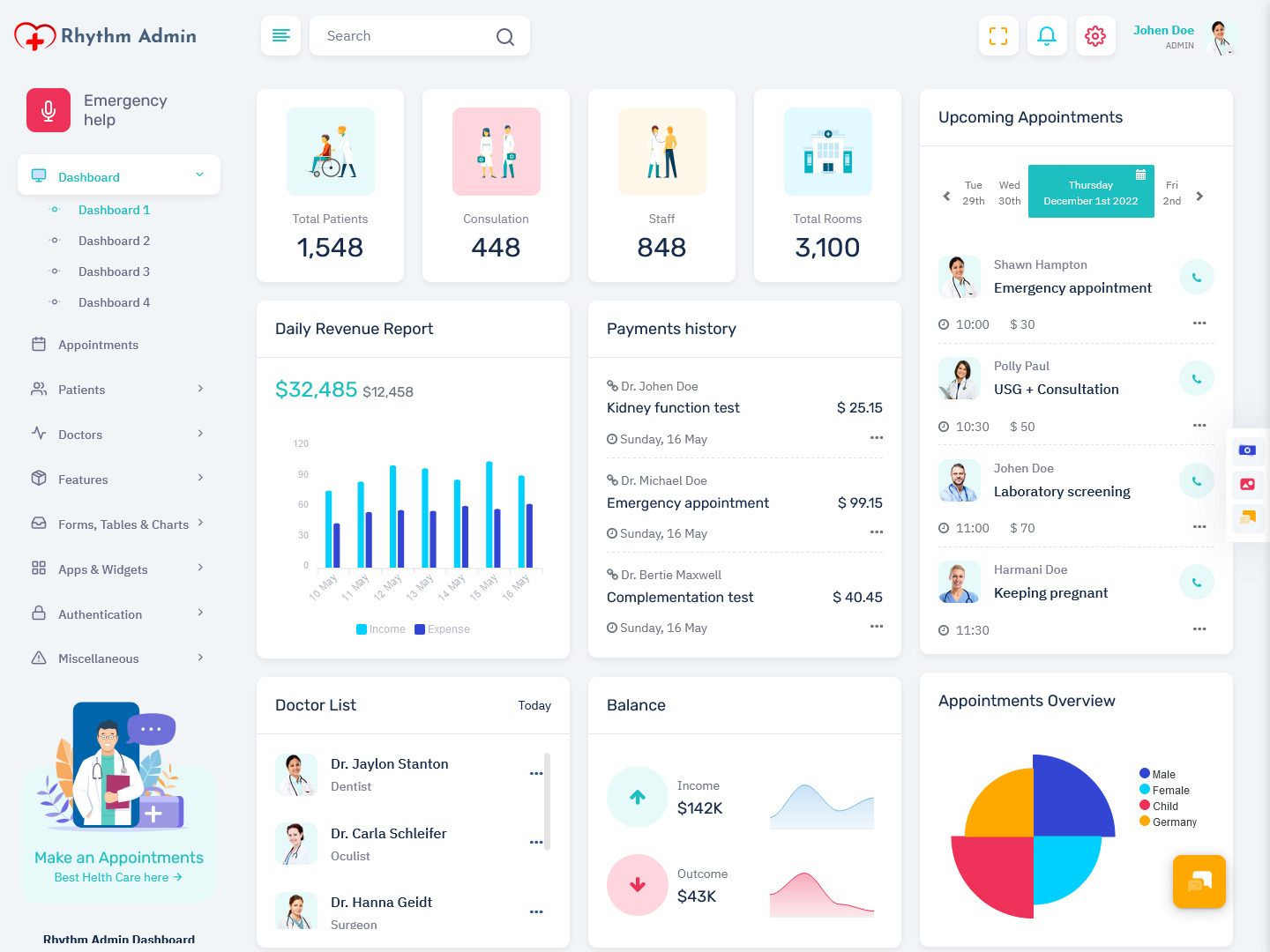
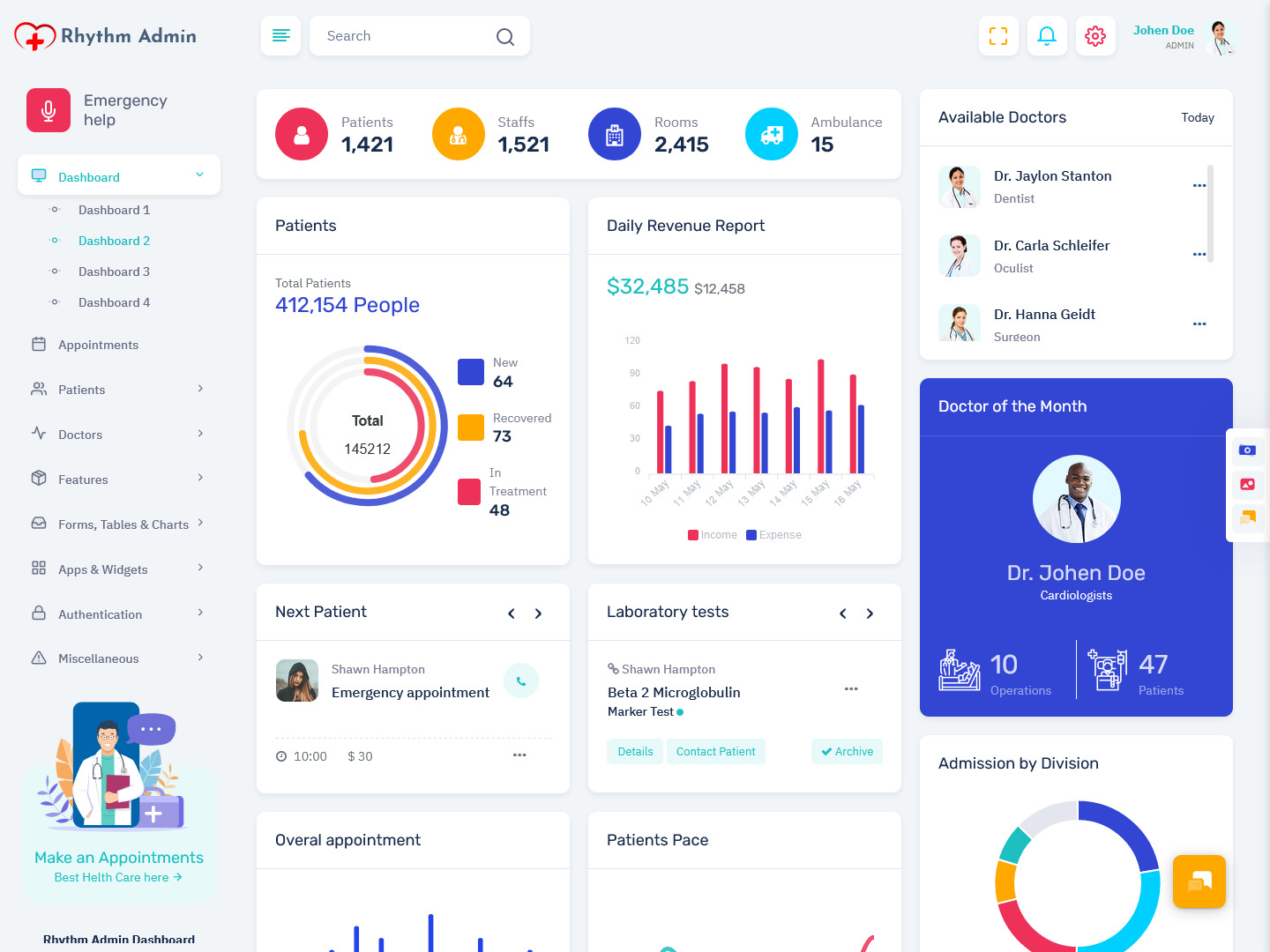
Technology is transforming the healthcare industry rapidly. Hospitals now rely on digital platforms to track patient activities, monitor staff performance, and manage daily operations. A well-designed Hospital Admin Dashboard provides an overview of hospital operations, including patient admissions, appointments, department performance, and billing data.
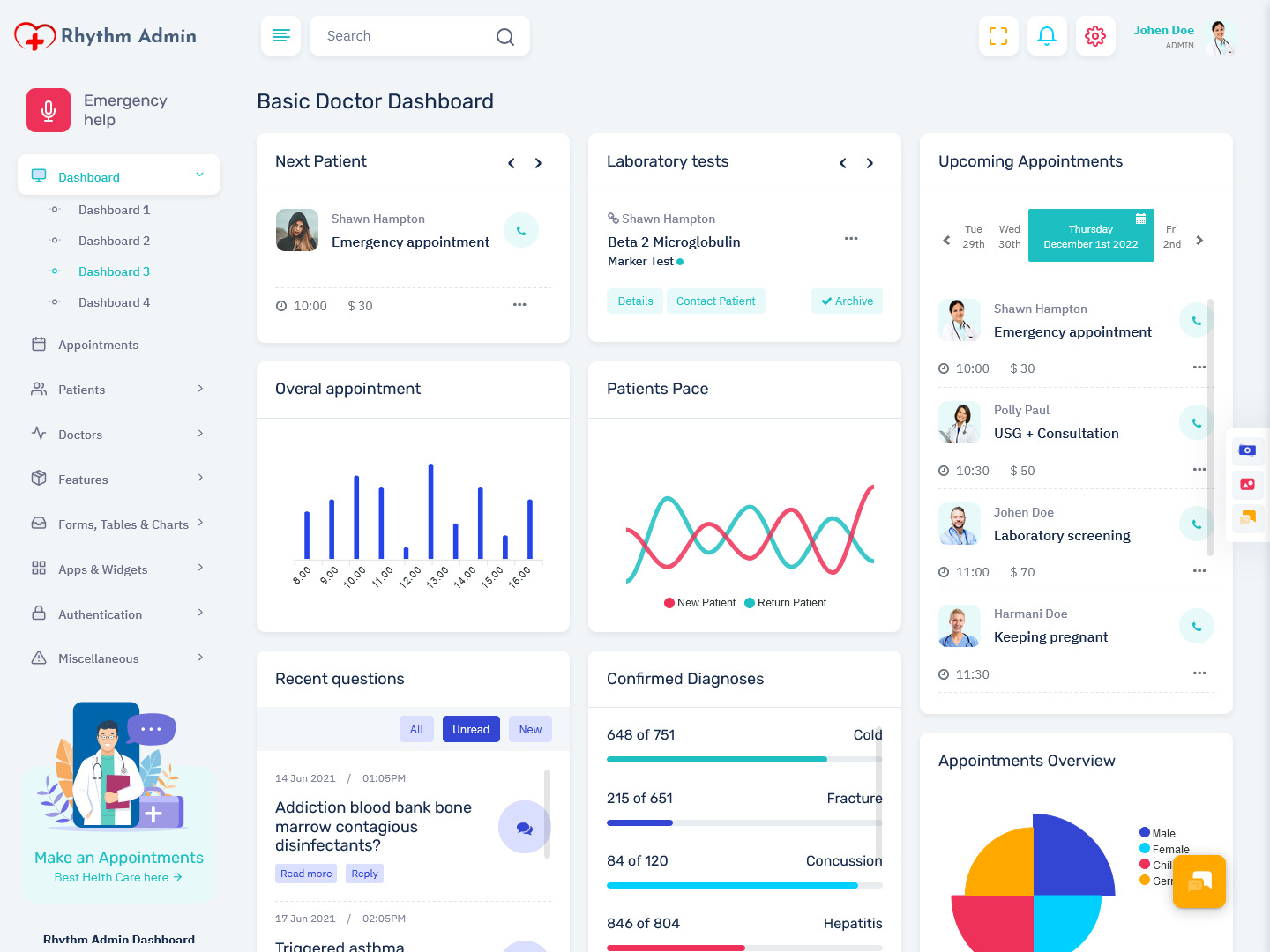
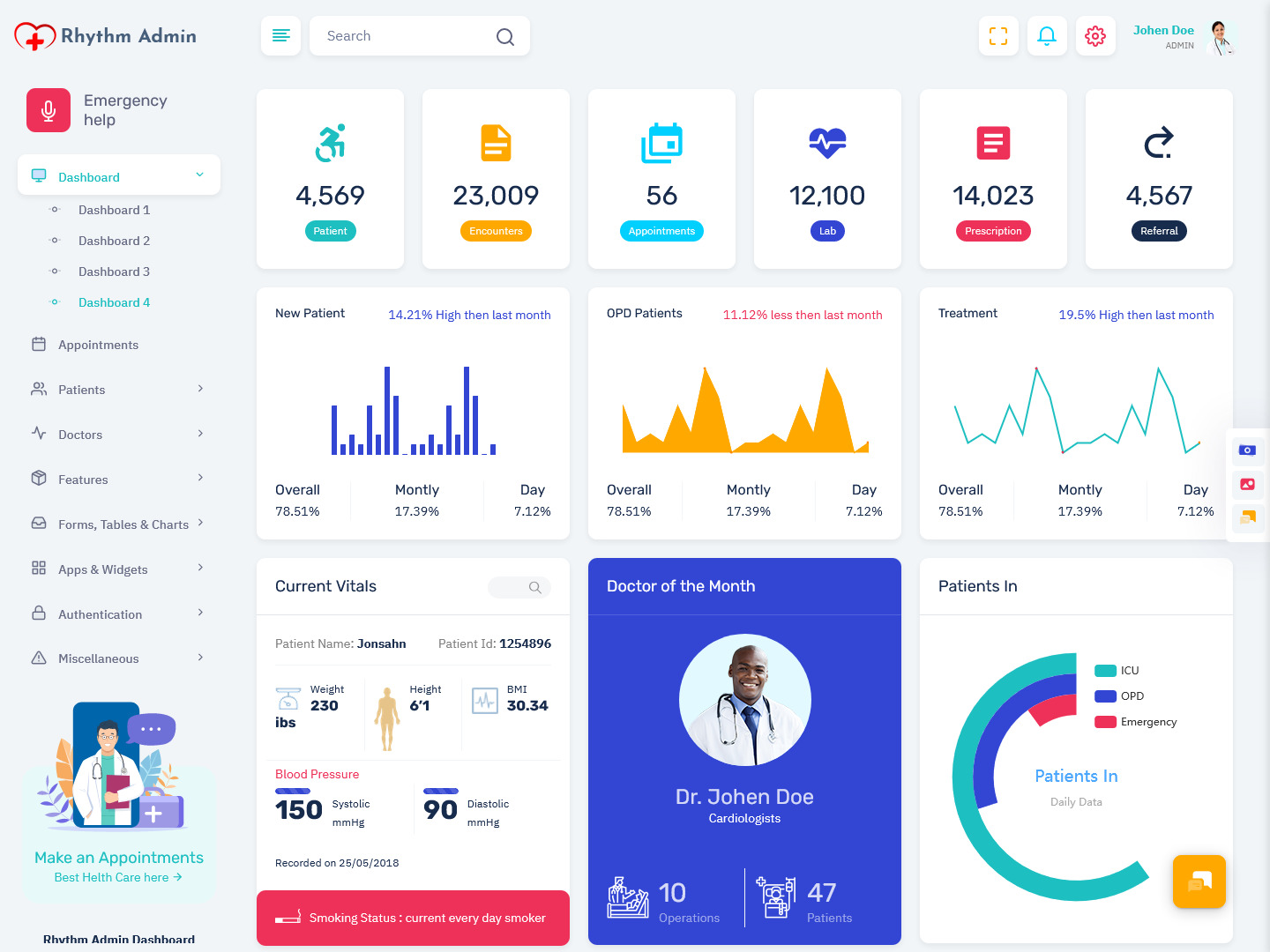
At the same time, medical professionals benefit from specialized tools like a Doctor Dashboard, which helps physicians track patient history, treatment progress, and appointment schedules. Patients themselves can also interact with healthcare systems through a Patient Dashboard Template, which allows them to view their medical records, appointments, and reports.
As healthcare becomes more digital and data-driven, dashboards are becoming essential tools for managing complex medical systems. A well-designed dashboard not only simplifies hospital operations but also improves patient care by making critical information easily accessible.
Discover Dashboard Design
BUY NOW DEMO
BUY NOW DEMO
BUY NOW DEMO
BUY NOW DEMO
What is a Medical Dashboard
A Medical Dashboard is a digital interface designed to display and manage healthcare-related information in an organized and visual format. It acts as a centralized platform where healthcare professionals can monitor hospital operations, patient records, medical statistics, and administrative data.
The primary goal of a medical dashboard is to simplify data management. Hospitals and clinics handle a large amount of information daily, including patient admissions, medical histories, treatment plans, laboratory reports, and financial records. A dashboard helps organize this data so that it can be accessed quickly and easily.
A Hospital Admin Dashboard is specifically designed for hospital administrators and management teams. It provides a complete overview of hospital operations such as bed availability, patient admissions, department performance, appointment schedules, and financial summaries. With this information available in real time, hospital administrators can manage resources more effectively and improve operational efficiency.
Doctors also benefit greatly from a specialized Doctor Dashboard. This type of dashboard allows physicians to access patient medical records, review treatment histories, manage appointments, and monitor patient progress. By having all relevant patient data available in one place, doctors can focus more on providing quality care rather than searching for information.
Another important component of modern healthcare systems is the Patient Dashboard Template. This interface is designed for patients who want to access their personal healthcare information. Through this dashboard, patients can check upcoming appointments, view medical reports, track prescriptions, and communicate with healthcare providers.
Overall, a medical dashboard acts as the digital control center of modern healthcare systems, helping both professionals and patients manage healthcare information more efficiently.
How Medical Dashboards Improve Healthcare Management
Healthcare management involves coordination between different departments, doctors, nurses, administrative staff, and patients. Without proper systems in place, managing such complex operations can become difficult. A Medical Dashboard simplifies these processes by providing a clear overview of healthcare activities.
One of the key ways dashboards improve healthcare management is through better data visibility. When information is organized and presented visually, it becomes easier for administrators and healthcare providers to understand trends and patterns. A Hospital Admin Dashboard can show real-time statistics about patient admissions, department workloads, and hospital performance.
Another benefit is improved communication between healthcare teams. A Doctor Dashboard allows physicians to quickly access patient records, lab reports, and treatment histories. This ensures that doctors always have the most accurate and updated information while making medical decisions.
Patient engagement is also enhanced through a Patient Dashboard Template. When patients can view their medical records and appointment schedules online, they become more involved in their healthcare journey. This transparency builds trust and encourages patients to follow treatment plans more carefully.
Medical dashboards also reduce administrative workload. Instead of manually compiling reports or searching through multiple systems, healthcare staff can access summarized information instantly. This not only saves time but also reduces the chances of human error.
With the increasing demand for digital healthcare solutions, medical dashboards are becoming a fundamental part of hospital management systems around the world.
Key Advantages of Using a Medical Dashboard
One of the biggest advantages of a Medical Dashboard is improved efficiency in hospital operations. Hospitals are busy environments where multiple departments work simultaneously to provide patient care. A dashboard helps administrators monitor these activities and coordinate resources more effectively. A Hospital Admin Dashboard can provide real-time insights into patient flow, staff availability, and hospital performance, allowing management teams to make better operational decisions.
Another important advantage is better patient care. Doctors require quick access to accurate medical information to make correct diagnoses and treatment decisions. A well-designed Doctor Dashboard allows physicians to review patient history, laboratory reports, and treatment plans instantly. This reduces delays in medical decision-making and ensures that patients receive timely care.
A Patient Dashboard Template also plays a vital role in improving the patient experience. Patients today expect easy access to their medical information and healthcare services. Through a digital dashboard, they can check appointment schedules, download medical reports, and communicate with healthcare providers. This convenience improves patient satisfaction and strengthens the relationship between patients and healthcare providers.
Data visualization is another major advantage of medical dashboards. Instead of viewing complex spreadsheets or long reports, healthcare professionals can analyze data through visual charts and graphs. A Medical Dashboard can display statistics such as patient admissions, treatment outcomes, and departmental performance in an easy-to-understand format.
Medical dashboards also help improve hospital planning and resource management. A Hospital Admin Dashboard allows administrators to monitor hospital occupancy rates, track equipment usage, and analyze department workloads. This information helps management allocate resources efficiently and ensure that hospital operations run smoothly.
Another key benefit is improved transparency and accountability. Healthcare organizations must maintain accurate records and comply with strict regulations. A centralized Medical Dashboard ensures that all data is properly documented and accessible when needed. This improves accountability and helps hospitals maintain compliance with healthcare standards.
Overall, these advantages make medical dashboards an essential tool for modern healthcare systems.
Real-World Applications of Medical Dashboards
Medical dashboards are used in many different healthcare environments. Hospitals are one of the most common places where these dashboards are implemented. A Hospital Admin Dashboard helps hospital management teams oversee operations, track patient statistics, and manage resources across departments.
Clinics and private healthcare centers also benefit from using dashboards. A Doctor Dashboard helps physicians manage appointments, review patient records, and monitor treatment progress. This allows doctors to focus more on patient care rather than administrative tasks.
Telemedicine platforms are another area where dashboards play a significant role. Online healthcare services often use a Patient Dashboard Template to allow patients to book virtual appointments, access prescriptions, and review medical reports. This digital interface makes remote healthcare services more accessible and convenient.
Healthcare research institutions also use medical dashboards to analyze patient data and monitor public health trends. By studying large datasets through visual dashboards, researchers can identify patterns in diseases and treatment outcomes.
In addition, healthcare startups and medical software companies frequently develop customized Medical Dashboard solutions for hospitals and clinics. These dashboards help integrate different healthcare systems and provide a unified platform for managing medical data.
As healthcare technology continues to evolve, the use of dashboards is expected to grow even further.
Future of Medical Dashboards in Healthcare
The future of healthcare is strongly connected to digital innovation. As medical systems become more advanced, the role of the Medical Dashboard will continue to expand. Hospitals and healthcare organizations are increasingly adopting smart technologies such as artificial intelligence, data analytics, and cloud computing.
In the future, a Hospital Admin Dashboard may integrate predictive analytics to forecast patient admissions and hospital resource requirements. This will help administrators plan operations more effectively and improve patient care.
Doctors will also benefit from more intelligent Doctor Dashboard systems that provide AI-powered insights based on patient data. These systems may assist physicians in diagnosing diseases, recommending treatments, and identifying potential health risks.
Patients will experience more personalized healthcare through advanced Patient Dashboard Template interfaces. These dashboards may allow patients to track their health metrics, communicate with doctors instantly, and receive automated health reminders.
As healthcare systems continue to modernize, medical dashboards will become more sophisticated and user-friendly. Their ability to organize complex healthcare data into clear and actionable insights will make them an indispensable tool for hospitals, doctors, and patients.
Conclusion
The healthcare industry is becoming increasingly digital, and managing medical information efficiently is more important than ever. A well-designed Medical Dashboard provides a centralized platform where healthcare professionals can access and analyze important data quickly.
From hospital administrators to doctors and patients, dashboards offer significant benefits. A Hospital Admin Dashboard helps manage hospital operations, while a Doctor Dashboard allows physicians to monitor patient data and treatment progress. At the same time, a Patient Dashboard Template empowers patients by giving them easy access to their medical information.
These dashboards improve efficiency, enhance communication, and support better decision-making within healthcare systems. By transforming complex medical data into clear and visual insights, medical dashboards help healthcare providers deliver higher-quality care.
As technology continues to evolve, medical dashboards will play an even greater role in shaping the future of healthcare management and patient services.

Related Posts