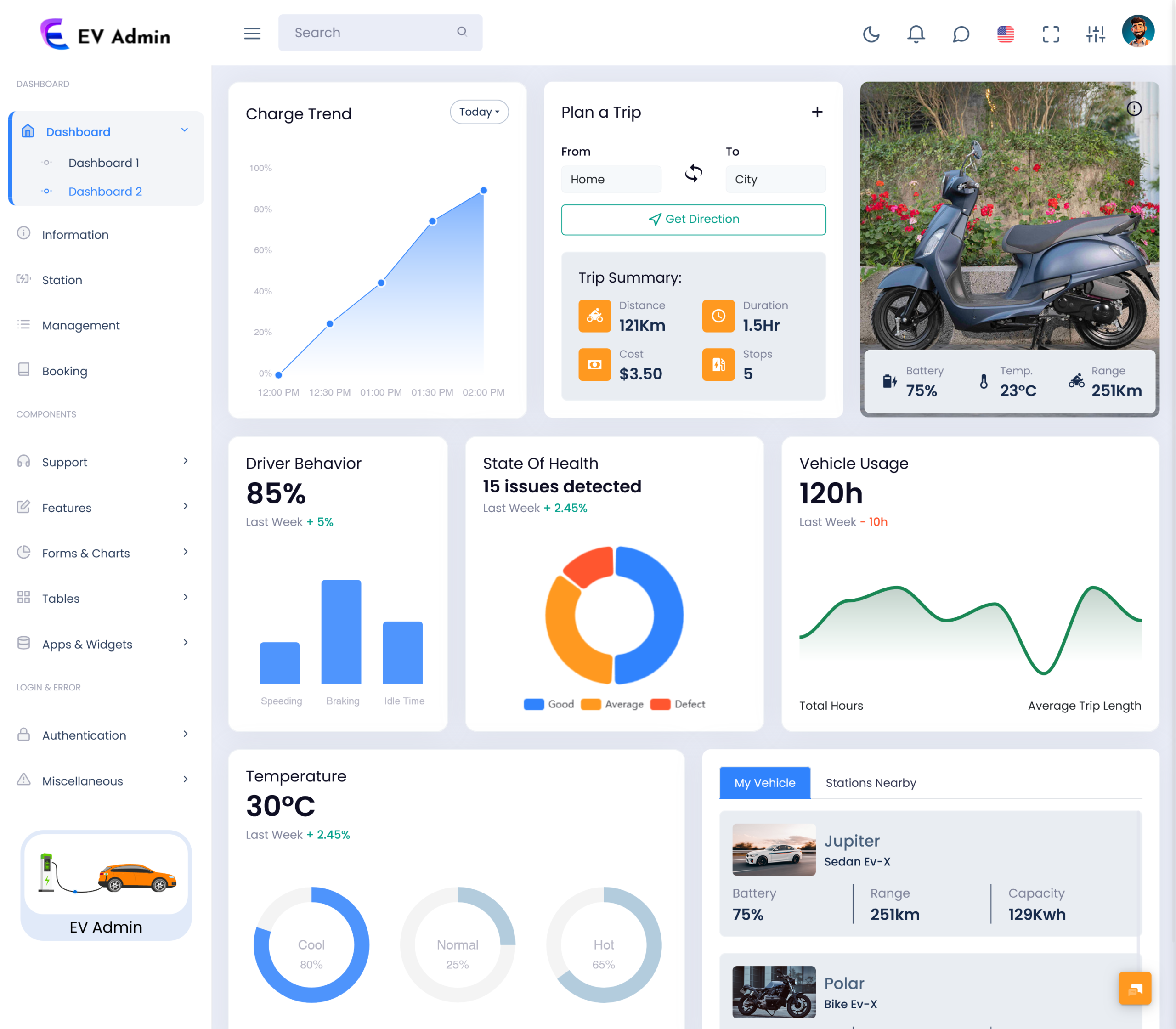
What is an EV Dashboard? An EV Dashboard is a centralized digital interface designed to…

Electric Vehicle Dashboard Intelligence for Charging Performance and Route Optimization in 2026
Reading Time: 11 minutes
The rapid growth of electric mobility has increased the need for intelligent monitoring systems that can organize charging activities, battery information, travel insights, and operational performance from a single interface. A modern Electric Vehicle Dashboard helps businesses, fleet operators, charging providers, and transportation companies visualize important information in real time, making decision-making faster and more accurate. Instead of relying on scattered reports, users can access critical metrics through interactive panels that simplify daily operations and long-term planning.
Watch Full Video
As charging networks continue expanding, organizations are adopting advanced digital tools to improve efficiency and service quality. A well-designed EV Charging Dashboard delivers a clear overview of charging sessions, energy consumption patterns, battery conditions, and vehicle activity. These insights help reduce downtime, optimize resource allocation, and improve user experiences. Whether managing a private fleet or a public charging network, dashboard technology is becoming an essential component of modern electric transportation ecosystems.
Explore Electric Vehicle Dashboard
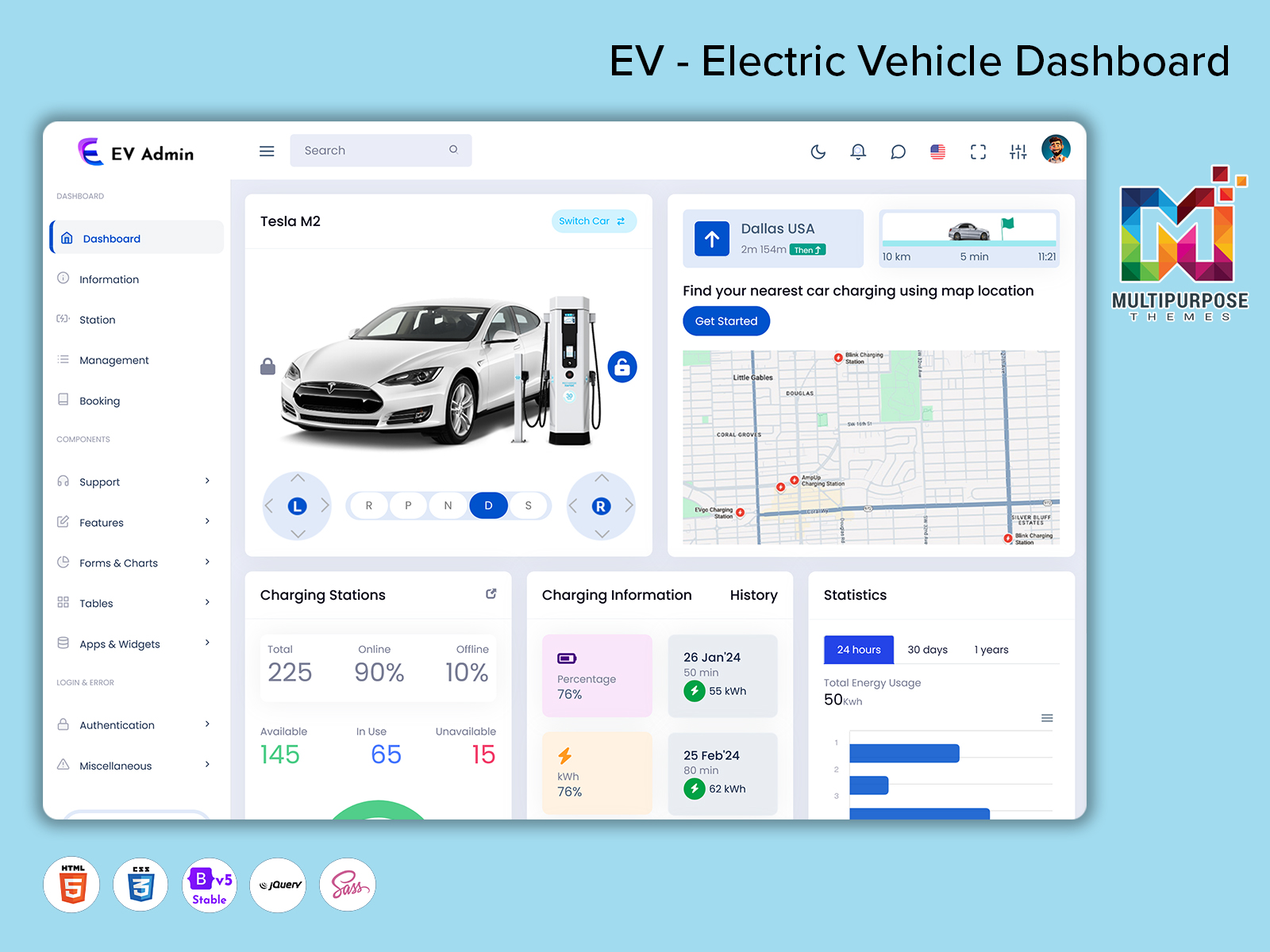
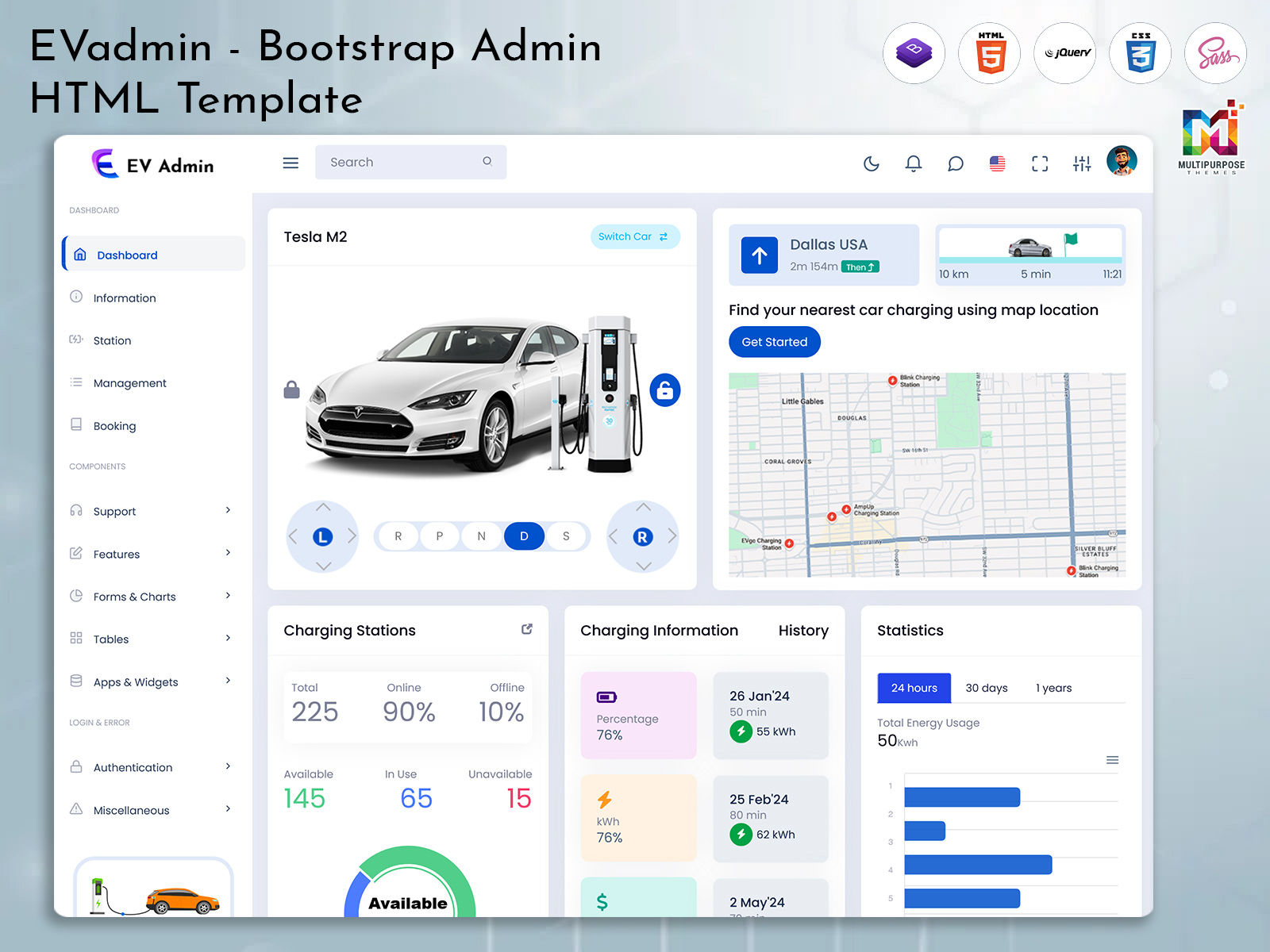
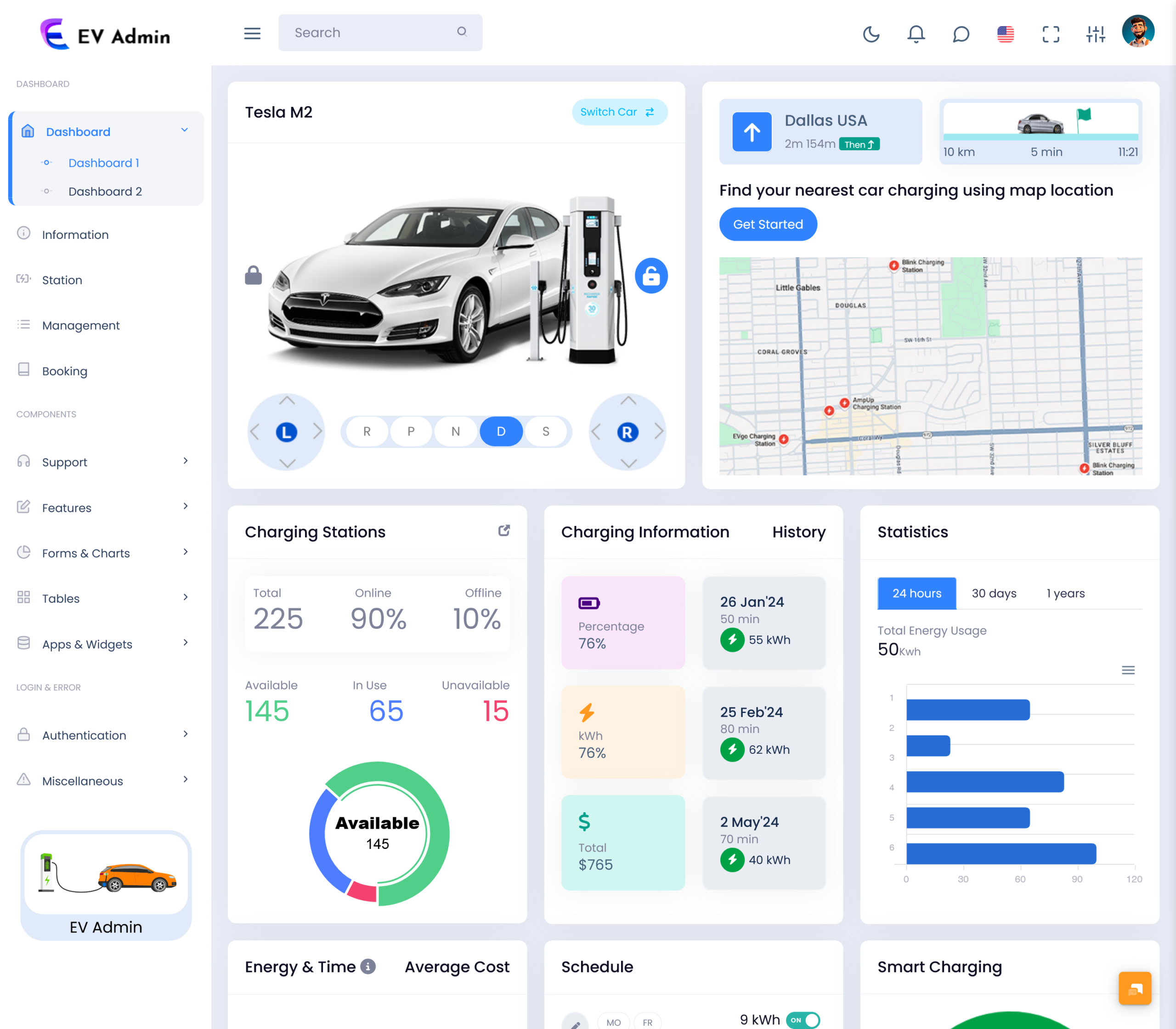
An Electric Vehicle Dashboard serves as a centralized control center that brings together vehicle analytics, charging information, battery performance data, operational metrics, and trip-related insights within a single interface. As electric mobility adoption continues to increase, businesses require smarter ways to monitor assets, manage energy usage, and track fleet performance. A well-designed EV Dashboard enables operators to access real-time information quickly, helping them respond to changing conditions while maintaining efficient operations. From commercial transportation providers to charging network operators, dashboard technology has become an important tool for simplifying complex workflows.
Modern platforms are built with advanced visualization capabilities that transform large volumes of data into easy-to-understand reports and charts. An EV Charging Dashboard can display charging activities, battery health indicators, route information, utilization statistics, and charging station availability. Organizations involved in EV Charging Management and EV Charger Management can use these insights to improve service quality, reduce operational costs, and optimize resource allocation. Many providers also integrate an EV Template or Charging Station Template to create customized monitoring environments that match business requirements. Whether managing a single facility or a large network, an Electric Car Dashboard helps stakeholders maintain visibility across connected charging infrastructure and vehicle ecosystems.
Why Businesses Need an EV Charging Management Dashboard
As electric mobility continues expanding across commercial sectors, organizations require advanced monitoring tools that help manage charging operations efficiently. An EV Charging Management Dashboard provides a structured environment where businesses can oversee charging activities, energy consumption, equipment status, and vehicle connectivity from one location. Instead of relying on manual reporting methods, operators gain access to live information that supports faster decision-making and improved operational control. This visibility becomes especially valuable for fleet operators, charging network providers, logistics companies, and property owners offering charging services.
A modern EV Charging Management solution also helps businesses improve asset utilization and maintain service reliability. Through an EV Charging Dashboard, managers can evaluate charging demand, identify performance trends, monitor charger availability, and track infrastructure efficiency. Companies using EV Charger Management systems can reduce downtime, plan maintenance activities more effectively, and improve customer experiences. Whether integrated into an Electric Vehicle Dashboard, Electric Car Dashboard, or Charging Station Dashboard, these management capabilities help organizations scale operations while supporting growing electric transportation requirements in 2026 and beyond.
VIEW DEMO BUY NOW
Charge Trend Analytics for Better Energy Tracking
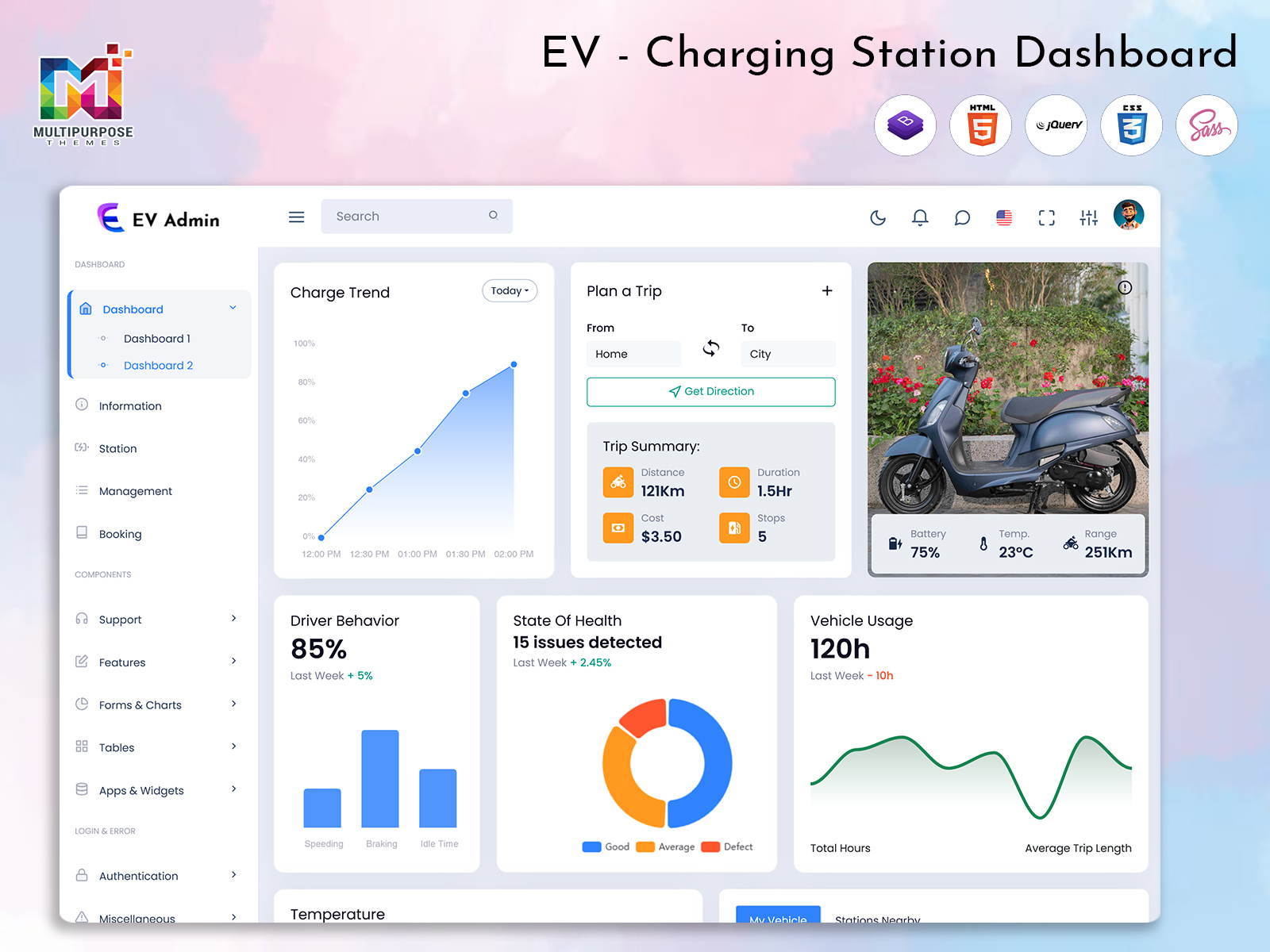
Charge trend analytics plays a crucial role in understanding how electric vehicles consume energy across different usage patterns. With an EV Charging Dashboard, businesses can track charging frequency, energy intake, peak usage hours, and cost variations in real time. This helps operators identify high-demand periods and adjust charging strategies accordingly. An Electric Vehicle Dashboard brings all these insights together, making it easier to visualize energy flow and optimize charging schedules for better efficiency and cost control.
For fleet operators and charging network managers, Charge Trend Analytics supports smarter EV Charging Management by highlighting inefficiencies and usage gaps. It allows better planning for infrastructure expansion and load balancing across multiple stations. Using an EV Template or Charging Station Template, organizations can customize analytics views based on operational needs. This level of insight improves EV Charger Management by reducing energy waste, enhancing grid stability, and ensuring smoother operations within an Electric Car Dashboard ecosystem in 2026.
Plan a Trip Feature for Efficient Route Optimization
The Plan a Trip feature in a modern Electric Vehicle Dashboard helps users design smarter and more efficient travel routes based on charging availability, distance, and energy consumption. It connects real-time navigation data with charging station networks so drivers can avoid range anxiety and reach destinations smoothly. An EV Charging Dashboard enhances this process by suggesting optimal stops where vehicles can recharge without delays, ensuring better time management during long-distance travel.
For businesses managing fleets, this feature improves EV Charging Management by reducing unnecessary detours and minimizing operational costs. It also supports better EV Charger Management by balancing station usage across routes. Integrated within an EV Template or Charging Station Dashboard, it helps operators visualize travel paths, station density, and charging intervals. When used in an Electric Car Dashboard, it ensures efficient route planning, improved driver experience, and higher overall productivity in electric mobility systems.
Benefits of Using an EV Charging Management Platform
A modern EV Charging Management Platform helps organizations streamline electric mobility operations by combining charging control, vehicle tracking, and energy insights into one unified system. It improves coordination between vehicles and charging infrastructure while reducing manual effort in monitoring daily activities. With an Electric Vehicle Dashboard, businesses can view live updates on charging status, station availability, and energy usage, allowing smoother decision-making and better operational visibility across networks.
1. Improved Operational Control
An EV Charging Dashboard provides centralized access to charging activities, making it easier to manage multiple stations without confusion or delays.
2. Better Energy Optimization
Through detailed analytics, EV Charging Management helps reduce energy wastage and balance load distribution across charging points.
3. Enhanced Fleet Efficiency
EV Charger Management supports smoother fleet movement by ensuring vehicles are charged at the right time and location.
4. Real-Time Infrastructure Monitoring
A Charging Station Dashboard enables continuous tracking of station performance, uptime, and utilization levels.
5. Scalable System Integration
Using an EV Template or Charging Station Template allows businesses to expand their system easily while maintaining consistent performance and structure.
VIEW DEMO BUY NOW
Understanding Trip Summary Data in EV Dashboard
Trip summary data in an Electric Vehicle Dashboard provides a complete breakdown of every journey in a structured and easy-to-read format. It helps users understand how an electric vehicle performs across different trips by combining travel insights, charging activity, and energy consumption details. With an EV Charging Dashboard, businesses and fleet operators can analyze how each route behaves in terms of efficiency, charging needs, and overall performance, making transportation planning more accurate and predictable.
A key part of this summary includes Distance, which shows how far the vehicle has traveled during a trip. Duration helps measure total travel time, allowing operators to evaluate delays or efficiency gaps. Cost tracking is another important element, as it reflects total energy expense across charging sessions and helps optimize EV Charging Management strategies. Stops data highlights how many charging or resting points were used during the journey, improving EV Charger Management planning and reducing unnecessary downtime. When combined inside an EV Template or Charging Station Dashboard, these insights support better decision-making and smoother operations for Electric Car Dashboard users in 2026.
Driver Behavior Monitoring for Safer Fleet Operations
Driver behavior monitoring is an important part of modern Electric Vehicle Dashboard systems, helping businesses improve safety, efficiency, and overall fleet performance. Through an EV Charging Dashboard, operators can track driving patterns such as acceleration, braking style, speed consistency, and route discipline. This information is collected in real time and displayed in a structured format, allowing managers to quickly identify risky driving habits and take corrective actions when needed.
In EV Charging Management environments, understanding driver behavior directly impacts operational cost and vehicle health. Smooth driving patterns reduce unnecessary energy consumption, while aggressive driving increases charging frequency and reduces battery efficiency. With EV Charger Management tools integrated into an Electric Car Dashboard, businesses can encourage safer driving practices, improve compliance, and extend vehicle lifespan. A well-designed Charging Station Dashboard or EV Template also supports reporting features that help organizations train drivers, reduce accident risks, and maintain higher service reliability across electric fleets in 2026.
State of Health for Battery Performance Management
The State of Health feature in an Electric Vehicle Dashboard plays a critical role in tracking battery condition and overall performance over time. It helps businesses and fleet operators understand how efficiently a battery is functioning compared to its original capacity. Through an EV Charging Dashboard, real-time indicators such as degradation level, charging efficiency, and remaining usable life are displayed in a clear visual format, supporting better maintenance planning and operational control.
In EV Charging Management systems, battery health insights directly influence cost efficiency and vehicle reliability. A declining State of Health can indicate the need for preventive maintenance or optimized charging cycles to extend battery lifespan. With EV Charger Management integrated into an Electric Car Dashboard, operators can reduce unexpected failures and improve fleet uptime. A Charging Station Dashboard or EV Template also helps standardize reporting, making it easier to compare battery performance across multiple vehicles and ensure consistent efficiency in large-scale electric mobility operations in 2026.
Features of Electric Vehicle Dashboard in 2026
Electric mobility systems are becoming more advanced, and modern dashboards are designed to handle complex data with simplicity and speed. An Electric Vehicle Dashboard in 2026 is no longer just a monitoring tool; it is a complete operational platform that connects vehicles, charging stations, users, and energy systems. With growing demand for EV Charging Management, businesses now rely on smart interfaces that combine analytics, automation, and real-time control. These features help operators manage fleets, optimize charging cycles, and improve overall efficiency across electric ecosystems.
1. Real-Time Charging Monitoring
An EV Charging Dashboard provides live tracking of charging sessions, including status updates, energy flow, and session duration. This ensures better control over EV Charger Management and reduces downtime at charging points.
2. Intelligent Route and Trip Planning
Advanced Electric Car Dashboard systems include smart navigation that suggests optimized routes based on charging availability, distance, and energy usage. This improves EV Charging Management efficiency for fleets and individual users.
3. Battery Health and Diagnostics Tracking
Modern dashboards integrate State of Health monitoring, fault detection, and performance diagnostics. This helps businesses maintain battery performance and extend vehicle lifespan.
4. Charging Station Network Control
A Charging Station Dashboard allows operators to monitor station availability, occupancy, and performance. It supports better load balancing and improves EV Charging Management across multiple locations.
5. Data Analytics and Custom EV Templates
An EV Template system provides customizable layouts for reporting and visualization. It helps businesses analyze energy consumption, cost trends, and operational KPIs for smarter decision-making.
Vehicle Usage Through Interactive Dashboard Reports
Vehicle usage tracking in an Electric Vehicle Dashboard provides a complete view of how electric vehicles are being utilized across different time periods and operational conditions. It helps businesses understand daily activity patterns, idle time, charging frequency, and overall fleet productivity. Through an EV Charging Dashboard, usage data is transformed into interactive reports that make it easier to identify underutilized vehicles and optimize deployment strategies for better efficiency.
In EV Charging Management systems, Vehicle Usage insights play a key role in improving operational planning and reducing unnecessary energy consumption. Metrics such as total running hours, trip frequency, and utilization rates help managers balance workload across the fleet. An Electric Car Dashboard combines this data with EV Charger Management tools to ensure vehicles are charged at optimal times. When integrated into a Charging Station Dashboard or EV Template, these reports support smarter resource allocation, improve cost efficiency, and enhance decision-making for large-scale electric mobility operations in 2026.
Temperature Monitoring Dashboard for EV Battery Safety
Temperature monitoring in an Electric Vehicle Dashboard is essential for maintaining battery safety, performance stability, and long-term reliability. Electric vehicles depend heavily on controlled thermal conditions, and even small variations in temperature can affect charging efficiency and battery lifespan. An EV Charging Dashboard continuously tracks thermal data from battery packs, charging units, and connected systems to ensure everything operates within safe limits. This real-time visibility helps operators take immediate action when abnormal heat levels are detected.
Within EV Charging Management systems, temperature insights are used to prevent overheating during fast charging sessions and heavy fleet usage. An EV Charger Management platform can automatically trigger alerts or adjust charging speed to protect battery health. When integrated into an Electric Car Dashboard, this data improves safety decision-making and reduces operational risks. A Charging Station Dashboard or EV Template also helps visualize temperature trends across multiple stations, ensuring consistent performance and safer charging infrastructure in 2026.
Stations Nearby Feature in Charging Station Dashboard
The Stations Nearby feature in an Electric Vehicle Dashboard helps users quickly locate available charging points based on real-time location data and network connectivity. It improves convenience for drivers by showing nearby charging stations, availability status, charging speed options, and estimated waiting time. In an EV Charging Dashboard, this feature is essential for reducing range anxiety and ensuring smoother travel experiences for both individual drivers and fleet operators.
For businesses managing EV Charging Management systems, this feature improves network utilization by distributing charging demand more efficiently across stations. An EV Charger Management platform can suggest the closest compatible station based on battery level, route direction, and charging requirements. Integrated within an Electric Car Dashboard or Charging Station Dashboard, it also supports dynamic updates for station status, helping users avoid congestion and downtime. Using an EV Template, operators can customize map views and improve accessibility across large-scale charging networks in 2026.
Future of Electric Vehicle Dashboard Technology
The future of the Electric Vehicle Dashboard is closely connected to the rapid advancement of smart mobility, connected vehicles, and intelligent charging infrastructure. As electric transportation networks continue expanding, businesses will increasingly rely on advanced dashboard platforms to manage vehicles, charging stations, battery systems, and energy resources from a unified environment. Future EV Dashboard solutions will offer deeper analytics, predictive maintenance capabilities, and AI-driven recommendations that help operators improve efficiency while reducing operational costs.
Emerging technologies will make EV Charging Dashboard systems more intelligent by integrating real-time traffic information, smart grid connectivity, autonomous vehicle support, and advanced battery diagnostics. EV Charging Management and EV Charger Management platforms will become more automated, enabling dynamic load balancing, predictive charging schedules, and optimized energy distribution across charging networks. Features within Electric Car Dashboard and Charging Station Dashboard solutions will provide faster decision-making through interactive visualizations and automated alerts.
In the coming years, customizable EV Template and Charging Station Template platforms will support large-scale fleet operations, public charging networks, logistics providers, and smart city initiatives. These innovations will transform the Electric Vehicle Dashboard into a comprehensive mobility management solution that enhances sustainability, improves charging efficiency, supports route optimization, and enables data-driven transportation strategies for businesses in 2026 and beyond.
Conclusion
An Electric Vehicle Dashboard has become a core requirement for modern electric mobility systems, helping businesses and fleet operators manage vehicles, charging stations, and energy usage in a structured and efficient way. With the rise of EV Charging Dashboard platforms, organizations can now monitor real-time charging activity, track performance metrics, and improve operational accuracy across distributed networks. This level of visibility supports better planning, reduces downtime, and enhances overall system reliability.
By integrating EV Charging Management, EV Charger Management, and advanced analytics, companies can optimize both cost and performance across their electric ecosystems. Features like trip tracking, battery monitoring, station mapping, and usage reports make it easier to handle large-scale operations. Whether using an Electric Car Dashboard, Charging Station Dashboard, or customizable EV Template, businesses gain a powerful digital solution that supports sustainable growth and smarter transportation planning in 2026.
VIEW DEMO BUY NOW
FAQs
1. What is an EV dashboard in electric vehicles?
An EV dashboard is a smart digital system used to monitor battery level, speed, range, energy usage, and charging status in real time. It helps fleet operators and EV users manage vehicle performance efficiently. For more advanced Electric Vehicle Dashboard and EV Charging Dashboard solutions, you can explore MultiPurpose Themes, which provides modern dashboard UI and management systems.
2. How does an EV charging dashboard work?
An EV charging dashboard collects live data from charging stations and electric vehicles to show charging progress, energy consumption, station availability, and session details. Businesses can use EV Charging Management features from MultiPurpose Themes to improve monitoring and control.
3. What is the best EV charging management software for fleets?
Fleet operators search for EV Charging Management software that includes real-time tracking, load balancing, smart scheduling, and analytics. MultiPurpose Themes offers scalable EV Charging Management Dashboard solutions designed for fleet and enterprise use.
4. How can I find nearby EV charging stations?
A Charging Station Dashboard or Electric Car Dashboard uses GPS-based systems to show nearby charging stations, availability, charging speed, and waiting time. MultiPurpose Themes provides Charging Station Dashboard templates that support real-time station tracking.
5. What features should an EV charger management system have?
A good EV Charger Management system should include real-time monitoring, remote control, fault alerts, billing integration, and energy tracking. These features are available in EV Template solutions provided by MultiPurpose Themes.
6. How does an electric vehicle dashboard reduce range anxiety?
An Electric Vehicle Dashboard shows battery range, charging points, route planning, and energy usage in real time. With solutions from MultiPurpose Themes, users get smart dashboards that improve driving confidence and planning.
7. What is included in a charging station management system?
A Charging Station Management System includes charger status tracking, energy monitoring, payment systems, user access control, and maintenance alerts. MultiPurpose Themes provides complete Charging Station Dashboard solutions for scalable operations.
8. How can businesses reduce EV charging costs?
Businesses reduce costs by optimizing charging schedules, avoiding peak hours, and balancing energy usage using EV Charging Management dashboards. MultiPurpose Themes helps implement cost-efficient EV Charging Management solutions.
9. What is the difference between EV dashboard and charging station dashboard?
An Electric Vehicle Dashboard focuses on vehicle data like battery, range, and trip details, while a Charging Station Dashboard focuses on station performance and charger availability. Both solutions are available in MultiPurpose Themes dashboard systems.
10. Why do companies need EV charging management software?
Companies need EV Charging Management software to improve efficiency, reduce downtime, track energy usage, and manage charging infrastructure. MultiPurpose Themes provides complete EV Charging Management Dashboard solutions for business scalability.

Related Posts