With solar becoming a real consideration for many homes and businesses looking to adopt a…

Solar Dashboard: Analyze and Predict Solar Irradiance Sensor Data
Reading Time: 7 minutes
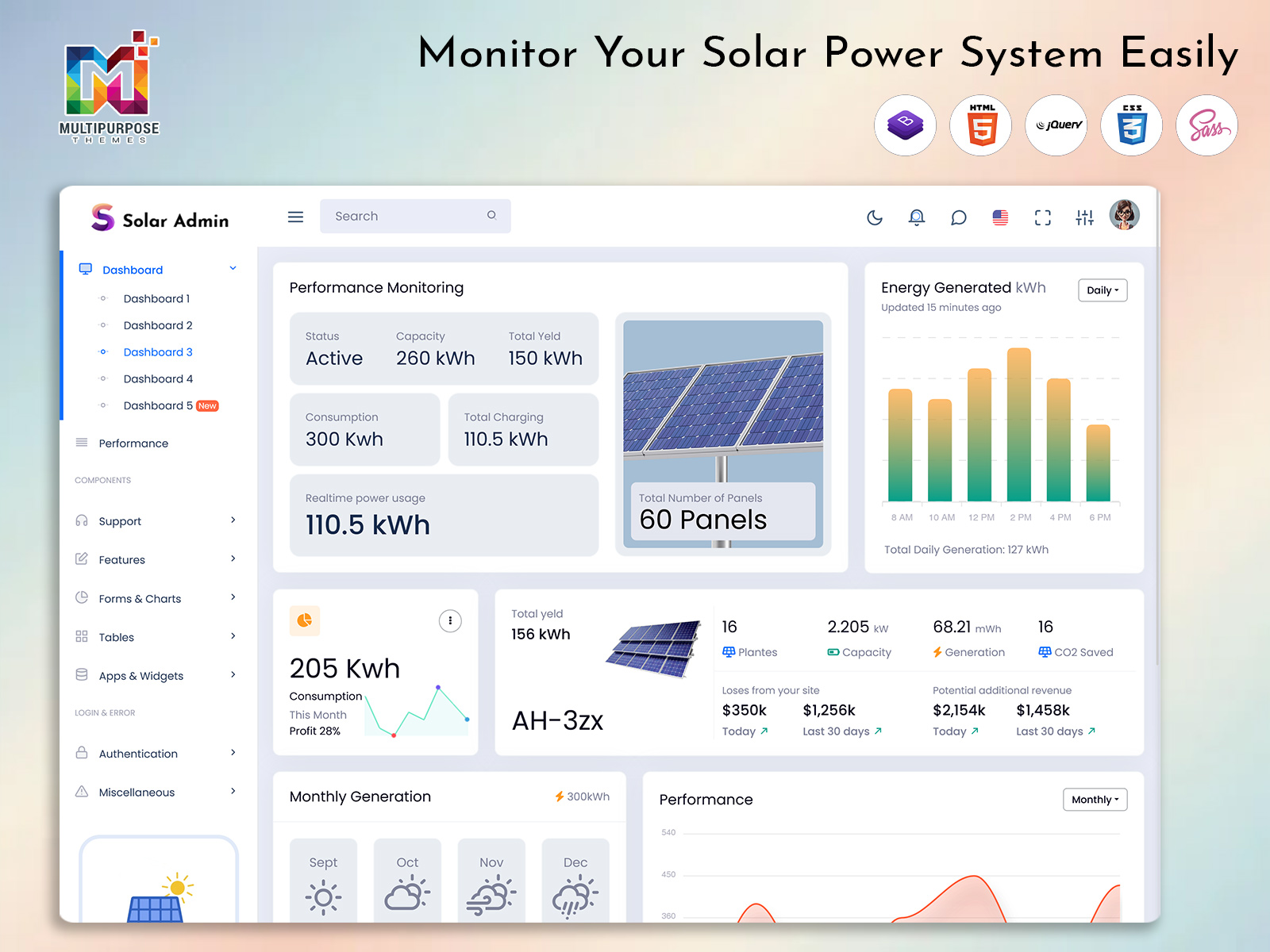
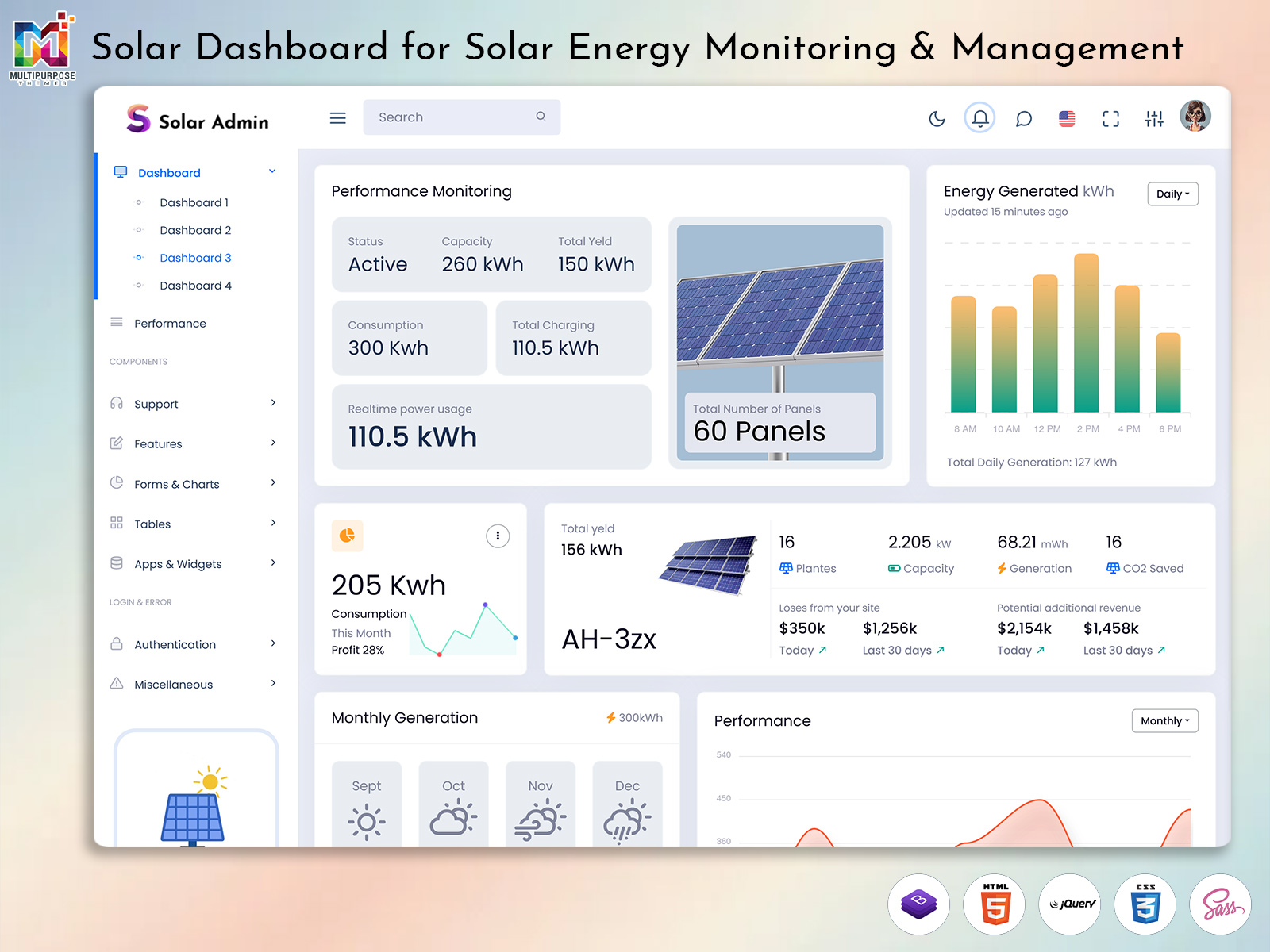
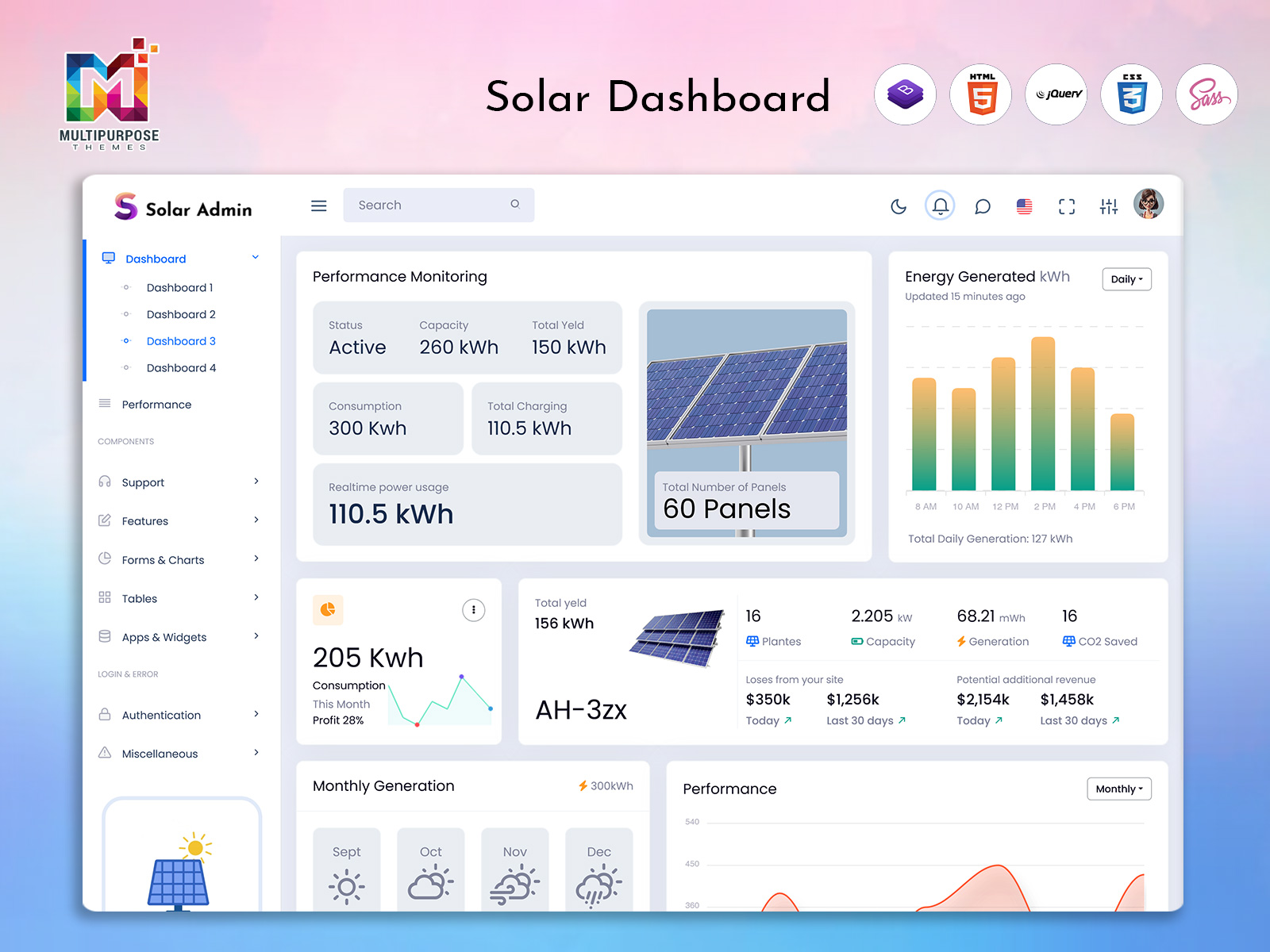
A Solar Dashboard is increasingly becoming a digital platform in the field of renewable energy. With the advancement in solar systems comes the need to harness and utilize its power efficiently. Solar Irradiance Sensor Data is vital in measuring the incoming solar energy. A Solar dashboard converts this sensor data into meaningful insights that can help in forecasting, managing and optimizing the performance of solar energy systems.
When paired with trends, the Solar Irradiance Sensor Data can aid in understanding the performance of a solar system. A Solar Dashboard is a key tool that contributes to the growth of the solar industry.
Explore Solar Dashboard Design
Dashboard: 1
BUY NOW DEMO
Dashboard: 2
BUY NOW DEMO
Dashboard: 3 (New)
BUY NOW DEMO
Dashboard: 4 (New)
BUY NOW DEMO
Understanding Solar Irradiance and Its Impact on Solar Energy
Solar Irradiance refers to the power per unit area received from the sun in the form of electromagnetic radiation. The amount of solar energy generated by a photovoltaic (PV) system depends on the solar irradiance received by the PV panels. Solar Irradiance sensors are essential in measuring the radiation and storing the information. Understanding the patterns in solar irradiance data requires a specialized dashboard. A Solar Dashboard can organize the data in such a way that it offers meaningful insights into the irradiance levels and their impact on the performance of the system. The information is critical for forecasting the energy output.
Role of a Solar Dashboard in Irradiance Data Analysis
A Sun-based dashboard acts as an intermediary between the raw data captured by a Solar Irradiance Sensor and the end-user. Solar admins can view the real-time data stored in the dashboard to determine the performance of the system.
From the trends in solar irradiance, users can identify the periods of highest energy production. They can also predict the system’s behavior based on the patterns observed. A Sun dashboard helps in making informed decisions regarding the energy system.
Sun-Powered Dashboard for Predicting Solar Energy Generation
A prediction feature is one of the most interesting aspects of a dashboard. With a dashboard, admins can forecast energy production based on the solar irradiance sensor data. This is important for system optimization and electricity planning.
Solar admins can utilize the information in the dashboard to determine the energy requirements for a particular period. With a Sun-predicted dashboard, industry admins can also predict the output of their solar systems. It ensures that they have an adequate supply of energy to meet the needs of production. A Solar Bootstrap 5 Dashboard transforms solar irradiance data into predictive insights that can help in planning and system optimization.
Solar Charging Dashboard and Irradiance-Based Charging Decisions
A Solar Charging dashboard is primarily concerned with the charging process of a battery. Solar Irradiance Sensor Data comes into play as it helps in optimizing the charging process for maximum efficiency. A charging system that utilizes a battery storage module for a solar PV system is considered to be one of the most efficient ways of harnessing solar energy.
A Solar Dashboard can be used to monitor the performance of the battery and ensure that it is operating at its fullest potential. Solar admins can store data on the irradiance levels and use it to predict the best times for charging the battery. A thorough understanding of the irradiance data can prevent battery degradation and increase the battery’s lifespan. A Solar Charging Dashboard is crucial for ensuring energy efficiency in solar PV systems.
Solar Meter Dashboard and Irradiance Correlation
A Meter Dashboard is a data visualization tool that provides information on the performance, consumption, and production of a solar power system. A better understanding of the energy production vs. consumption of a system can be achieved by correlating the relevant data with solar irradiance data. A comparison of the production of the solar PV system with the level of solar irradiance is essential for identifying the performance issues or inefficiencies in the system.
A Solar Dashboard admin can store this information for reference and analysis at a later date. A correlation of Solar Irradiance Sensor Data with production data will play a significant role in determining the system’s efficiency.
Solar System Dashboard for End-to-End Insights
An understanding of the performance of a solar energy system can be achieved by analyzing the data gathered from every component. A complete overview of the energy production process is necessary for a successful and efficient solar PV system. With the help of a Dashboard , the energy production process for a PV system can be monitored and optimized for stability and maximum output.
Irradiance data can be compared with the energy output to help the admin understand the rate at which the system is performing. A Solar System Dashboard ensures that a system is operating at the highest performance level possible.
Monitoring Solar Panel Performance Using Irradiance Data
The performance of a PV system should be measured based on the energy output. A slight decline in the energy production of a system can be misleading as it could be triggered by a reduction in the level of solar irradiance. A Solar Panel Performance Dashboard allows one to make comparisons between the output of the system and the level of solar irradiance.
This way, an admin can be assured that the system is not malfunctioning and determine the period it takes for the system to generate power. This data is crucial for making any adjustments or upgrades to the system.
Integration of Solar Designing Software with Solar Dashboards
Solar Designing Software is a program that is primarily used to design a solar PV system before the installation process. The software, when put together with a Solar Dashboard , enables one to analyze the assumptions of a system based on the performance data.
A Solar Designing Software Dashboard ensures that users obtain credible information regarding the potential output of a system based on the level of solar irradiance. The combination of a Solar Dashboard and the solar designing software will ensure that the energy system is fully exploited to offer the highest energy output. A Sun-powered Dashboard and a Solar Designing Software Dashboard, when combined, make up efficient solar system solutions.
Web-Based Solar Dashboards for Centralized Monitoring
Solar Dashboard is a web-based application used to monitor and optimize the performance of a solar power system. The application can offer insights into the system by analyzing the data collected from multiple sources. Web-based Solar dashboards collect solar irradiance data from various locations, and in turn, enable users to compare the system performance across locations.
A web-based application is the most suitable option for firms that deal with multiple solar plants. It offers flexibility and convenience as it enables users to monitor the performance of solar systems through a web browser. An application will also provide remote access to the system’s data and enable the admin to make decisions promptly.
Firms That Need Solar Dashboards with Irradiance Sensor Data
Solar energy firms and organizations deal with the installation, design, operation, and maintenance of solar PV systems. These firms require Solar Dashboards to monitor and optimize their systems. Similarly, manufacturing companies that utilize solar PV systems would benefit from a dashboard as it will help them to predict and plan their energy consumption according to the output of the system. An accurate prediction feature is vital in this field as it minimizes costs and optimizes the production process.
Several organizations and firms conduct research on solar energy. Their primary role is to generate statistics, reports, and recommendations on energy production and consumption. These companies utilize Admin Dashboards to analyze, store, and generate reports on the insights gained from Solar Irradiance Sensor Data. This information is used to devise sustainable and efficient energy production methods and present credible information to stakeholders.
Energy firms and utility companies deal with the production and distribution of power. They will benefit from a Solar Dashboard as it offers a comprehensive overview of the energy production process. Utility companies can utilize a Meter Dashboard to monitor the energy generation and consumption rate in a given location and plan their strategy accordingly. In addition, the application will support them in making adjustments or modifications where necessary.
A dashboard is also essential in the field of education and research. Several educational institutions offer courses on renewable energy. In addition, some firms specialize in energy research and development. These organizations can benefit from a Solar Dashboard as it will support their research and analysis of the energy production process. Educational institutions can also use the application to support the learning process of students.
In the field of technology, technology firms tend to incorporate energy dashboards into their applications for web and mobile applications. Technology startups can benefit from developing a dashboard as it will be their main selling point. It will serve as the main source of income for the startup as it integrates the web application with their intended clients.
Solar Dashboards for Mobile Applications and Smart Energy Systems
Most applications are compatible with smartphones and offer several insights. A Solar Dashboard can be utilized as a mobile application to offer flexibility and convenience to the users. Smart energy systems are essential in current systems as they offer remote access and control of a system.
A dashboard can be integrated with smart energy systems to offer dynamic control of a system. Irradiance insights stored in a dashboard can be used to remotely manipulate smart appliances, charging systems, and storage systems. This way, the energy system can be optimized for maximum efficiency and convenience.
Importance of Data Accuracy and Reliability
A Solar Dashboard relies on accurate and reliable data for its predictions and recommendations. An Admin Dashboard is ideal for storing and organizing data for a seamless user experience. The accuracy of the data stored in the dashboard is critical for the admin. Having reliable data ensures that the admin gains credibility and trust from stakeholders, if any.
It also ensures that they have a long-term perspective of the energy production process. Storing historical data in a dashboard is vital for future insights.
Future of Solar Admin Dashboards and Irradiance Analytics
The future of Solar Dashboard lies in smart analytics and predictions. As a user, it is essential to invest in technologies that offer long-term benefits. In the coming years, Solar Dashboards will store and analyze the data, and go further to offer recommendations based on the insights gained from the data. The future of Admin Dashboards is promising as it will store and analyze the data, and go further to offer recommendations based on the insights gained from the data.
Conclusion: Solar Power Dashboard as a Data-Driven Solar Intelligence Tool
A Solar Dashboard will serve as a data-driven intelligence tool when dealing with solar sensor data. The data generated by the Solar Irradiance is critical in optimizing the performance of a system. From the Sun charging dashboard to Solar Meter Dashboard and Solar System Dashboard, every application requires irradiance sensor data for efficient performance.
Coupling a Solar Dashboard with Solar Panel Performance will offer an in-depth analysis of the performance of a system. The combination of a Solar Dashboard and a Solar Designing Software will also provide an effective solution for long-term energy production.

Related Posts