What is a Real Estate Dashboard? A Real Estate Dashboard is a digital interface created…
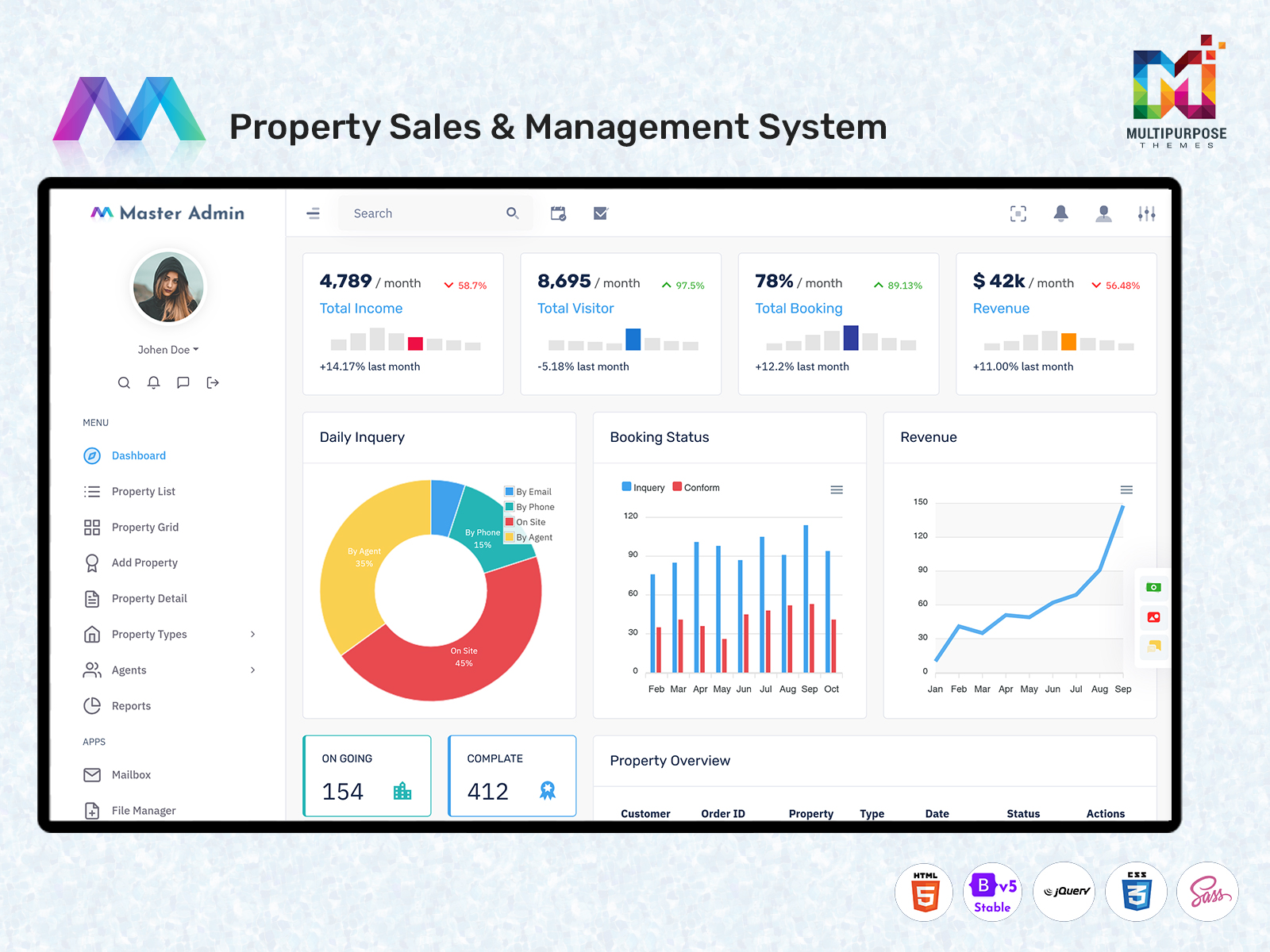
Professional Property Monitoring System with Dashboard UI Design
Reading Time: 6 minutes
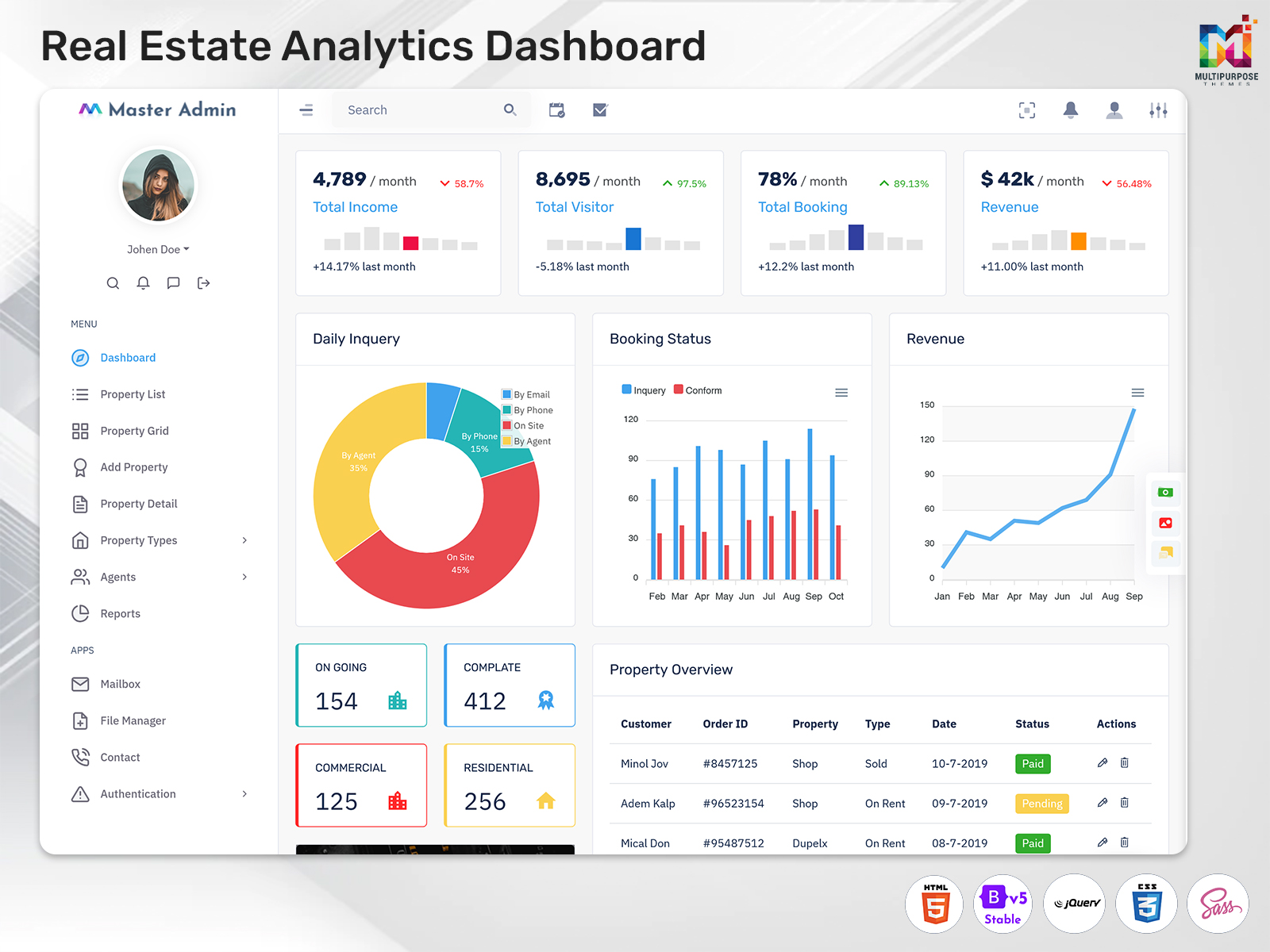
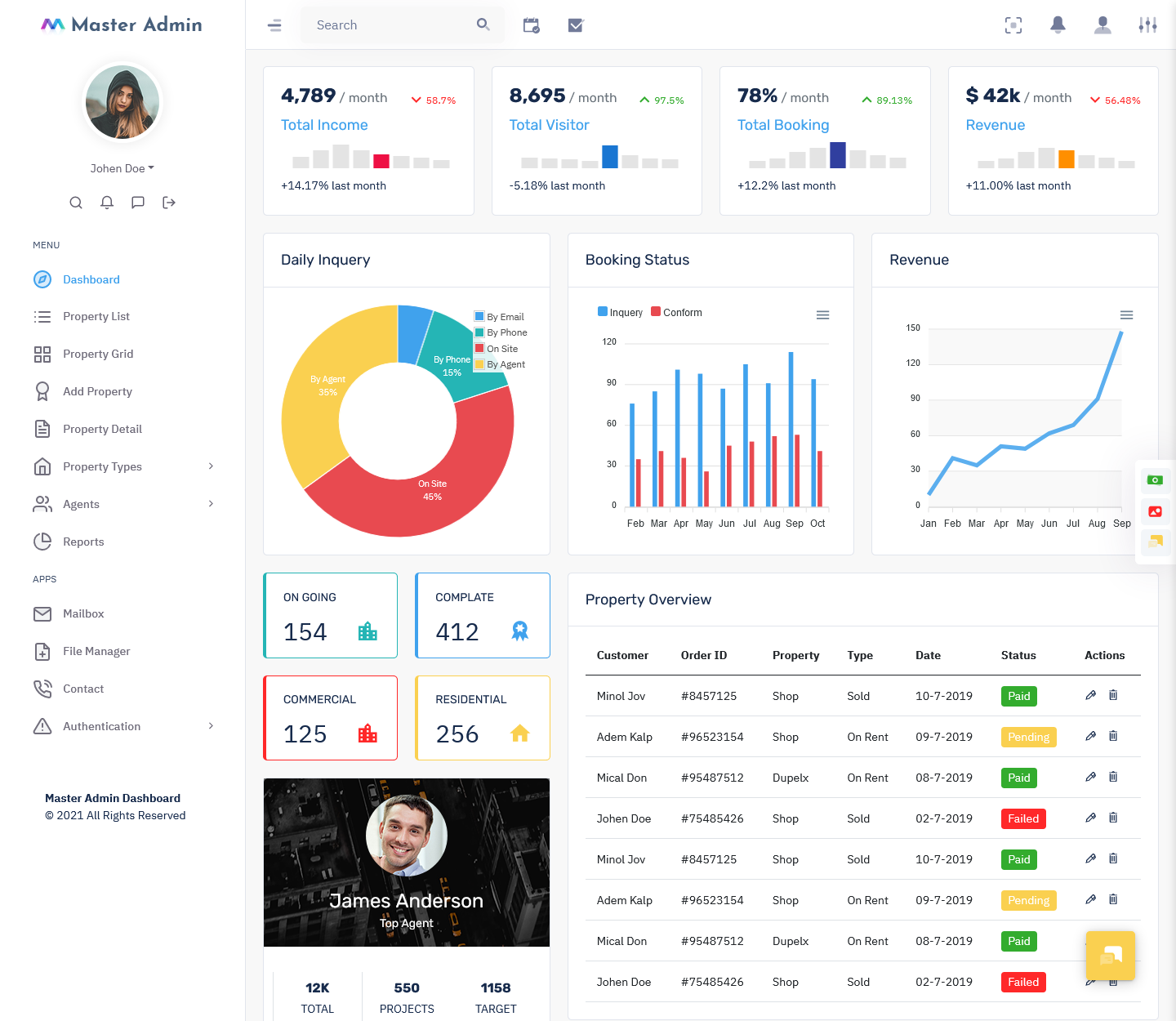
The real estate industry is rapidly evolving with digital tools that simplify property tracking, sales management, and project monitoring. A modern Real Estate Dashboard plays a key role in bringing all property-related operations into one unified system. It helps businesses manage listings, agent activities, rental records, and commercial property insights with real-time data visualization. With advanced reporting features, it becomes easier to understand performance trends and make better business decisions.
Watch Full Video
In today’s competitive market, tools like Real Estate Software Dashboard, Real Estate Property Software, and Real Estate WebApp Dashboards are essential for smooth operations. Platforms such as Property Dashboard UI Kit and Real Estate Project Dashboard support better workflow for agents and managers. This system also improves Real Estate Sales Dashboard tracking, Real Estate Commercial Dashboard insights, and Property Software Dashboard control, making property management more efficient and structured.
How Modern Real Estate Systems Manage Property Operations Efficiently
Today’s real estate industry depends heavily on digital tools that simplify property tracking, sales monitoring, and project handling. These systems allow businesses to manage listings, agent activities, and client records in a single organized platform. It reduces manual effort and improves accuracy by bringing all property-related information into one structured dashboard view.
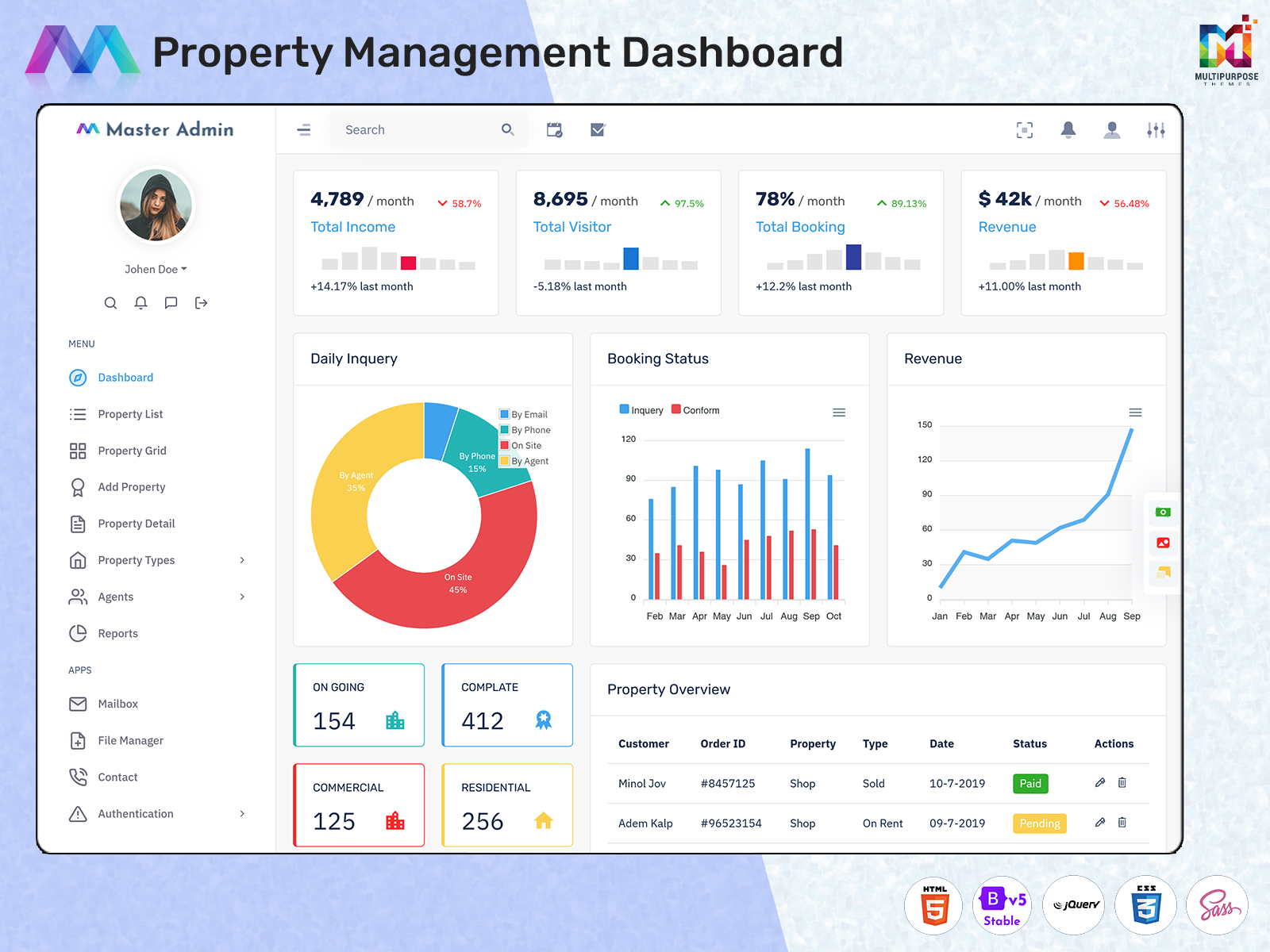
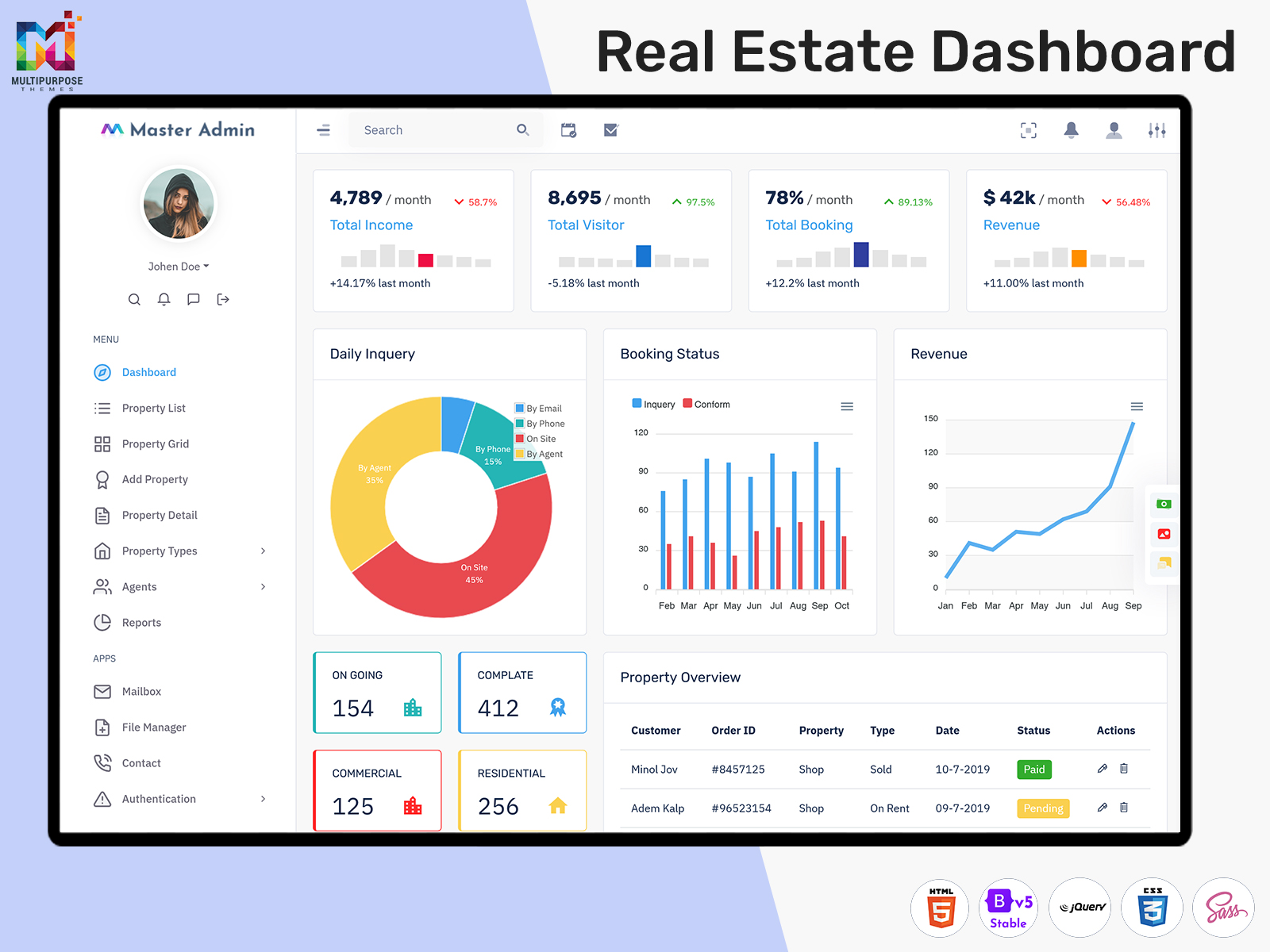
A Property Dashboard plays a key role in connecting different modules like property listings, sales tracking, rental updates, and commercial insights. It works alongside Real Estate Property Software Dashboard, Property Dashboard UI Kit, and Real Estate WebApp Dashboards to deliver real-time reports and visual analytics. With integrated charts and performance tracking, companies can manage projects and property portfolios more effectively while improving overall decision-making speed.
Types of Property Dashboard Systems in Real Estate Platforms
Real estate platforms are not built on a single dashboard. Instead, they use multiple specialized systems that handle different business needs such as sales, projects, rentals, agents, and commercial properties. Each dashboard type focuses on a specific function and helps in organizing property data in a structured and measurable way. This improves visibility, reduces confusion, and supports faster decision-making in daily operations.
A Real Estate Sales Dashboard is one of the most important systems because it tracks property deals, lead performance, and revenue flow. Below is a clear numbered breakdown of major dashboard types used in real estate platforms:
1. Sales Dashboard System
Focuses on property transactions, buyer leads, conversion rates, and monthly revenue tracking. It helps sales teams understand performance trends clearly.
2. Project Monitoring Dashboard
Used for tracking construction progress, deadlines, budget usage, and project completion stages in real estate developments.
3. Rental Management Dashboard
Manages rent collection, tenant records, lease agreements, and occupancy status for residential and commercial properties.
4. Commercial Property Dashboard
Handles office spaces, retail units, and investment properties with detailed performance and occupancy analytics.
5. Property Agent Dashboard
Tracks agent performance, assigned leads, property listings, and client communication history.
6. Property UI Kit Dashboard System
Provides ready design components and layouts that help developers build consistent and responsive real estate interfaces.
7. Unified Software Dashboard System
Combines Real Estate Software Dashboard, Property Software Dashboard, and WebApp Dashboards into one centralized platform for complete property control.
These structured systems ensure that every part of real estate operations is managed separately but connected through a single digital ecosystem.
VIEW DEMO BUY NOW
Before vs After Real Estate Dashboard Usage
In traditional real estate operations, property data is often managed through manual records, spreadsheets, and separate tools. This creates delays in updating listings, confusion in tracking sales, and errors in reporting project progress. Teams spend more time managing data instead of focusing on business growth, which slows down overall performance.
With modern digital systems like a Commercial Property Dashboard, everything becomes faster and more structured. Data is updated in real time, sales performance is tracked instantly, and property listings are managed in a single system. It improves coordination between agents, project teams, and management. Reports become accurate, decision-making becomes quicker, and overall productivity increases significantly in daily real estate operations.
System Workflow Explained
A modern real estate platform operates through a structured digital flow that simplifies property management from start to finish. It gathers information from different sources like property listings, sales entries, agent updates, and project records, then organizes everything into a centralized system. This allows real estate teams to access accurate and updated information without switching between multiple tools.
A Real Estate Dashboard Design processes data step by step to deliver clear insights. First, property and client data is collected from various inputs. Then it is processed and converted into visual reports such as charts, performance graphs, and status tables. Finally, users can monitor sales activity, rental progress, commercial property updates, and project timelines in real time. This structured workflow improves efficiency, reduces errors, and helps real estate businesses manage operations smoothly.
Benefits of Real Estate Dashboard System
1. Better Data Organization
A real estate dashboard helps store all property-related data such as listings, sales records, rental details, and project updates in a structured format. It removes confusion caused by scattered files and makes information easy to access, update, and manage efficiently in daily real estate operations.
2. Improved Sales Tracking
Sales activities, lead conversions, and revenue performance are tracked in a clear and organized manner. This helps real estate teams identify high-performing properties, monitor agent progress, and improve sales strategies, resulting in better conversion rates and increased overall property sales performance.
3. Efficient Project Monitoring
Real estate projects can be monitored from planning to completion using a centralized system. It tracks deadlines, budget usage, and construction progress in real time. This ensures projects stay on schedule, reduces risks, and improves coordination between teams and stakeholders.
4. Enhanced Agent Performance
Agent dashboards provide visibility into assigned properties, client interactions, and performance metrics. This helps managers evaluate productivity, improve accountability, and support agents with better insights, ultimately increasing efficiency and improving client satisfaction in property dealings.
5. Better Business Growth
By combining analytics, automation, and real-time insights, real estate companies can scale operations more effectively. It improves planning, enhances customer experience, and supports long-term growth by providing clear visibility into all property business activities.
Easy Future Work in Real Estate Systems
In modern real estate operations, digital tools are designed to make daily work faster, simpler, and more organized. Instead of handling multiple files or manual records, teams can manage everything through one connected platform. This reduces workload and improves accuracy in handling property data, sales updates, and project tracking.
A Real Estate WebApp Dashboard supports future-ready operations by integrating automation, real-time reporting, and smart data visualization. It allows agents and managers to access property insights anytime, track performance instantly, and manage clients without delays.
In the future, real estate systems will become even more intelligent with predictive analytics and automated decision support. Businesses will be able to forecast property demand, optimize pricing, and improve customer experience with minimal manual effort. This makes operations more efficient, scalable, and growth-focused.
Conclusion
Modern real estate businesses are increasingly relying on digital platforms to manage complex property operations in a more structured and efficient way. From tracking property listings to monitoring sales performance and project progress, everything becomes more organized when handled through a centralized system. This helps reduce manual effort, improves accuracy, and supports faster business decisions in daily operations.
A Real Estate Sales Dashboard enhances this transformation by providing clear insights into transactions, lead performance, and revenue tracking. It allows real estate teams to monitor sales activity in real time, evaluate agent performance, and improve conversion strategies. With better visibility and structured reporting, companies can make smarter decisions and achieve stronger business growth in a competitive property market.
FAQs
1. What is a real estate dashboard used for?
It is used to manage property listings, sales data, project tracking, and agent activities in one system. It helps real estate businesses organize all information in a simple and visual way.
2. How does real estate software help property businesses?
It helps manage property records, client details, and transactions in a structured way. It reduces manual work and improves speed, accuracy, and daily productivity.
3. What is included in a property dashboard system?
It includes sales tracking, rental management, project updates, agent performance monitoring, and commercial property insights in a single platform.
4. Why is a real estate dashboard important?
It is important because it turns complex property data into easy visual reports. This helps teams understand performance quickly and make better decisions.
5. Can real estate dashboards improve sales performance?
Yes, they help track leads, monitor conversions, and analyze sales trends. This improves decision-making and increases overall sales efficiency.
6. What is a property dashboard UI kit?
It is a pre-designed set of interface components used to build real estate dashboards quickly. It includes layouts, charts, and UI elements.
7. Are real estate dashboards useful for future business growth?
Yes, they support automation, real-time insights, and better data control, helping real estate businesses grow faster and more efficiently.

Related Posts