

What is an HRM Dashboard? An HRMS dashboard is a centralized platform which is created…
HRM Dashboard Design for Modern Workforce Management and Business Productivity in 2026
Reading Time: 9 minutes
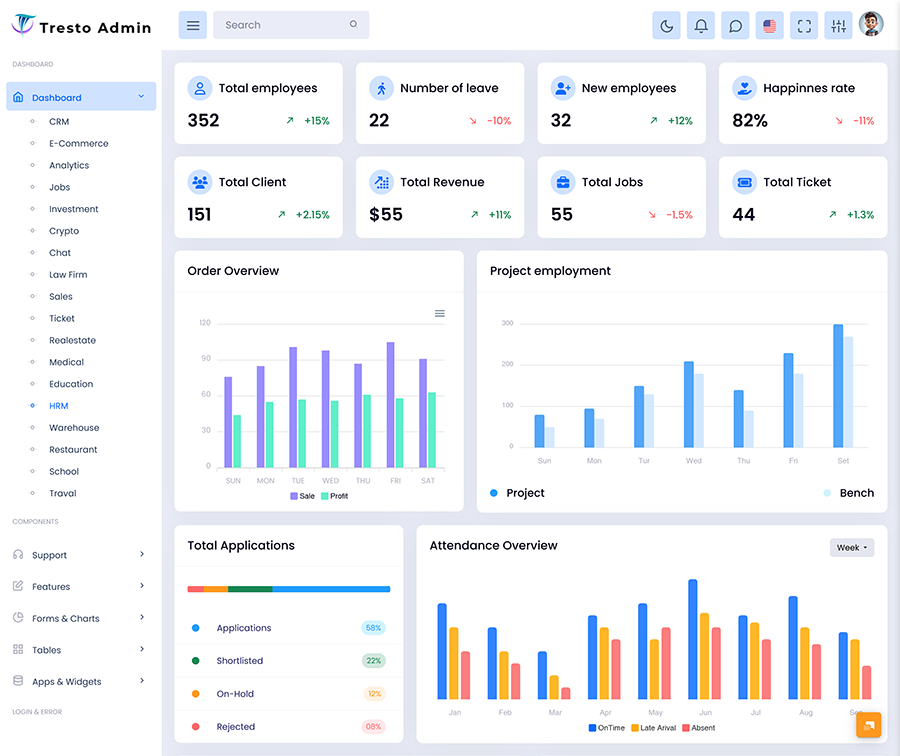
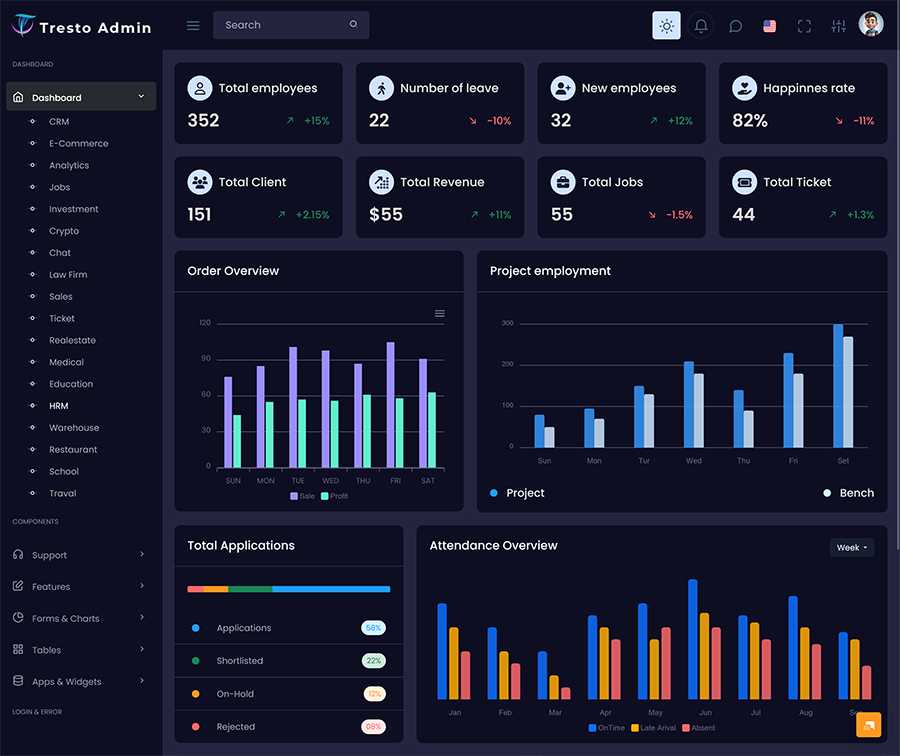
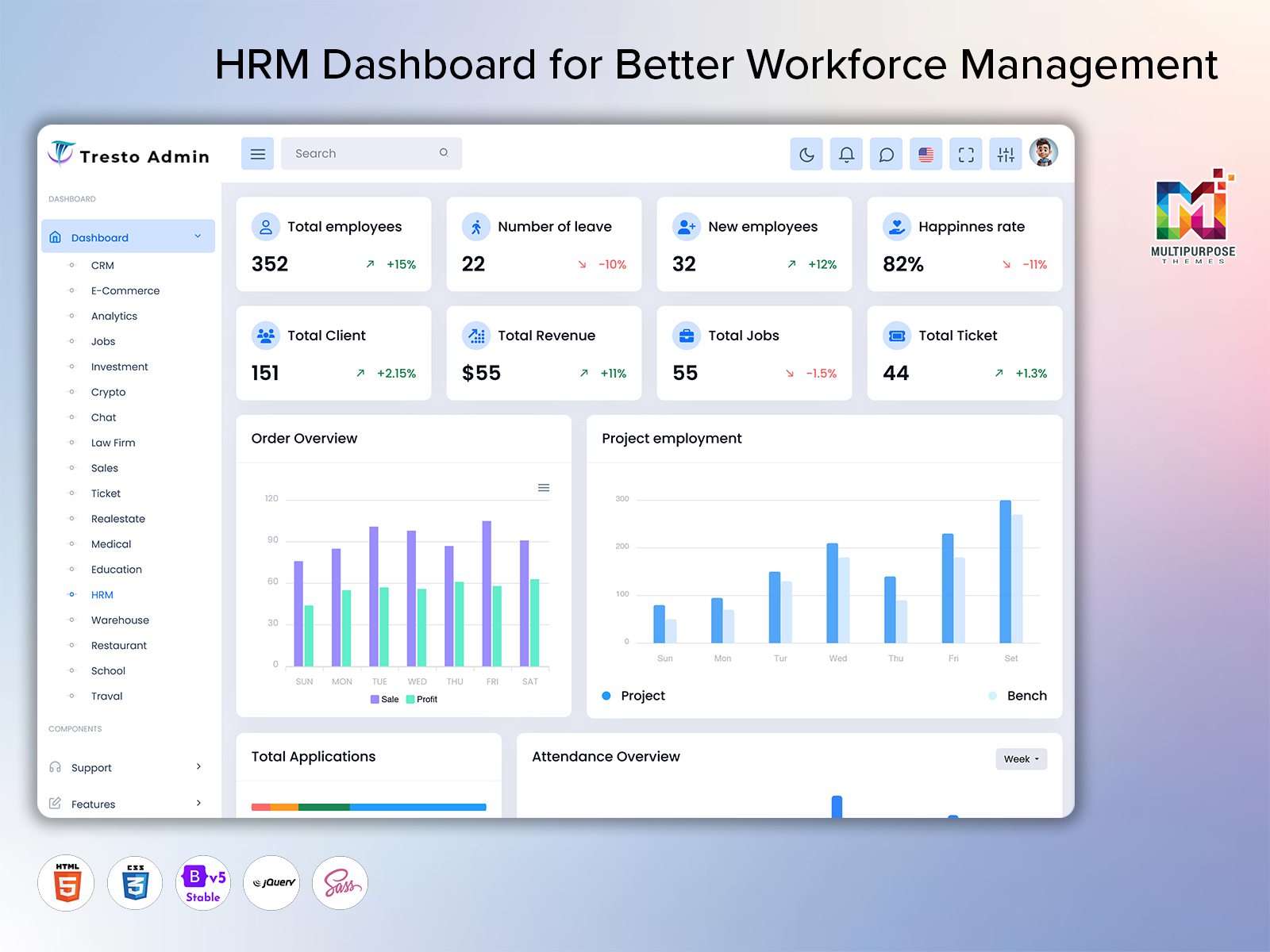
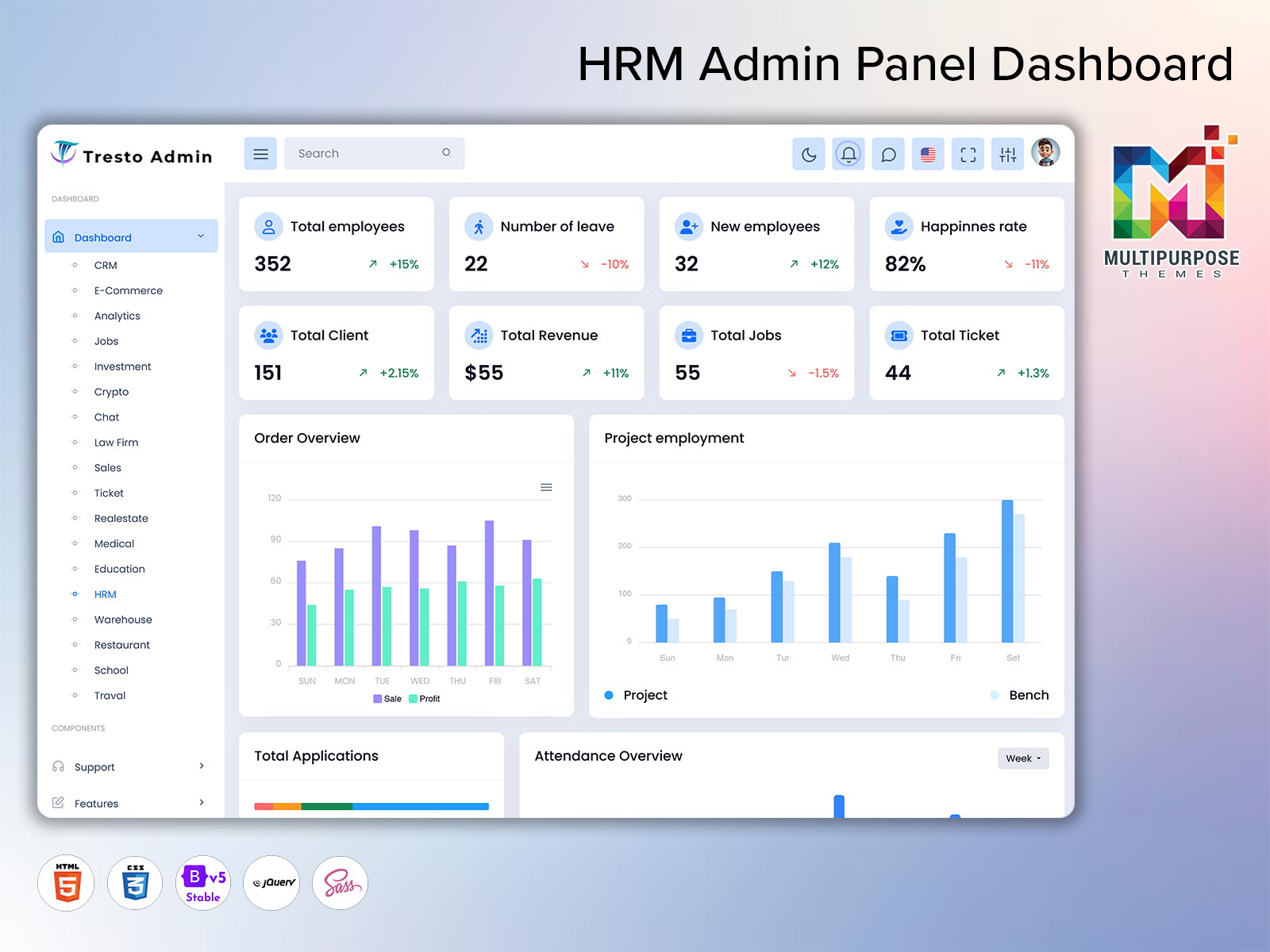
An HRM Dashboard helps organizations manage employees, recruitment, attendance, payroll, and workforce activities from one centralized platform. A modern HRMS Dashboard provides a clear overview of daily HR operations, allowing managers to monitor important information without navigating multiple systems. An HRM App Dashboard makes employee records, leave management, hiring status, and performance tracking easily accessible, while an effective HRM Dashboard Design improves usability through organized layouts, interactive charts, and real-time reports. These capabilities help businesses make faster decisions and maintain a productive work environment.
Watch Full Video
A powerful HRM Software Dashboard developed with an HRM Software WebApp offers flexibility for growing businesses and enterprises. Using an HRM Bootstrap 5 Dashboard, HRM WebApplication Kit, or HRM Admin Ui Kit enables developers to build responsive and scalable HR solutions. An HRM Admin Dashboard Template, HRM Bootstrap Admin Template, and HRM Admin Dashboard Ui Kit simplify interface development while maintaining a professional appearance. Combined with an HRM Ui Framework, HRM Ui Kit, and HRM Bootstarp 5 Admin Template, these modern HRM Dashboards deliver a smooth user experience that supports efficient workforce management and long-term organizational success.
Explore HRM Dashboard for Better Workforce Management
An HRM Dashboard serves as the central hub where businesses can manage employee information, recruitment activities, attendance records, payroll updates, and workforce performance from a single interface. A well-planned HRM WebApp Dashboard Design allows HR professionals to access essential data quickly while reducing manual work and improving operational accuracy. Organizations using an HRM Employee Dashboard can monitor employee activities, department performance, project assignments, and important notifications in real time. This structured approach helps teams respond faster to changing business requirements and maintain organized HR processes.
Modern HRMS Management platforms continue to evolve with intelligent reporting, interactive visualizations, and customizable modules. An advanced HRMS Management Dashboard integrates employee records, HRM Employee List, HRM Employee Charts, and HRM Admin Panel Dashboard into one streamlined environment for better decision-making.
Businesses also benefit from HRM Bootstrap Template solutions that provide responsive layouts and flexible customization. Whether managing recruitment, employee engagement, or HRMS Software operations, these digital tools improve productivity, simplify administration, and create a better experience for both HR teams and employees while supporting long-term organizational growth.
Total Jobs and Recruitment Progress System in HRMS Management Dashboard
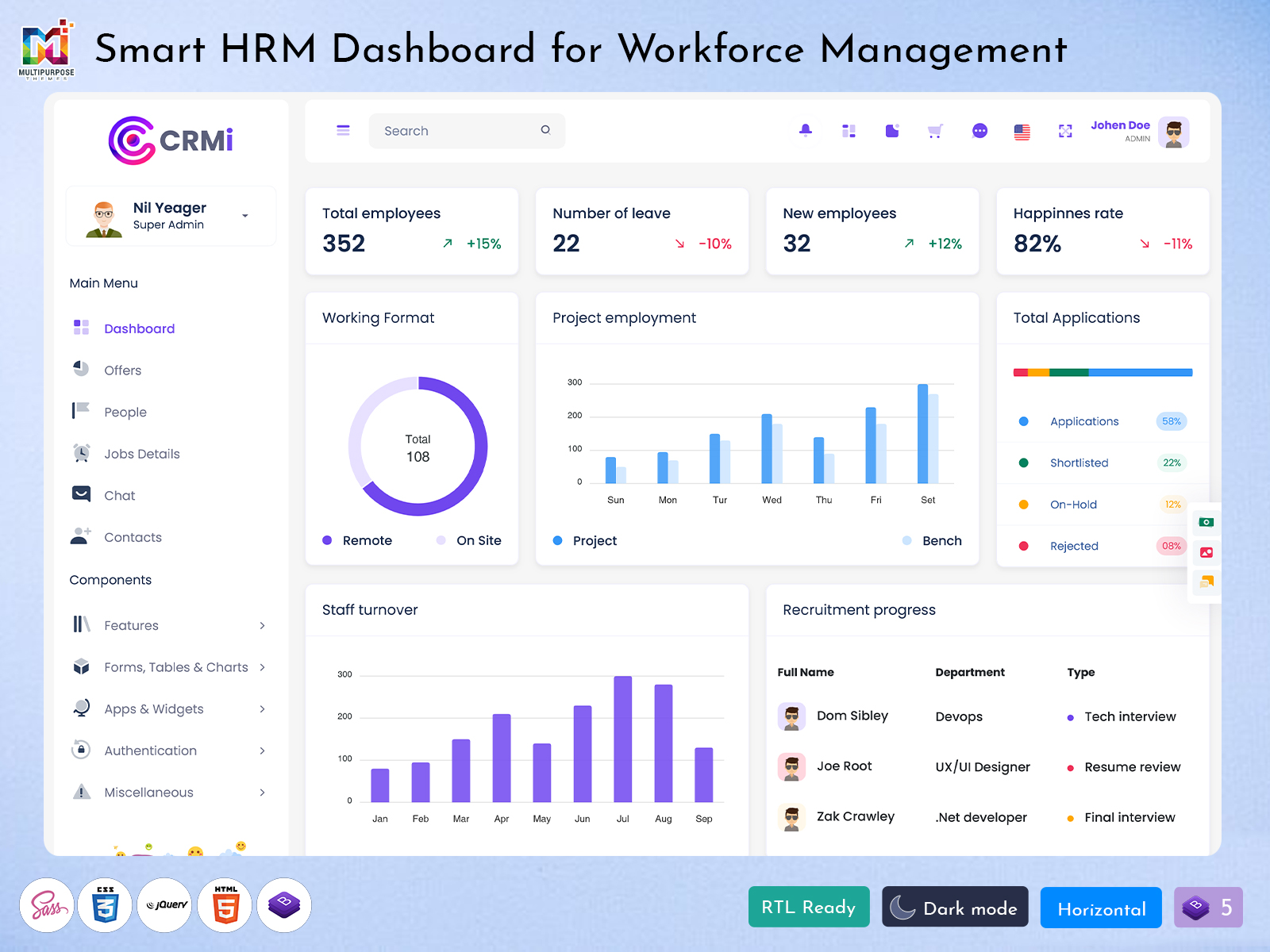
An effective recruitment module is one of the most valuable components of an HRMS Management Dashboard because it gives HR teams complete visibility into every hiring stage. From creating job openings to monitoring interview schedules and final selections, the dashboard keeps the recruitment process organized and easy to manage. Recruiters can review active vacancies, track departmental hiring requirements, and monitor recruitment timelines without relying on separate spreadsheets. This centralized approach helps reduce delays, improves coordination among hiring managers, and ensures every position moves smoothly through the recruitment pipeline.
Businesses using HRMS Management Software can also evaluate hiring performance through visual reports and real-time recruitment metrics. A well-structured HRM Project Management Dashboard can connect workforce planning with current and upcoming projects, making it easier to identify staffing requirements before project execution begins. HR managers can compare recruitment progress with organizational goals, review hiring trends, and allocate resources more efficiently. Combined with reliable HRMS Software, the recruitment management system supports faster decision-making, improves candidate selection accuracy, and helps organizations build a skilled workforce while maintaining consistent hiring operations across different departments.
Total Applications Tracking with Candidate Management Flow
An organized application tracking system helps HR teams manage every candidate from the moment an application is received until the final hiring decision is made. A modern HRM Admin Panel provides a centralized workspace where recruiters can review applications, filter candidates based on skills, schedule interviews, update recruitment stages, and maintain complete candidate records. Instead of handling large volumes of resumes manually, the system keeps every application structured and easily searchable. This improves communication between recruiters and hiring managers while reducing the chances of missing qualified candidates during the recruitment process.
A well-developed HRM Project Management solution can also connect recruitment activities with departmental staffing needs, ensuring that hiring aligns with ongoing and future business projects. Using an HRM Project Dashboard, managers can monitor workforce availability alongside candidate progress to make timely hiring decisions. Organizations implementing an HRM Project Management Bootstrap Dashboard gain better visibility into recruitment workflows, resource planning, and hiring timelines through interactive reports and organized data panels. This integrated candidate management flow enhances recruitment efficiency, supports informed decision-making, and creates a smoother hiring experience for both HR professionals and job applicants.
Key Features of an HRM Dashboard
A modern HRM Dashboard combines multiple HR functions into a single digital workspace, making employee management faster and more organized. An advanced HRM Employee Dashboard presents important information through interactive widgets, reports, and visual indicators that help HR professionals monitor daily activities with greater accuracy. From workforce records to project updates, every module works together to improve efficiency and reduce administrative workload. Below are some essential features that make an HRM solution more effective for organizations of every size.
1. Centralized Employee Information
A complete HRM Employee List stores employee profiles, departments, designations, contact details, and employment records in one secure location. This makes searching, updating, and managing workforce information much easier while reducing manual documentation.
2. Interactive Employee Charts
Dynamic HRM Employee Charts display workforce statistics through visual reports that simplify performance analysis, department distribution, attendance trends, and employee growth. These graphical insights support better planning and informed decision-making.
3. Smart Administrative Control
An organized HRM Admin Panel Dashboard provides quick access to user permissions, employee requests, system notifications, and HR activities. Administrators can manage multiple HR functions from one interface while maintaining operational consistency.
4. Project and Workforce Coordination
Integrated HRM Project Management tools connect employees with ongoing assignments, allowing managers to monitor workloads, project participation, and team availability. This improves resource planning and keeps projects aligned with workforce capacity.
5. Responsive and Modern User Experience
Built using an HRM Bootstrap Template, the dashboard delivers a responsive interface that works smoothly across desktops, tablets, and mobile devices. The modern design improves navigation, enhances usability, and allows HR teams to complete daily tasks efficiently from any location.
Staff Turnover Analysis and Workforce Stability Reports
Employee retention is an important indicator of organizational health, and a well-designed reporting system helps businesses understand workforce movement with greater accuracy. By monitoring hiring, resignations, retirements, and internal transfers, organizations can identify trends that influence employee stability. An advanced HRM Project Management Dashboards solution brings workforce analytics together with operational data, allowing managers to evaluate staffing patterns across different departments and projects. These insights help HR teams recognize areas with higher turnover and develop strategies that improve employee engagement and long-term retention.
A comprehensive reporting system also supports better workforce planning by presenting historical records and current employment statistics in an easy-to-understand format. Managers can compare retention rates, monitor departmental performance, and evaluate staffing consistency without relying on manual reports. Visual analytics make it easier to understand workforce behavior, identify potential skill shortages, and prepare for future recruitment needs. With accurate turnover reports and real-time workforce information, organizations can strengthen employee retention strategies, improve resource planning, and maintain a balanced workforce that supports sustainable business growth.
Order Overview and Operational Workflow Monitoring
An organized operational monitoring system helps businesses track daily activities, task completion, approvals, and workflow progress from a single interface. Although an HR platform primarily focuses on workforce management, it also supports internal operational processes by presenting ongoing activities in a structured format. Managers can monitor task assignments, approval status, pending requests, departmental performance, and workflow progress without switching between multiple applications. This centralized visibility improves coordination, reduces processing delays, and ensures every operational step is completed according to organizational procedures.
A modern dashboard also provides real-time summaries through interactive reports, activity timelines, and performance indicators that simplify operational monitoring. Team leaders can review completed tasks, identify pending actions, monitor resource utilization, and evaluate workflow efficiency across different departments. Automated notifications and organized reporting help eliminate communication gaps while improving accountability among employees. With accurate operational insights available in one place, businesses can optimize internal processes, improve productivity, maintain smoother daily operations, and support faster decision-making without increasing administrative complexity.
Advantages of Using an HRM Dashboard for Business Operations
A modern HRM Dashboard offers practical benefits that help organizations simplify workforce management while improving operational efficiency. By bringing employee information, reporting, project tracking, and administrative activities into one platform, businesses can reduce manual work and improve collaboration across departments. The following advantages demonstrate how an advanced HR management solution supports daily operations and long-term organizational growth.
1. Improved Workforce Visibility
Managers gain instant access to employee records, attendance summaries, project participation, and workforce updates from a centralized dashboard. This improves transparency and helps leaders make informed decisions based on accurate information.
2. Faster Administrative Processes
Routine HR activities such as approvals, employee record updates, document management, and request handling become more efficient through automated workflows. This reduces processing time and allows HR teams to focus on strategic responsibilities.
3. Better Project Resource Planning
Integrated workforce information enables managers to assign employees according to project requirements, monitor team availability, and balance workloads effectively. Proper resource allocation improves productivity while supporting timely project completion.
4. Data-Driven Decision Making
Interactive reports, visual analytics, and performance indicators provide meaningful insights into workforce trends and operational activities. These reports help organizations evaluate performance, identify improvement opportunities, and support future planning with greater confidence.
5. Scalable and User-Friendly Management
A responsive HR management platform adapts to growing business requirements without increasing operational complexity. Easy navigation, organized modules, and centralized access create a better user experience for administrators, managers, and employees while supporting sustainable business expansion.
Project Employment and Resource Allocation Dashboard
An effective Project Employment and Resource Allocation Dashboard helps organizations assign the right employees to the right projects while maintaining balanced workloads across departments. By providing a centralized view of available staff, project requirements, employee skills, and assignment schedules, managers can make faster and more accurate resource planning decisions. This organized approach reduces scheduling conflicts, prevents resource shortages, and ensures that every project has the necessary workforce to meet deadlines. Real-time updates also help teams respond quickly when priorities or staffing requirements change.
The dashboard improves collaboration by connecting workforce availability with project timelines and business objectives. Managers can monitor active assignments, review employee utilization, identify underused resources, and adjust allocations based on project demands. Interactive reports and visual summaries simplify workforce planning, allowing organizations to optimize productivity without overloading employees. A structured resource allocation system also supports better communication between HR teams and project managers, ensuring every assignment is aligned with organizational goals. As businesses continue to grow, this dashboard provides the flexibility needed to manage multiple projects efficiently while maintaining workforce performance and operational stability.
Conclusion
An HRM Dashboard provides organizations with a practical and efficient way to manage every aspect of workforce operations from a single platform. From recruitment and employee records to project planning, workforce analytics, and operational monitoring, the dashboard helps HR teams and managers stay organized while improving overall productivity. Centralized information, real-time reporting, and interactive visualizations simplify daily administrative tasks and support faster, more informed business decisions.
As organizations continue to expand, adopting a modern HR management solution becomes increasingly valuable for maintaining efficiency and workforce transparency. A well-designed dashboard improves collaboration between departments, streamlines employee management, enhances project coordination, and supports long-term business growth. By combining automation, structured reporting, and user-friendly navigation, businesses can reduce manual effort while creating a more productive and organized working environment. Investing in an advanced HR management platform allows companies to adapt to changing workforce requirements with confidence and build a strong foundation for future success.
FAQs
1. Which is the best HRM Dashboard template for modern HR management?
The best HRM Dashboard template offers employee management, recruitment tracking, attendance monitoring, payroll reports, and project management in one place. MultiPurpose Themes provides responsive HRM dashboard templates with modern UI, clean layouts, and business-ready components.
2. Where can I download an HRM Bootstrap 5 Dashboard template?
You can download an HRM Bootstrap 5 Dashboard template from trusted template providers that offer responsive and well-documented products. MultiPurpose Themes offers professionally designed HRM Bootstrap Admin Templates suitable for startups, businesses, and enterprise HR applications.
3. What features should an HRMS Dashboard include?
A complete HRMS Dashboard should include employee profiles, recruitment management, attendance, leave tracking, payroll, performance reports, project management, and interactive charts. MultiPurpose Themes develops HRM dashboard solutions with all these essential features.
4. Is there a responsive HRM Admin Dashboard Template available?
Yes. A responsive HRM Admin Dashboard Template works smoothly across desktop, tablet, and mobile devices. MultiPurpose Themes provides fully responsive templates built with Bootstrap 5 to ensure an excellent user experience on every screen size.
5. Can I use an HRM Dashboard for employee and project management?
Yes. A modern HRM Dashboard helps manage employee records, assign projects, monitor workloads, and track team performance from a centralized platform. MultiPurpose Themes offers templates designed to simplify both HR and project management workflows.
6. What is included in an HRM Employee Dashboard?
An HRM Employee Dashboard generally includes attendance details, leave requests, personal profiles, assigned projects, notifications, and performance summaries. MultiPurpose Themes designs dashboards that provide employees with quick access to important workplace information.
7. Why should developers choose an HRM Bootstrap Admin Template?
Developers prefer an HRM Bootstrap Admin Template because it saves development time, offers reusable UI components, and supports responsive web applications. MultiPurpose Themes provides clean, customizable templates that are easy to integrate into HR software projects.
8. Which company provides premium HRMS Dashboard UI Kits?
Several companies develop HR dashboard templates, but MultiPurpose Themes offers premium HRMS Dashboard UI Kits with modern design, reusable components, responsive layouts, and developer-friendly code for faster application development.
9. Can an HRM Dashboard be customized for different businesses?
Yes. Most HRM Dashboards can be customized to match different industries, company sizes, and workflow requirements. MultiPurpose Themes creates flexible HRM dashboard templates that can be easily adapted for various business needs.
10. Why choose MultiPurpose Themes for an HRM Dashboard Template?
MultiPurpose Themes delivers professionally designed HRM Dashboard Templates with responsive Bootstrap 5 layouts, modern UI components, clean coding standards, regular updates, and easy customization, making them suitable for HRMS software, employee management systems, and enterprise web applications.

Related Posts


This Post Has 0 Comments