

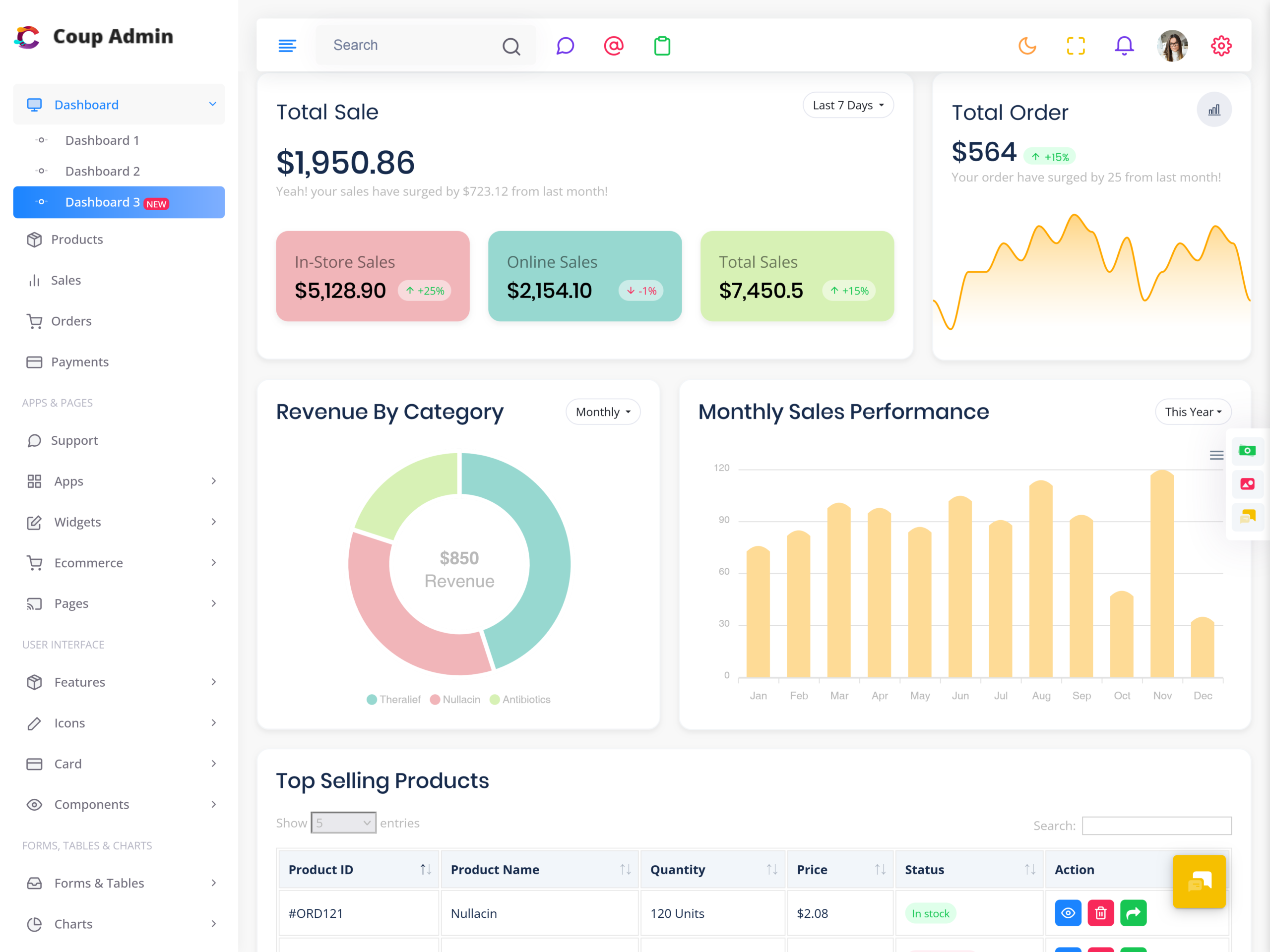
What is a Hospital Dashboard? Hospital dashboard is a centralized online platform which helps hospitals…
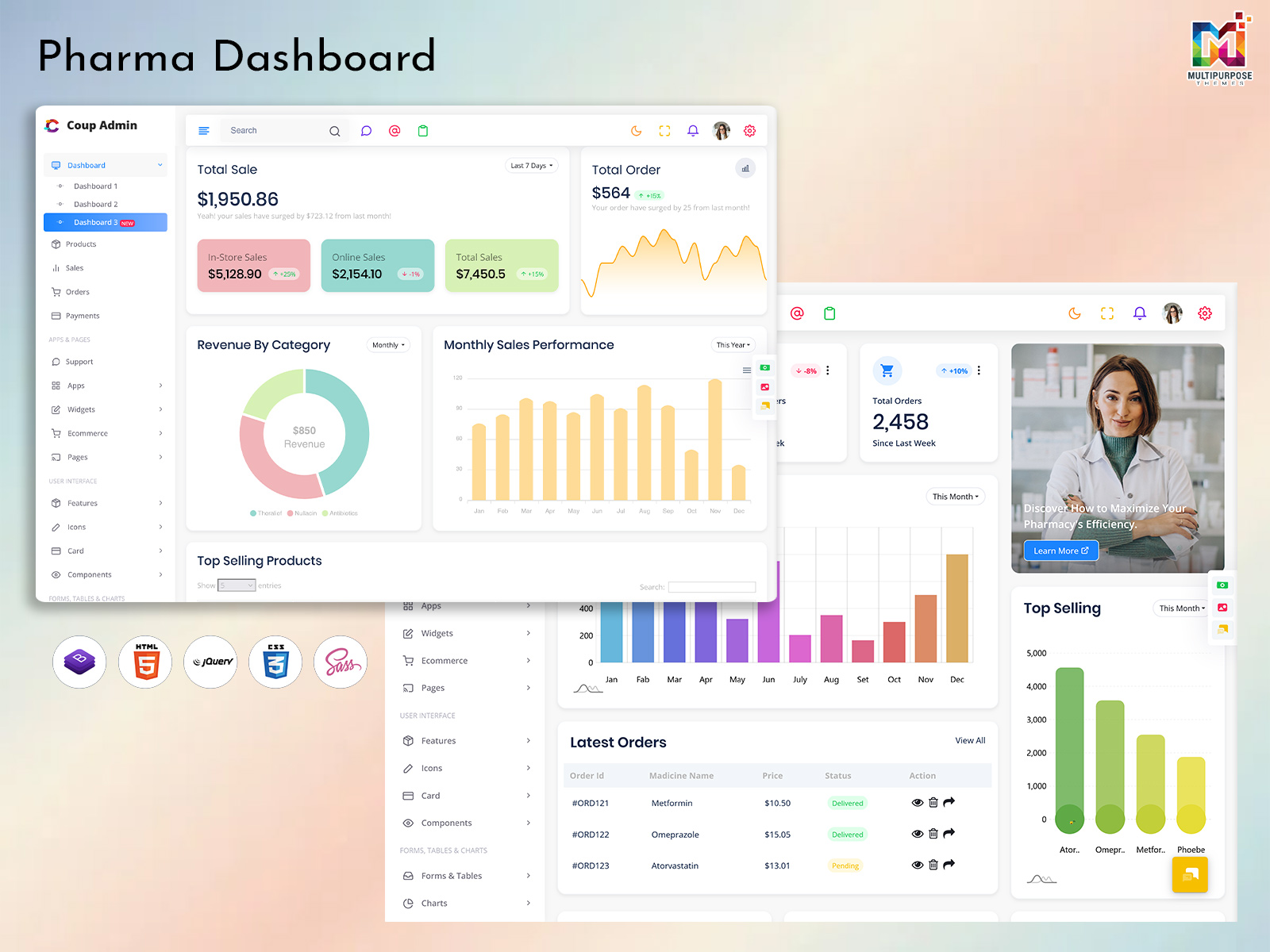
80+ Hospital Dashboard Design Concepts for Medical Admin Systems
Reading Time: 5 minutes
Healthcare organizations now depend on digital systems to manage patient activities, doctor schedules, billing details, reports, and medical analytics in one place. A modern Hospital Dashboard Design helps hospitals organize daily operations through a clean and user-friendly interface that improves workflow visibility across departments. It allows medical teams to access information faster while reducing manual paperwork and reporting delays.
Watch Full Video
Today, clinics, diagnostic centers, and healthcare institutions are adopting smart dashboard solutions to simplify administration and improve service quality. A professional dashboard layout can display patient records, appointments, analytics, emergency cases, and hospital performance using visual panels and charts. These platforms also help healthcare teams monitor operations in real time while maintaining structured communication between departments.
Smart Hospital Dashboard Overview
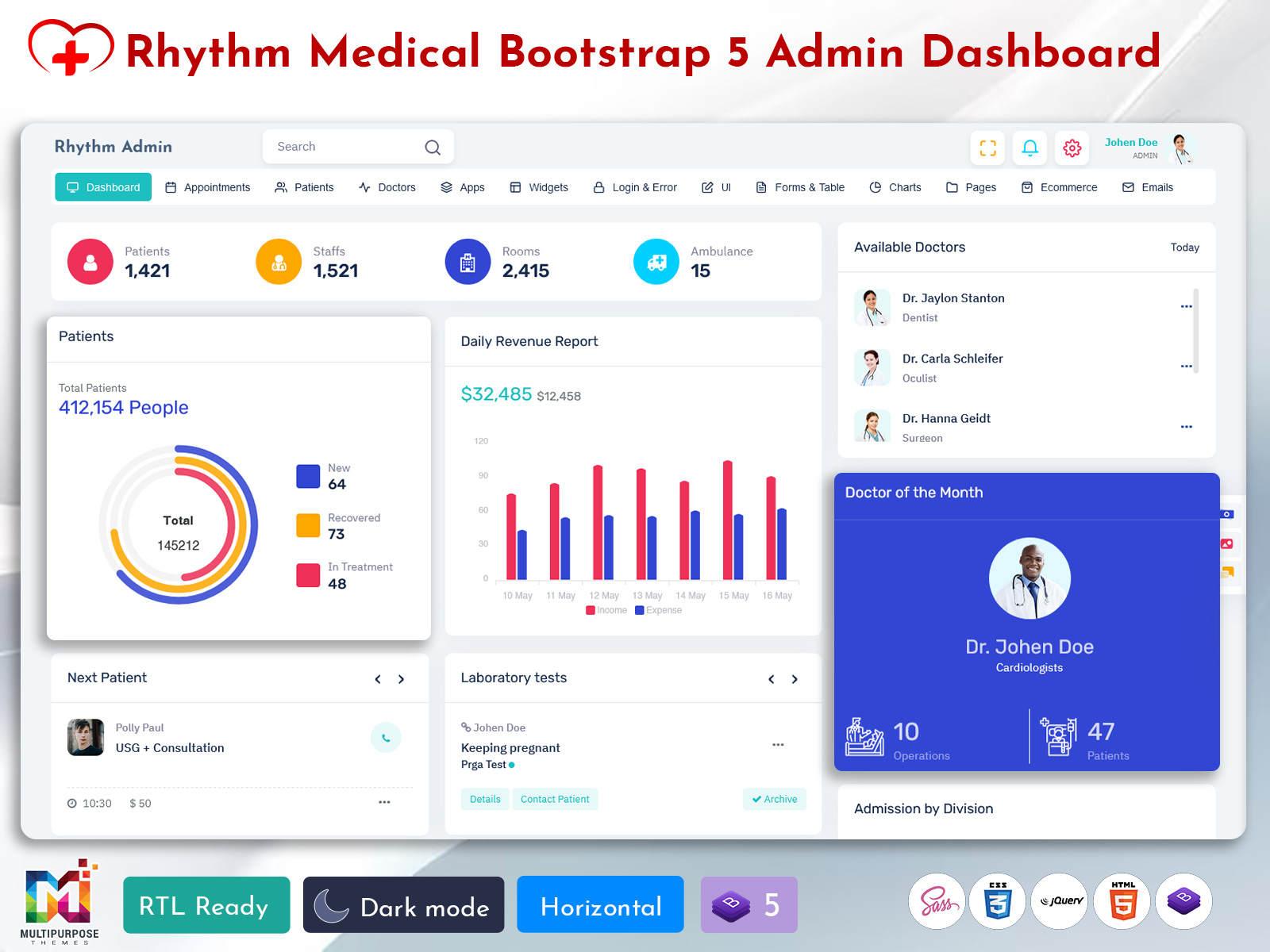
A modern healthcare platform is designed to simplify hospital activities through organized digital management systems. A professional Hospital Dashboard helps doctors, reception staff, administrators, and management teams monitor appointments, patient details, medical reports, billing activities, and department performance from one centralized interface. This type of dashboard improves coordination between healthcare departments while reducing manual work inside medical facilities.
Today’s healthcare software solutions include advanced visual layouts, responsive panels, real-time notifications, appointment tracking modules, analytics cards, and report management sections. A well-developed dashboard structure also supports laboratories, pharmacies, emergency wards, ICU monitoring, and patient admission systems. These platforms are created to improve operational efficiency while helping hospitals manage large amounts of information in a structured and secure format.
Complete Hospital Operations Management
Healthcare organizations handle multiple activities every day, including patient registration, doctor scheduling, emergency support, billing processes, pharmacy coordination, laboratory reports, and staff management. A modern Hospital Admin Dashboard helps medical institutions control these operations through a connected digital system that keeps every department organized. Administrators can quickly monitor appointments, room availability, discharge records, doctor performance, and operational reports without depending on paperwork.
Advanced medical management platforms also improve communication between departments by storing information in one centralized environment. Reception teams can manage admissions, doctors can review patient histories, laboratories can upload test reports, and management teams can analyze hospital performance using visual reporting tools. These systems help reduce delays, improve workflow accuracy, and support faster decision-making across healthcare facilities of every size.
VIEW DEMO BUY NOW
Centralized Patient Data & Records
Modern healthcare institutions generate large volumes of medical information every day, including prescriptions, diagnostic reports, treatment histories, insurance details, billing records, and appointment logs. A smart Hospital Patients Page allows healthcare professionals to access all patient-related information from one organized interface. This centralized structure helps doctors and staff quickly review medical histories, monitor treatment progress, and update records without searching through physical files.
Digital healthcare systems also improve the accuracy of record management by reducing duplicate entries and minimizing manual errors. Medical teams can securely store laboratory reports, scan documents, prescriptions, radiology images, and discharge summaries within connected dashboards. Real-time access to organized records supports faster treatment decisions, smoother patient handling, and better coordination between departments such as laboratories, pharmacies, and emergency units.
Top Benefits of Hospital Dashboard Systems
1. Faster Daily Workflow Management
Modern healthcare platforms simplify routine operations by automating appointments, billing activities, patient admissions, and doctor scheduling. A professional Hospital software ui Framework helps hospitals reduce manual coordination and improve department efficiency through connected digital modules. Staff members can complete administrative tasks more quickly while management teams monitor activities from a centralized dashboard environment.
2. Better Patient Monitoring Experience
Healthcare dashboards provide real-time access to treatment records, prescriptions, laboratory reports, and emergency case updates. A structured interface supported by a smart Hospital Dashboard ui Kit allows doctors and nurses to review important patient information instantly. This improves treatment planning and helps medical teams respond faster during critical situations.
3. Improved Data Visualization
Hospitals generate large amounts of operational and medical information every day. Interactive analytics panels and Hospital Charts help management teams understand patient statistics, revenue performance, occupancy rates, and healthcare trends through visual reports. These graphical insights support faster decision-making and improve operational planning across departments.
4. Organized Administrative Control
A modern healthcare platform simplifies staff coordination, resource allocation, inventory tracking, and financial monitoring. A responsive Hospital Admin Template provides structured management tools that help administrators control hospital operations more effectively. This organized workflow reduces confusion and improves productivity within healthcare facilities.
5. Better Accessibility Across Devices
Modern dashboard systems are designed to work smoothly on desktops, tablets, and mobile devices. A responsive Hospital and Medical Dashboard allows doctors, administrators, and healthcare staff to access information remotely whenever required. This flexibility improves communication, supports faster updates, and enhances operational accessibility across medical organizations.
Healthcare Data Security Systems
Medical organizations handle sensitive patient records, billing information, prescriptions, laboratory reports, and confidential healthcare documents every day. A secure Hospital and Medical Dashboard TemplateHospital structure helps protect this information through controlled access systems, encrypted databases, and secure authentication methods. These security measures help hospitals prevent unauthorized access while maintaining the privacy of patient data.
Modern healthcare platforms also include role-based permissions that allow doctors, administrators, laboratory staff, and finance departments to access only the information related to their responsibilities. Backup systems, secure cloud storage, login verification, and activity monitoring improve overall protection against data loss and cyber threats. A professionally developed medical dashboard environment helps healthcare institutions maintain trust, improve operational reliability, and support safe digital healthcare management.
Improving Modern Hospital Systems
Healthcare institutions are continuously adopting digital technologies to improve patient care, department coordination, and operational management. A modern Hospital Medical Bootstrap Dashboard helps hospitals streamline workflows by connecting appointments, billing systems, patient records, emergency management, pharmacy operations, and staff monitoring within one intelligent platform. This connected environment reduces delays and improves communication between healthcare departments.
Advanced medical systems also support faster reporting, real-time monitoring, and automated data handling for better operational accuracy. Features like analytics dashboards, smart notifications, patient tracking, doctor scheduling, and centralized reporting improve overall healthcare performance. A responsive dashboard solution allows hospitals to deliver better patient experiences while helping administrators manage resources more efficiently in today’s fast-moving healthcare industry.
Conclusion
Modern healthcare management now depends heavily on digital systems that improve operational speed, patient monitoring, and administrative efficiency. Advanced dashboard platforms help hospitals organize appointments, patient histories, billing activities, laboratory reports, and staff coordination from a single connected environment. A responsive Hospital WebApp Dashboard also improves accessibility for doctors, administrators, and healthcare teams by providing real-time access to important medical information.
As hospitals continue moving toward smart healthcare technology, professionally designed dashboard systems are becoming essential for better patient experiences and organized workflow management. These digital solutions support accurate reporting, secure data handling, visual analytics, and simplified communication between departments. A modern hospital dashboard structure helps healthcare organizations operate more efficiently while preparing for future digital healthcare advancements.
FAQs
1. What is a hospital dashboard system?
A hospital dashboard system is a digital platform used to manage healthcare operations such as patient records, appointments, billing, reports, analytics, and staff coordination through one centralized interface.
2. Why is hospital dashboard design important?
A professional dashboard design improves workflow visibility, simplifies hospital management, supports faster decision-making, and helps healthcare teams access important information quickly and efficiently.
3. How do hospital dashboards improve patient management?
Hospital dashboards organize patient records, prescriptions, appointments, laboratory reports, and treatment history in one place, allowing doctors and staff to manage patients more effectively.
4. What features are included in hospital dashboard software?
Modern hospital dashboard software commonly includes appointment management, billing systems, patient monitoring, analytics panels, staff management, laboratory reporting, and emergency tracking features.
5. Are hospital dashboard systems secure?
Yes, most modern healthcare dashboards include secure login systems, encrypted databases, backup protection, and role-based access controls to protect sensitive patient information.
6. Can hospital dashboards work on mobile devices?
Many modern healthcare platforms are fully responsive and support desktops, tablets, and smartphones for flexible hospital management and remote accessibility.
7. Who can use hospital dashboard platforms?
Doctors, nurses, reception staff, hospital administrators, pharmacists, laboratory teams, and healthcare management professionals can use hospital dashboard systems according to their roles.

Related Posts
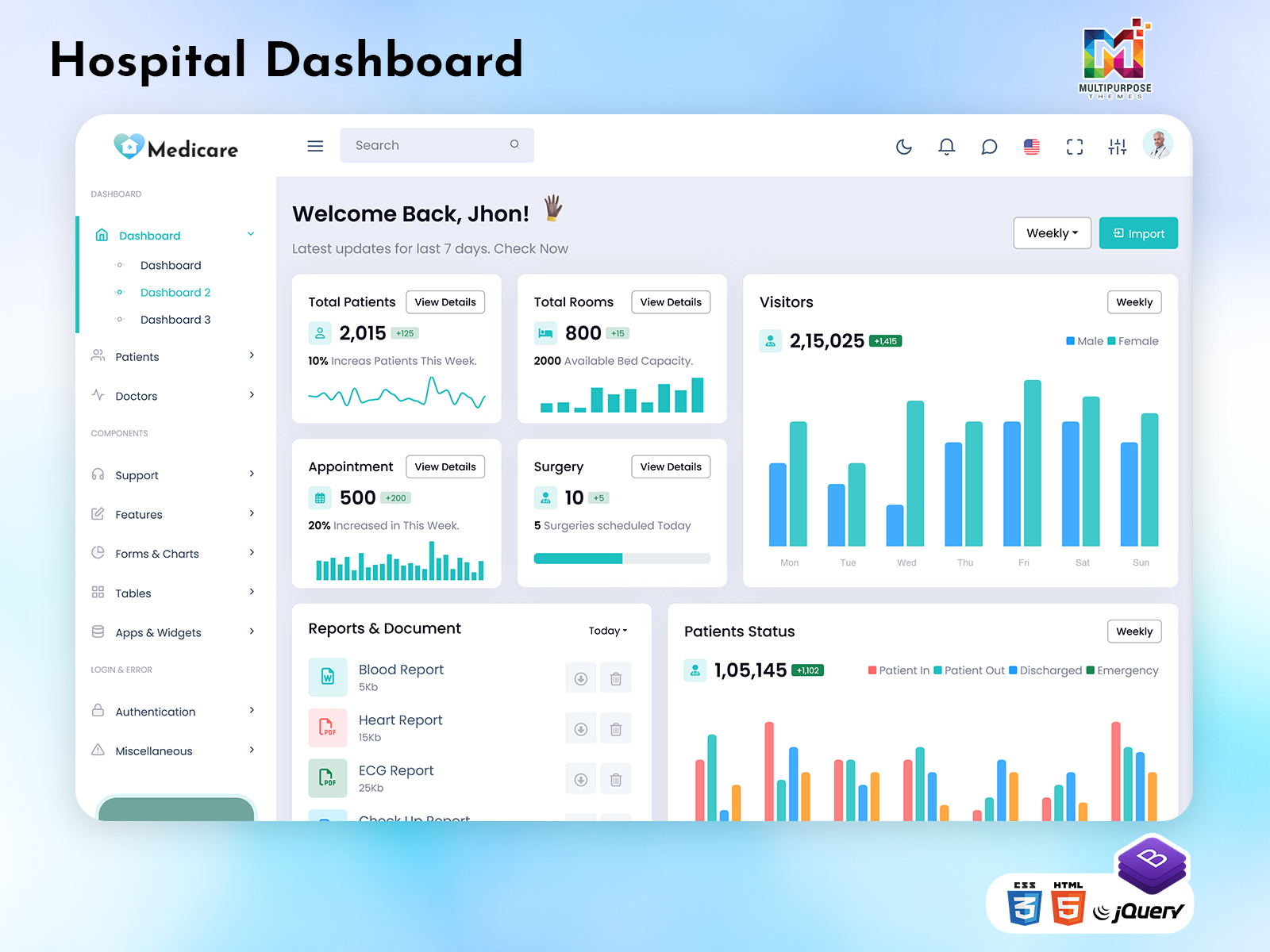
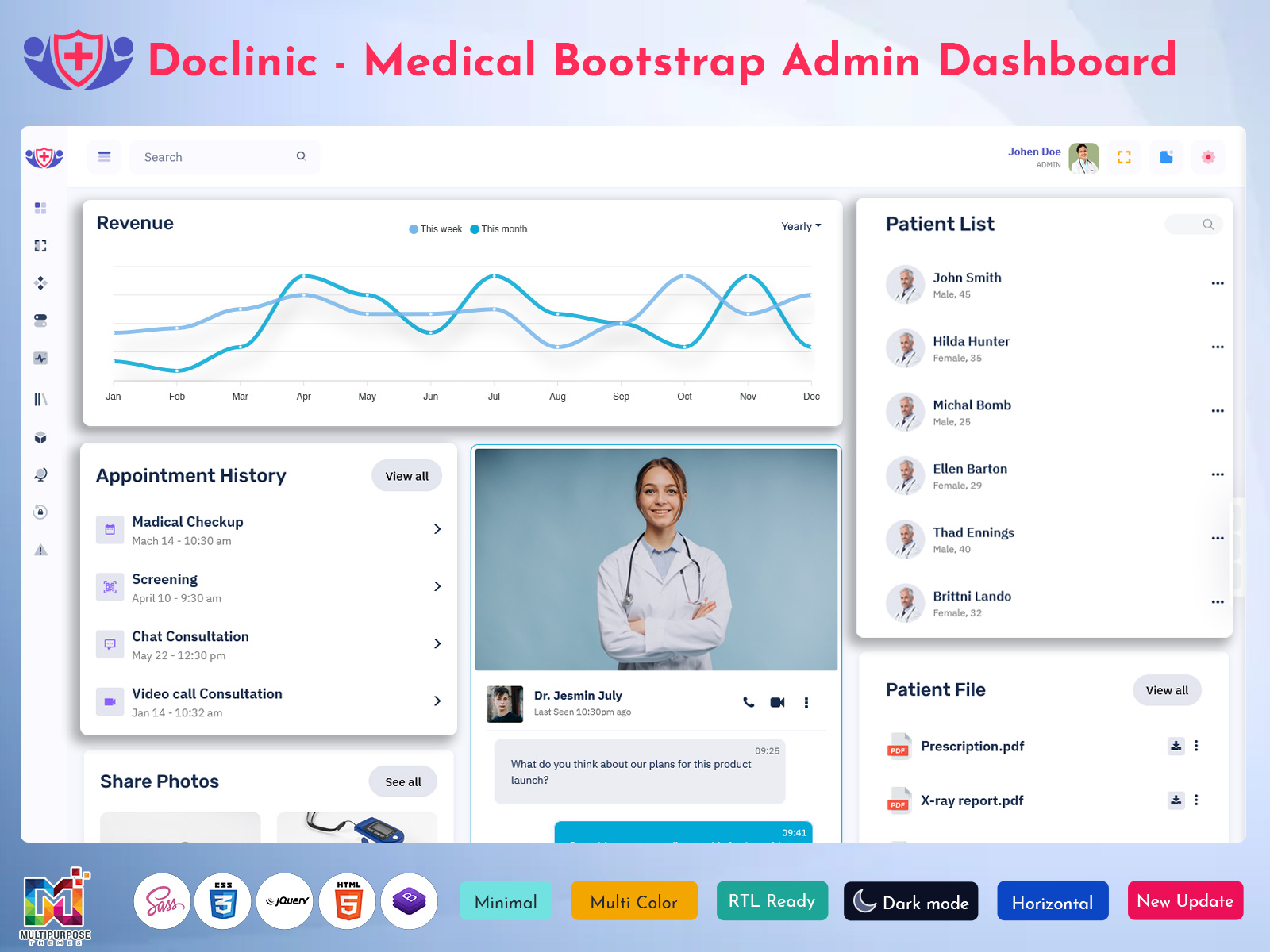

This Post Has 0 Comments