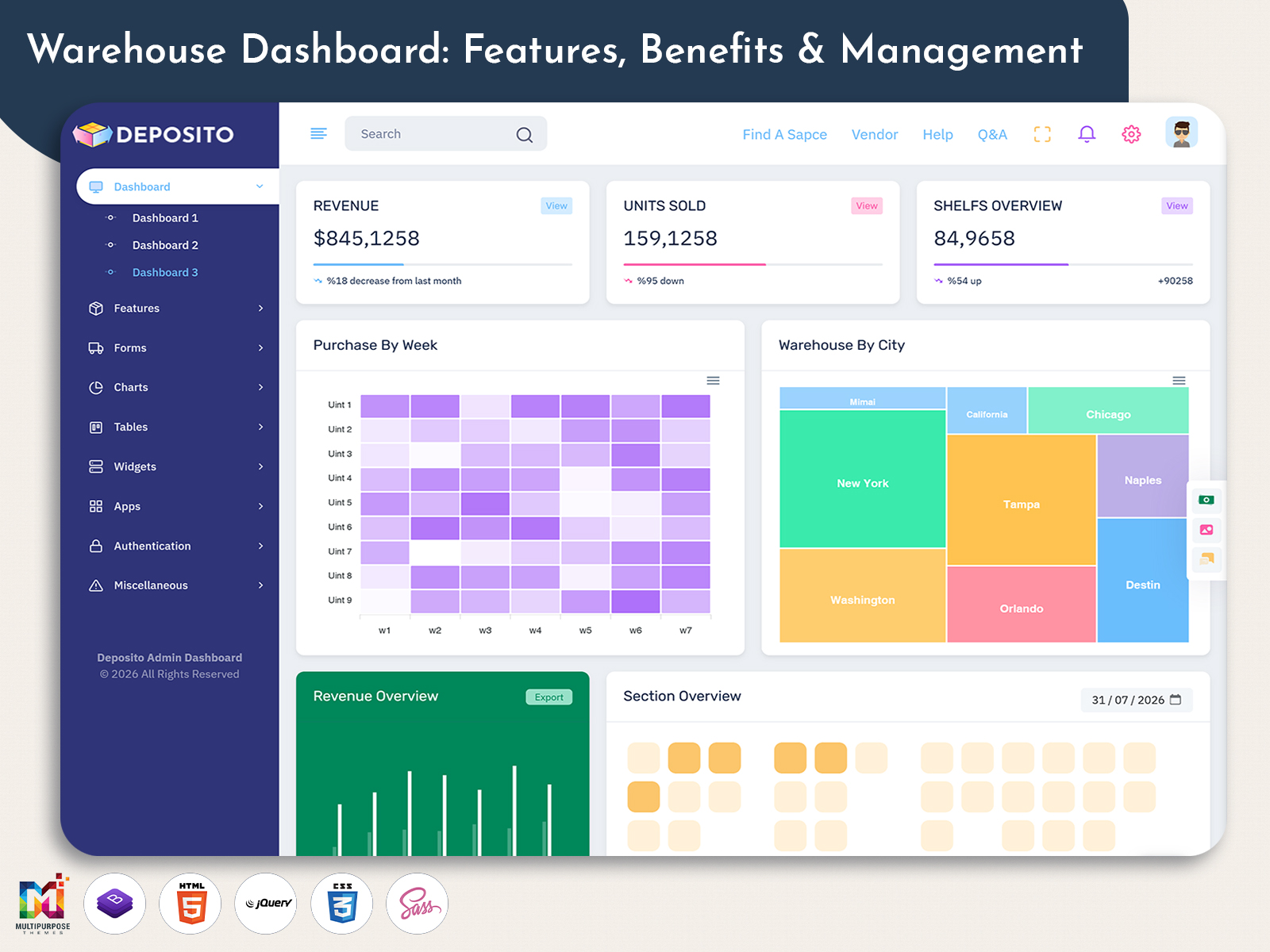
What is a Warehouse Dashboard? A Warehouse Dashboard is a digital management interface that helps…
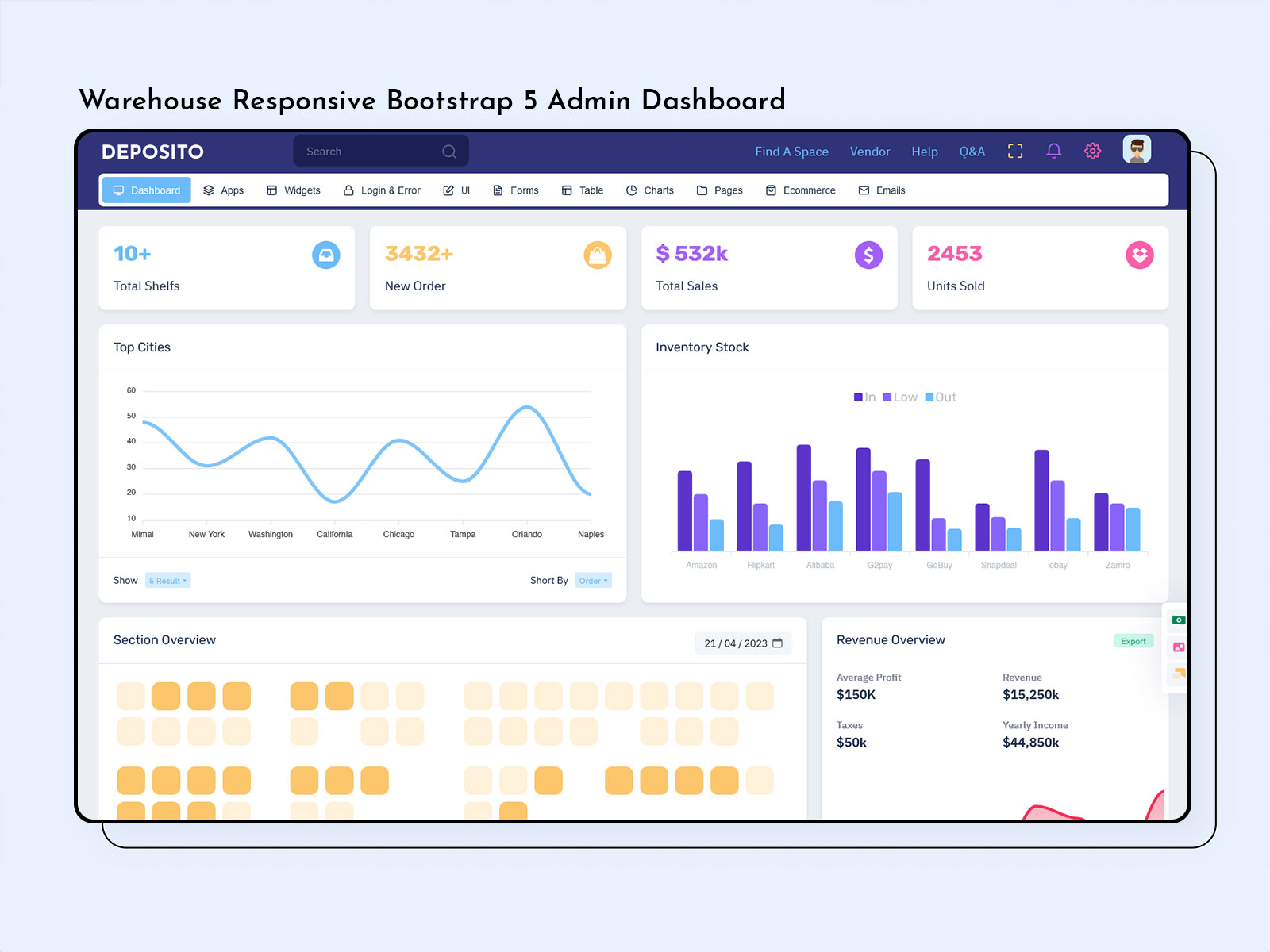
Warehouse Management Dashboard for Smart Warehouse KPI and Logistics Tracking System
Reading Time: 5 minutes
A modern supply chain needs clear visibility and control over daily operations to stay efficient and competitive. A Warehouse Management Dashboard brings all important warehouse activities into one digital view, making it easier to monitor stock levels, order movement, and operational status in real time. It helps teams reduce confusion and manage warehouse operations with better accuracy and speed.
Watch Full Video
In today’s digital business environment, companies rely heavily on data-driven decisions. A Warehouse Dashboard provides live insights into inventory flow, dispatch status, and storage utilization. It supports warehouse managers in understanding performance trends and improving overall productivity without depending on manual reporting or delayed updates.
Efficient logistics management depends on tracking the right performance indicators. A Warehouse KPI Dashboard allows businesses to measure key metrics such as order accuracy, delivery time, and inventory turnover. With these insights, organizations can optimize warehouse processes, reduce operational costs, and ensure smooth coordination between warehouse and logistics teams.
Overview of Warehouse Management Dashboard System for Smart Operations
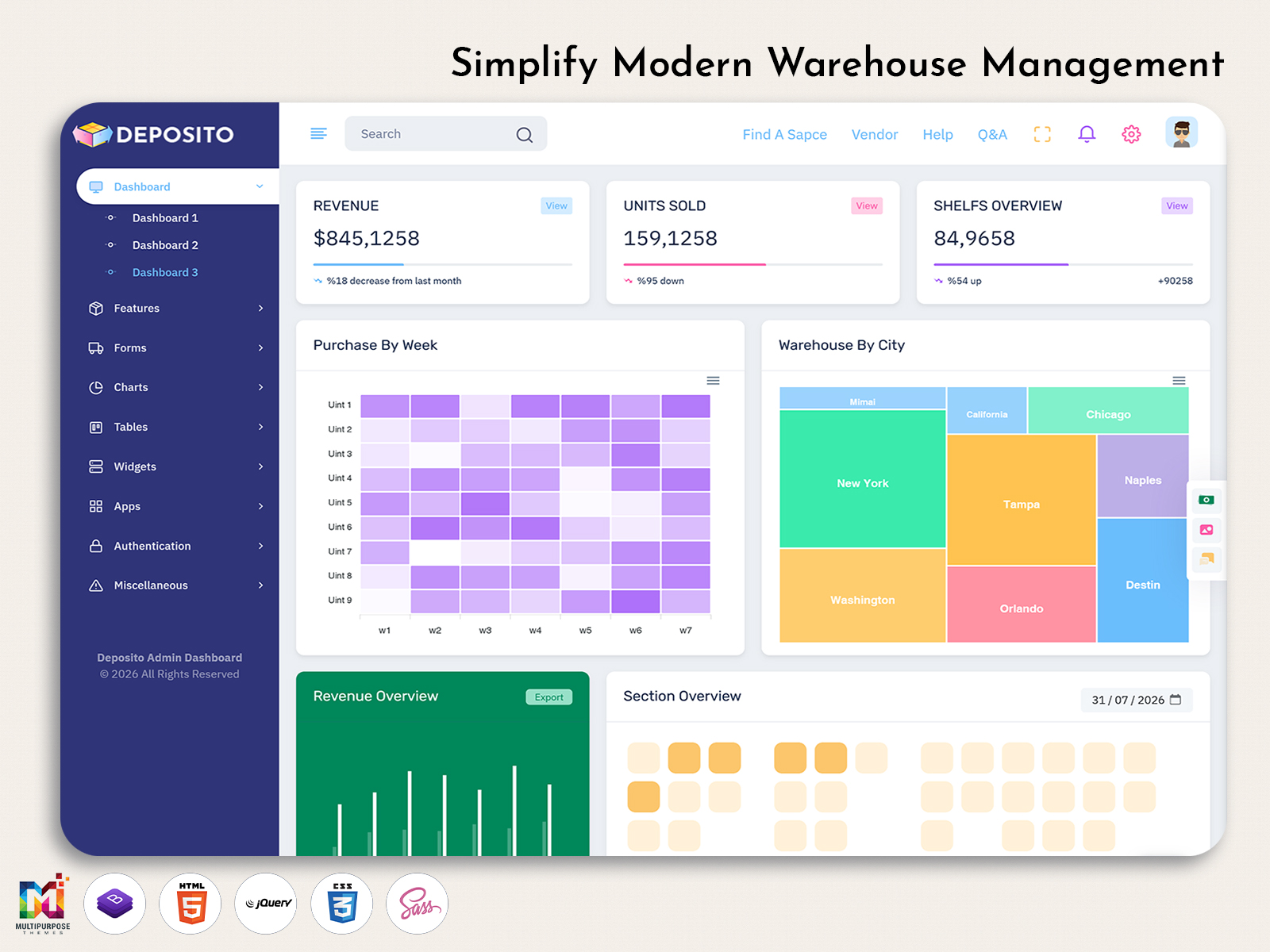
A Warehouse Management Dashboard is a centralized digital system designed to control and monitor all warehouse activities in a simple and structured way. It gives real-time visibility of inventory movement, order processing, storage capacity, and dispatch operations. This helps businesses manage warehouse tasks more efficiently without relying on manual records or disconnected systems.
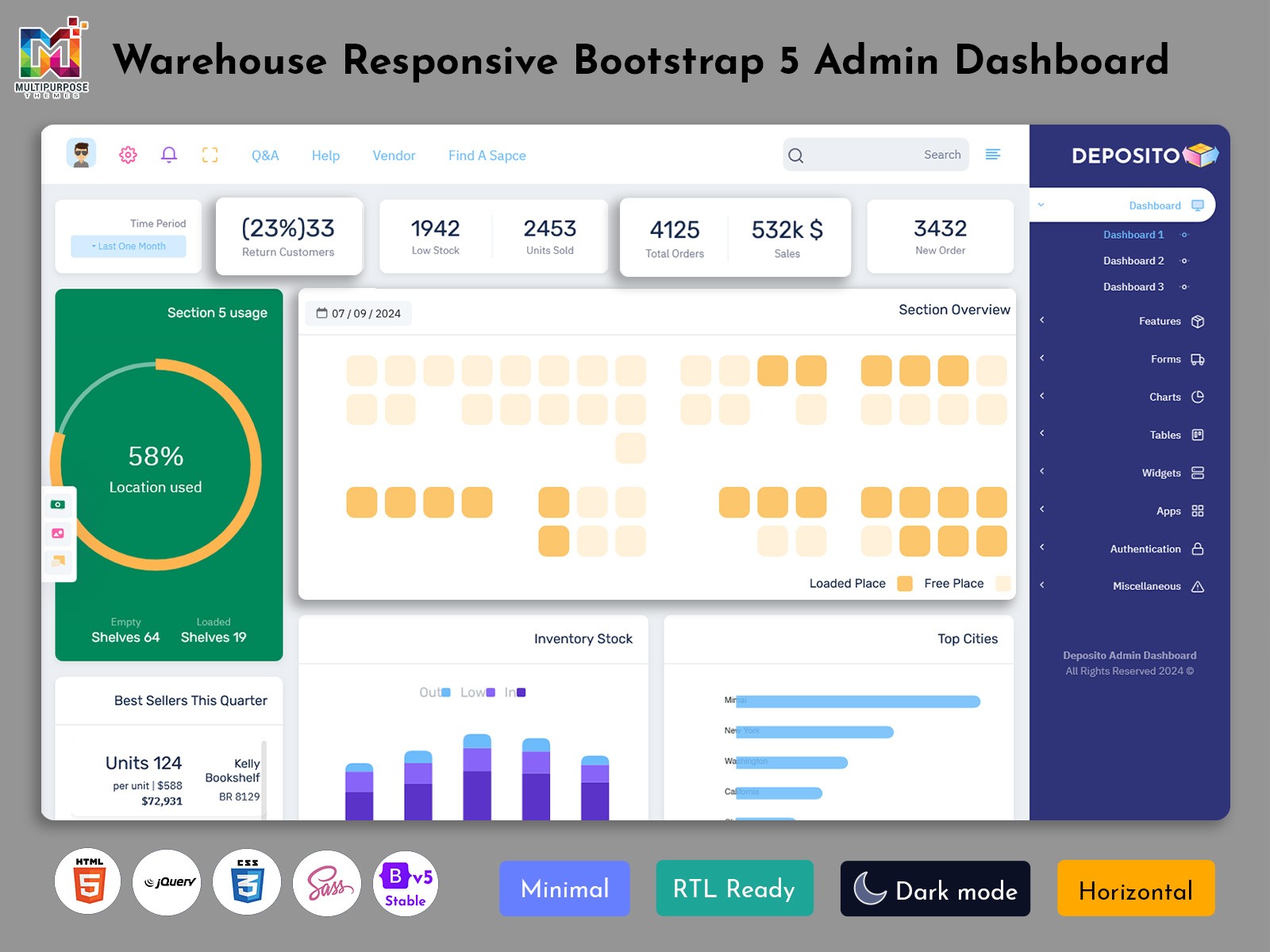
A Warehouse Dashboard acts as a control center where all warehouse data is displayed in a visual format such as charts, graphs, and live reports. It helps teams quickly understand stock availability, pending orders, and overall workflow status. This improves coordination between departments and reduces delays in daily warehouse operations.
Modern warehouse systems depend on digital tools for better accuracy and speed. A Warehouse Software Dashboard supports automation, reporting, and tracking features that simplify complex warehouse processes. It helps organizations maintain better control over logistics flow and ensures smooth execution of warehouse activities.
Who Should Use a Warehouse KPI Dashboard Solution?
1. Warehouse Managers and Operational Supervisors
A Warehouse KPI Dashboard Solution is highly useful for warehouse managers and operational supervisors who handle day-to-day warehouse activities. It helps them monitor stock levels, track order movement, and ensure smooth workflow across storage and dispatch areas. With real-time insights, they can quickly identify issues and improve efficiency in warehouse operations.
2. Logistics and Supply Chain Coordination Teams
Logistics and supply chain teams depend on accurate data to maintain smooth delivery schedules. A Warehouse Dashboard supports them by providing live updates on shipments, inventory flow, and transportation status. This improves coordination between different departments and ensures faster decision-making across the supply chain process.
3. E-commerce and Retail Business Owners
E-commerce and retail business owners need complete visibility of inventory and order fulfillment. A Warehouse Manager Dashboard helps them track product availability, customer orders, and dispatch timelines in one place. This reduces delays, improves customer satisfaction, and supports better business planning.
4. Warehouse Admin Panel and System Users
System administrators and warehouse admin panel users require structured control over warehouse data and user access. A Warehouse Software Dashboard allows them to manage permissions, generate reports, and maintain operational records efficiently. It ensures better security and organized data handling within the system.
5. Distribution and Inventory Control Departments
Distribution centers and inventory control teams manage large-scale stock movement and storage systems. A Warehouse Metrics Dashboard helps them track inventory accuracy, stock turnover, and storage utilization. This improves warehouse efficiency and reduces the chances of overstocking or shortages.
Importance of Warehouse Metrics Dashboard in Logistics Operations
A Warehouse Metrics Dashboard is essential for improving visibility and control in modern logistics operations. It provides real-time updates on stock movement, order status, and delivery performance, helping teams respond quickly to operational challenges. With the support of a Warehouse Dashboard, businesses can reduce delays, improve accuracy, and maintain smooth coordination across warehouse and supply chain activities.
This system also plays a key role in strengthening decision-making and operational planning. A Warehouse KPI Dashboard allows managers to analyze performance indicators such as inventory turnover, shipping speed, and order fulfillment rates. These insights help organizations optimize workflows, reduce operational costs, and enhance overall efficiency in logistics and warehouse management systems.
Key Security Features in Warehouse Admin Dashboard Platforms
1. User Authentication and Access Control
A secure Warehouse Admin Panel ensures that only authorized users can access sensitive warehouse data. It uses strong login authentication methods and role-based permissions to control who can view, edit, or manage specific information. This reduces the risk of unauthorized access and keeps warehouse operations protected.
2. Data Encryption and Secure Storage
A Warehouse Software Dashboard protects critical business data using advanced encryption techniques. All information related to inventory, orders, and logistics is securely stored and transmitted. This ensures that sensitive warehouse records remain safe from cyber threats and external attacks.
3. Activity Monitoring and Audit Logs
A Warehouse Dashboard includes detailed activity tracking that records every user action within the system. It helps administrators monitor changes, identify unusual behavior, and maintain transparency in warehouse operations. This feature strengthens security and improves accountability across the platform.
Future Scope of Warehouse Software Dashboard Technology
The future of warehouse systems is moving toward automation, intelligence, and real-time decision-making. A Warehouse Software Dashboard will continue to evolve with advanced technologies like AI and machine learning, helping businesses predict demand, optimize stock levels, and reduce operational errors. This will make warehouse operations faster, smarter, and more efficient in handling complex logistics workflows.
Integration with IoT devices and cloud-based systems will further improve visibility and control in warehouse environments. A Warehouse WebApp Template will enable seamless access from any location, allowing managers to monitor performance and manage operations remotely. This will support global supply chains and improve coordination between multiple warehouse locations.
In the coming years, businesses will rely more on data-driven insights for growth and efficiency. A Warehouse Dashboard Design will focus on better visualization, automation, and predictive analytics to support smarter decision-making. This will transform traditional warehouse systems into fully connected digital ecosystems for improved logistics performance.
Conclusion
A modern Warehouse Management Dashboard plays a vital role in simplifying complex warehouse and logistics operations. It brings all essential activities like inventory tracking, order management, and performance monitoring into one centralized system. This improves accuracy, reduces manual effort, and helps businesses maintain better control over daily warehouse functions.
With the help of a Warehouse And Logistics Dashboard, organizations can easily track key performance indicators and improve decision-making speed. It supports warehouse managers and logistics teams by providing real-time insights into stock movement, delivery performance, and operational efficiency. This leads to better coordination and smoother workflow across the entire supply chain.
FAQs
1. What is a Warehouse Management Dashboard used for?
A Warehouse Management Dashboard is used to monitor and control warehouse activities such as inventory tracking, order processing, and dispatch management. It provides real-time insights that help improve efficiency and reduce operational delays in warehouse operations.
2. Who benefits most from a Warehouse KPI Dashboard?
A Warehouse KPI Dashboard is most beneficial for warehouse managers, logistics teams, and business owners. It helps them track performance metrics like order accuracy, delivery speed, and stock levels to improve decision-making and overall productivity.
3. How does a Warehouse Software Dashboard improve operations?
A Warehouse Software Dashboard improves operations by automating data tracking, reducing manual errors, and providing real-time updates. It enhances coordination between departments and ensures smooth workflow across warehouse and logistics systems.
4. Is a Warehouse Admin Dashboard secure for business data?
Yes, a Warehouse Admin Dashboard includes security features like user authentication, role-based access, and data encryption. These features protect sensitive warehouse information and ensure safe system operations.
5. What is the future of Warehouse Dashboard technology?
The future of Warehouse Dashboard technology includes AI automation, IoT integration, and predictive analytics. These advancements will make warehouse management more intelligent, faster, and highly efficient.

Related Posts