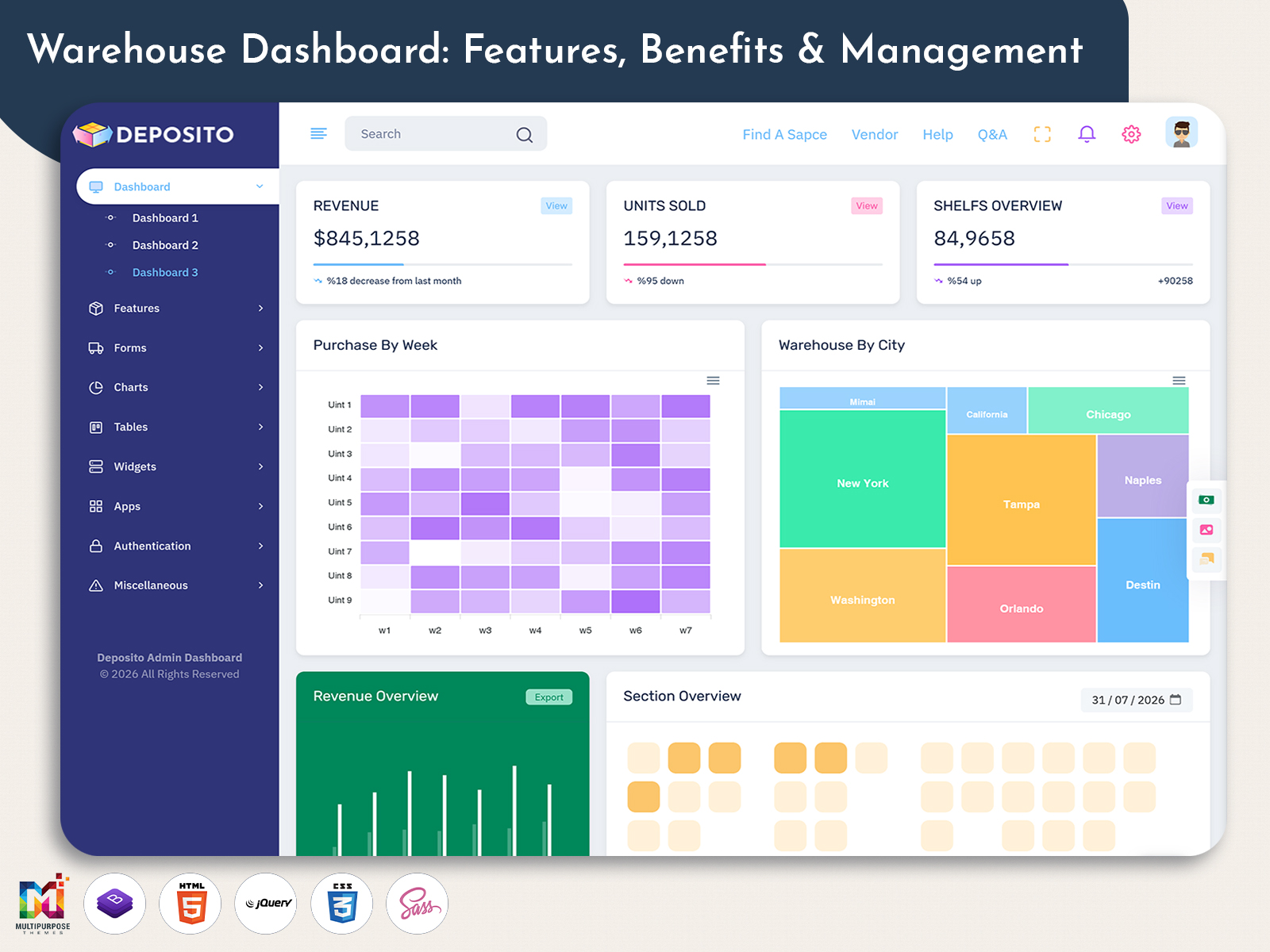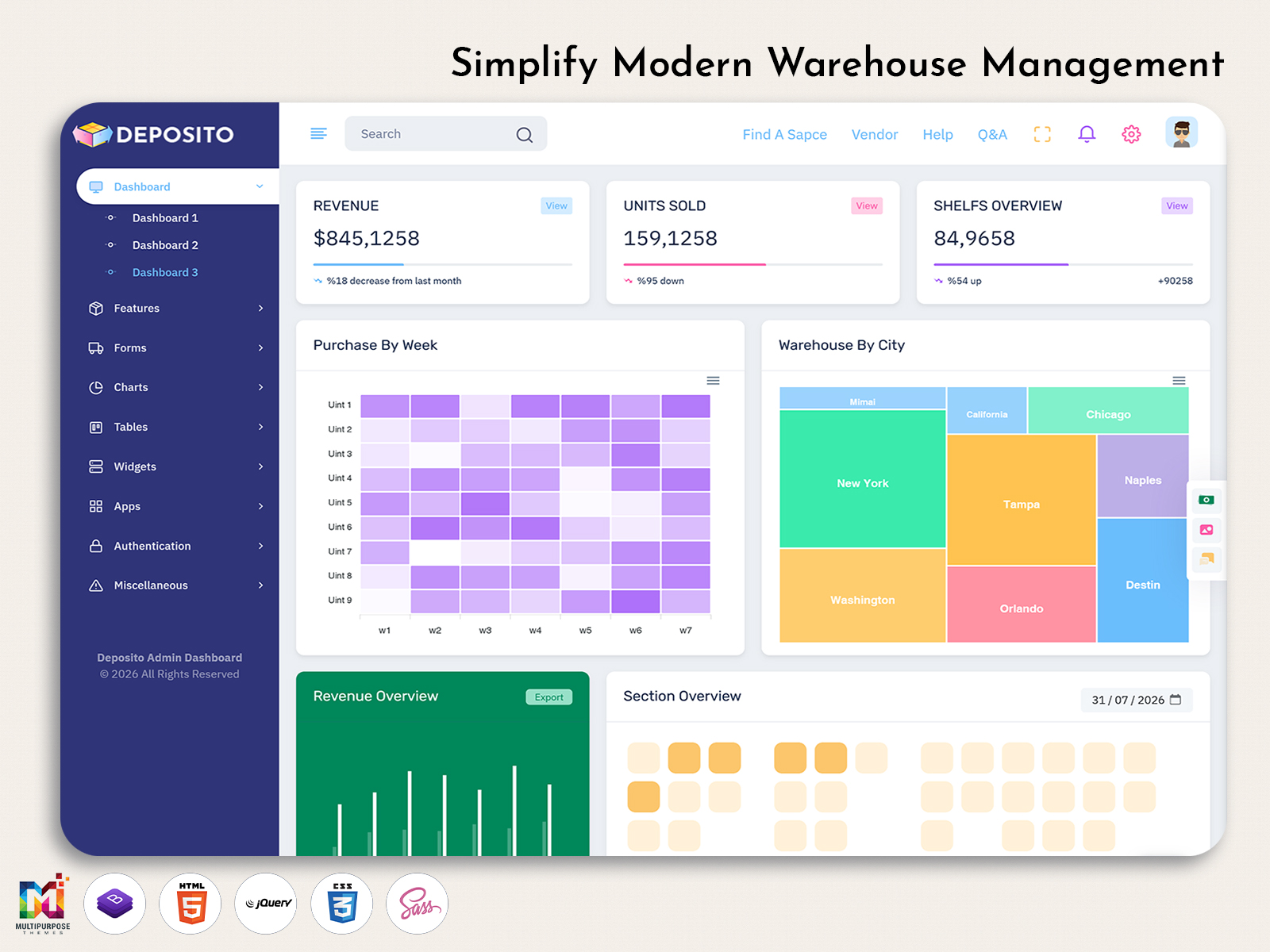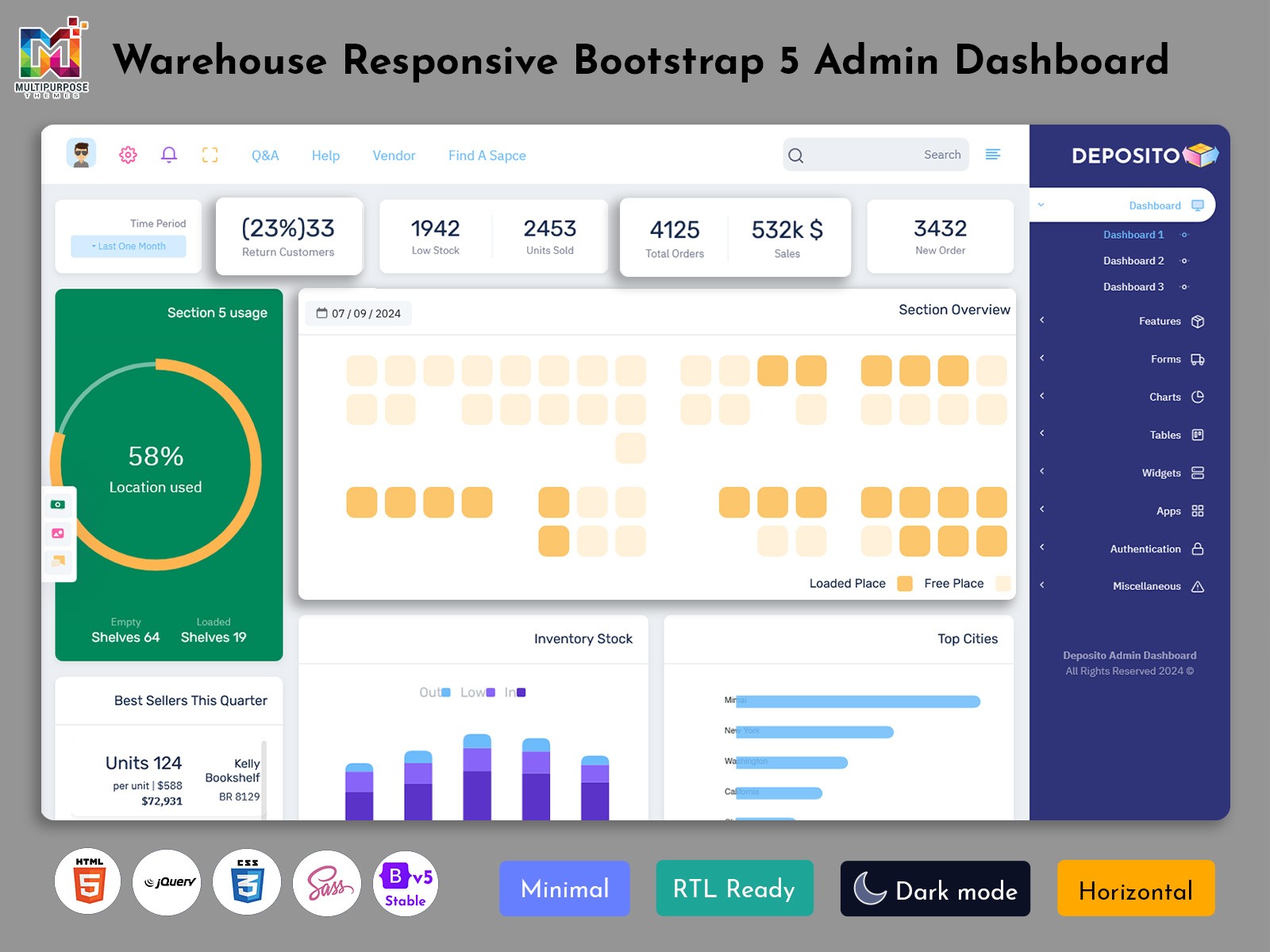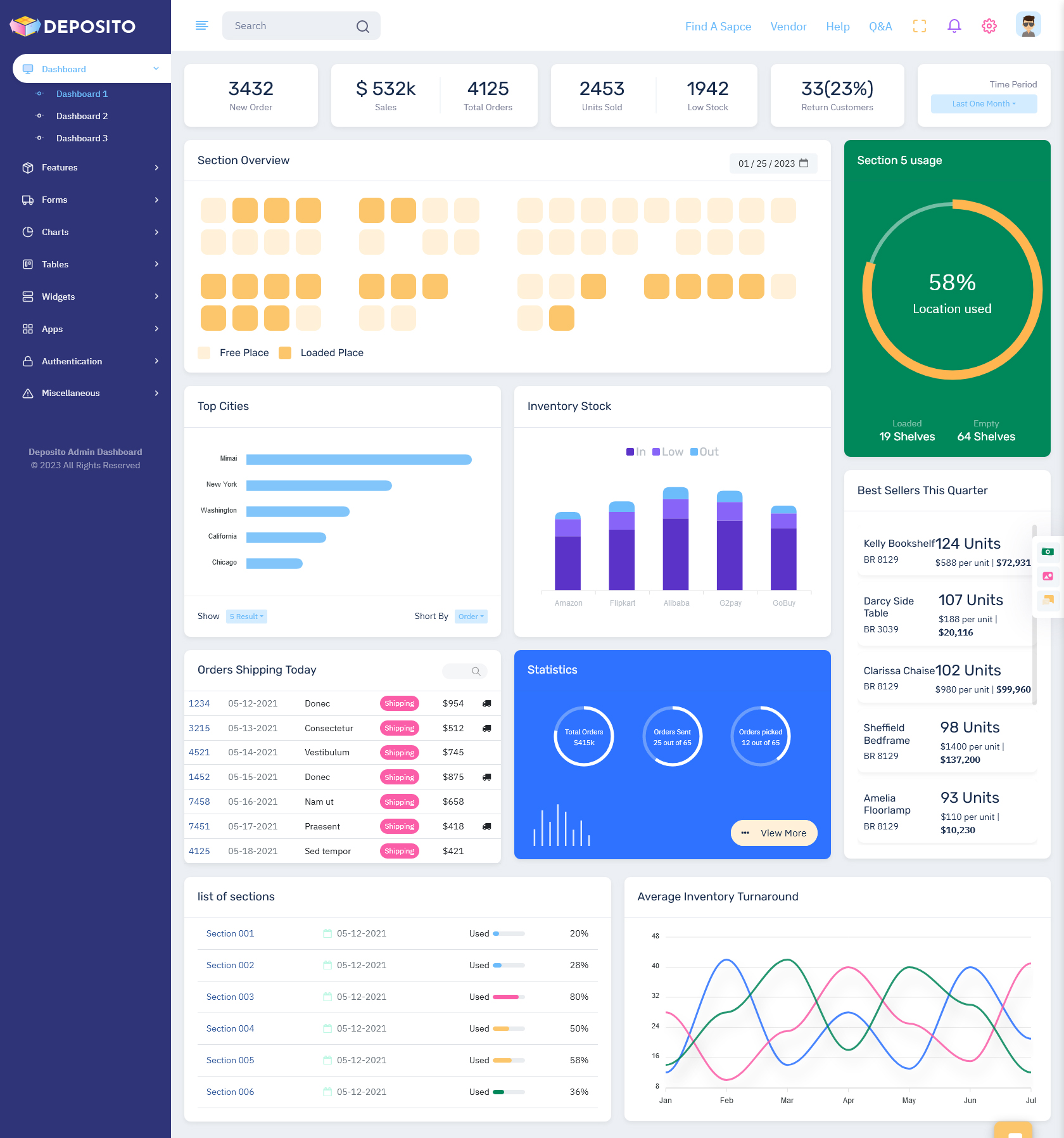
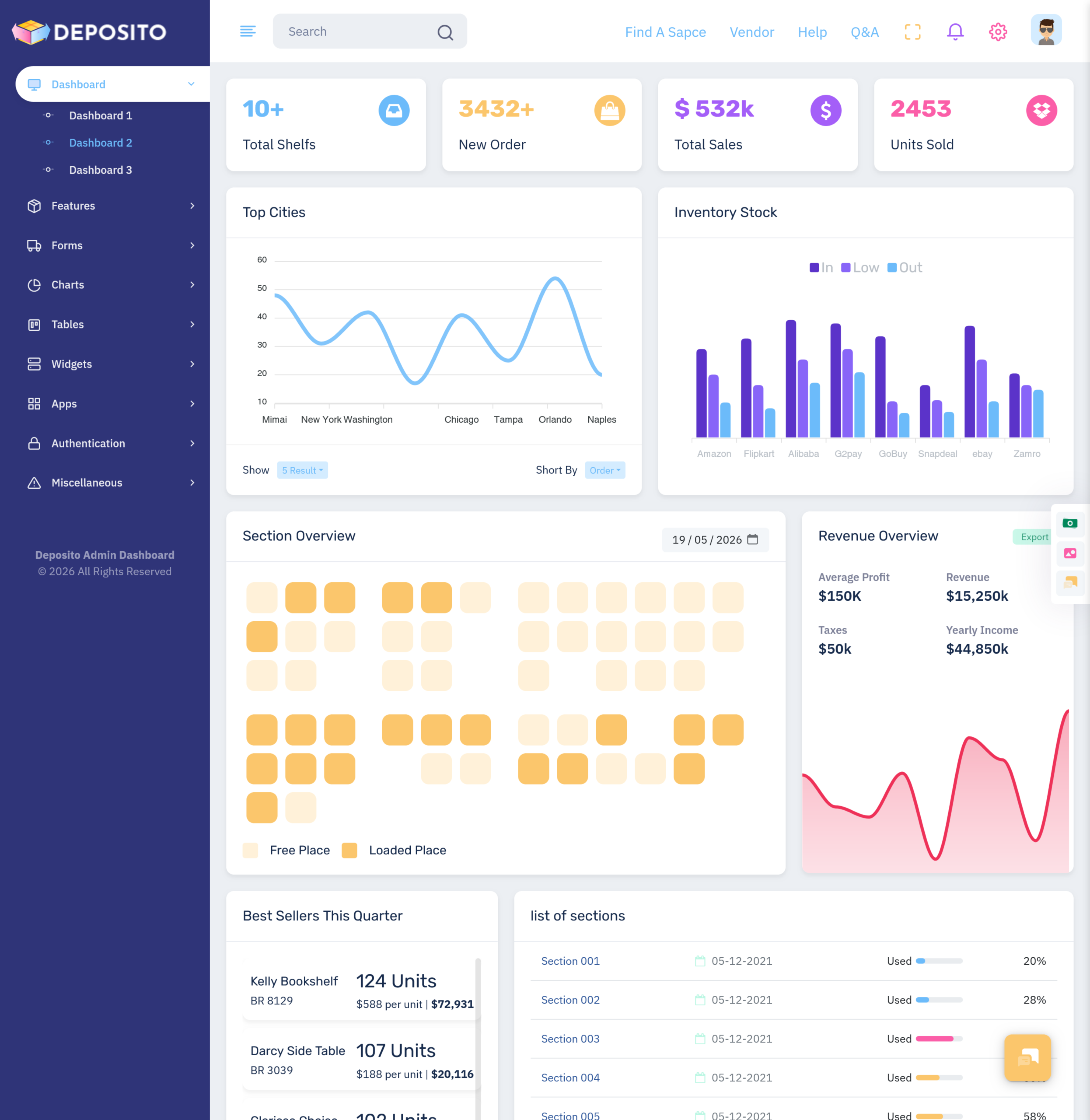
What is a Warehouse Dashboard? A Warehouse Dashboard is a digital management interface that helps…
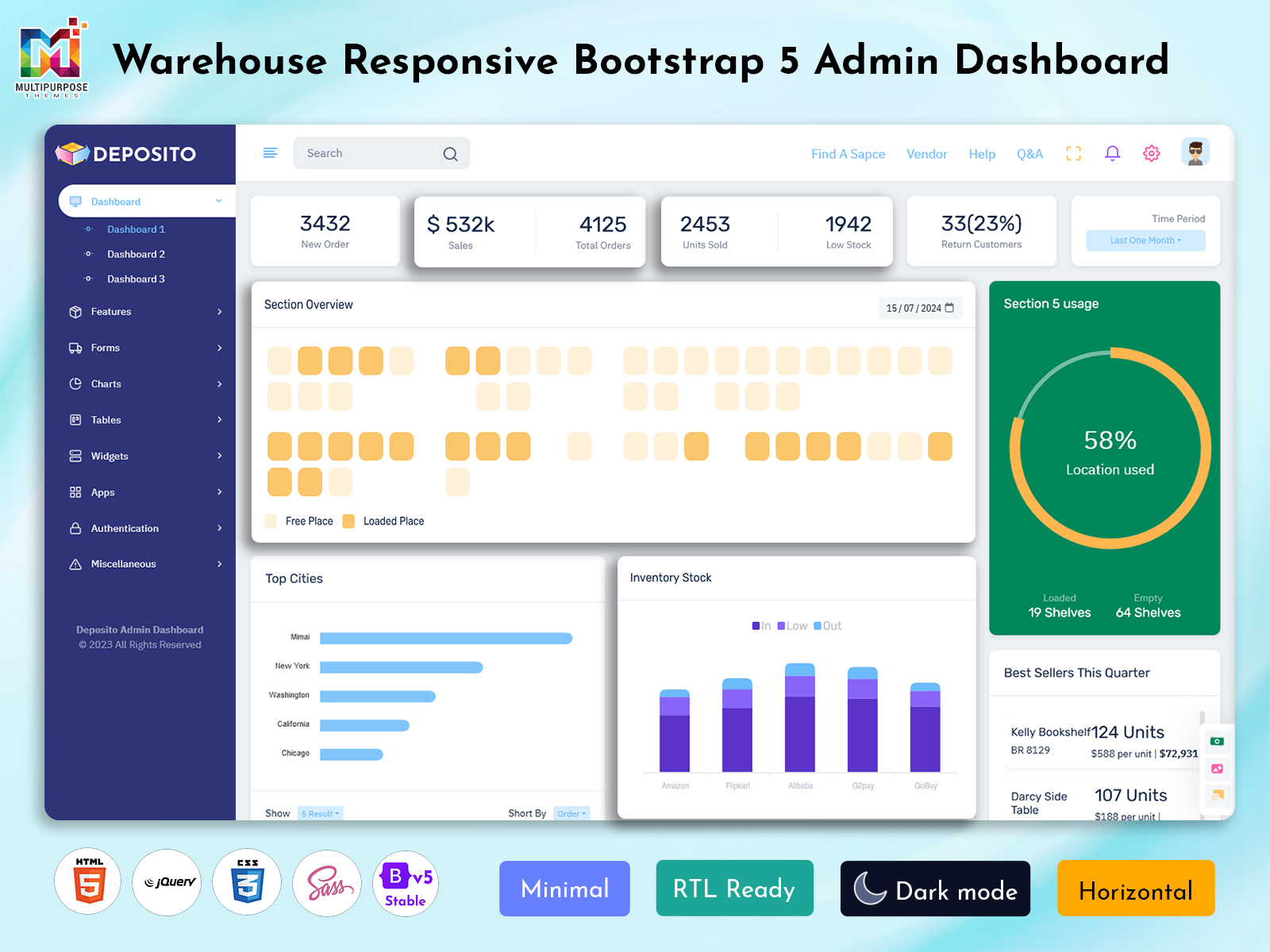
Future-Ready Warehouse Dashboard for Smart Supply Chain Control
Reading Time: 5 minutes
Modern logistics and supply chain industries are rapidly evolving, requiring smarter systems to handle inventory flow, dispatch accuracy, and real-time tracking. A well-structured Warehouse Dashboard helps businesses centralize all core warehouse activities such as stock monitoring, order updates, shipment coordination, and operational reporting into a single unified system. This improves control over daily processes and reduces manual errors in fast-moving warehouse environments.
Watch Full Video
Today’s businesses also depend on advanced digital interfaces that offer clear visibility into performance and operations. A modern Warehouse Admin Dashboard enables warehouse teams to track movements, monitor stock levels, and analyze operational efficiency in real time. It helps managers make faster decisions while maintaining accuracy across different warehouse functions and logistics channels.
As global supply chains grow more complex, companies are shifting toward automated systems and data-driven platforms that improve productivity and reduce delays. Smart dashboard solutions provide structured insights, better coordination, and improved workflow management. This transformation supports warehouse managers in handling large-scale operations with greater efficiency and consistency.
How Warehouse Metrics Dashboard Improves Business Efficiency
Modern logistics environments depend heavily on real-time performance tracking to maintain smooth operations. A Warehouse Metrics Dashboard helps businesses monitor key indicators like stock movement, delivery speed, and order accuracy in a structured way. This improves visibility across all warehouse activities and allows teams to quickly identify delays, errors, or inefficiencies in daily operations.
By using a Warehouse KPI Dashboard, warehouse managers can track important performance goals and measure productivity with clear data insights. It supports faster decision-making by converting complex warehouse activities into simple visual reports. This improves coordination between departments, reduces operational waste, and ensures better utilization of available resources.
VIEW DEMO BUY NOW
Warehouse Software Template for Fast Deployment Systems
A modern Warehouse Software Template helps businesses quickly set up structured warehouse management systems without building everything from scratch. It provides pre-designed modules for inventory tracking, order processing, stock updates, and shipment coordination, making it easier for companies to launch efficient warehouse operations in less time. This reduces development effort and ensures faster implementation across logistics environments.
Advanced deployment solutions also improve flexibility and scalability for growing businesses. A well-built Warehouse WebApp Template allows organizations to customize dashboards, integrate new features, and adapt to changing operational needs. This supports smooth expansion while maintaining consistency in performance and workflow management across different warehouse functions.
Warehouse Report Dashboard for Data-Driven Decision Making
A modern Warehouse Report Dashboard plays a key role in transforming raw warehouse data into clear and actionable insights. It helps businesses monitor stock levels, shipment performance, order fulfillment rates, and daily operational activities in a structured format. This improves visibility and allows warehouse managers to understand performance trends without relying on manual reporting methods.
By using a Warehouse Management Dashboard, companies can analyze historical data and current operations to make smarter business decisions. It supports accurate forecasting, reduces operational risks, and helps identify inefficiencies in warehouse workflows. With real-time reporting features, businesses can respond quickly to issues and maintain smooth logistics performance across all operations.
VIEW DEMO BUY NOW
Benefits of Using Warehouse Admin Dashboard for Inventory Control
1. Real-Time Inventory Visibility
A warehouse admin system provides continuous monitoring of stock levels, product movement, and storage updates across the facility. This allows teams to instantly understand what is available, what is running low, and what needs replenishment. It reduces confusion, improves accuracy in stock handling, and ensures smooth coordination between warehouse staff and management for better operational control.
2. Reduced Human Errors in Stock Management
Automated tracking systems significantly reduce manual entry mistakes that often occur in traditional inventory methods. Every product movement is recorded digitally, ensuring accurate data at all times. This improves reliability in warehouse records, minimizes discrepancies during audits, and helps maintain consistency in daily operations without unnecessary corrections or delays in reporting.
3. Faster and Smarter Decision Making
With real-time data insights, warehouse managers can quickly analyze inventory status, demand patterns, and stock performance. This enables faster decisions regarding procurement, dispatching, and restocking processes. Clear visual reports simplify complex data, helping teams respond efficiently to operational challenges and maintain smooth workflow across different warehouse activities.
4. Better Space Optimization
Effective inventory tracking helps identify unused or overused storage areas within the warehouse. By analyzing product placement and movement trends, managers can reorganize storage more efficiently. This improves space utilization, reduces clutter, and ensures that high-demand products are easily accessible, leading to smoother picking and packing operations.
5. Improved Operational Efficiency
Centralized control over warehouse activities streamlines daily tasks such as receiving goods, dispatching orders, and updating inventory records. This reduces delays, eliminates repetitive manual work, and improves coordination between teams. As a result, overall productivity increases while operational costs and processing time are significantly reduced.
Warehouse Dashboard Templates for Scalable Solutions
A modern warehouse system requires flexible structures that can grow with business needs. A Warehouse Dashboard Templates approach provides pre-built layouts for inventory tracking, order management, and performance monitoring, helping companies quickly adapt their systems without complex development. This ensures faster setup and consistent workflow management across different warehouse operations.
Scalability becomes easier when businesses use a Warehouse Management Dashboard Template that supports customization and expansion. It allows companies to add new modules, integrate third-party tools, and upgrade features without disrupting existing processes. This makes warehouse operations more efficient, future-ready, and capable of handling increasing business demands.
How Warehouse Service Dashboard Supports Business Growth
A modern warehouse system depends on smooth service coordination to maintain consistent business performance. A Warehouse Service Dashboard helps organizations monitor service-level activities such as order fulfillment speed, delivery accuracy, and customer demand tracking. This structured visibility ensures that warehouse teams can respond quickly to operational challenges and maintain high service quality across all logistics processes.
An advanced Warehouse And Logistics Dashboard improves overall business growth by connecting warehouse operations with transportation and supply chain activities. It provides real-time insights into dispatch status, stock availability, and delivery performance, helping managers make faster and more accurate decisions. This leads to better customer satisfaction, reduced delays, and stronger operational efficiency across the entire logistics network.
Conclusion
Modern logistics systems are rapidly evolving with the help of advanced digital tools that simplify complex warehouse operations. A well-structured Warehouse Management Dashboard brings together inventory tracking, order processing, reporting, and performance monitoring into a single unified platform, helping businesses improve accuracy and operational control. This reduces manual effort and enhances overall productivity in daily warehouse activities.
With scalable solutions like Warehouse Dashboard Templates, companies can quickly deploy customized systems that support growth and flexibility. These tools improve decision-making, streamline workflows, and ensure better coordination across warehouse and logistics functions. As a result, businesses can achieve higher efficiency, lower operational costs, and stronger performance in competitive supply chain environments.
VIEW DEMO BUY NOW
FAQs
1. What is a Warehouse Management Dashboard?
A Warehouse Management Dashboard is a centralized system used to monitor inventory, orders, stock movement, and warehouse performance in real time for better operational control.
2. Why is a Warehouse Dashboard important for businesses?
A Warehouse Dashboard helps businesses track daily warehouse activities, reduce errors, improve efficiency, and maintain better visibility over logistics operations.
3. What is the use of a Warehouse KPI Dashboard?
A Warehouse KPI Dashboard tracks key performance indicators like order accuracy, delivery speed, and stock levels to improve decision-making and productivity.
4. How does a Warehouse Software Dashboard improve operations?
A Warehouse Software Dashboard automates tracking, reporting, and inventory updates, reducing manual work and improving accuracy in warehouse processes.
5. What are Warehouse Dashboard Templates used for?
Warehouse Dashboard Templates provide ready-made layouts that help businesses quickly build scalable and efficient warehouse management systems.
6. What is a Warehouse Admin Panel?
A Warehouse Admin Panel is a control system used by managers to handle inventory, users, reports, and warehouse activities from a single interface.
7. How does a Warehouse And Logistics Dashboard help growth?
A Warehouse And Logistics Dashboard connects warehouse and transportation data, improving coordination, delivery speed, and overall business performance.

Related Posts