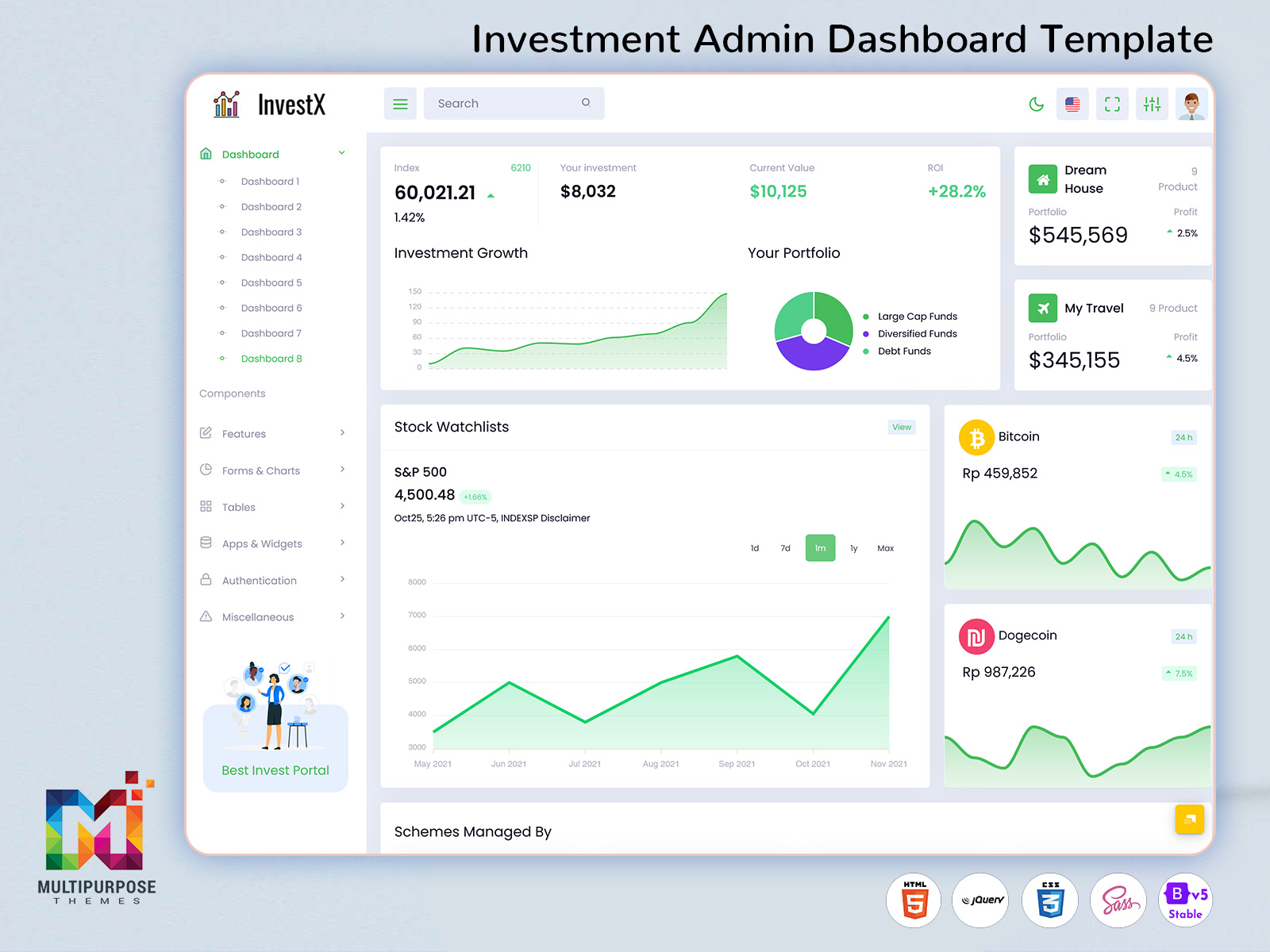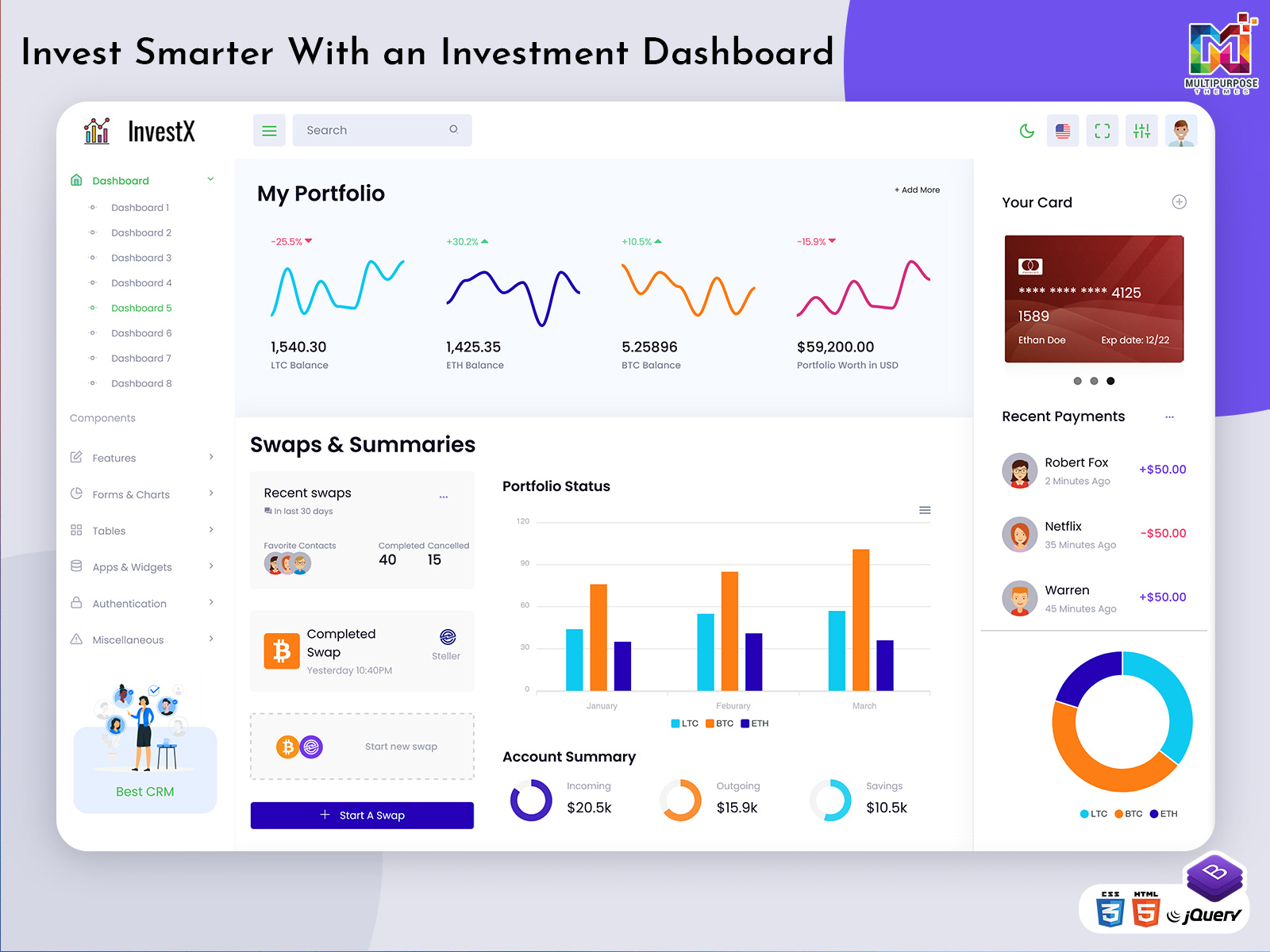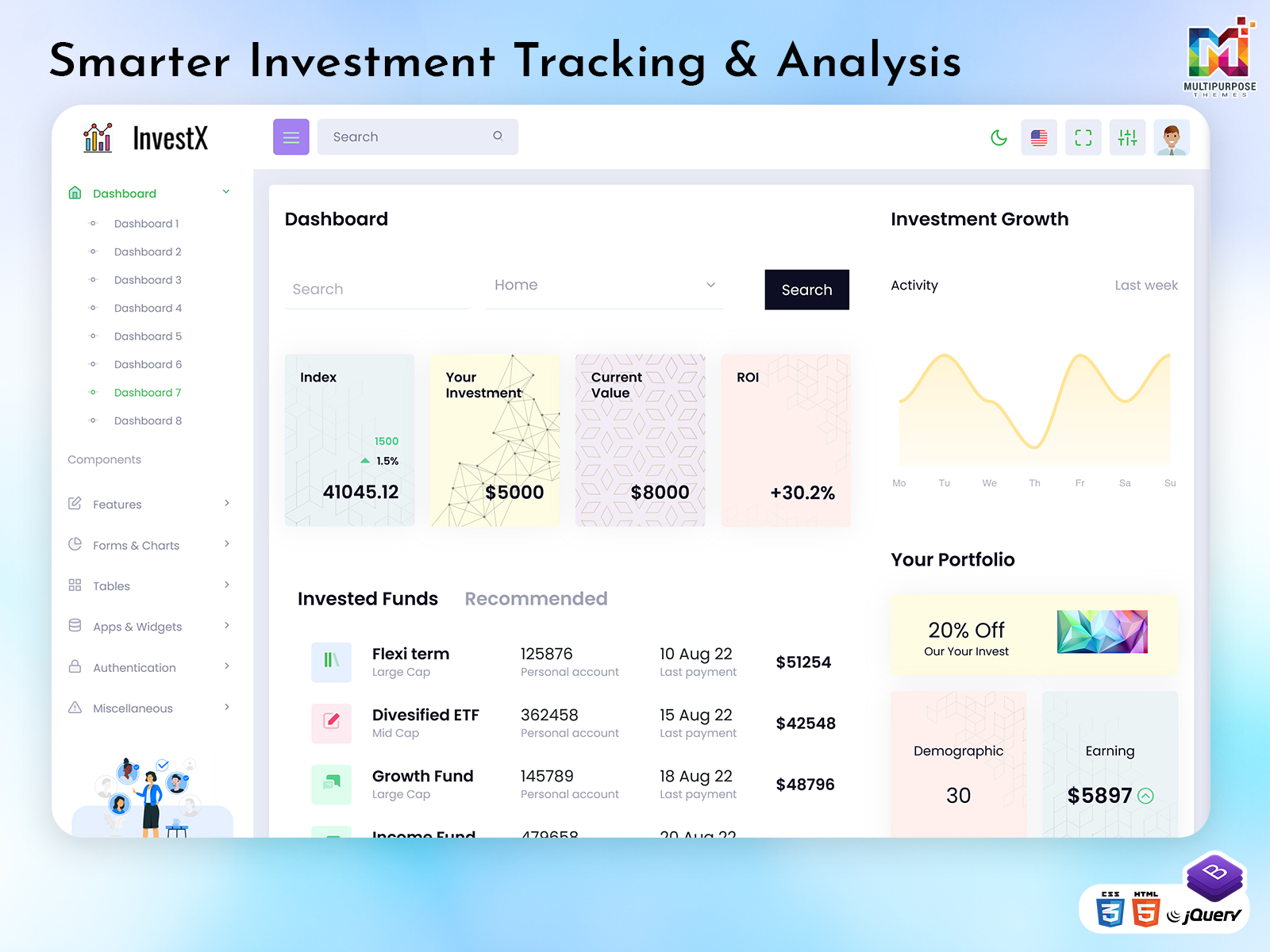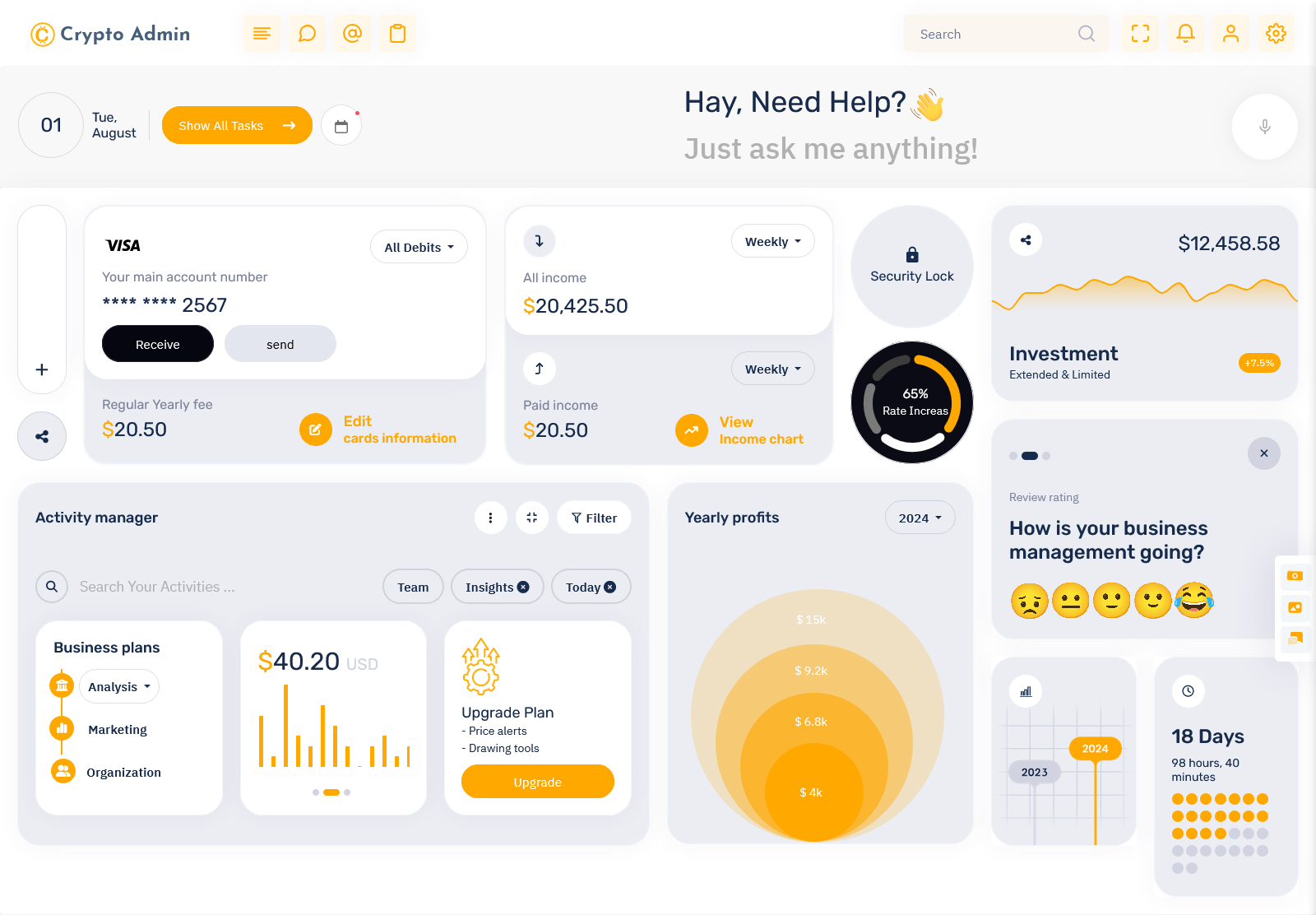
This is where an Investment dashboard can become useful. Rather than treating every investment as…
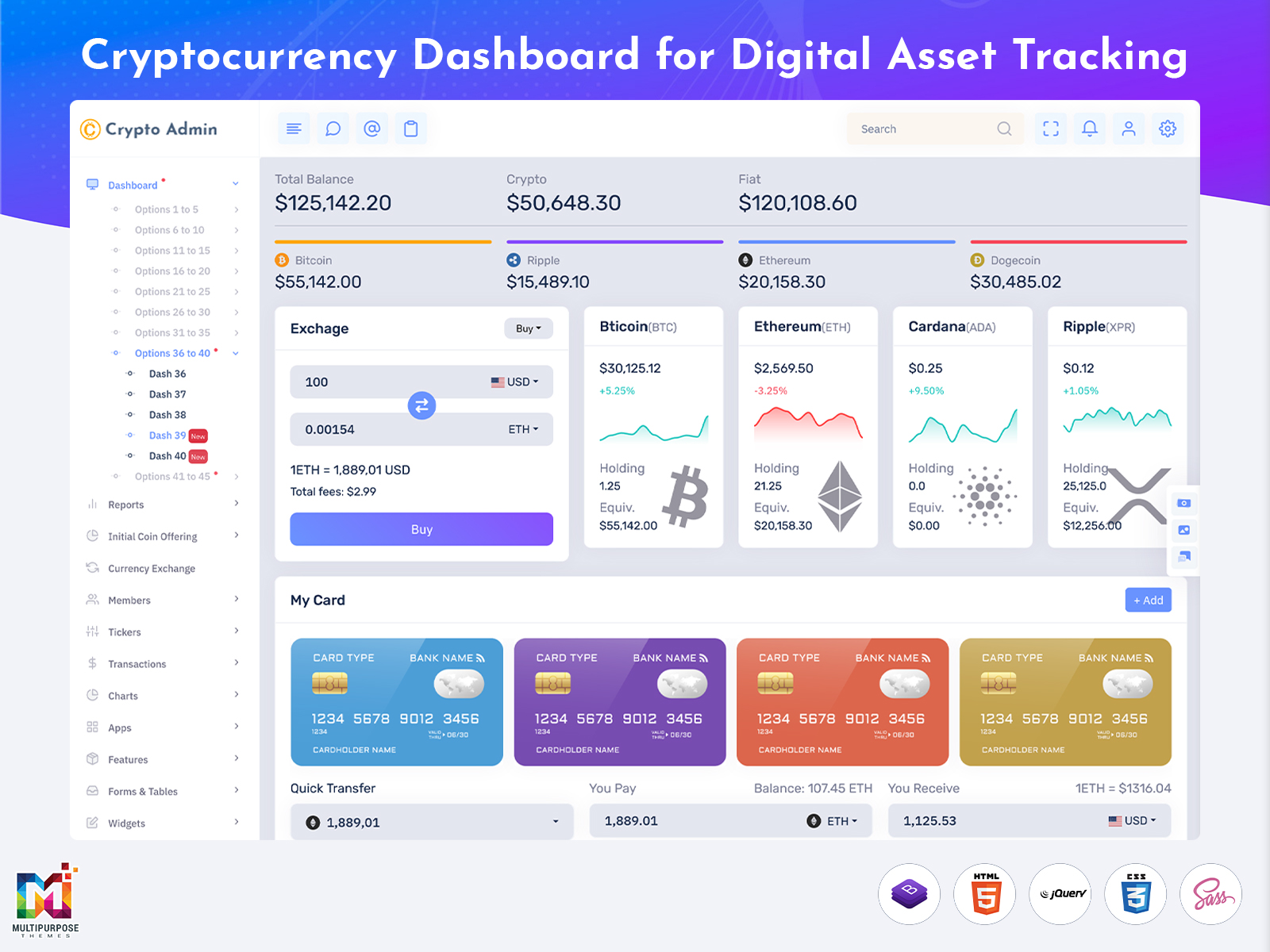
Cryptocurrency Dashboard: Track Digital Assets
Reading Time: 9 minutes
Cryptocurrency platforms generate a large amount of information every day. Prices change quickly, wallets receive and send assets, transactions are recorded, and portfolio values can move within a short period. Trying to understand all this information through separate pages or manual records can become difficult. A Crypto Dashboard brings relevant digital asset information into a more organized workspace.
A dashboard can be useful for crypto platforms, portfolio applications, exchanges, financial technology products, and businesses developing digital asset management tools. Instead of forcing users to search through different sections, it can present important information in a structured format that is easier to review.
The purpose of a Crypto Dashboard is not simply to fill a screen with market numbers. Its real value comes from organizing information in a way that helps users understand what is happening. A thoughtful dashboard can make complex cryptocurrency information more approachable for both regular users and platform administrators.
Watch Full Video
What is a Crypto Dashboard?
A Crypto Dashboard is a digital interface designed to organize cryptocurrency-related information in one place. Depending on the purpose of the application, it may present portfolio information, asset values, transaction activity, wallet details, market movements, and other relevant data.
A Crypto Wallet Dashboard can focus on information connected with digital asset wallets, helping users review their holdings and transaction activity from a centralized interface. On the other hand, a broader crypto management platform may require information about multiple assets, portfolio movement, or market-related data.
Developers building cryptocurrency applications may also use a Crypto Dashboard Template as a starting point for their interface. A ready-made dashboard structure can provide the foundation for the visual experience while developers customize the application according to its particular requirements.
For projects focused specifically on Bitcoin, a Bitcoin Admin Template can provide a more specialized design direction. The actual dashboard structure should always depend on what users need to monitor and how the platform is intended to operate.
Connecting Digital Asset Data in One Place
A Crypto Dashboard can be understood as a central observation point for digital asset information. Cryptocurrency users often deal with information coming from multiple areas, including wallets, market data, transactions, and portfolio records. The challenge is not necessarily a lack of information but making that information understandable.
A useful dashboard creates a connection between these different pieces of information. For example, a user may want to understand how a change in an asset’s value affects the overall portfolio. Looking at portfolio information alongside relevant market movement can provide more context than viewing either figure separately.
For administrators, the dashboard can serve a different purpose. They may need to monitor platform activity, review account information, understand transaction patterns, or keep an eye on system-level information. This means the same concept can be adapted for different users without forcing every dashboard to follow an identical structure.
The most effective approach is to start with the decisions or tasks the user needs to perform. Once those requirements are clear, the dashboard can be organized around the information that actually supports them.
VIEW DEMO BUY NOW
Features of Crypto Dashboard
1. Organized Crypto Information
A Crypto Dashboard brings relevant digital asset information into a structured interface. Users can review important figures without moving repeatedly between different sections. A logical arrangement makes the dashboard easier to understand and provides a practical starting point for regular cryptocurrency portfolio or platform monitoring.
2. Crypto Analytics Charts
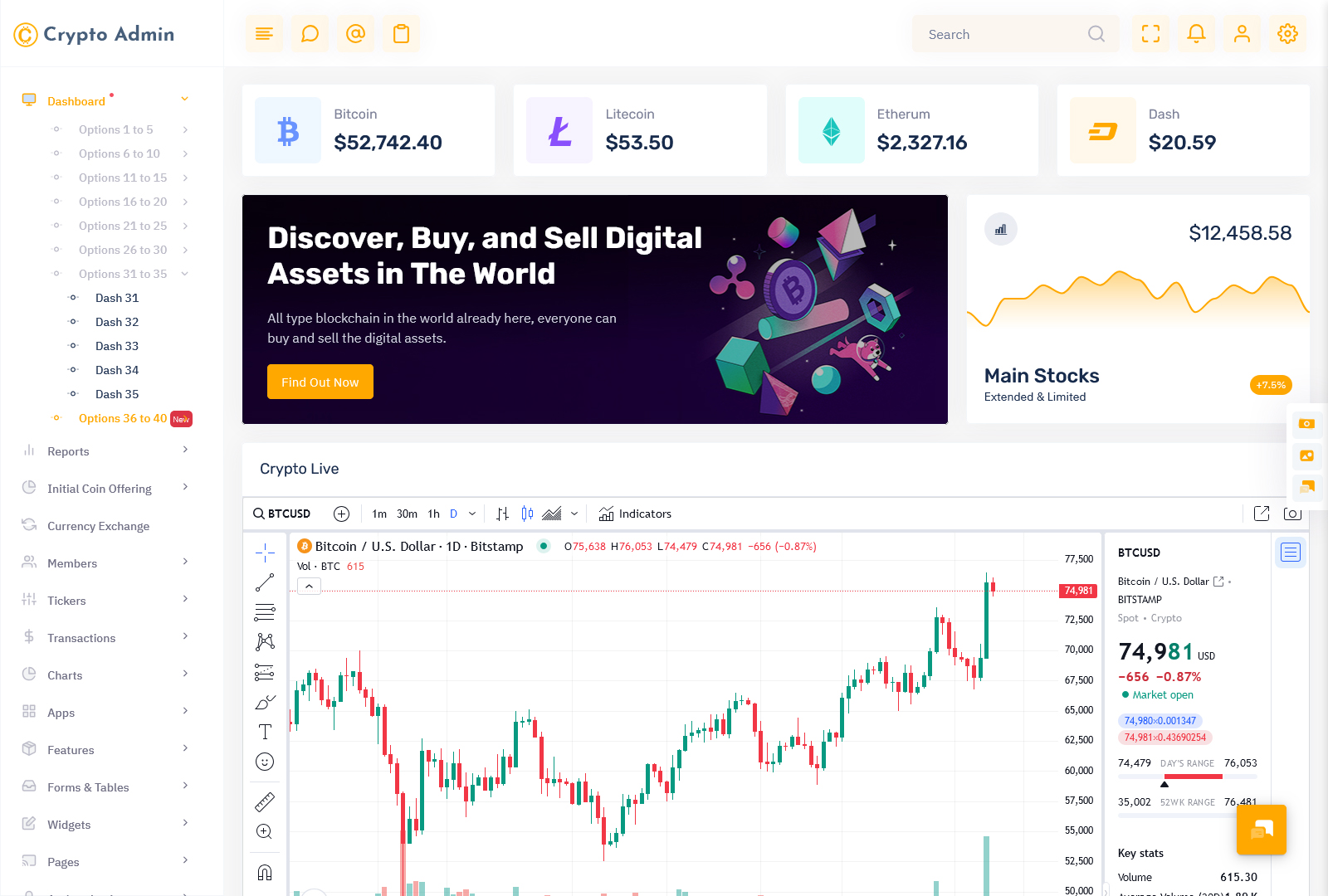
Crypto Analytics Charts can present market and portfolio information visually, making changes easier to recognize. Instead of depending entirely on tables or individual figures, users can observe movement through visual representations that provide additional context when reviewing cryptocurrency-related information over selected periods.
3. Wallet Information Management
A Crypto Wallet Dashboard provides a dedicated environment for viewing wallet-related information. It can help users organize relevant wallet data and understand their digital asset position from one place, creating a more convenient experience for applications where wallet management is an important part of the platform.
4. Portfolio Visibility
A Crypto Dashboard can provide a broader view of a user’s digital asset portfolio. Rather than checking each cryptocurrency individually, users can access information about their overall holdings in one interface. This makes routine portfolio reviews more organized and reduces unnecessary navigation between separate screens.
5. Transaction Overview
Cryptocurrency platforms can generate many transaction records, particularly when users actively move assets. A dashboard can provide a structured view of transaction-related information, making it easier to review activity and maintain awareness of recent account movements without searching through disconnected records.
6. Responsive Dashboard Design
Crypto platforms may be accessed from desktops, laptops, tablets, and mobile devices. A responsive dashboard can adjust its layout according to the available screen space. This helps users maintain access to important information while providing a more consistent experience across different devices.
7. Customizable Interface
A Crypto Dashboard Template can provide a starting structure that developers can adapt according to project requirements. Customization allows businesses to adjust the interface around their preferred information, branding, workflows, and user roles rather than relying on a fixed layout that may not match their application.
Organizing Complex Crypto Data for Better Decisions
The most meaningful role of a Crypto Dashboard is to reduce complexity. Cryptocurrency applications can contain technical and financial information that may appear overwhelming when presented without structure. A dashboard can create an organized path through that information so users know where to look and what they are seeing.
For example, a portfolio application may contain several digital assets with different values and movements. Showing every available metric at the same level of importance can make the interface confusing. A better approach is to establish a clear hierarchy where the most useful information receives attention while secondary details remain available when required.
The same principle applies to administrators. A crypto platform may have large amounts of account, transaction, and operational information. An effective admin interface should help administrators identify what deserves attention rather than forcing them to examine every record individually.
This makes dashboard design an important part of the overall product experience. The technology behind a cryptocurrency application may be complex, but the user interface should make the information feel as clear and manageable as possible.
VIEW DEMO BUY NOW
Benefits of Crypto Dashboard
1. Simplifies Information Access
A Crypto Dashboard gives users a centralized place to review relevant cryptocurrency information. This reduces repeated navigation across different sections and makes routine monitoring more convenient. Users can begin their review from one organized workspace instead of searching through several unrelated screens.
2. Improves Portfolio Awareness
When digital asset information is displayed together, users can develop a clearer understanding of their overall portfolio. They can review different holdings within the same environment and gain better context about how individual assets relate to the broader portfolio.
3. Makes Market Movement Easier to Follow
Visual information can make changes more noticeable than isolated numbers. With Crypto Analytics Charts, users can review movement across selected periods and understand patterns more easily. This can make market information more approachable without requiring users to interpret every figure separately.
4. Supports Faster Account Reviews
A well-organized dashboard reduces the time required to locate commonly needed information. Users can quickly review wallet details, portfolio information, or recent activity from a central interface. This creates a smoother experience for people who regularly check their digital asset accounts.
5. Helps Administrators Stay Organized
Crypto platforms can contain information from many users and transactions. An administrative dashboard gives platform teams a structured environment for managing relevant information. This can make everyday administration more manageable and help teams maintain better visibility across different areas of the platform.
6. Creates a Better User Experience
A clear interface can make a major difference when users work with complicated financial information. A Crypto Dashboard can organize information in a logical manner, helping users understand where they are and what information they can access without making the experience unnecessarily complicated.
7. Provides a Scalable Starting Point
A Crypto Dashboard Template can help development teams begin with an established interface structure. Instead of creating every visual component from the ground up, developers can adapt the foundation to their application. This can make the early stages of dashboard development more efficient.
Who Can Use a Crypto Dashboard?
Crypto Dashboards can serve several types of users. Individual cryptocurrency portfolio applications can use them to organize wallet and asset information. Digital asset platforms can use dashboards to provide account-related information to customers, while businesses developing blockchain-based applications can use them as part of their product interface.
Administrators have different requirements. They may need to manage users, review platform activity, monitor transactions, or understand operational information. A Bitcoin Admin Template can be useful for projects that are specifically focused on Bitcoin-related applications and require an administration-oriented interface.
Developers can also benefit from dashboard templates when creating cryptocurrency applications. A template can provide an initial structure that can later be adapted to the project’s technical and design requirements.
The important factor is defining the user before selecting the dashboard structure. A portfolio user, exchange administrator, and blockchain application manager may all need different information. Designing around their actual tasks will create a more useful experience.
Crypto Dashboard for Portfolio Management
Portfolio management is one of the areas where a Crypto Dashboard can provide practical value. Users may hold multiple cryptocurrencies and need to understand their overall position without checking every asset separately.
A dashboard can create a single view where portfolio information is organized according to the user’s needs. This can make regular reviews more convenient and give users a broader perspective on their digital asset holdings.
A Crypto Wallet Dashboard can be particularly useful when wallet information is central to the application. It can provide a structured environment for viewing relevant wallet data and related activity.
However, a dashboard should not encourage users to focus only on short-term changes. Cryptocurrency values can move quickly, so the interface should provide enough context for users to understand information rather than simply highlighting every price movement.
Choosing a Crypto Dashboard Template
When selecting a Crypto Dashboard Template, businesses should first consider the type of application they are building. A portfolio platform may need a different structure from an exchange administration system or blockchain analytics product.
The template should also be evaluated for responsive behavior, customization possibilities, visual clarity, code structure, and compatibility with the project’s technology. A good-looking interface is useful, but it should also be practical for the people who will use it every day.
For Bitcoin-focused projects, a Bitcoin Admin Template may provide a suitable starting direction. For broader cryptocurrency applications, a more flexible Crypto Dashboard Template may be more appropriate.
The most important consideration is whether the dashboard can adapt to the application’s actual workflow. Templates should support the project rather than forcing the project to work around the template.
Crypto Dashboard and Data Visualization
Cryptocurrency platforms produce information that can be difficult to understand through plain numbers alone. Data visualization can help users recognize changes and compare information more naturally.
Crypto Analytics Charts can provide visual context when users need to review market movement, portfolio changes, or historical information. The goal should be clarity rather than adding charts simply to make the dashboard look more advanced.
Too many visual elements can make a dashboard difficult to use. A smaller number of meaningful charts can often communicate more effectively than a screen filled with graphs and indicators.
Good visualization should answer a question. If users need to understand how a portfolio has changed over time, the chart should make that comparison easy. If they need to review transaction activity, the design should help them identify the relevant information without unnecessary distractions.
Conclusion
A Crypto Dashboard can turn complex digital asset information into a more organized and approachable experience. It can help users review portfolios, understand wallet activity, follow transactions, and explore relevant cryptocurrency information from a central interface.
For developers and businesses, a Crypto Dashboard Template can provide a practical starting point for building a customized cryptocurrency application. A Crypto Wallet Dashboard can focus on wallet-related information, while a Bitcoin Admin Template can support projects with a Bitcoin-specific administration requirement.
The value of a dashboard ultimately depends on how well it matches the needs of its users. Clear organization, meaningful data visualization, responsive design, and useful information are more important than simply adding a large number of dashboard elements.
When these principles are followed, a Crypto Dashboard can become more than a collection of crypto numbers. It can provide a structured environment that makes digital asset information easier to review, understand, and manage.
VIEW DEMO BUY NOW
Frequently Asked Questions
1. What is the main purpose of a Crypto Dashboard?
The main purpose of a Multi Purpose Themes Crypto Dashboard is to organize cryptocurrency-related information into a single, easy-to-follow interface. Depending on the application, it can display portfolio information, wallet activity, transactions, asset values, and other relevant data. This can make regular monitoring more convenient for users and administrators.
2. What is a Crypto Wallet Dashboard?
A Multi Purpose Themes Crypto Wallet Dashboard is an interface focused on information connected with cryptocurrency wallets. It can provide users with a centralized place to review wallet-related information and activity. The exact information depends on the application, but the overall goal is to make wallet management and monitoring more organized.
3. Can a Crypto Dashboard show multiple cryptocurrencies?
Yes. A Multi Purpose Themes Crypto Dashboard can be designed to display information for multiple digital assets. This is particularly useful for portfolio applications where users hold several cryptocurrencies. Presenting different assets within one interface can give users a broader view of their holdings instead of requiring them to check each asset separately.
4. Are Crypto Analytics Charts useful for crypto applications?
Yes, when they are used for a clear purpose. Crypto Analytics Charts can help users understand movement and compare information visually. They may be useful for reviewing historical changes, portfolio performance, or other relevant data. However, charts should remain easy to understand and should not be added only for decorative purposes.
5. What should I check before choosing a Crypto Dashboard Template?
Before selecting a Crypto Dashboard Template, check its responsiveness, customization options, design structure, code quality, and compatibility with your development requirements. You should also consider whether the layout can accommodate the information your users actually need. A template should provide flexibility rather than restrict the application’s future development.
6. When should I use a Bitcoin Admin Template?
A Bitcoin Admin Template may be suitable when the application has an administration interface focused specifically on Bitcoin-related activities or information. It can provide a starting structure for developers, but the final dashboard should still be adapted according to the project’s features, user roles, technical requirements, and business workflow.
7. Can Multi Purpose Themes be used for a Crypto Dashboard project?
Multi Purpose Themes can be considered as a starting point for a cryptocurrency dashboard project when its available interface and technical structure fit the application’s requirements. Developers should review the template’s responsiveness, customization capabilities, documentation, and compatibility before selecting it for a production project.

Related Posts