

Introduction to CRM Dashboard A CRM Dashboard is an essential part of modern business operations…
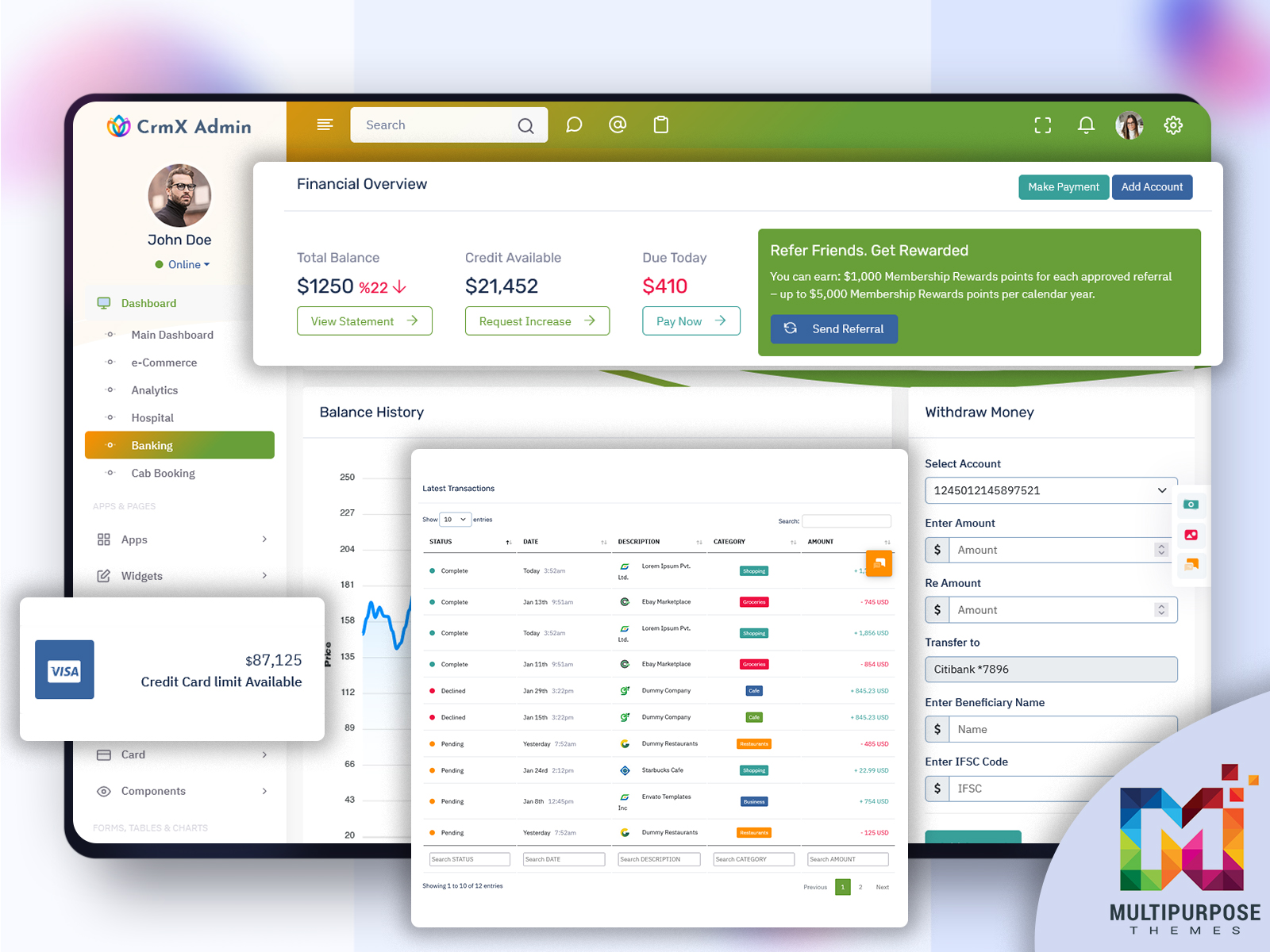
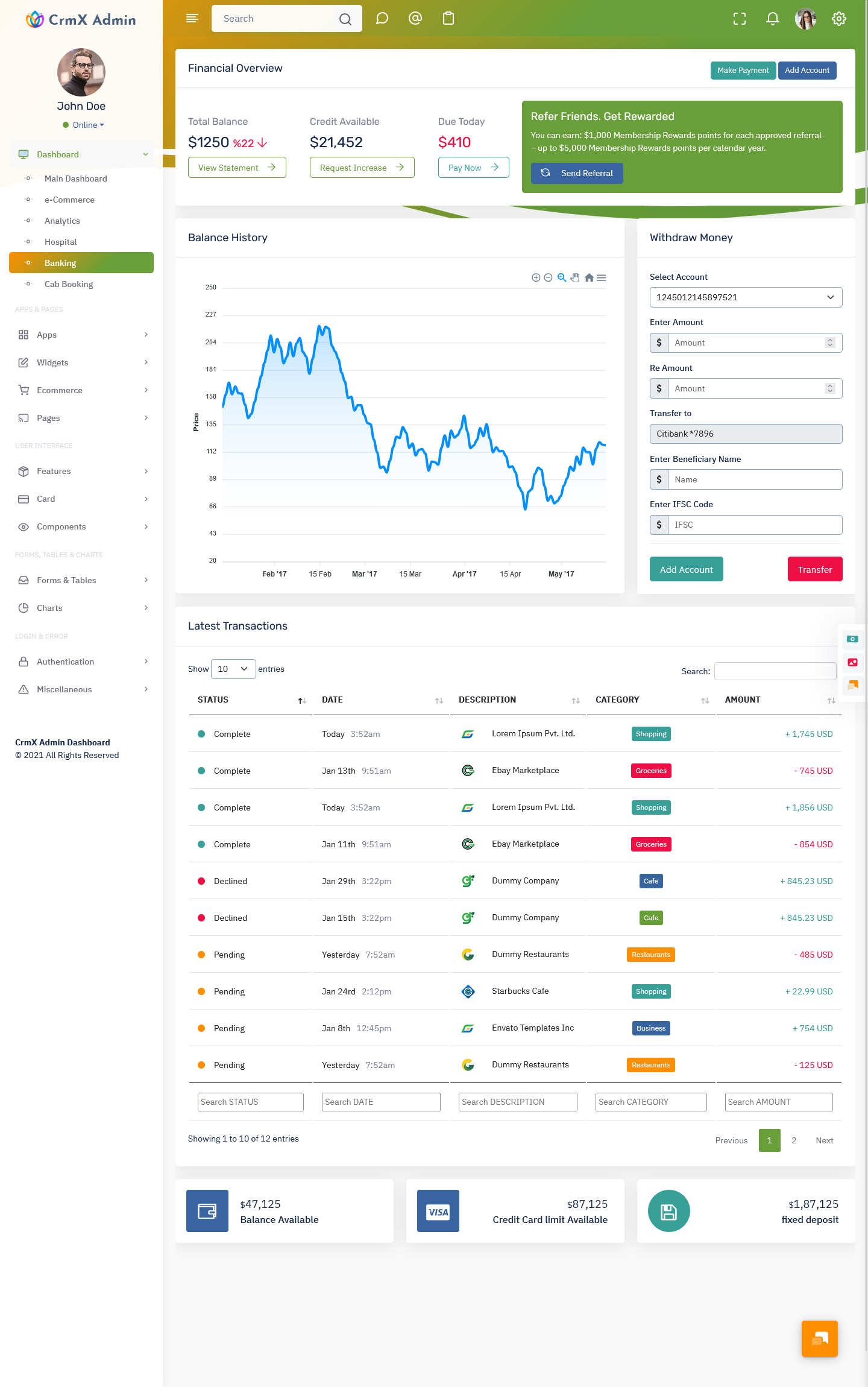
CRM Software Dashboard 2026: Modern Dashboard Layout for Banking CRM Systems
Reading Time: 7 minutes
The banking and financial services industry has changed significantly in recent years. Customers now expect faster responses, personalized services, and seamless communication with their financial institutions. As competition grows and digital transformation accelerates, banks must adopt smart tools that help them manage customer relationships effectively. One of the most important tools used by modern financial institutions is a CRM Software Dashboard.
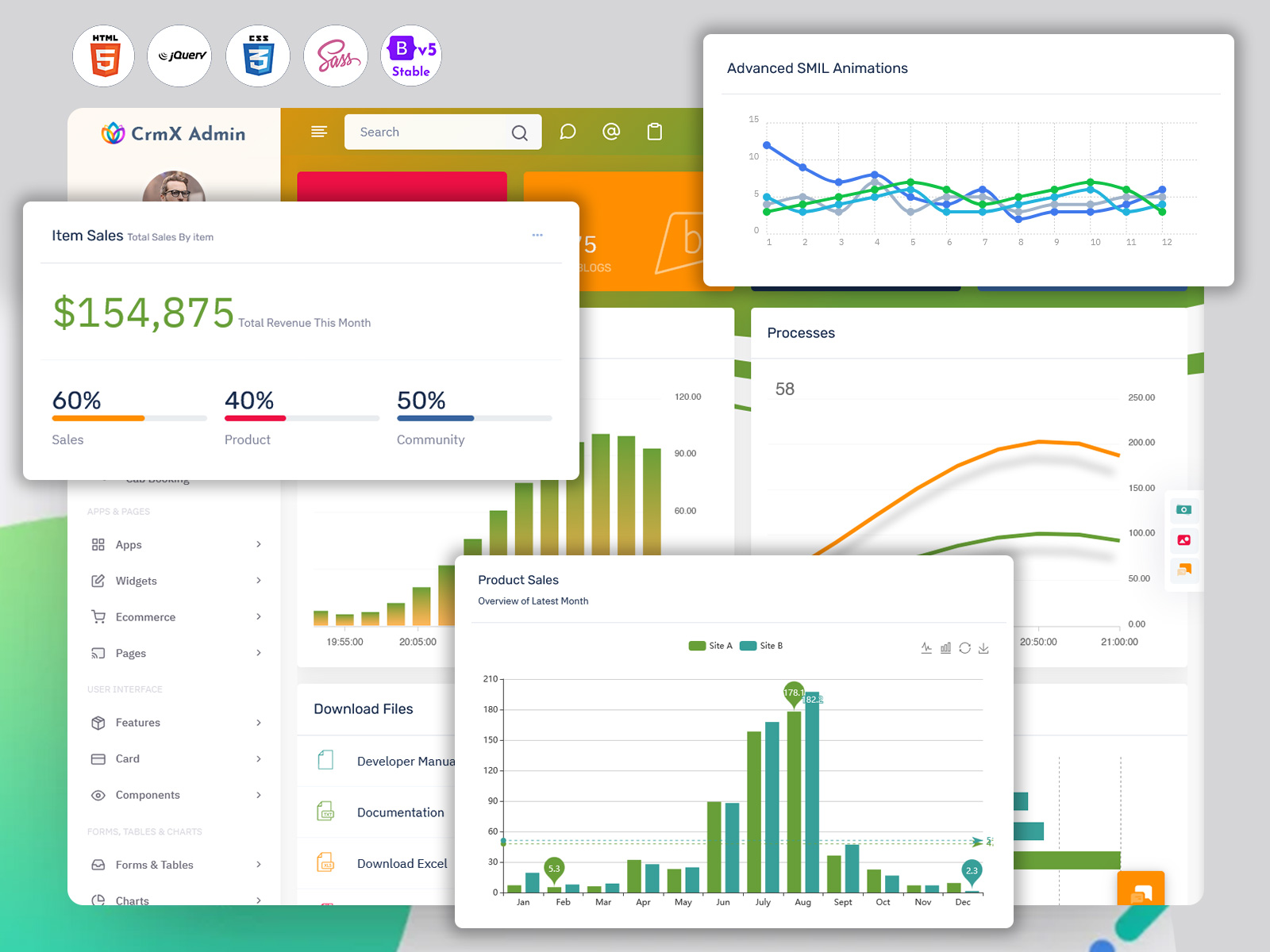
A well-designed CRM Dashboard helps banks organize customer information, track interactions, analyze sales performance, and improve communication with clients. It becomes easier for relationship managers and sales teams to understand client behavior and provide better financial solutions. When combined with a modern CRM Admin Template and a clean Dashboard Layout, banks can create powerful Sales Dashboards that deliver real-time insights and simplify daily operations.
This article explores how a CRM Software Dashboard helps banks strengthen client relationships, improve engagement, and increase customer retention while maintaining efficient business operations.
Explore Dashboard
BUY NOW DEMO
Understanding the Role of a CRM Software Dashboard in Banking
A CRM Software Dashboard is a centralized digital interface that displays important customer data, sales performance, and operational insights in one place. For banks and financial institutions, managing large volumes of customer information can be challenging. Clients interact with banks through multiple channels including branch visits, online banking, mobile applications, and customer support services. Without a proper system, tracking these interactions becomes difficult.
A CRM Dashboard solves this problem by collecting and organizing all relevant data into an easy-to-understand visual interface. Relationship managers can quickly access details about customer accounts, transaction history, service requests, and communication records. This information helps them respond to client needs more efficiently.
Banks often integrate their CRM systems with a modern CRM Admin Template, which improves usability and design. A well-structured Dashboard Layout ensures that important metrics such as leads, customer engagement, sales performance, and service requests are visible at a glance. These visual insights make it easier for bank staff to monitor business performance and provide better customer service.
In addition, financial institutions use Sales Dashboards to monitor the progress of their sales teams. These dashboards help track loan applications, credit card sales, insurance products, and investment services. With real-time data, managers can quickly identify opportunities and improve sales strategies.
Why Banks Need a CRM Dashboard in the Digital Era
The digital era has significantly changed how customers interact with banks. Clients now expect fast service, digital accessibility, and personalized financial advice. Banks that fail to deliver these experiences risk losing customers to competitors. A CRM Dashboard helps financial institutions meet these expectations by improving how customer information is managed and utilized.
One of the main advantages of a CRM Software Dashboard is the ability to provide a complete view of each customer. Relationship managers can see past interactions, product usage, and customer preferences. This knowledge allows banks to provide personalized recommendations such as loan offers, credit cards, or investment opportunities.
A modern CRM Admin Template also ensures that employees can easily access the information they need. When the Dashboard Layout is clear and intuitive, employees spend less time searching for data and more time focusing on client relationships. This improved efficiency directly contributes to better customer experiences.
Another important benefit is the ability to analyze customer behavior through Sales Dashboards. These dashboards display performance metrics, lead conversion rates, and sales trends. Managers can use these insights to improve sales strategies and allocate resources effectively.
How CRM Software Dashboards Improve Client Engagement
Client engagement is one of the most important factors in banking success. Engaged customers are more likely to trust their bank, use multiple financial products, and remain loyal for a long time. A CRM Software Dashboard plays a major role in strengthening client engagement.
By collecting data from multiple touchpoints, the CRM Dashboard provides a comprehensive overview of customer activity. Bank representatives can understand when a client last interacted with the bank, what services they use, and what financial goals they may have. This information helps banks communicate with customers in a more relevant and meaningful way.
A well-designed CRM Admin Template allows teams to monitor communication history and schedule follow-ups. When a client submits an inquiry or applies for a product, the system records the interaction and alerts the appropriate staff member. This prevents missed opportunities and ensures that customers receive timely responses.
The Dashboard Layout also plays a key role in improving engagement. Clear visual elements, charts, and data summaries help employees quickly understand customer activity. Instead of reviewing complex reports, staff can rely on intuitive Sales Dashboards to track engagement metrics and customer interactions.
As a result, banks can maintain stronger relationships with clients and deliver more personalized financial solutions.
Enhancing Sales Performance with Sales Dashboards
Sales performance is another area where a CRM Software Dashboard offers significant advantages. Banks offer a wide range of financial products, including savings accounts, loans, credit cards, and investment services. Managing these sales activities requires accurate tracking and performance monitoring.
Sales Dashboards provide real-time visibility into sales pipelines, lead progress, and conversion rates. Managers can see how many leads are generated, how many deals are in progress, and how many have been successfully closed. This information helps sales teams stay focused on their targets.
A modern CRM Dashboard also helps identify potential sales opportunities. For example, if a customer frequently uses online banking services, they may be interested in digital financial products or investment services. The system can highlight such opportunities and notify relationship managers.
Using a well-designed CRM Admin Template, banks can customize their Dashboard Layout according to their sales strategy. Some dashboards may focus on loan approvals, while others track credit card applications or insurance sales. This flexibility ensures that every department has the insights they need to improve performance.
By using Sales Dashboards, banks can increase efficiency, identify growth opportunities, and achieve better financial results.
Improving Customer Retention Through CRM Dashboards
Customer retention is one of the biggest challenges in the banking industry. Acquiring new customers requires significant marketing efforts, but retaining existing customers is often more profitable. A CRM Software Dashboard helps banks improve retention by understanding customer needs and addressing potential issues early.
Through a CRM Dashboard, banks can monitor customer behavior and identify signs of dissatisfaction. For instance, if a customer frequently contacts support or reduces account activity, it may indicate a potential problem. Relationship managers can then reach out to resolve concerns and strengthen the relationship.
A structured Dashboard Layout also helps track customer engagement levels and loyalty indicators. These insights allow banks to develop targeted retention strategies such as personalized offers, loyalty programs, or financial advisory services.
The use of a professional CRM Admin Template ensures that all relevant customer data is easily accessible. Employees can quickly review account history, previous interactions, and service preferences before communicating with clients. This level of preparation makes interactions more meaningful and builds trust with customers.
With accurate insights provided by Sales Dashboards and CRM analytics, banks can maintain long-term relationships and reduce customer churn.
The Importance of Dashboard Layout in CRM Systems
The effectiveness of a CRM Software Dashboard depends greatly on its design and usability. A cluttered or confusing interface can make it difficult for employees to access important information. This is why the Dashboard Layout plays such an important role in CRM systems.
A well-designed layout ensures that key metrics are clearly displayed and easy to interpret. Important information such as customer activity, sales performance, and service requests should be visible without navigating through multiple pages.
Banks often use a modern CRM Admin Template to achieve this structure. These templates provide pre-designed components that organize data into charts, tables, and visual reports. The result is a professional CRM Dashboard that improves productivity and simplifies decision-making.
In addition, responsive Dashboard Layouts ensure that CRM systems can be accessed across different devices, including desktops, tablets, and mobile devices. This flexibility allows relationship managers and executives to monitor business performance anytime and anywhere.
When combined with advanced Sales Dashboards, an optimized layout helps banks turn complex data into actionable insights.
The Role of CRM Admin Templates in Banking Technology
A CRM Admin Template is an essential component in modern CRM platforms. It provides the visual framework and interface design that powers the CRM Dashboard. For banks, choosing the right template ensures that their CRM system is efficient, secure, and easy to use.
These templates include various components such as charts, graphs, activity logs, and analytics tools. When integrated into a CRM Software Dashboard, they transform raw data into meaningful insights that employees can easily understand.
A well-developed CRM Admin Template also improves workflow management. Banking teams can track tasks, monitor performance, and manage customer interactions within a single interface. This centralized system reduces operational complexity and improves collaboration between departments.
Furthermore, templates support customizable Dashboard Layouts, allowing banks to create specialized Sales Dashboards for different teams. Sales managers may focus on lead conversions, while customer service teams monitor support requests and response times.
By using advanced CRM templates, banks can streamline operations while delivering better services to their clients.
Future of CRM Software Dashboards in the Banking Industry
As digital banking continues to evolve, the role of CRM Software Dashboards will become even more significant. Emerging technologies such as artificial intelligence, predictive analytics, and automation will further enhance CRM capabilities.
Future CRM Dashboards will be able to predict customer needs based on behavioral patterns and transaction history. Banks will be able to anticipate financial requirements and offer personalized solutions before customers even request them.
Advanced Sales Dashboards will provide deeper insights into sales trends and customer engagement. Managers will be able to analyze performance across different regions, products, and teams, helping them make more informed strategic decisions.
At the same time, modern CRM Admin Templates will continue to improve the design and functionality of CRM systems. Enhanced Dashboard Layouts will focus on user experience, ensuring that employees can access insights quickly and efficiently.
For banks that want to remain competitive in a rapidly changing financial landscape, adopting advanced CRM dashboards will be essential.
Conclusion
In the modern banking environment, managing customer relationships effectively is essential for long-term success. A CRM Software Dashboard provides financial institutions with the tools they need to organize client information, analyze performance, and deliver personalized services.
By using a well-structured CRM Dashboard, banks can gain a complete view of customer interactions and improve engagement. Sales Dashboards help monitor performance and identify growth opportunities, while a carefully designed Dashboard Layout ensures that employees can easily access critical data.
The integration of a professional CRM Admin Template further enhances usability and functionality, making CRM systems more efficient and visually intuitive. Together, these technologies help banks streamline operations, improve decision-making, and strengthen client relationships.
As customer expectations continue to rise, investing in a powerful CRM dashboard is no longer optional. It is a strategic requirement for banks that want to improve client engagement, increase retention, and achieve sustainable growth in the digital banking era.

Related Posts


This Post Has 0 Comments