

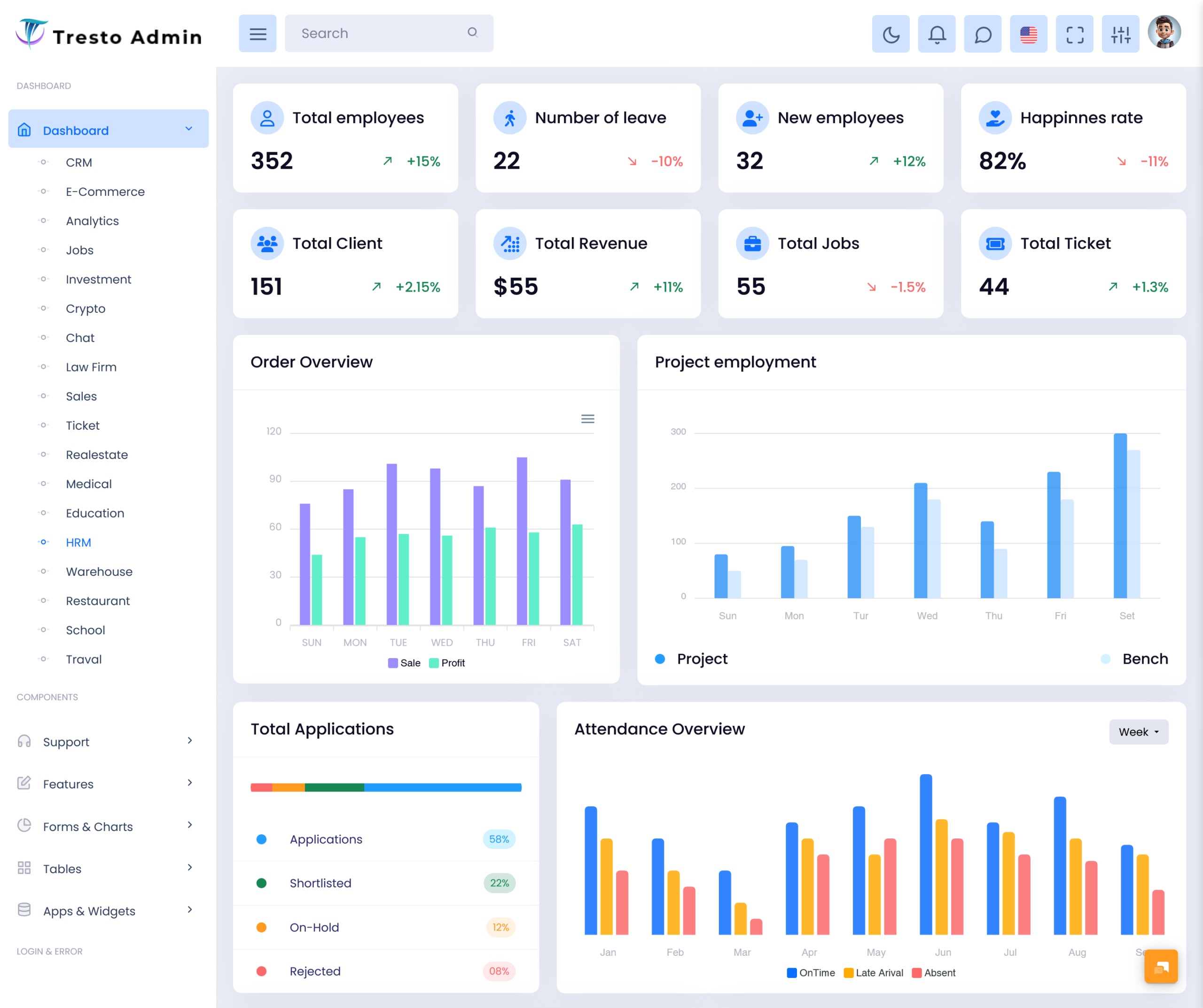
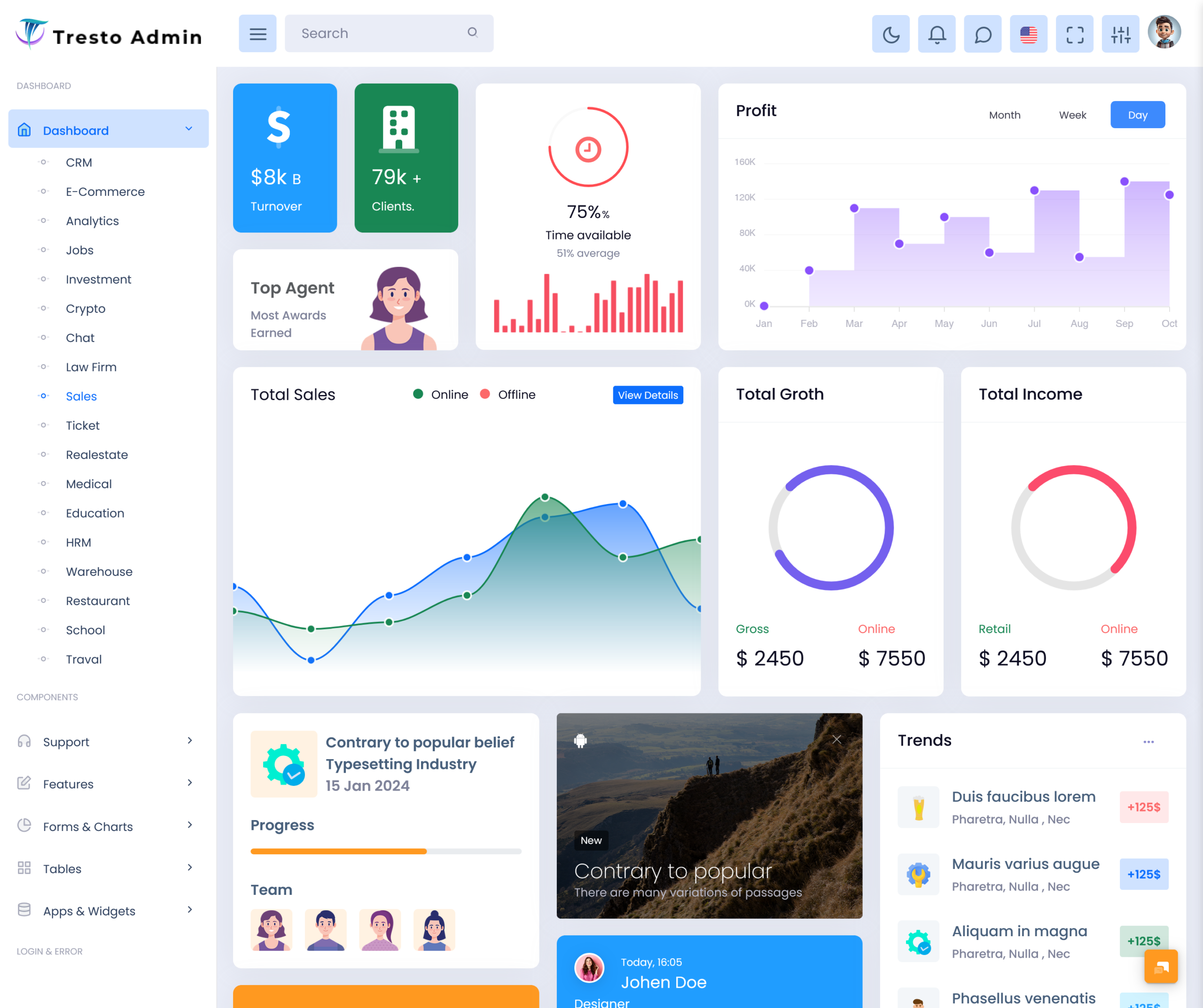
What is an HRM Dashboard? An HRM dashboard is a centralized digital workspace that helps…
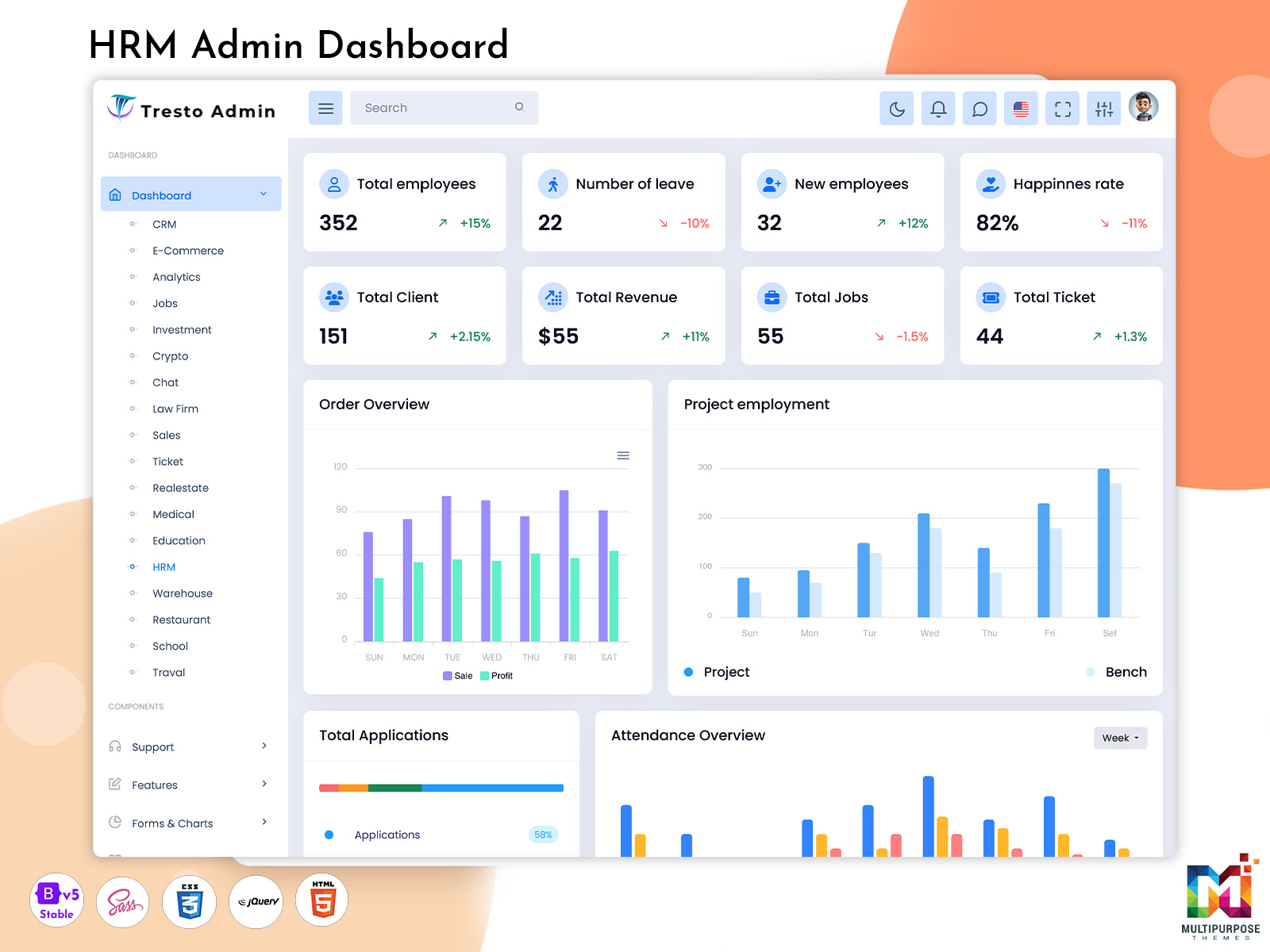
25+ HRM Admin Dashboard Templates for Workforce Tracking 2026
Reading Time: 8 minutes
Modern businesses require smart workforce systems to manage employees, recruitment, attendance, and operational reporting efficiently. A powerful HRM Admin Dashboard Template helps organizations organize employee activities, monitor workforce performance, and manage HR operations through one centralized platform. These digital systems simplify communication, reporting, and employee management while improving overall operational productivity for modern companies.
Watch Full Video
Today, organizations prefer HRMS Dashboard platforms and HRM Software Dashboard solutions because they provide automation, analytics, and responsive management tools within one environment. These systems support employee monitoring, attendance tracking, recruitment management, and project coordination through organized interfaces and structured reporting sections. Businesses also benefit from HRM Bootstrap 5 Dashboard technologies that improve accessibility across multiple devices.
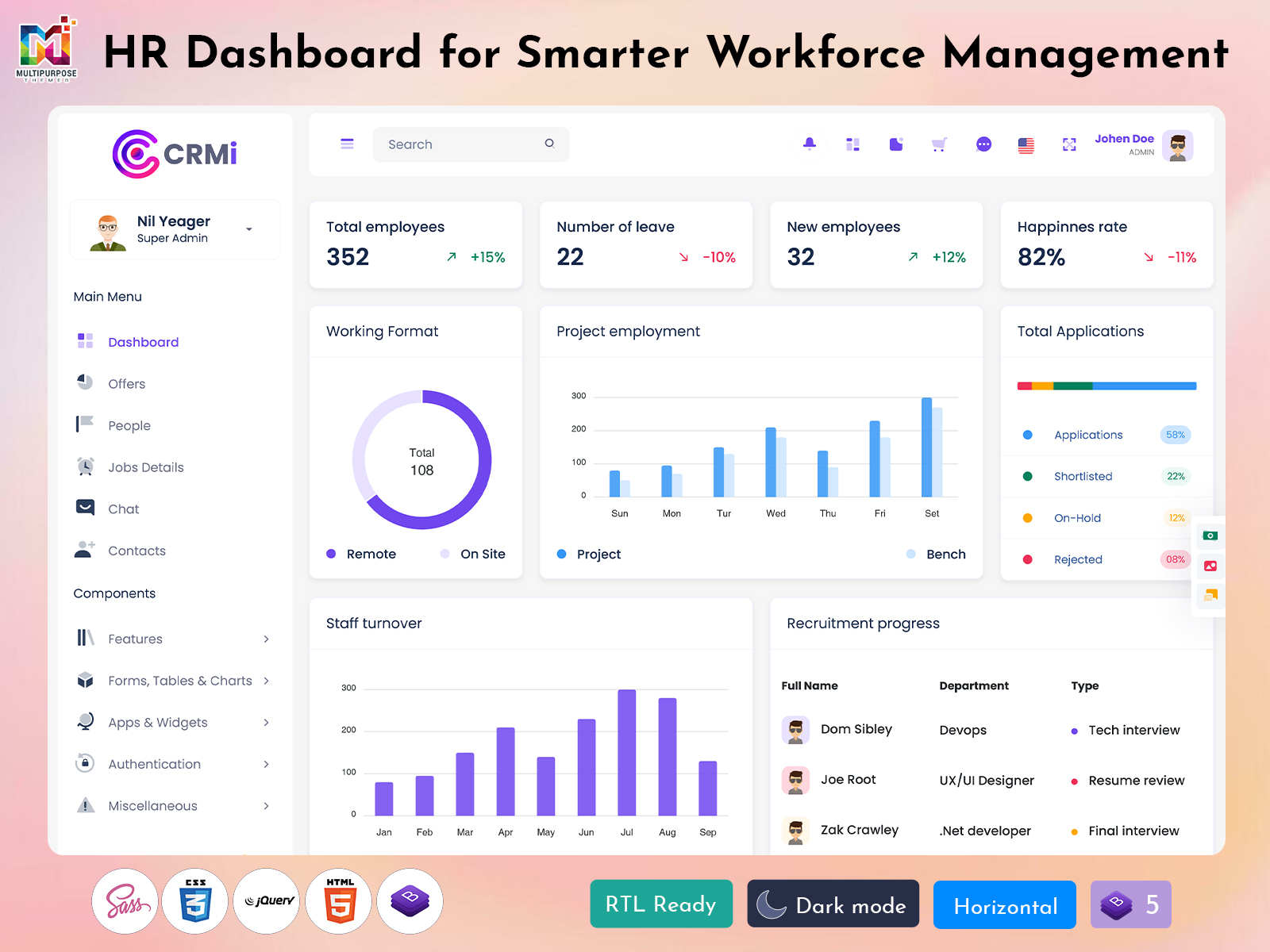
Modern HRMS Management Software platforms focus on user experience through clean layouts, responsive navigation, and organized operational tools. Companies can monitor workforce performance, track employee activities, and manage HR operations more effectively using advanced HRM Dashboards in 2026.
Explore HRM Admin Dashboard Template Features
Modern HRM Admin Dashboard Template systems help businesses organize workforce operations, employee management, attendance tracking, and recruitment activities through centralized digital platforms. Companies use HRM Software WebApp solutions and HRM Admin Panel Dashboard systems to simplify operational management while improving communication between departments. These platforms combine reporting tools, employee analytics, project coordination, and workforce monitoring features into one organized management environment for better productivity and operational efficiency.
1. Employee Monitoring System
HRM Employee Dashboard and HRM Employee List features help organizations manage employee records, attendance, leave tracking, and workforce activities through structured management panels.
2. Recruitment and Hiring Tools
HRMS Management Dashboard systems simplify candidate tracking, application monitoring, recruitment progress, and employee onboarding processes for HR departments.
3. Responsive Dashboard Interface
HRM Bootstrap Template and HRM Bootstrap Admin Template technologies improve accessibility across desktops, tablets, and smartphones while maintaining smooth navigation.
4. Analytics and Reporting Features
HRM Employee Charts and HRMS Software reporting tools help businesses analyze workforce performance, operational activities, and attendance trends more efficiently.
5. Project and Workflow Management
HRM Project Management Dashboard and HRM Project Dashboard systems improve task coordination, workflow planning, and employee productivity monitoring for growing organizations.
VIEW DEMO BUY NOW
HRMS Management Dashboard for Workforce Operations
HRMS Management Dashboard systems help organizations control workforce operations, employee records, attendance data, and HR activities through a centralized digital platform. Businesses use HRMS Software and HRM Software Dashboard solutions to simplify daily operations while improving communication between HR teams and employees. These systems combine reporting tools, employee management features, and operational monitoring into one structured interface for better efficiency and productivity.
Modern HRM App Dashboard and HRM WebApplication Kit platforms improve workflow automation, employee tracking, and operational visibility across departments. Companies can manage recruitment, attendance, payroll, and performance analysis through organized HRM Admin Panel Dashboard systems. These tools also support HRM Ui Framework and HRM Ui Kit components that enhance usability, navigation, and real-time data access.
Total Employees and Leave Tracking Overview
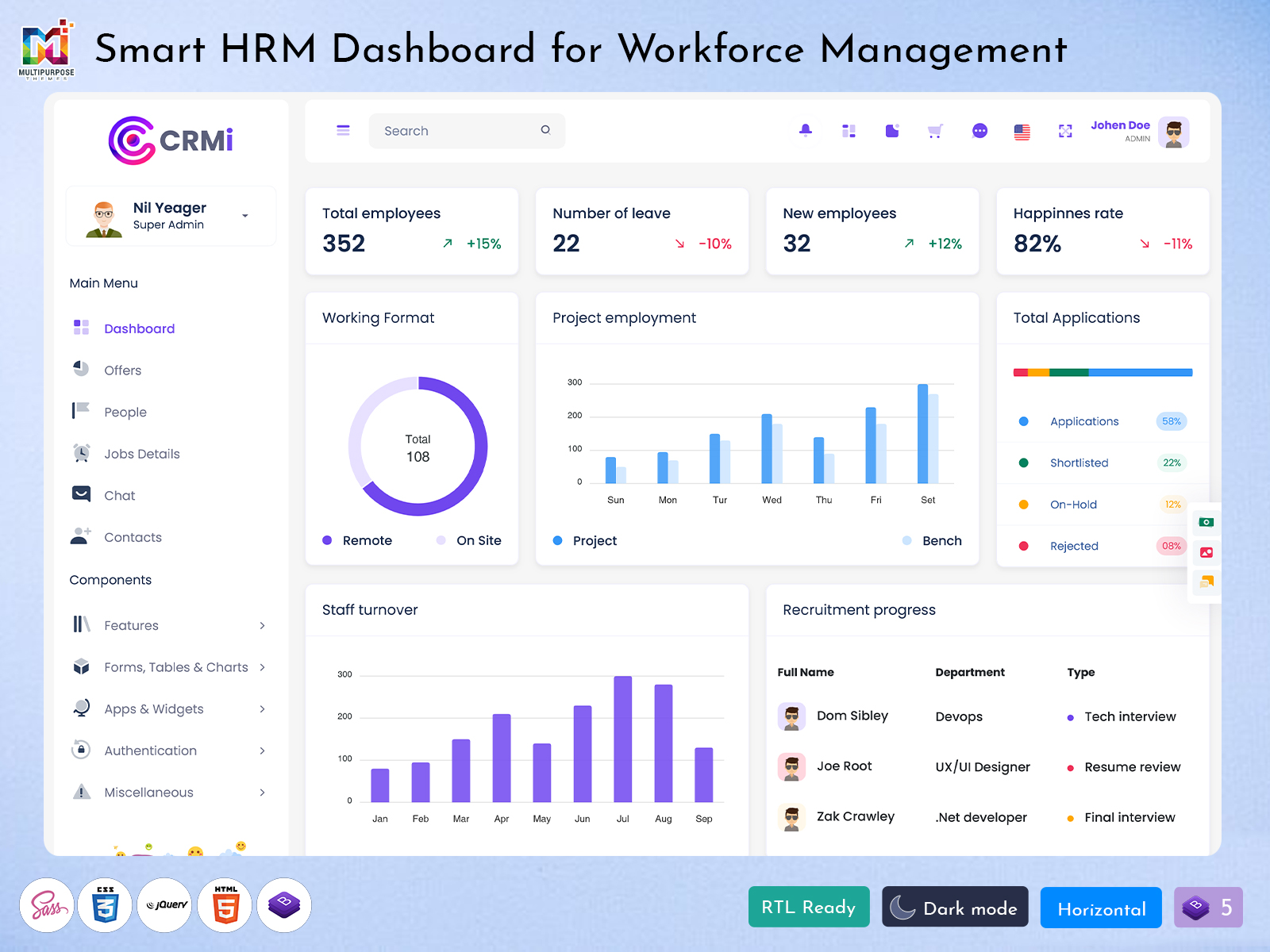
HRM Dashboard systems help organizations manage total employee records, attendance data, and leave tracking through a centralized digital platform. Businesses use HRM Admin Dashboard Template and HRM Software Dashboard solutions to monitor workforce strength, employee status, and daily attendance activities in a structured way. This helps HR teams maintain accurate records while improving overall operational efficiency.
Modern HRMS Dashboard platforms and HRM Employee Dashboard systems simplify leave management, employee tracking, and workforce reporting with real-time updates. Companies can analyze leave trends, attendance patterns, and employee availability using HRM Dashboard Design and HRM Admin Panel Dashboard tools. These systems also improve decision-making by providing clear visibility of workforce activity and operational balance.
New Employees and Happiness Rate Monitoring
HRM Dashboard systems help organizations track new employee onboarding and overall workplace satisfaction through structured workforce analytics. Using HRM Admin Dashboard and HRMS Dashboard platforms, companies can monitor new hires, their integration into teams, and early performance activities. These systems provide a clear view of employee growth, helping HR teams manage onboarding processes more efficiently.
Modern HRM Employee Dashboard and HRM Software WebApp solutions also measure happiness rate through feedback tools, engagement surveys, and performance indicators. Businesses can analyze employee satisfaction levels, morale trends, and workplace experience using HRM Analytics Dashboard and HRM Employee Charts. This helps organizations build a positive work environment, improve retention, and enhance overall workforce productivity.
Total Client and Revenue Analytics in HRMS Software
HRMS Dashboard systems help organizations manage total client records and revenue performance through structured business intelligence tools. With HRM Software Dashboard and HRM Admin Dashboard Template platforms, companies can track client interactions, service history, and financial contributions in a centralized system. This improves visibility into business relationships while helping HR and management teams coordinate operations more effectively.
Modern HRMS Management Software and HRM Analytics Dashboard solutions also provide detailed revenue insights through charts, reports, and performance tracking tools. Businesses can analyze income trends, client value, and operational profitability using HRM Dashboard Design and HRM WebApp Dashboard Design systems. These tools help organizations improve financial planning, strengthen client relationships, and make data-driven decisions for long-term business growth.
VIEW DEMO BUY NOW
Total Jobs and Ticket Management Dashboard
HRM Dashboard systems help organizations manage total job listings, internal requests, and support tickets through a centralized workflow platform. Using HRM Admin Panel Dashboard and HRM Software WebApp solutions, companies can assign job roles, track job status, and manage service tickets efficiently. This structured approach helps HR teams maintain smooth communication between departments while ensuring all tasks are completed on time.
Modern HRMS Dashboard and HRM Project Management Dashboard platforms also simplify ticket handling and job monitoring through automated tracking systems. Businesses can view job progress, resolve employee requests, and manage support tickets using HRM WebApplication Kit and HRM Ui Framework tools. These systems improve operational efficiency by organizing workloads, reducing delays, and ensuring better task distribution across teams.
Order Overview in HRM Software Dashboard
HRM Dashboard systems help organizations manage order overview data by tracking internal requests, service workflows, and operational assignments in a structured format. With HRM Software Dashboard and HRM Admin Dashboard Template platforms, companies can monitor order status, approval stages, and completion progress from a centralized system. This improves workflow visibility and helps management teams maintain better control over daily operations.
Modern HRMS Dashboard and HRM WebApp Dashboard Design solutions also simplify order tracking through real-time updates and organized reporting panels. Businesses can analyze order distribution, processing speed, and task completion efficiency using HRM Bootstrap 5 Dashboard and HRM Admin Panel Dashboard tools. These systems improve coordination between departments while ensuring faster processing, reduced delays, and better operational accuracy.
HRM Project Management Dashboard for Team Workflow
HRM Dashboard systems support project planning and team coordination by managing tasks, deadlines, and workforce allocation through a centralized platform. Using HRM Project Management Dashboard and HRM Admin Panel Dashboard solutions, organizations can assign responsibilities, track project milestones, and monitor daily progress in a structured workflow. This helps teams stay aligned and improves productivity across departments.
Modern HRM Software Dashboard and HRM WebApp Dashboard Design platforms also enhance project visibility with real-time updates and performance tracking tools. Businesses can manage collaboration, resource allocation, and task execution using HRM Project Dashboard and HRM Ui Framework systems. These solutions improve communication between team members, reduce workflow delays, and ensure smooth project completion with better operational efficiency.
Project Employment Monitoring in HRM Dashboards
HRM Dashboard systems help organizations track project-based employment activities, workforce allocation, and task participation through structured digital tools. Using HRM Project Management Dashboard and HRM Employee Dashboard systems, companies can monitor which employees are assigned to specific projects, their working status, and contribution levels. This improves visibility across teams and helps managers distribute work more efficiently.
Modern HRMS Dashboard and HRM Software Dashboard platforms also support real-time tracking of project employment data, including task completion, workload balance, and team performance. With HRM Project Management Bootstrap Dashboard and HRM WebApp Dashboard Design solutions, organizations can improve coordination, reduce workload confusion, and ensure smooth execution of project tasks. These systems enhance productivity by aligning employees with the right projects and maintaining clear operational control.
Total Applications Tracking and Recruitment Status
HRM Dashboard systems help organizations manage recruitment data by tracking total applications, candidate progress, and hiring status in a structured way. Using HRM Admin Dashboard Template and HRM Employee Dashboard platforms, HR teams can monitor incoming applications, review candidate details, and organize recruitment workflows from a centralized system. This improves hiring efficiency and reduces manual processing efforts.
Modern HRMS Dashboard and HRM Software WebApp solutions also simplify recruitment tracking by displaying application status such as shortlisted, selected, on-hold, and rejected in real time. With HRM Admin Panel Dashboard and HRM Project Management Dashboard tools, organizations can improve hiring accuracy, speed up recruitment decisions, and maintain better coordination between HR teams and management for effective workforce planning.
Advantages of HRM Dashboard Platforms
1. Improved Workforce Management Efficiency
HRM Dashboard systems help businesses manage employees, attendance, leave records, and performance tracking in one centralized platform. With HRMS Dashboard and HRM Software Dashboard solutions, organizations can reduce manual work, streamline HR operations, and improve overall workforce productivity through structured digital workflows.
2. Better Recruitment and Hiring Process
Modern HRM Admin Dashboard Template and HRM Employee Dashboard tools simplify recruitment by tracking applications, shortlisting candidates, and monitoring hiring progress. Companies can make faster decisions using HRM Analytics Dashboard features that organize recruitment data and improve hiring accuracy.
3. Real-Time Data and Analytics Access
HRM Software WebApp and HRM WebApp Dashboard Design platforms provide real-time insights into employee performance, project status, and operational activities. This helps management teams analyze workforce behavior and make data-driven decisions more effectively.
4. Enhanced Project and Task Coordination
HRM Project Management Dashboard systems improve task assignment, project tracking, and team collaboration. Businesses can monitor project employment, deadlines, and progress using HRM Project Dashboard and HRM Ui Framework tools, ensuring smoother workflow execution.
5. Better Employee Engagement and Transparency
HRM Employee Dashboard and HRM Admin Panel Dashboard systems improve communication between employees and management. Features like notifications, reports, and performance tracking help build transparency, increase engagement, and create a more productive work environment.
Applications Shortlisted Selected On-Hold and Rejected Analytics
HRM Dashboard systems help organizations manage recruitment pipelines by tracking application status in a structured and organized way. Using HRM Admin Dashboard Template and HRM Employee Dashboard platforms, HR teams can easily monitor total applications and categorize candidates into different stages. This includes applications received, shortlisted profiles, selected candidates, on-hold cases, and rejected submissions, all managed from a centralized dashboard system. It improves hiring visibility and reduces manual tracking efforts.
Modern HRMS Dashboard and HRM Analytics Dashboard solutions provide real-time recruitment insights through charts, status cards, and performance tables. With HRM Software Dashboard and HRM WebApp Dashboard Design tools, organizations can analyze hiring efficiency, candidate quality, and recruitment speed more effectively. HRM Admin Panel Dashboard systems also help HR teams improve decision-making by clearly separating each recruitment stage, ensuring faster and more accurate hiring processes across departments.
Conclusion
HRM Dashboard systems play a vital role in simplifying workforce management, employee tracking, recruitment processes, and operational reporting within modern organizations. With advanced HRMS Dashboard and HRM Software Dashboard platforms, businesses can manage attendance, leave records, employee performance, and project workflows through one centralized system. This helps improve productivity, reduce manual work, and create a more organized HR environment for daily operations.
Modern HRM Admin Dashboard and HRM WebApp Dashboard Design solutions also enhance decision-making by providing real-time analytics, structured reports, and clear workforce insights. Using HRM Admin Panel Dashboard and HRM Analytics Dashboard tools, companies can improve recruitment efficiency, monitor employee engagement, and optimize project management. These smart HRMS Management Software systems ensure better transparency, smoother communication, and long-term business growth through effective human resource management.
FAQs
1. What is an HRM Dashboard used for?
An HRM Dashboard is used to manage employee data, attendance, leave records, recruitment processes, and project tracking in a centralized system for better workforce management.
2. Why is an HRMS Dashboard important for companies?
An HRMS Dashboard helps companies improve HR operations, automate workflows, track employee performance, and manage recruitment and payroll processes efficiently.
3. What features are included in an HRM Admin Dashboard Template?
An HRM Admin Dashboard Template includes employee management, analytics charts, attendance tracking, recruitment modules, project dashboards, and reporting tools.
4. How does an HRM Software Dashboard improve productivity?
An HRM Software Dashboard improves productivity by automating HR tasks, reducing manual work, and providing real-time data for faster decision-making.
5. What is the role of HRM Project Management Dashboard?
An HRM Project Management Dashboard helps teams manage tasks, track project progress, assign work, and monitor employee contributions efficiently.
6. Can HRM Dashboards track recruitment status?
Yes, HRM Dashboards track recruitment stages such as applications, shortlisted, selected, on-hold, and rejected candidates in real-time.
7. What are the benefits of HRM Analytics Dashboard?
An HRM Analytics Dashboard provides workforce insights, performance reports, employee trends, and helps improve strategic HR decisions.

Related Posts


This Post Has 0 Comments