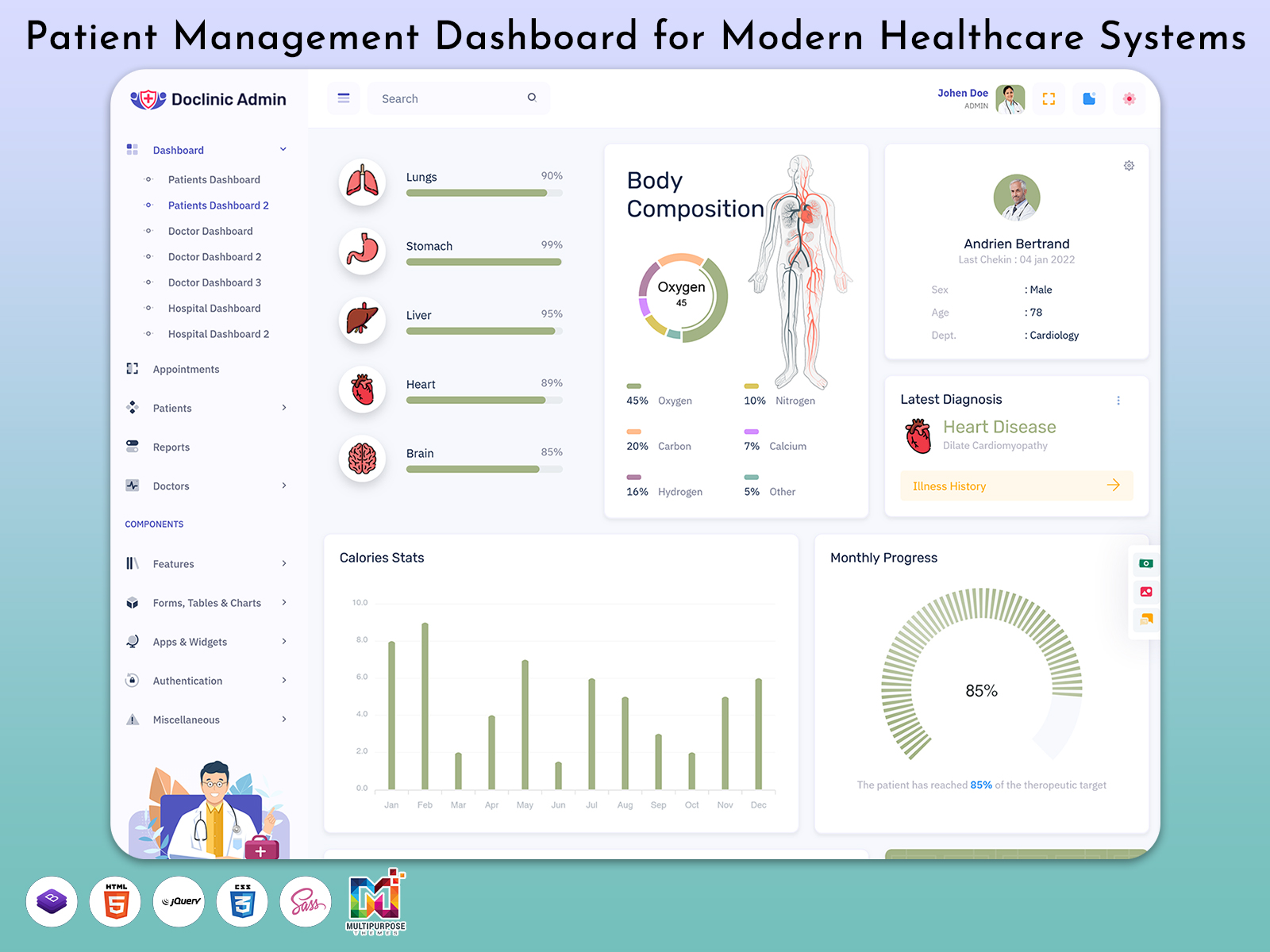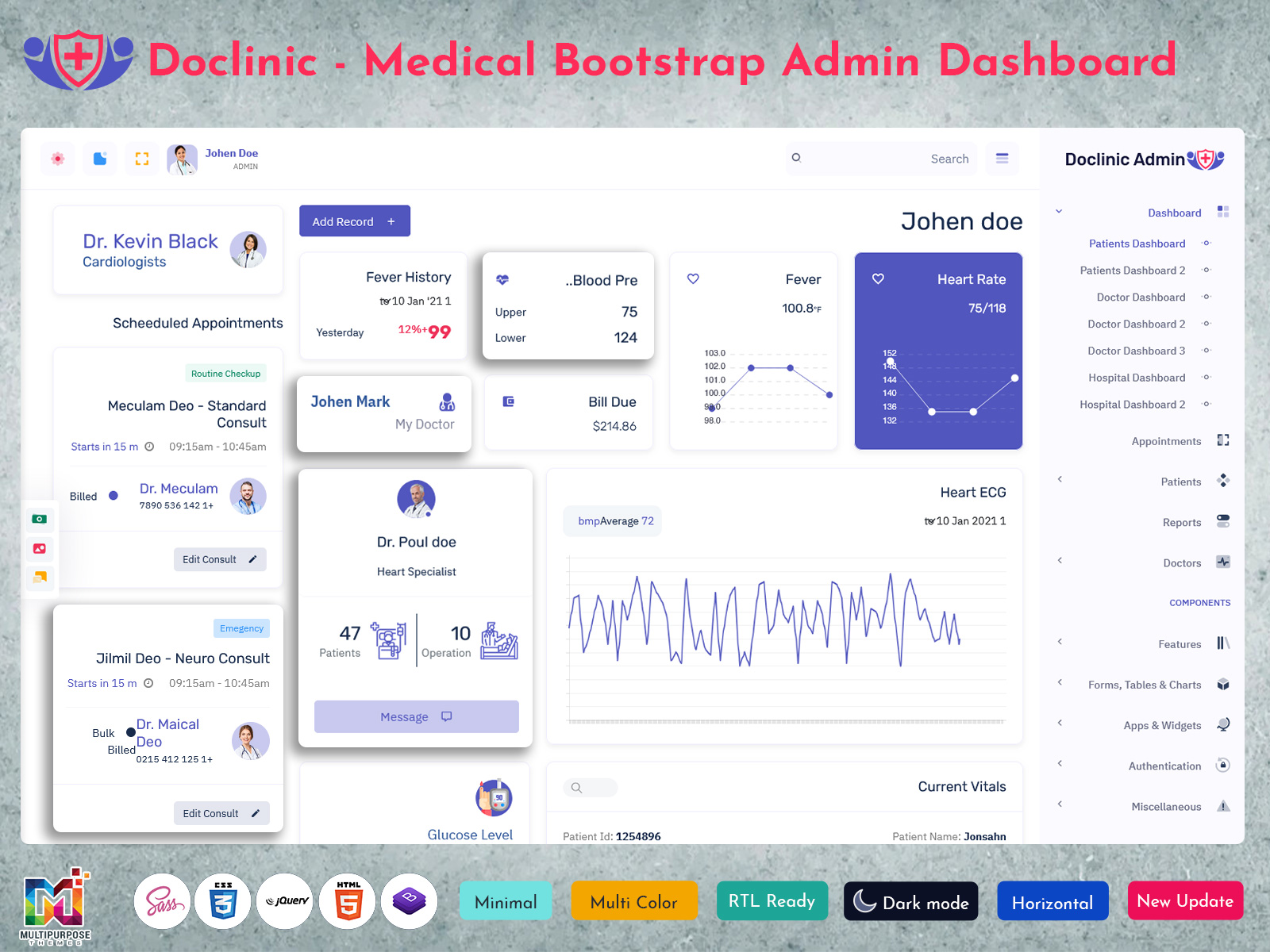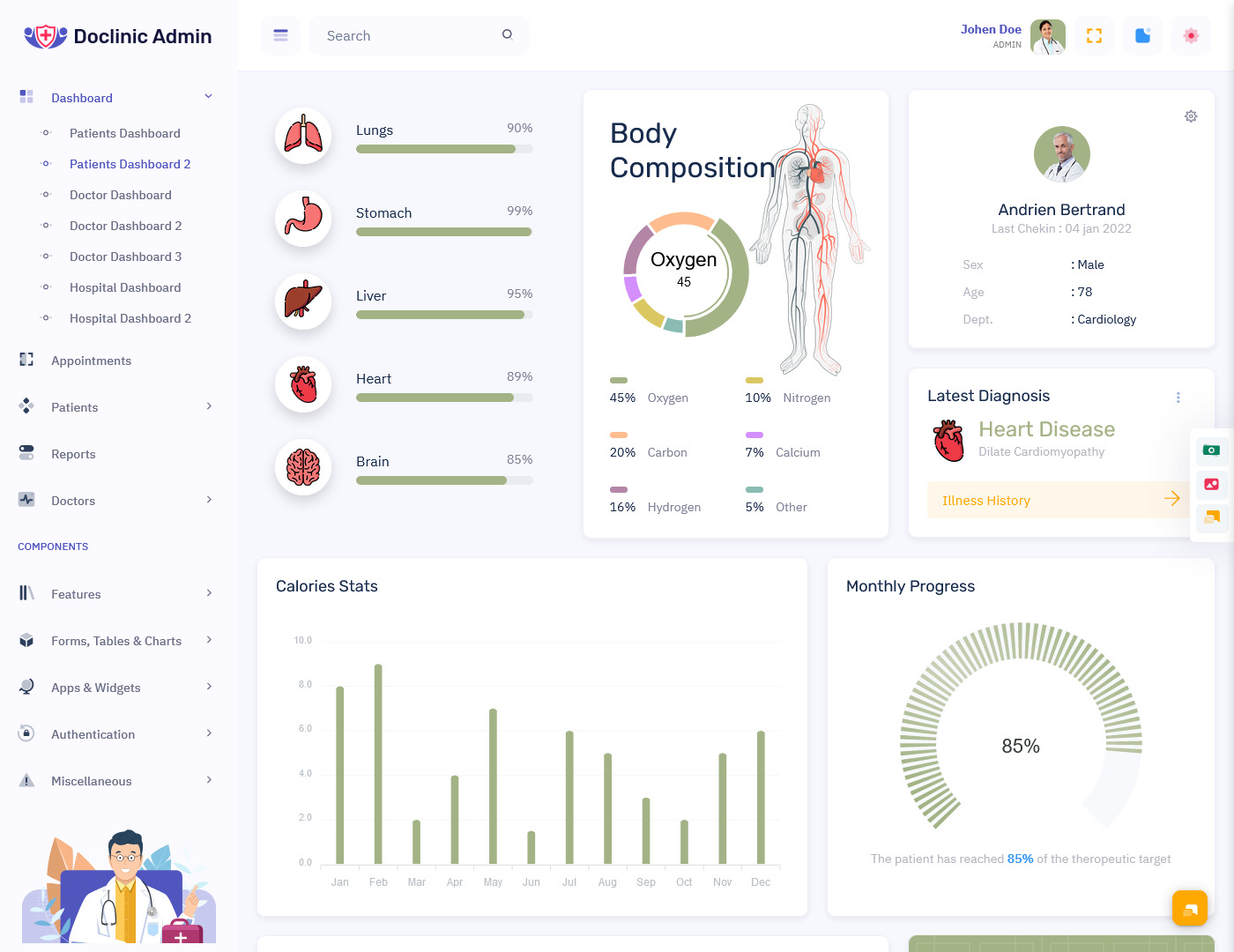
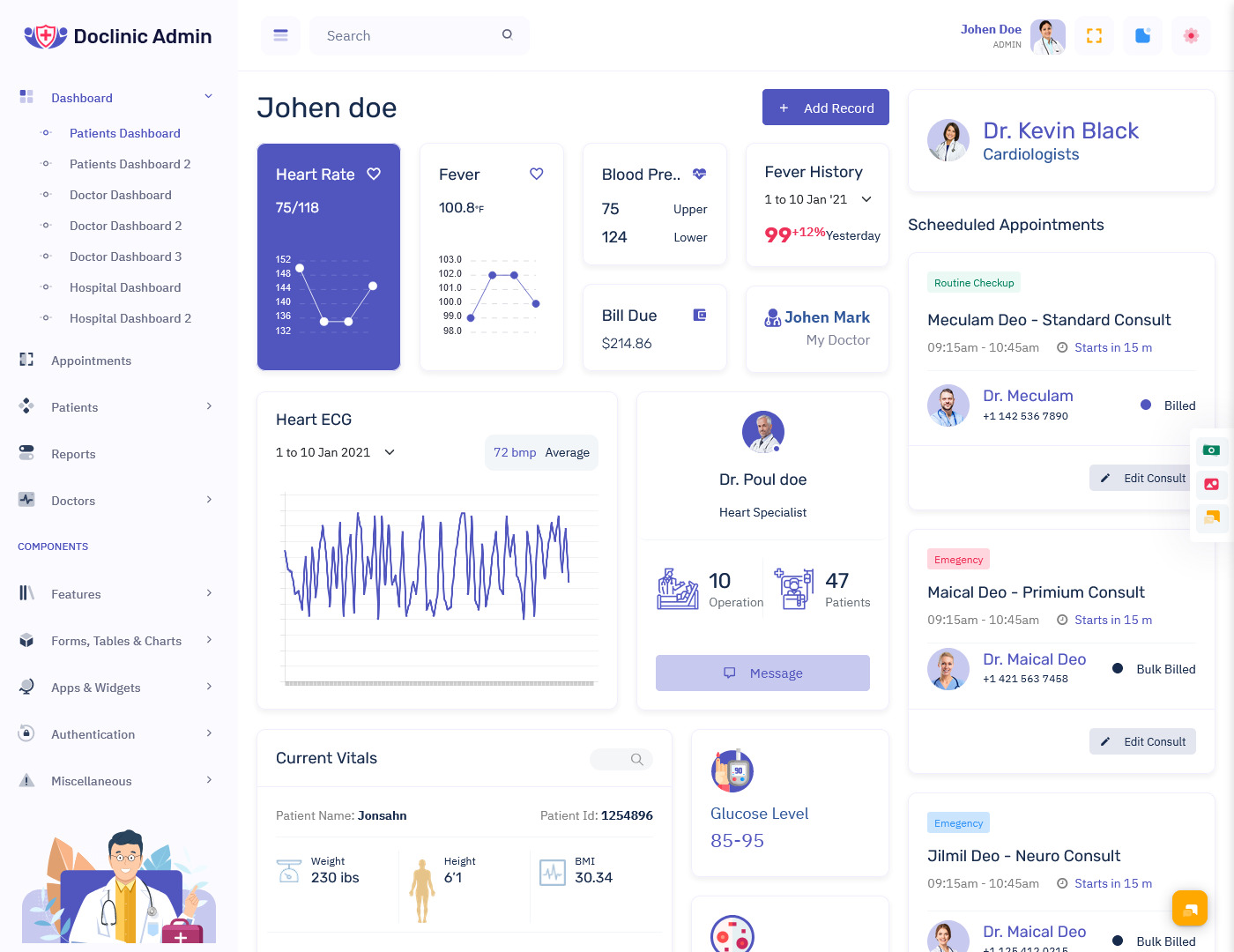
Healthcare facilities. Store a lot of information which needs to be properly organized and protected.…
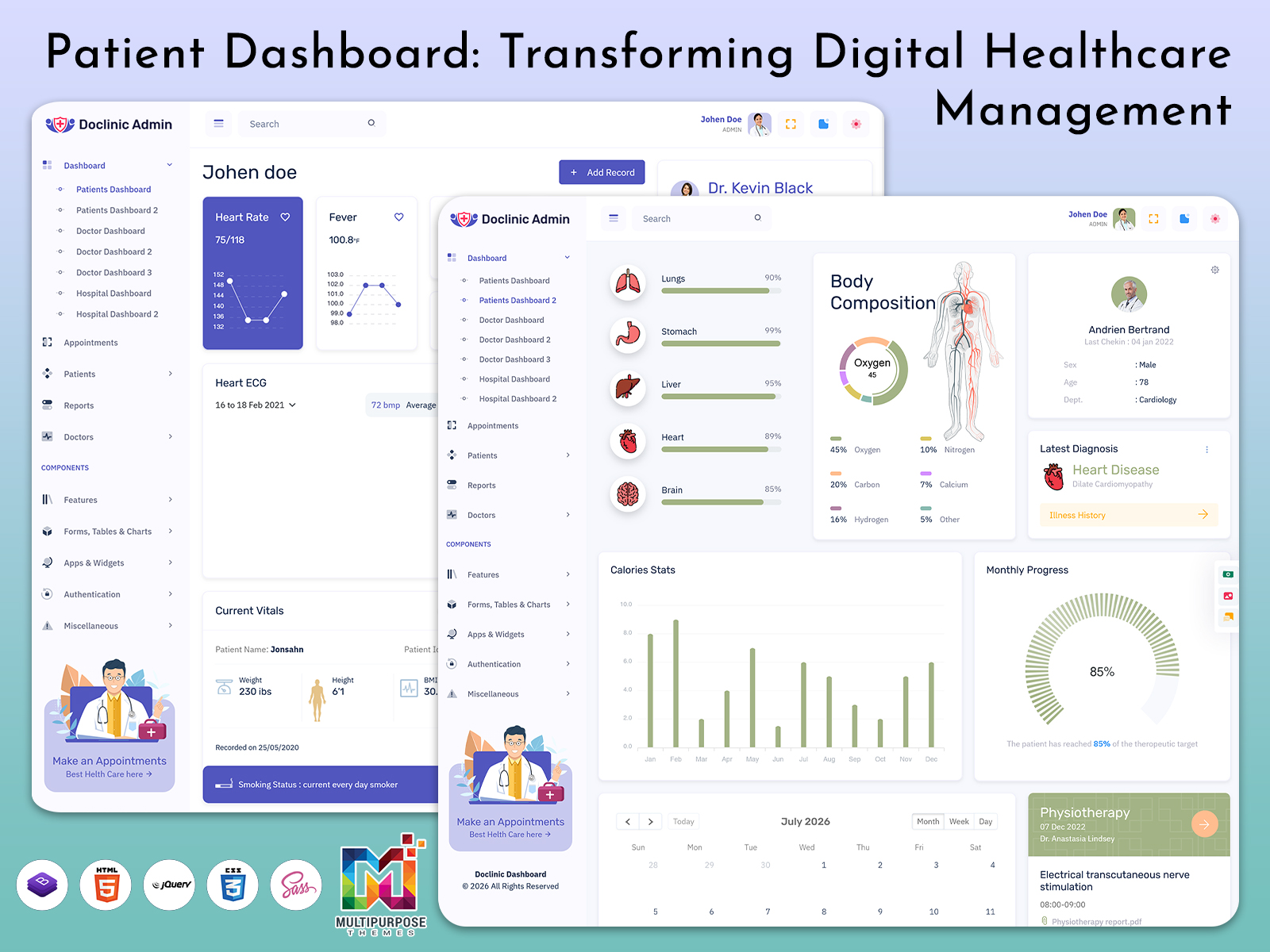
Patient Dashboard: Transforming Digital Healthcare Management
Reading Time: 6 minutes
What is a Patient Dashboard?
A Patient Dashboard is a centralized digital interface that helps patients access and manage their healthcare information in one place. It brings tighter important details such as appointments, prescriptions, history of medical, reports of labs , information of billing and communication with healthcare providers. Instead of maintaining paper records of calling clinics for updates, patients can view anything through a secure online centralized platform which is this patient dashboard.
Watch Full Video
Advanced healthcare organizations are increasingly adopting patient dashboard template solutions to improve patient engagement and offer a better healthcare experience. These dashboards are commonly included within a medical dashboard template or medical admin template to create a connected ecosystem for hospitals, clinics and healthcare providers.
A patient dashboard is not only for patients but also complements the work of doctors and administrators. When integrated with a doctor dashboard or doctor dashboard template, healthcare professionals can access relevant patient information quickly, leading to more informed decisions and increased care delivery. As digital healthcare continues to evolve, product dashboard and product dashboard template solutions are becoming necessary tools for healthcare institutions worldwide.
How Patient Dashboard Works
A Patient Dashboard collects information from multiple healthcare systems and presents it through an easy-to-understand interface. Once a patient logs into the system, they can access their profile, upcoming appointments, prescriptions, payment history, and test results without navigating through multiple applications.
Most Patient Dashboard Template solutions are connected with hospital management software and electronic medical records. This integration allows healthcare providers to update information in real time, ensuring patients always have access to the latest details regarding their treatment plans.
In many organizations, the dashboard works alongside a Medical Admin system and Doctor Admin Template. When a doctor updates consultation notes or prescribes medication, the information automatically becomes available within the patient’s account. This seamless flow of information improves transparency and strengthens communication between patients and healthcare providers.
Why More Patients Prefer Digital Healthcare
In this era , people expect healthcare services to be as simple and convenient as other digital services they use everyday. This Patient Dashboard makes this possible by giving users instant access to their healthcare information without unnecessary delays. Whether someone wants to check a lab report before a doctor’s visit, confirm an upcoming appointment, or review past history of prescriptions, everything is available in one secure place. This saves valuable time and reduces the hassle of visiting hospitals for basic information. It also helps patients stay more organised and confident about their journey of treatment. Healthcare providers benefit as well because patients come prepared with accurate information and are less likely to miss appointments or misunderstand treatment instructions. As more hospitals and clinics using digital healthcare solutions, patient dashboard platforms consistently increases the overall experience for both patients and medical professionals while supporting faster, more efficient healthcare management.
VIEW DEMO BUY NOW
Is It Created for Personal Use?
Yes, a Patient Dashboard created for personal use. It allows individuals to analyse and manage their own healthcare journey from a single location. Patients can consistently track their appointments, medications, vaccination schedules, and health records without depending on physical documentation. However, its capabilities extend beyond individual use. Family members often assist elderly patients in managing their healthcare activities. Through shared access features. Parents may also use the dashboard to analyze their children’s medical appointments and treatment progress.
Healthcare providers benefit indirectly from this personal management approach. When patients have easy access to their information, they are more likely to attend appointments, follow treatment plans, and communicate effectively with their doctors. This makes the Patient Dashboard Template an important component of modern Medical Dashboard Template solutions.
Features of Patient Dashboard
1. Appointment Management
This patient dashboard allows users to schedule, view and manage appointments very easily and quickly. Patients receive reminders and can track upcoming consultations, reducing missed appointments and increasing communication between healthcare providers and individuals.
2. Medical Records Access
Patients can securely access their health records whenever required. This contains prescriptions, reports of laboratory, history of treatment, and discharge summaries, making healthcare information available without requiring visits to the hospital administration desk.
3. Prescription Tracking
The patient dashboard helps users to analyse prescribed medications and treatment schedules. They can review dosage instructions and maintain better compliance with treatment plans, helping them to stay informed about their healthcare requirements.
4. Billing and Payment Information
This patient dashboard template also contains billing features which show invoices, history of payment, and outstanding balances. This offers greater transparency and also helps patients to manage healthcare expenses more effectively.
5. Secure Communication Tools
Many Medical Dashboard Template solutions include secure messaging capabilities. Patients can communicate with healthcare providers regarding follow-up questions, appointment requests, and treatment updates while maintaining confidentiality and data security.
6. Personalized Health Insights
Advanced dashboards provide personalized recommendations based on health data. Patients may receive reminders for health checkups, vaccinations, and preventive care activities, helping them make more informed healthcare decisions.
7. Multiple-Device Accessibility
Advanced patient dashboard systems are accessible on multiple devices like desktops, tablets, and smartphones. This flexibility helps users to manage healthcare information conveniently regardless of their location or any device which they have .
VIEW DEMO BUY NOW
Future Trends in Patient Portal Technology
The future of patient portal technology looks promising as healthcare continues to embrace digital transformation. Artificial intelligence is expected to play a major role in delivering personalized health recommendations and predictive healthcare insights. Future Patient Dashboard Template platforms may analyze patient behavior and provide proactive suggestions for improving health outcomes.
Telemedicine integration is another emerging trend. Many healthcare providers are already incorporating virtual consultation capabilities into their Product Dashboard solutions. This allows patients to connect with healthcare professionals without visiting medical facilities, saving time and increasing accessibility.
Wearable device integration is also becoming increasingly common. Smartwatches and fitness trackers can provide real-time health information that automatically syncs with Patient Dashboard systems. This continuous flow of data enables healthcare providers to monitor patients more effectively and identify potential concerns earlier.
Additionally, advancements in cybersecurity will continue to strengthen data protection measures. As healthcare data becomes more valuable, Medical Admin and Doctor Admin Template platforms will increasingly prioritize privacy, encryption, and secure access controls to maintain patient trust.
Benefits of Using Patient Dashboard
1. Improved Access to Healthcare Information
Patients can access important medical information at any time. This convenience reduces dependence on paper records and helps individuals stay informed about their health status and ongoing treatment plans.
2. Better Patient Engagement
Patient Dashboard systems encourage individuals to take a more active role in their healthcare. Access to information and reminders helps patients remain involved throughout their treatment journey and maintain stronger communication with providers.
3. Reduced Administrative Work
Healthcare facilities can reduce administrative burdens by allowing patients to manage appointments, access records, and review billing information independently through a centralized dashboard platform.
4. Enhanced Communication
Secure communication features improve interactions between patients and healthcare professionals. This helps address concerns more efficiently and ensures important healthcare information is exchanged promptly and securely.
5. Greater Convenience
Patients no longer need to visit hospitals for routine information requests. The dashboard provides immediate access to essential details, making healthcare management significantly more convenient and accessible.
6. Increased Treatment Compliance
Access to prescriptions, medication schedules, and appointment reminders helps patients follow treatment plans more effectively. This can contribute to better health outcomes and improved patient satisfaction over time.
7. Supports Digital Healthcare Adoption
Patient Dashboard Template solutions contribute to broader digital healthcare initiatives. By encouraging technology adoption, they help organizations improve service delivery and create more connected healthcare experiences.
Conclusion
The Patient Dashboard has become an essential component of modern healthcare systems. It empowers patients by providing convenient access to medical information while supporting healthcare providers through improved communication and administrative efficiency.
Whether integrated into a Medical Admin Template, Doctor Dashboard Template, or Product Dashboard, these solutions play an important role in creating connected healthcare environments. As technology continues to evolve, Patient Dashboard systems will become even more intelligent, personalized, and accessible.
Organizations seeking to improve patient experiences and streamline healthcare operations should consider implementing a comprehensive Patient Dashboard Template. It is more than just a digital tool—it is a step toward a smarter and more patient-focused healthcare future.
Frequently Asked Questions (FAQs)
1. What is a Patient Dashboard?
A MultiPurpose Themes Patient Dashboard is a digital platform that allows patients to access medical records, appointments, prescriptions, billing information, and communication tools from a single, centralized interface.
2. Where is a Patient Dashboard used?
MultiPurpose Themes Patient Dashboard systems are commonly used in hospitals, clinics, healthcare centers, telemedicine platforms, and multi-specialty medical organizations. They are often integrated with Medical Admin and Doctor Dashboard Template solutions.
3. Are Patient Dashboards safe to use?
Yes, MultiPurpose Themes Patient Dashboard Template platforms include security features such as encryption, password protection, and role-based access controls to help protect sensitive patient information from unauthorized access.
4. Which healthcare organizations can use a Patient Dashboard?
Hospitals, private clinics, diagnostic centers, healthcare startups, and telehealth providers can implement Patient Dashboard solutions to improve patient engagement and streamline healthcare management processes.
5. Can patients access the dashboard on mobile devices?
Yes. Most modern Patient Dashboard systems are designed to work across smartphones, tablets, and desktops, allowing users to manage healthcare information conveniently from virtually any location.
6. Can family members help manage a patient’s dashboard?
Many platforms provide shared or delegated access features. This is especially useful for elderly patients, children, or individuals who require assistance managing appointments, medications, and healthcare records.

Related Posts