

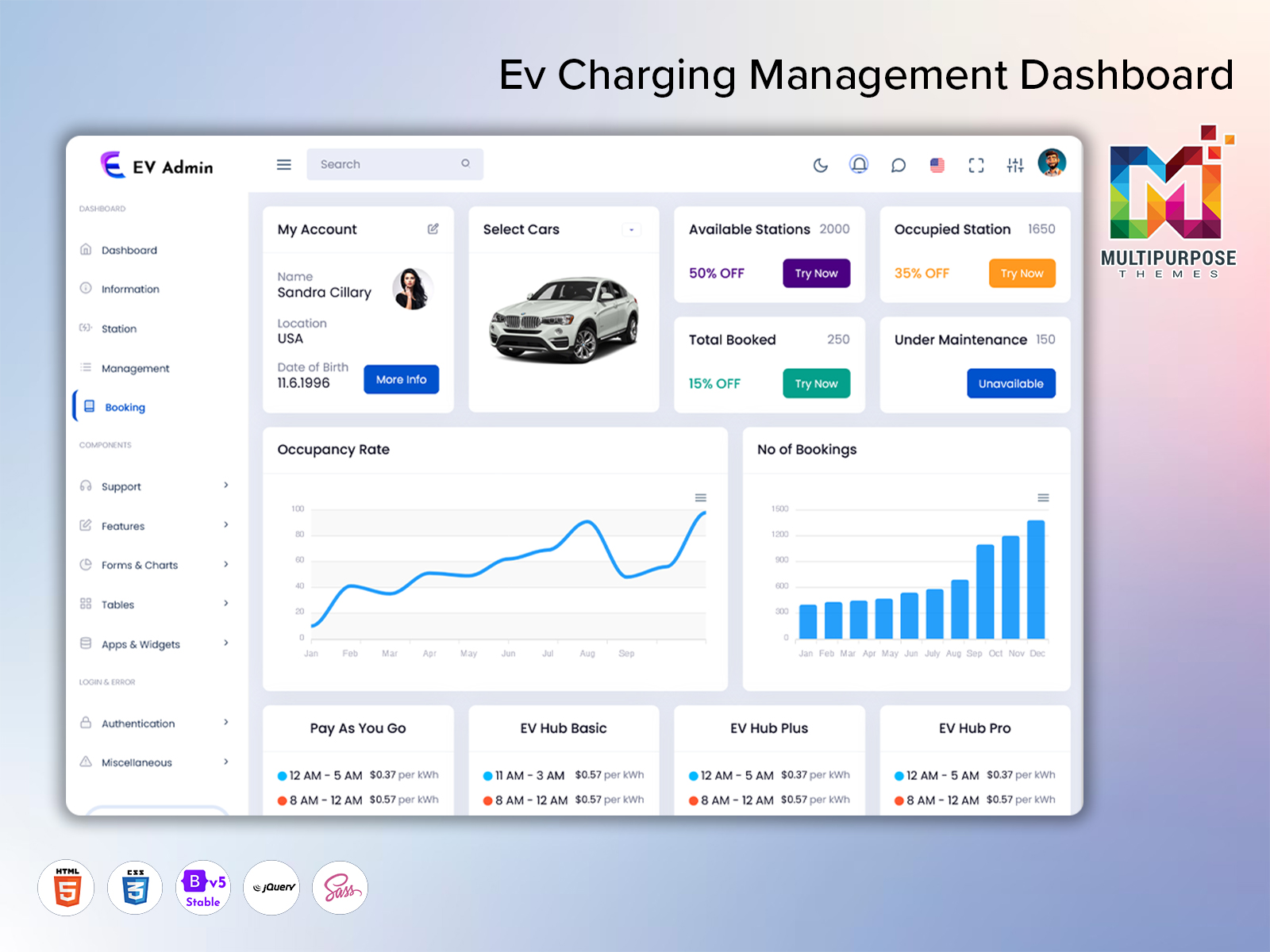
EV Charger Management: A Smarter Way to Manage EV Charging
An EV dashboard provides a centralized workspace for viewing and managing information related to electric vehicle charging. It can help businesses, fleet operators, charging station providers, and other organizations understand what is happening across their charging environment without depending on disconnected records.
Watch Full Video
The usefulness of an EV dashboard is not limited to displaying charging numbers. A thoughtfully designed interface can help users understand charging activity, recognize changes, coordinate operations, and make better decisions about the infrastructure they manage.
This becomes increasingly important when an organization operates multiple charging points. Checking each charger separately can take unnecessary time, particularly when the team needs a broader view of current activity.
An Electric Vehicle Dashboard can bring relevant information into a structured interface, making it easier to move between an overall picture and specific charging information.
Multi Purpose Themes has existing dashboard-related material covering EV monitoring, charging information, statistics, charts, vehicle activity, and related interface concepts. This article approaches the subject differently by focusing on operational awareness, charging coordination, user experience, infrastructure planning, and practical decision-making, rather than repeating a standard description of an EV dashboard.
What is an EV Dashboard?
An EV dashboard is a digital interface designed to organize information associated with electric vehicle charging and related operations. It can be used by charging station operators, fleet managers, businesses, facility teams, mobility service providers, and organizations responsible for EV infrastructure.
Electric vehicle charging creates different types of information. A charging session may involve a vehicle, a charging point, a user, a start time, an end time, energy consumption, and other operational information.
When these details are handled separately, understanding the overall charging environment can become challenging.
An Electric Vehicle Dashboard provides a structured way to bring relevant information together.
For example, a fleet manager may want to understand how charging activity is distributed throughout the day. A facility manager may need to know whether charging infrastructure is being used effectively. A charging operator may need a broader view of multiple stations.
These users may have different objectives, but they all need information presented in a way that supports quick understanding.
EV Charging Management refers to the broader process of organizing and overseeing charging operations. An EV dashboard can act as the visual workspace through which this activity is reviewed.
Similarly, EV Charger Management focuses more directly on the operation and oversight of charging equipment. A suitable dashboard can provide a convenient interface for viewing charger-related information and understanding its current situation.
The dashboard should not attempt to replace technical professionals or make every operational decision automatically. Its role is to make information easier to access and interpret.
A useful EV Dashboard should help answer practical questions such as:
- What charging activity is happening now?
- Which charging points are being used?
- Are there unusual changes in usage?
- How is charging activity changing over time?
- Does the available infrastructure meet current demand?
By answering these questions through a clear interface, the dashboard can become a practical tool rather than just another data screen.
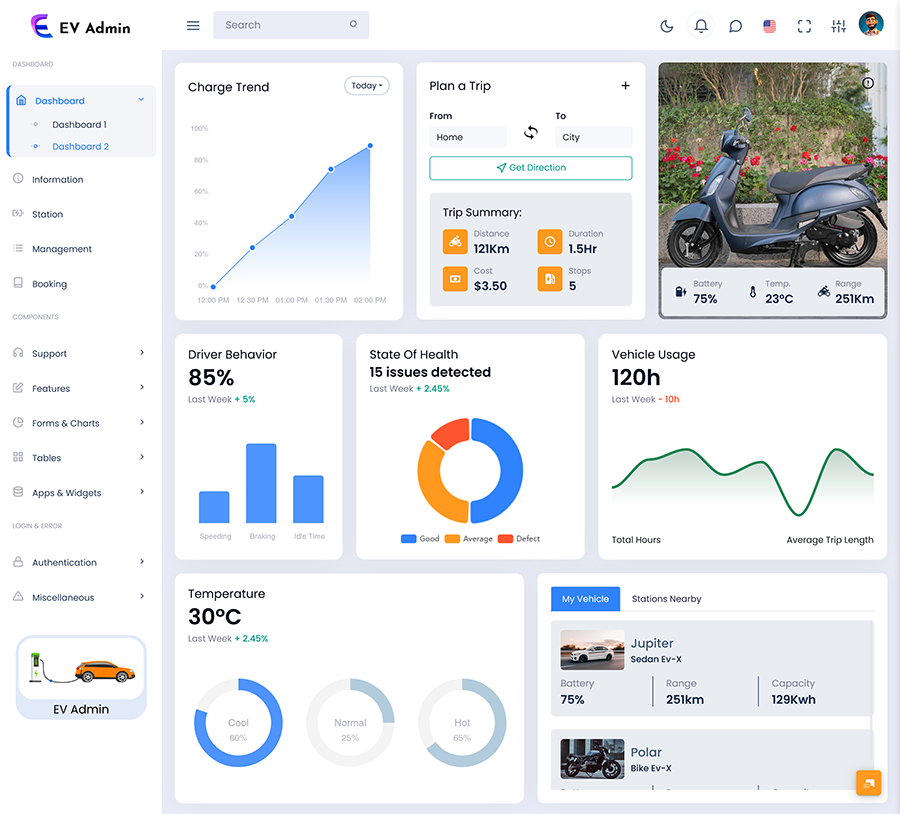
VIEW DEMO BUY NOW
From EV Monitoring to Smarter Charging Management
An EV dashboard is often described as a place to monitor charging sessions. While that is certainly part of its purpose, the bigger value lies in helping people understand how charging infrastructure is being used.
Consider an organization with several charging points.
During one period, demand may be low. At another time, multiple vehicles may require charging simultaneously. If the organization only looks at individual charging sessions, it may miss the larger pattern.
A dashboard can bring those observations together.
This is particularly useful for EV Charging Management, where understanding demand can be just as important as knowing individual charging activity.
For example, if charging demand consistently rises during a particular period, the organization may need to review scheduling, charger availability, or infrastructure capacity.
The dashboard does not necessarily need to recommend the final solution.
Instead, it provides the information that allows the responsible person to investigate the situation.
This makes an EV Dashboard valuable as a decision-support interface.
The same principle applies to EV Charger Management.
A charger that appears inactive may require no action, or it may deserve investigation depending on the circumstances. A dashboard can make such situations easier to notice, but technical diagnosis should still be handled according to the equipment and operational requirements.
This distinction is important.
Good dashboard design does not overwhelm users with automation. It gives them the right information at the right time.
Features of EV Dashboard
1. Charging Activity Visibility
An EV Dashboard can present charging activity in a centralized workspace, helping users understand what is happening across their charging environment. This can reduce the need to check individual records repeatedly and give operators a clearer starting point for reviewing current activity.
2. EV Charging Management
An interface designed for EV Charging Management can organize relevant charging information in a way that supports daily operational review. It can help users understand charging patterns and identify areas where the existing process may require closer attention.
3. EV Charger Management
EV Charger Management can become easier when charger-related information is presented through a structured interface. A dashboard can help authorized users review the charging environment and move toward relevant information without requiring them to work through multiple disconnected screens.
4. Electric Vehicle Dashboard
An Electric Vehicle Dashboard can bring vehicle and charging information together into a single visual environment. This can be useful for organizations that need to understand charging activity alongside broader electric vehicle operations without creating an unnecessarily complicated user experience.
5. Usage History
A dashboard can organize previous charging information to provide context for current activity. Looking at earlier periods can help users understand whether today’s charging behavior appears typical or represents a change that deserves additional review.
6. Responsive Interface
Charging operations may be reviewed from different devices and working environments. A responsive EV dashboard can adapt its presentation to various screen sizes, making information easier to access for authorized users without restricting the experience to one particular workstation.
7. Operational Overview
A well-planned dashboard can provide a broader picture of charging activity without forcing users to inspect every individual record. This overview can help managers understand the current situation before deciding whether detailed information needs to be examined.
EV Dashboard for Charging Station Operators
Charging station operators often deal with more than one charging point.
When the number of chargers increases, manually reviewing each unit can become inefficient.
An EV Dashboard can provide a broader operational view that allows operators to understand activity across the charging environment.
This can be useful when several stations are located at different areas or when a business manages charging infrastructure for multiple customers.
The dashboard can help operators identify where attention may be required.
For example, if a particular charging point behaves differently from others, the operator can investigate it more closely.
The dashboard should not automatically assume that unusual activity represents equipment failure. There may be legitimate reasons for the difference.
This is why context matters.
A good interface presents the information clearly enough for an operator to make an informed decision.
That approach can reduce unnecessary alerts while still making meaningful changes easier to notice.
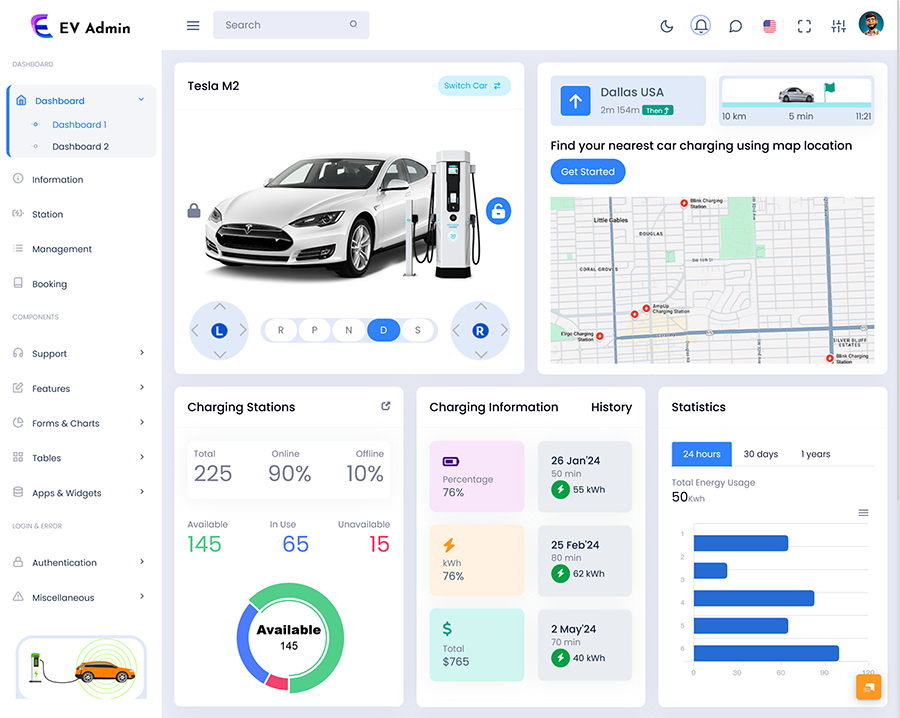
VIEW DEMO BUY NOW
Benefits of EV Dashboard
1. Centralizes Charging Information
An EV Dashboard brings relevant charging information into one structured workspace. This can reduce the need to move between disconnected records and give users a clearer starting point when they want to understand ongoing charging activity.
2. Supports Better EV Charging Management
EV Charging Management becomes easier when teams can review charging activity from a centralized interface. Clear information can help users understand demand patterns, recognize changes, and decide when closer investigation or operational adjustment may be necessary.
3. Improves Charger Visibility
An interface supporting EV Charger Management can make charger-related information easier to review. Operators can gain a clearer picture of their charging environment and identify unusual activity that may require additional attention or professional inspection.
4. Helps Fleet Operations
An Electric Vehicle Dashboard can give fleet teams useful visibility into charging activity. Understanding how charging demand changes can support vehicle preparation, scheduling discussions, and operational planning without requiring managers to manually combine information from multiple sources.
5. Supports Infrastructure Planning
Historical charging information can provide useful evidence when businesses consider future infrastructure requirements. By reviewing usage patterns over time, organizations can better understand how their existing charging resources are being utilized before discussing possible expansion.
6. Makes Information Easier to Understand
A thoughtfully designed dashboard can transform complex charging information into a more readable visual experience. Users can begin with an overview and move toward greater detail when needed, reducing the effort required to understand the current operational situation.
7. Encourages Proactive Monitoring
Regular visibility can help teams notice meaningful changes earlier. An EV dashboard does not replace technical expertise, but it can make unusual patterns easier to identify and give responsible users a stronger basis for deciding whether further action is appropriate.
EV Dashboard as a Foundation for Future Charging Operations
Electric vehicle infrastructure will continue to evolve as organizations add more vehicles and charging points.
This growth can create new management requirements.
An EV Dashboard should therefore be designed with flexibility in mind.
A system that works well for ten charging points may eventually need to support many more. The interface should be capable of handling increased information without becoming difficult to navigate.
This is particularly important for EV Charging Management.
As charging operations become larger, users may need broader visibility, additional access levels, and better historical context.
EV Charger Management may also become more complex as organizations operate equipment across different locations.
A scalable dashboard can provide a consistent workspace while allowing the underlying application to evolve.
The goal is not to predict every future requirement.
Instead, the dashboard should provide a solid foundation that can accommodate reasonable growth.
That makes it a more practical long-term investment for organizations building their electric vehicle infrastructure.
Turning Charging Data into Operational Insight
An EV dashboard can do more than display charging activity. It can bring together information from multiple charging points and help organizations understand how their infrastructure is being used in real-world situations. At MultiPurpose Themes, our EV dashboard approach focuses on presenting this information through a clear and adaptable interface, making it easier to review charging activity, station status, usage patterns, and operational details from one place. The dashboard can be customized to suit different EV charging environments and workflows, giving businesses a practical foundation for building an interface around their specific monitoring requirements. Rather than simply presenting more data, the goal is to organize relevant information in a way that makes everyday EV Charger Management easier to review and understand.
Conclusion
An EV dashboard can provide much-needed structure to the growing amount of information created by electric vehicle charging operations.
Through EV Charging Management, organizations can gain a clearer understanding of how charging activity changes and where operational attention may be needed. EV Charger Management can benefit from better visibility into charging infrastructure, while an Electric Vehicle Dashboard can bring broader vehicle and charging information into an accessible digital workspace.
The strongest dashboard is not simply a collection of numbers, charts, and status indicators.
It should help people understand what is happening.
A fleet manager may use it to support vehicle preparation. A facility manager may review charging demand. A charging operator may monitor infrastructure. A business decision-maker may use historical information when considering future charging capacity.
Each user has a different purpose.
Good dashboard design respects those differences.
When information is organized clearly, users can spend less time searching for data and more time making informed decisions. The dashboard can also create a shared point of reference for teams responsible for charging operations.
VIEW DEMO BUY NOW
Frequently Asked Questions
1. What is an EV Dashboard used for?
A Multi Purpose Themes EV Dashboard is used to organize and present information related to electric vehicle charging operations. It can help users review charging activity, understand usage patterns, monitor charger-related information, and gain a broader view of the infrastructure they are responsible for managing.
2. How does EV Charging Management work with an EV dashboard?
Multi Purpose Themes EV Charging Management uses the dashboard as a central interface for reviewing charging activity and related operational information. The dashboard can help users understand current and historical activity, while actual charging processes and technical controls depend on the underlying EV charging system.
3. What is EV Charger Management?
Multi Purpose Themes EV Charger Management refers to overseeing and organizing information and operations associated with EV charging equipment. A dashboard can provide a convenient interface for reviewing charger activity, identifying unusual situations, and supporting maintenance or operational decisions.
4. Can an EV Dashboard be used for electric vehicle fleets?
Yes. A Multi Purpose Themes Electric Vehicle Dashboard can be useful for fleet operators who need visibility into charging activity. It can help teams understand charging demand, review usage patterns, and support operational planning for vehicles that depend on charging infrastructure.
5. Is an EV dashboard useful for businesses with workplace chargers?
Yes. Businesses can use an EV Dashboard to understand how workplace charging infrastructure is being used. Historical information can also help facility teams evaluate demand and consider whether existing charging resources are appropriate for current and future requirements.
6. Can an EV Dashboard support multiple charging stations?
Yes. A dashboard can be designed to present information from multiple charging points or locations, depending on the underlying system. This can provide operators with a broader view and reduce the need to review every charging point through separate interfaces.
7. What should I consider before choosing an EV Dashboard?
Consider the number of chargers, expected users, charging locations, required information, customization options, responsive behavior, framework compatibility, integrations, security requirements, and scalability. The dashboard should match the organization’s actual EV Charging Management workflow instead of adding unnecessary complexity.



This Post Has 0 Comments