

Most people obsess over course content. They spend weeks recording videos, writing scripts, and designing…
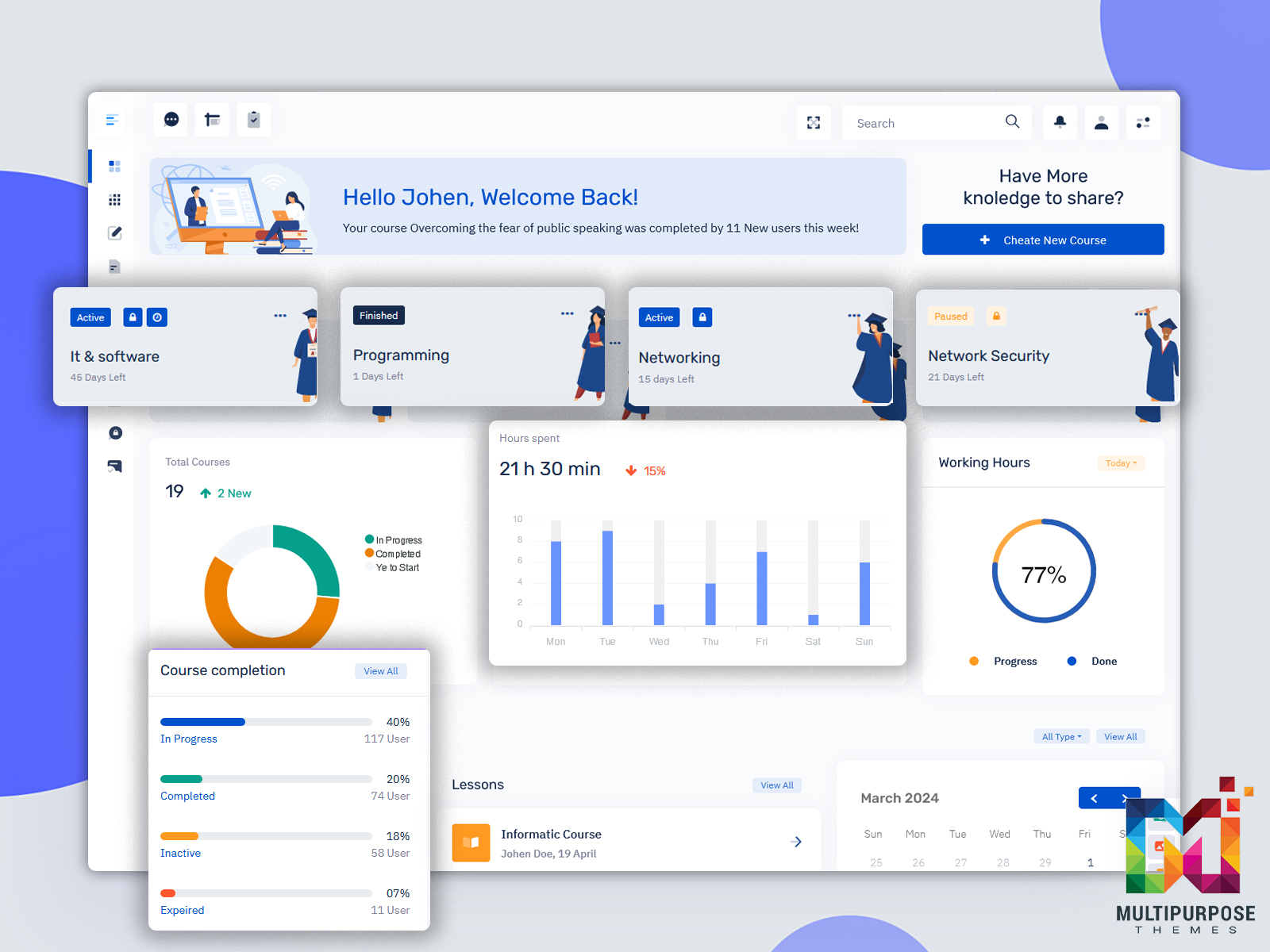
Why LMS Dashboard Remain the Top Choice in 2026
Reading Time: 6 minutes
In the modern digital learning landscape, organizations, educators, and businesses are rapidly adopting technology to deliver education in more efficient and engaging ways. Among the many tools available, the LMS Dashboard continues to stand out as a central component of any digital learning ecosystem. Whether it is an Elearning Dashboard, Learning Dashboard, or a complete Education Software Dashboard, these systems have become essential for managing, tracking, and optimizing online education platforms.
In 2026, LMS dashboards are not just a convenience but a necessity. They bring together students, instructors, and administrators under one unified system, making it easier to manage online courses, monitor progress, and improve learning outcomes. With the rise of remote education and hybrid learning models, the importance of a well-designed Onlinecourse Dashboard or Online Classes Dashboard has grown significantly.
Watch Full Video
The Evolution of LMS Dashboard in Modern Education
The concept of a digital learning management system has evolved over the years. Earlier systems were limited to basic course hosting and content delivery. However, modern LMS Dashboards have transformed into advanced platforms that provide interactive features, analytics, automation, and seamless communication tools.
Today’s Education Software Dashboard is designed to serve multiple purposes at once. It is not just a content delivery platform but also an administrative control center, communication hub, and performance tracking tool. This evolution has made LMS platforms more powerful and indispensable for institutions of all sizes.
The integration of modern UI frameworks such as Bootstrap 5 Dashboard templates has further enhanced the usability and responsiveness of these systems. Clean layouts, mobile-friendly designs, and intuitive navigation make it easier for users to interact with the platform without technical difficulties.
Centralized Control with LMS Dashboard
One of the primary reasons why the LMS Dashboard remains the top choice is its ability to provide centralized control. Administrators can manage courses, users, instructors, and content from a single interface. This centralized Admin Panel simplifies operations and reduces the complexity of handling multiple tools.
Through a well-structured dashboard, administrators can create courses, assign roles, upload learning materials, and monitor user activity without switching between different systems. This unified approach saves time and ensures consistency across the entire learning platform.
For institutions managing large numbers of students and courses, having a centralized Learning Dashboard is essential. It allows real-time access to important data and ensures that all activities are tracked and organized efficiently.
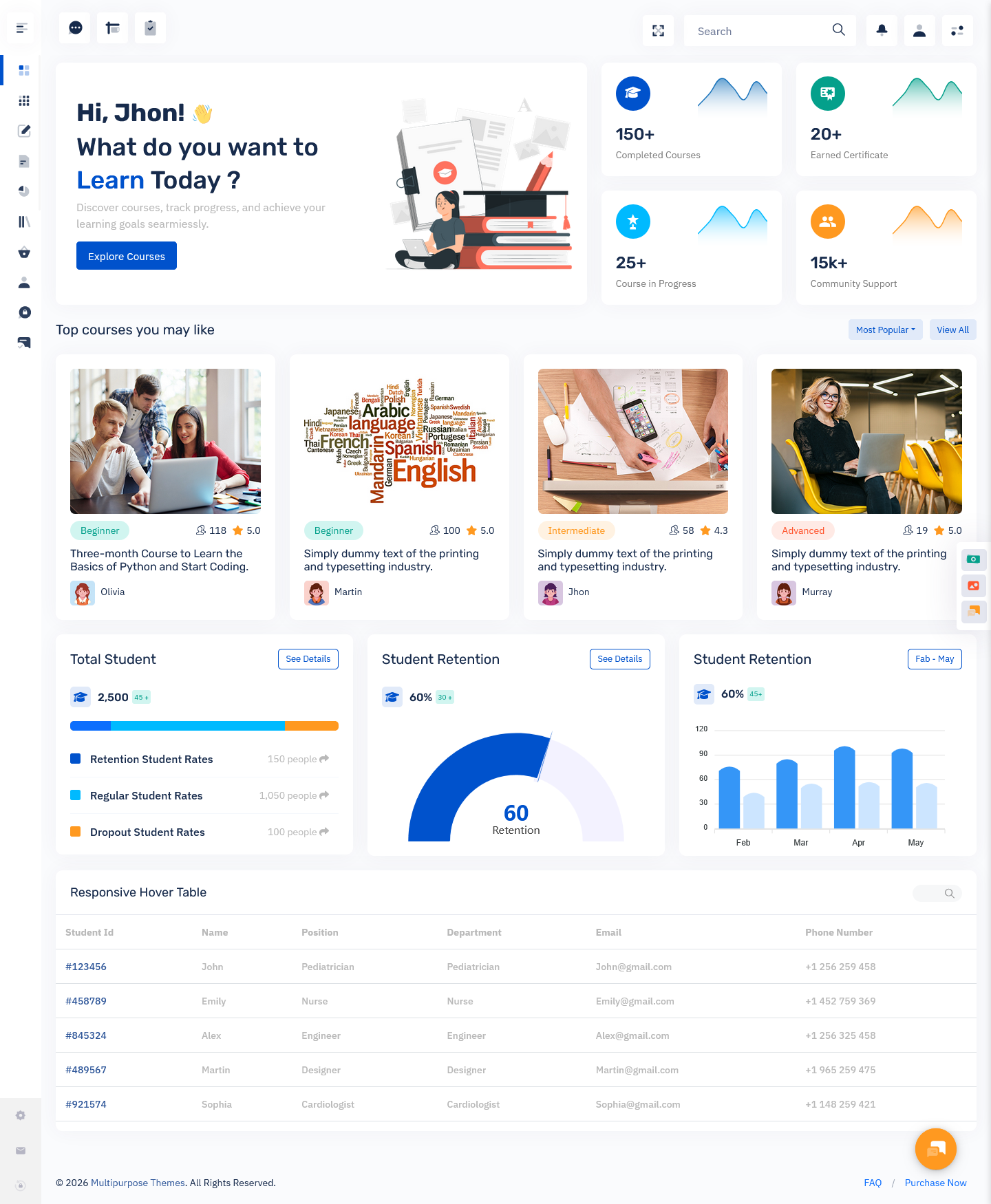
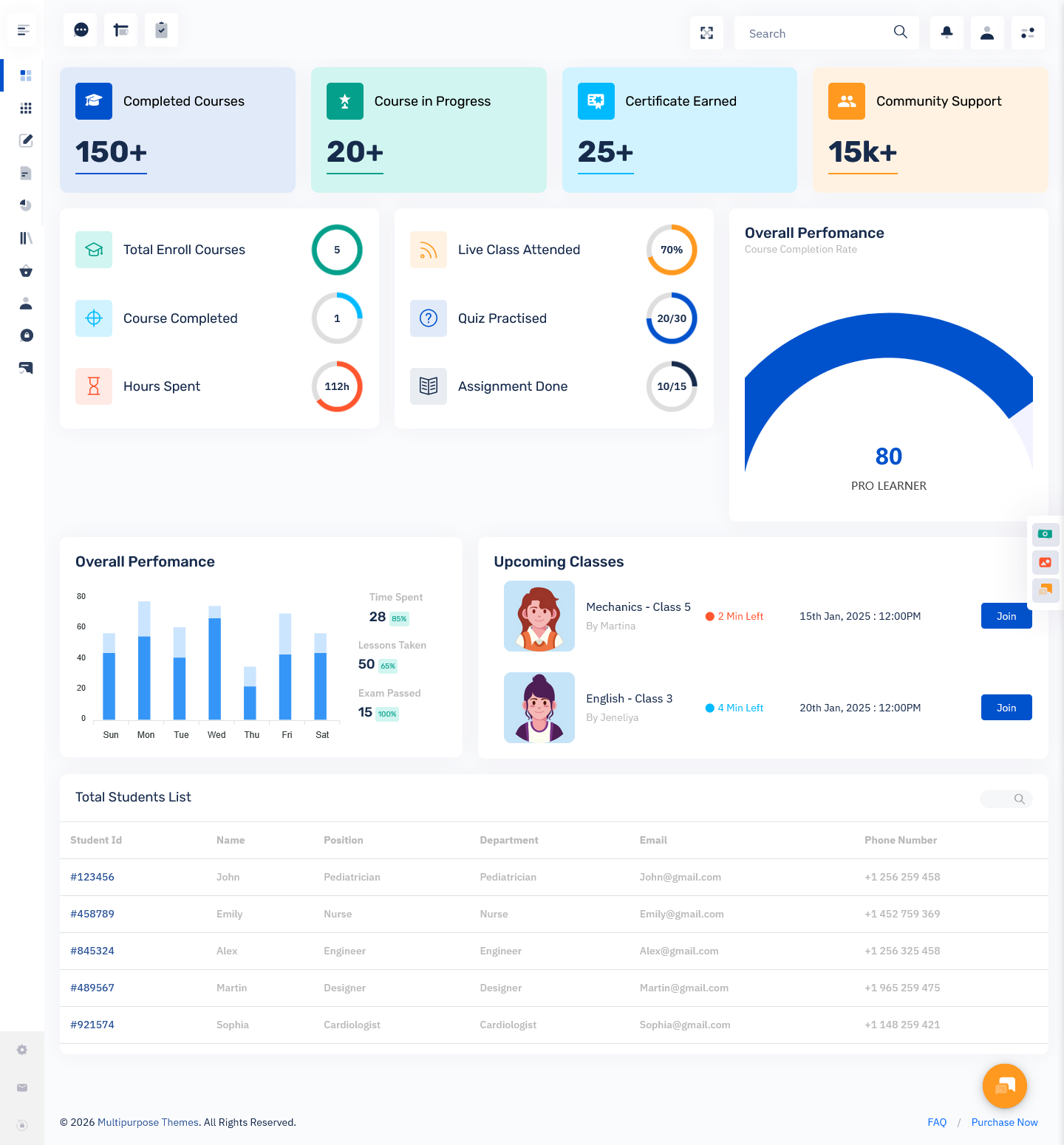
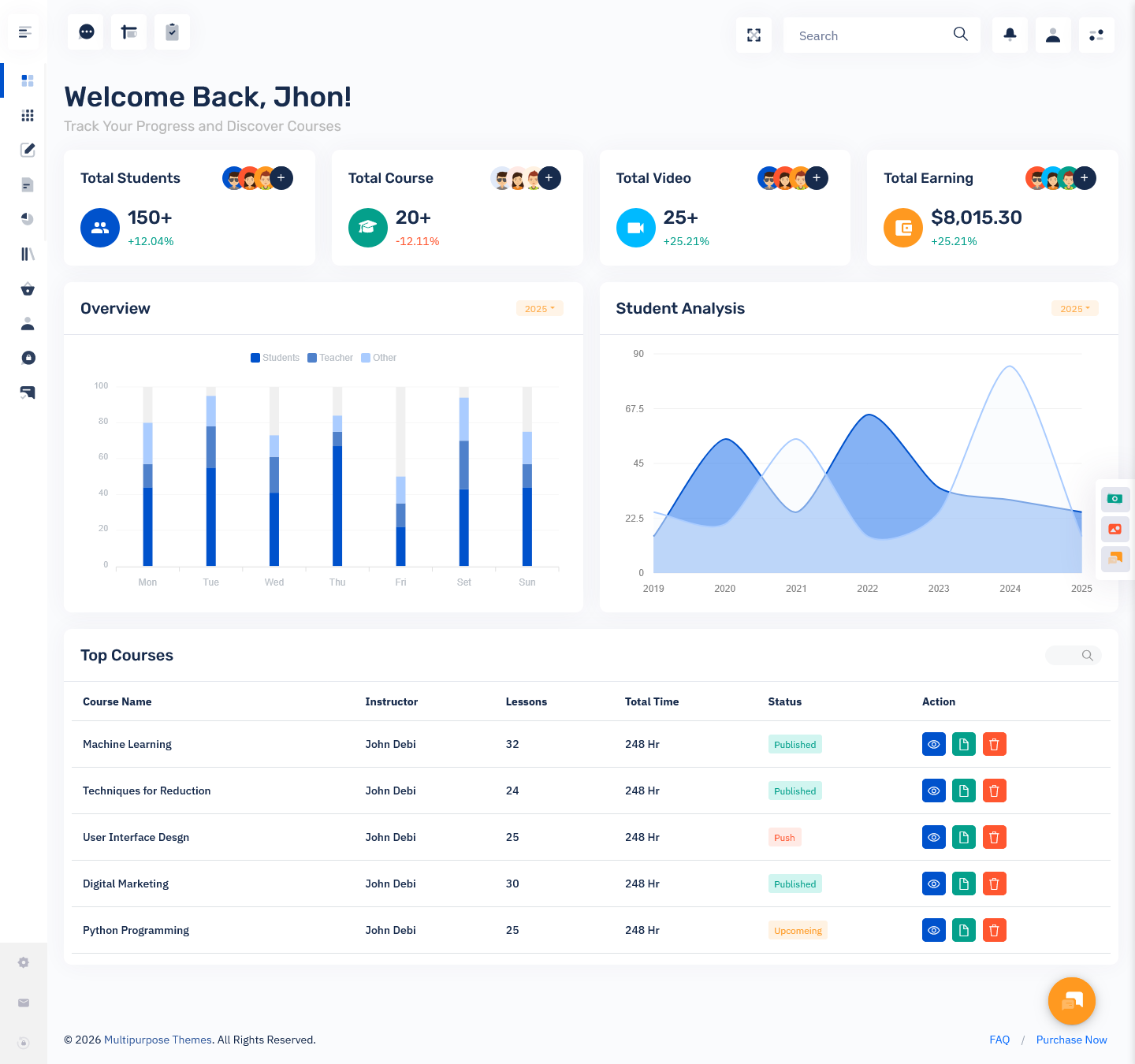
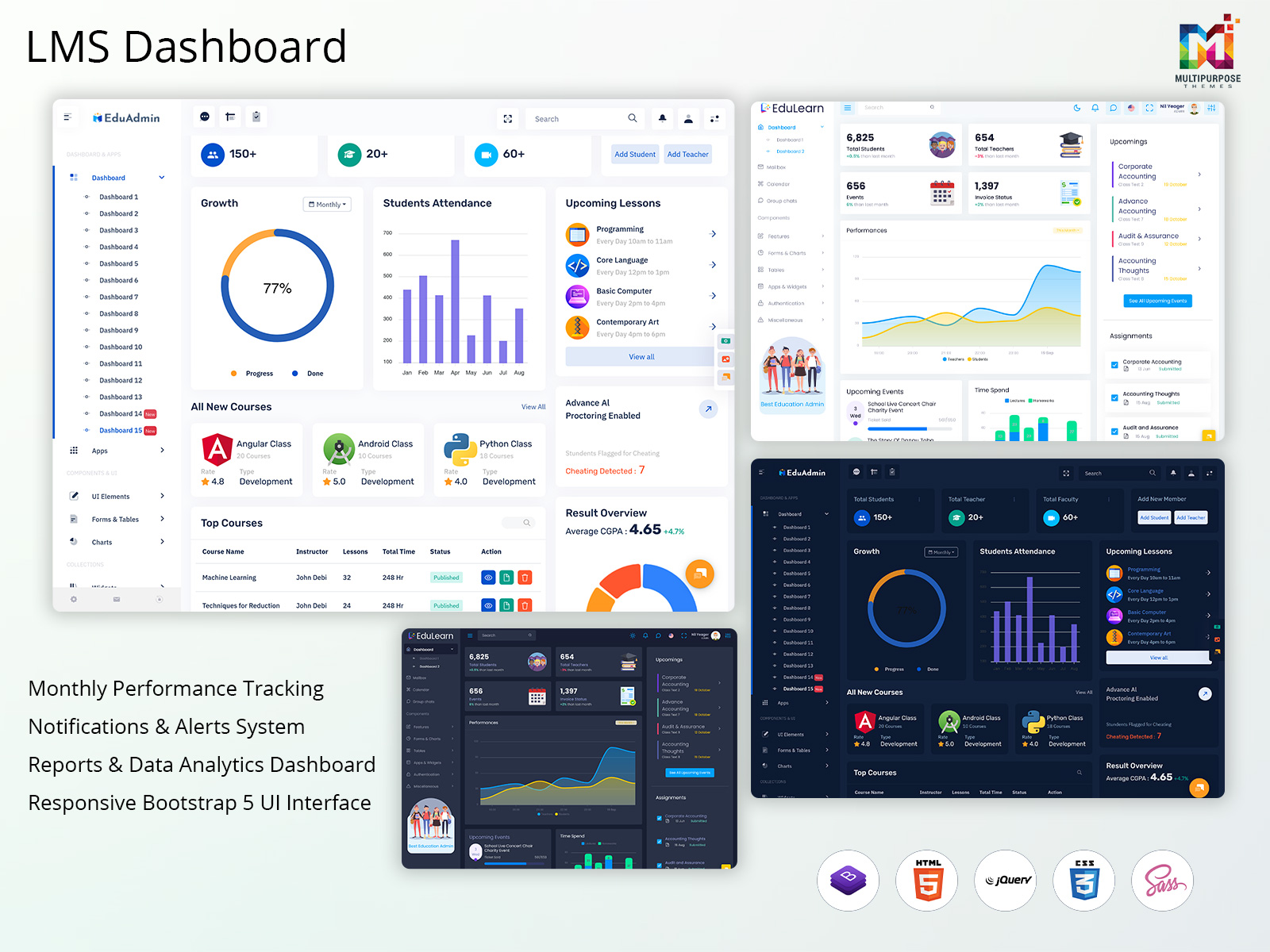
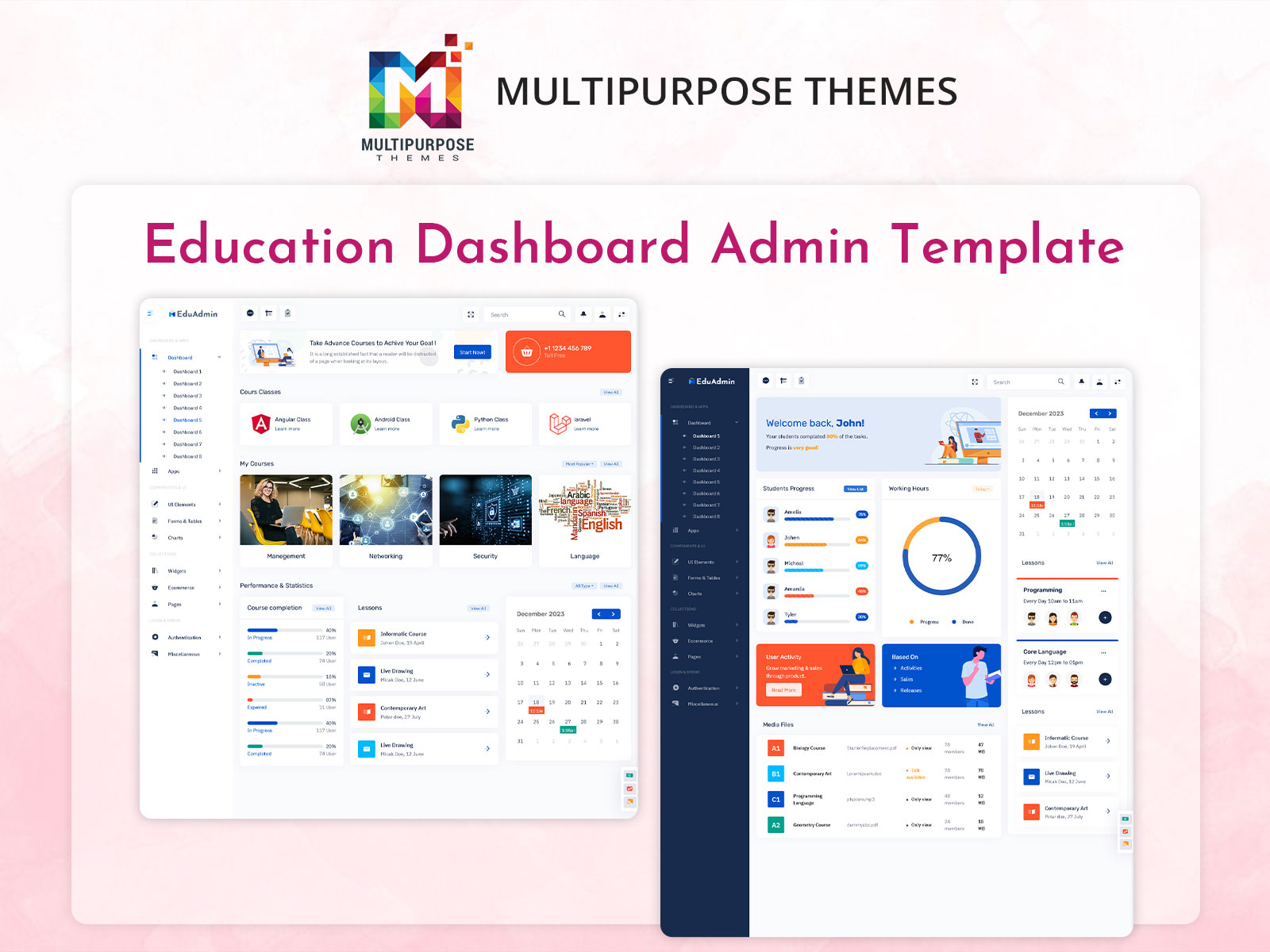
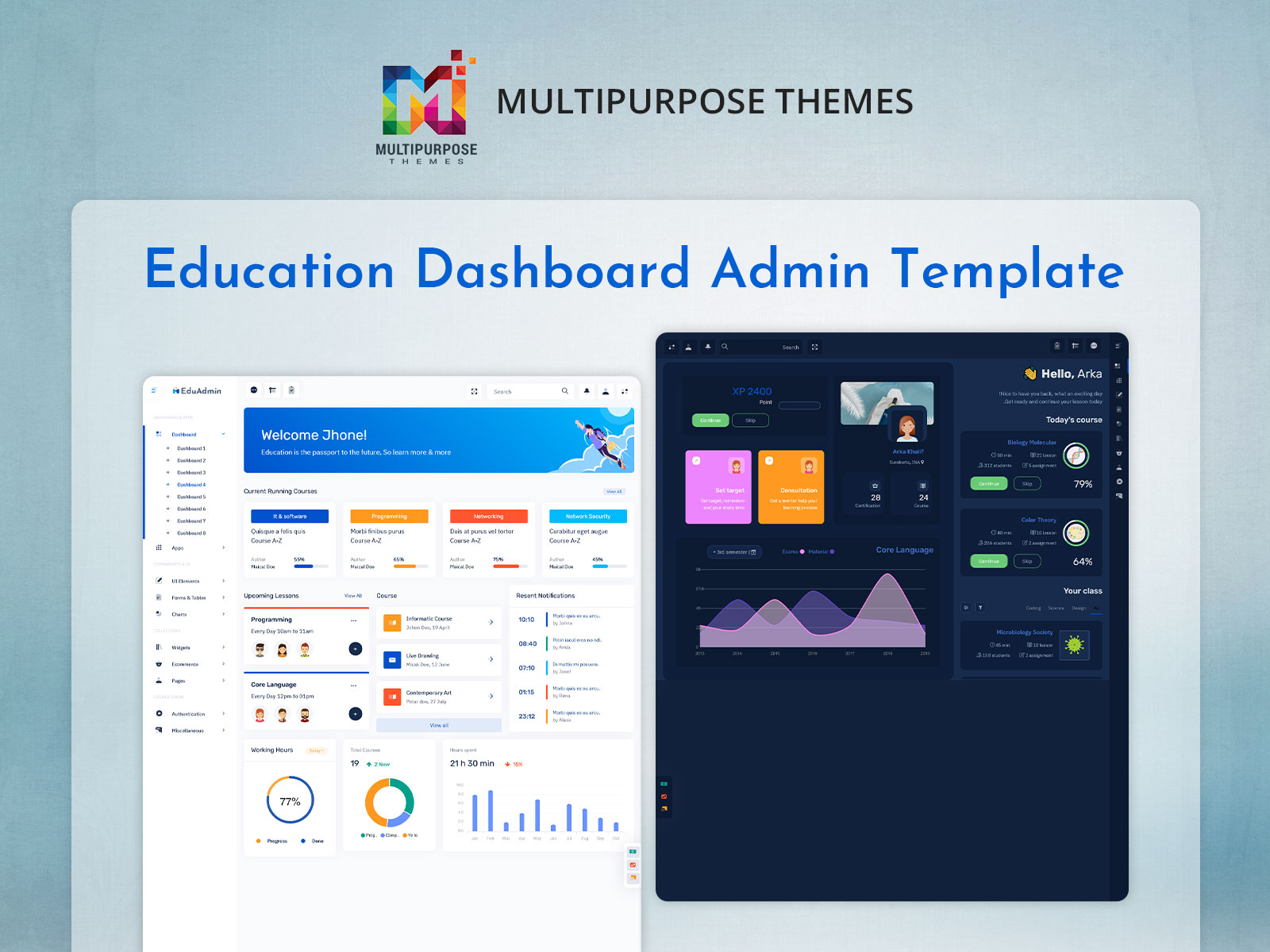
Explore Dashboard Design of EduAdmin
BUY NOW DEMO
BUY NOW DEMO
BUY NOW DEMO
Enhanced User Experience in Onlinecourse Dashboard
User experience plays a critical role in the success of any digital platform. A well-designed Onlinecourse Dashboard ensures that students and instructors can easily navigate through courses, track progress, and access learning materials without confusion.
Modern dashboards focus on simplicity and clarity. Clean layouts, intuitive menus, and interactive elements make it easier for users to find what they need. The use of visual elements such as progress bars, charts, and notifications enhances engagement and keeps learners motivated.
The Online Classes Dashboard also supports features like live sessions, recorded lectures, quizzes, and assignments. These elements create an interactive environment that closely resembles a physical classroom while offering the flexibility of online learning.
Importance of Analytics in Elearning Dashboard
Another major reason LMS dashboards remain popular is their powerful analytics capabilities. The Elearning Dashboard provides detailed insights into student performance, course completion rates, engagement levels, and more.
These analytics help educators understand how learners interact with the content and identify areas that need improvement. For example, if a large number of students drop off at a certain point in a course, instructors can revise the content or teaching approach accordingly.
Administrators can also use data from the dashboard to evaluate instructor performance, track enrollment trends, and make informed decisions. This data-driven approach ensures continuous improvement in the quality of education.
Flexibility and Scalability of LMS Dashboard
In 2026, scalability is a key requirement for any digital platform. The LMS Dashboard offers the flexibility to grow alongside the needs of an organization. Whether it is a small training institute or a large university, the system can handle increasing numbers of users, courses, and data without compromising performance.
A scalable Education Software Dashboard allows organizations to expand their offerings, add new features, and integrate with third-party tools as needed. This flexibility ensures that the platform remains relevant and effective over time.
The modular nature of LMS systems also allows developers to customize features based on specific requirements. This adaptability makes LMS dashboards suitable for a wide range of industries, including corporate training, academic institutions, and online coaching platforms.
Role of Bootstrap 5 Dashboard in LMS Design
Modern LMS platforms often rely on frameworks like Bootstrap 5 Dashboard to create responsive and visually appealing interfaces. Bootstrap 5 provides a set of pre-designed components that help developers build user-friendly dashboards quickly.
Using a Bootstrap-based Admin Panel, developers can ensure that the LMS interface is mobile-responsive, consistent, and easy to maintain. The grid system, components, and utility classes make it easier to design layouts that adapt to different screen sizes.
This responsiveness is especially important in today’s world, where users access online learning platforms from various devices such as smartphones, tablets, and desktops. A well-optimized Bootstrap-based dashboard ensures a seamless experience across all devices.
Integration Capabilities of LMS Dashboard
Another advantage of modern LMS dashboards is their ability to integrate with other systems and tools. Whether it is payment gateways, video conferencing platforms, email services, or third-party APIs, integration enhances the functionality of the platform.
The Onlinecourse Dashboard can be connected with tools that support live classes, automated notifications, and content management systems. This creates a complete ecosystem where all components work together efficiently.
Integration also helps in automating repetitive tasks such as sending reminders, generating certificates, and updating course progress. This reduces manual effort and improves overall efficiency.
Security and Data Management in LMS Dashboard
Security is a critical aspect of any digital platform, especially one that handles sensitive user data. The LMS Dashboard is designed with robust security measures to protect user information, course content, and administrative data.
Role-based access control ensures that only authorized users can access specific features of the Admin Panel. For example, students, instructors, and administrators have different levels of access depending on their roles.
Data encryption, secure authentication methods, and regular updates further enhance the security of the platform. This ensures that both learners and institutions can use the system with confidence.
Why LMS Dashboard Continues to Lead in 2026
The continued dominance of LMS dashboards in 2026 can be attributed to their versatility, efficiency, and adaptability. As online education continues to grow, the demand for reliable and feature-rich platforms increases.
The combination of a Learning Dashboard, Elearning Dashboard, and Online Classes Dashboard into a single system provides a comprehensive solution for managing education digitally. These dashboards offer everything needed to run a successful online learning platform, from content delivery to performance tracking and user management.
The use of modern design frameworks like Bootstrap 5 Dashboard ensures that these systems remain visually appealing and easy to use. At the same time, powerful backend systems and integrations make them highly functional and scalable.
Future Outlook of LMS Dashboard
Looking ahead, LMS dashboards will continue to evolve with new technologies and features. While the core purpose will remain the same, improvements in design, performance, and user experience will make these systems even more efficient.
We can expect more personalization, smarter analytics, better integration options, and enhanced collaboration tools in future versions of LMS platforms. The focus will remain on improving the overall learning experience while making administration simpler and more efficient.
As digital education becomes more widespread, the role of LMS dashboards will become even more important in shaping the future of learning.
Conclusion
The LMS Dashboard remains the top choice in 2026 because of its ability to centralize control, enhance user experience, provide powerful analytics, and support scalability. Whether it is used as a Learning Dashboard, Onlinecourse Dashboard, or Education Software Dashboard, it offers a complete solution for managing modern education systems.
With the support of frameworks like Bootstrap 5 Dashboard and the flexibility of a well-structured Admin Panel, LMS platforms continue to deliver efficient, secure, and user-friendly environments for both learners and administrators.
In an era where online education is not just an option but a necessity, LMS dashboards play a vital role in ensuring smooth operations, better engagement, and improved learning outcomes. Their continued evolution and adoption make them an indispensable part of the digital education ecosystem in 2026 and beyond.

Related Posts

This Post Has 0 Comments