

Running a hospital is no longer limited to treating patients. Every day, healthcare teams handle…

Why Hospital Dashboard Template is Changing Healthcare Management
Reading Time: 4 minutes
Healthcare leaders face a big challenge today. They need to make fast decisions with complex data. A Hospital Dashboard Template offers a simple solution. It turns raw numbers into clear visuals that anyone can understand.
These tools are reshaping how hospitals work. They help staff save time and improve patient care. Let’s explore why more healthcare facilities are using them.
What Is a Hospital Dashboard?
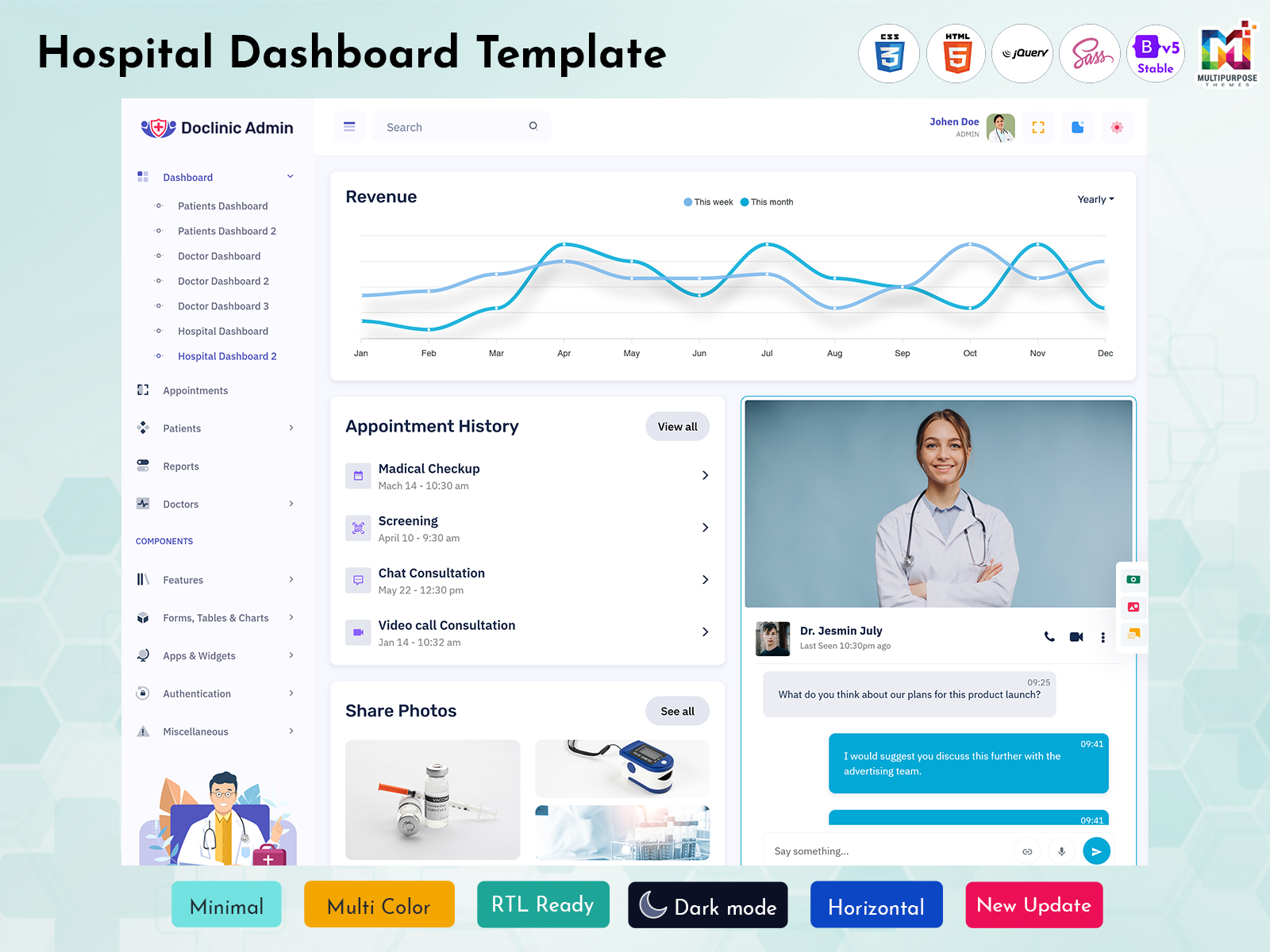
A Hospital Dashboard is a digital tool that shows key data in one place. It displays important metrics like patient numbers, bed availability, and treatment costs. Think of it as your car’s dashboard. It tells you what you need to know at a glance.
These dashboards pull data from many sources. They connect electronic health records, billing systems, and scheduling tools. The result is a unified view of your hospital’s performance.
A Patient Dashboard focuses on individual patient care. It tracks recovery rates, readmissions, and satisfaction scores. This helps doctors and nurses provide better treatment.
Explore Dashboard Design of Doclinic Admin
Patient Dashboard
BUY NOW DEMO
Patient Dashboard – 2
BUY NOW DEMO
Doctor Dashboard
BUY NOW DEMO
Doctor Dashboard – 2
BUY NOW DEMO
Doctor Dashboard – 3
BUY NOW DEMO
Hospital Dashboard
BUY NOW DEMO
Hospital Dashboard – 2
BUY NOW DEMO
Real-Time Data Saves Lives
Speed matters in healthcare. A Hospital Dashboard provides real-time updates on critical metrics. Staff can see bed availability instantly. They know which departments are busy. This helps them act fast when emergencies arise.
One study showed that dashboards reduce the time staff spend collecting data. They also lower mental strain on workers. When information is clear and easy to read, people make better choices.
Real-time monitoring also improves patient safety. Staff can track patients who are getting worse. They can escalate care quickly when needed. One hospital found that their dashboard helped nurses chase escalation of deteriorating patients more effectively.
Explore Dashboard Design of Rhythm Admin
Medical Dashboard – 1
BUY NOW DEMO
Medical Dashboard – 2
BUY NOW DEMO
Medical Dashboard – 3
BUY NOW DEMO
Medical Dashboard – 4
BUY NOW DEMO
Better Resource Management
Hospitals often struggle with resource planning. They don’t know when beds will open up. They can’t predict staffing needs accurately. A Hospital Dashboard Template solves these problems.
Dashboards show bed occupancy rates by department. They reveal average length of stay patterns. This helps administrators plan ahead. They can move patients more smoothly between units.
Staff allocation becomes easier too. Dashboards track the number of patients per medical staff member. If one department is overwhelmed, managers can shift resources quickly. This prevents burnout and improves care quality.
Explore Dashboard Design of Medicare Admin
Healthcare Dashboard
BUY NOW DEMO
Healthcare Dashboard – 2
BUY NOW DEMO
Healthcare Dashboard – 3
BUY NOW DEMO
Financial Performance at Your Fingertips
Money matters in healthcare. Hospitals need to balance quality care with financial health. A Patient Dashboard helps track both sides of this equation.
These tools show average treatment costs by procedure. They reveal which services generate the most revenue. Leaders can spot overspending areas fast. This information guides smarter budget decisions.
Insurance claim data becomes clearer too. Dashboards track claim processing costs and denial rates. When claims are denied, hospitals lose money. Monitoring this metric helps billing teams fix problems before they grow.
Improved Patient Satisfaction
Happy patients are the goal of every hospital. A Hospital Dashboard makes it easier to measure and improve satisfaction. It tracks survey scores and feedback in real time.
The HCAHPS survey is a key patient satisfaction tool. It measures communication, cleanliness, and pain management. Low scores in any area can cost hospitals money through penalties. Dashboards highlight weak spots so teams can take action.
Net Promoter Scores also appear on patient dashboards. This shows how likely patients are to recommend your hospital. When scores drop, you know something needs attention.
Better data leads to better experiences. When staff can see satisfaction trends, they can adjust their approach. This builds trust with patients and communities.
Faster Decision Making
Hospital leaders deal with countless decisions each day. Should they hire more nurses? Do they need more beds in the ER? Is one department underperforming ?
A Hospital Dashboard Template answers these questions quickly. Instead of waiting for weekly reports, leaders see current data. They can compare departments side by side. This turns raw numbers into informed decisions.
The dashboard becomes a bridge between data and action. It shows not just what is happening, but where to focus efforts. Small hospitals especially benefit from this clarity when resources are tight.
Tracking Clinical Outcomes
Quality of care is the most important metric. A Patient Dashboard tracks clinical outcomes that matter. This includes readmission rates, mortality rates, and infection rates.
Thirty-day readmission rates show if patients are truly recovering. High rates might signal discharge problems or poor follow-up care. Dashboards make these patterns visible so teams can intervene.
Hospital-acquired infections are another critical metric. These infections harm patients and cost money. Tracking infection rates by department helps infection control teams target their efforts.
Surgical complication rates and fall rates also appear on clinical dashboards. When these numbers rise, quality improvement teams can investigate causes and implement solutions.
Connecting Siloed Systems
Most hospitals use many different software systems. One vendor handles electronic health records. Another manages billing. Spreadsheets track staffing. This creates data silos.
A Hospital Dashboard Template breaks down these walls. It pulls information from all systems into one view. Staff no longer need to log into multiple programs to find data. This saves hours each week.
Integration also improves accuracy. When data flows automatically between systems, human error decreases. Teams trust the numbers they see. This confidence leads to better decisions.
Easy Customization for Different Needs
Every hospital is unique. A good Hospital Dashboard adapts to your specific needs. You can customize which metrics appear for different departments.
Emergency departments need to track wait times and throughput. Operating rooms focus on surgery completion rates and complication rates. Billing departments want claim data. One dashboard platform can serve all these needs with different views.
This flexibility means everyone gets relevant information. Nurses see patient care metrics. Administrators view financial data. No one is overwhelmed with unnecessary numbers.
Planning for the Future
Healthcare is evolving rapidly. AI tools are becoming more common. Many hospitals now run predictive models for tasks like readmission prediction.
A modern Hospital Dashboard Template supports these advances. It can display AI-generated risk scores alongside traditional metrics. This helps staff spot problems before they happen.
Predictive analytics also helps with capacity planning. Dashboards can forecast which days will be busiest. This allows better staff scheduling and resource allocation.

Related Posts

This Post Has 0 Comments