

In today’s digital workplace, managing employees efficiently is a top priority for every organization. This…
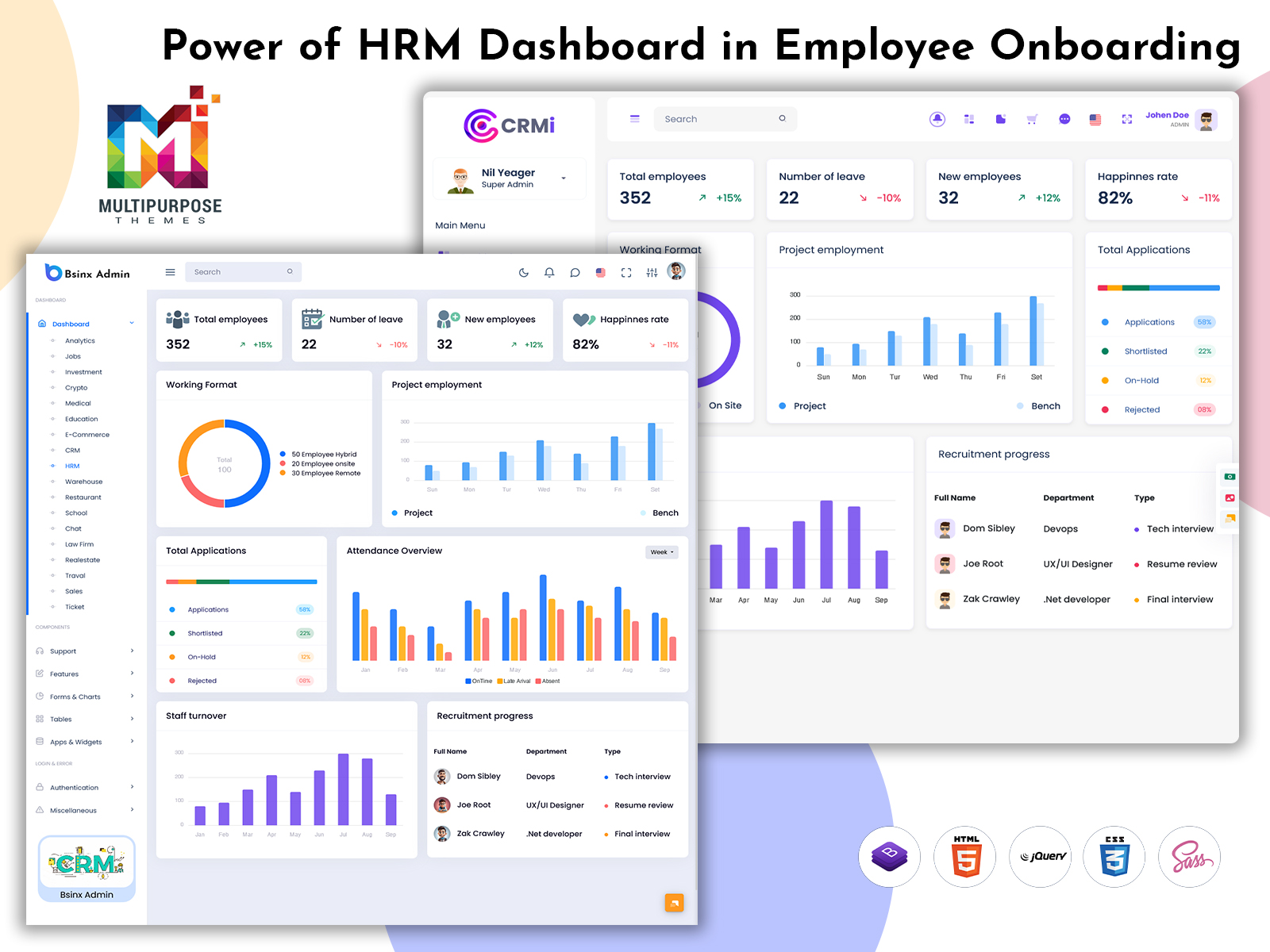
HRM Dashboard for Efficient Workforce Management in 2026 Job Portals
Reading Time: 8 minutes
Introduction to HR Dashboard
An HR Dashboard is a centralized digital interface designed to help human resource teams manage employee data, monitor performance, and streamline HR operations in a simple and efficient way. In today’s fast-paced business environment, organizations rely on structured systems to handle workforce-related tasks, and an HR Dashboard plays a key role in bringing all important information together in one place.
An HR Dashboard is often part of broader systems such as an HRM Dashboard or HRMS Dashboard, where multiple HR functions like recruitment, payroll, attendance, and performance tracking are integrated into a single platform. With the help of modern technologies like Bootstrap 5 Admin Template and Bootstrap Admin HTML, developers can create responsive and visually appealing Dashboard Templates that make HR operations easier to manage and understand.
Understanding the Purpose of an HR Dashboard
The primary purpose of an HR Dashboard is to simplify human resource management by providing real-time insights into employee-related data. Instead of manually maintaining records or switching between multiple tools, HR professionals can use a single dashboard to access everything they need.
An HR Dashboard helps track attendance, monitor employee performance, manage recruitment pipelines, and analyze workforce trends. This centralized approach improves decision-making and ensures that HR teams can respond quickly to organizational needs. Whether it is employee onboarding or exit management, an HR Dashboard ensures that every process is organized and accessible.
Discover HRM Dashboard
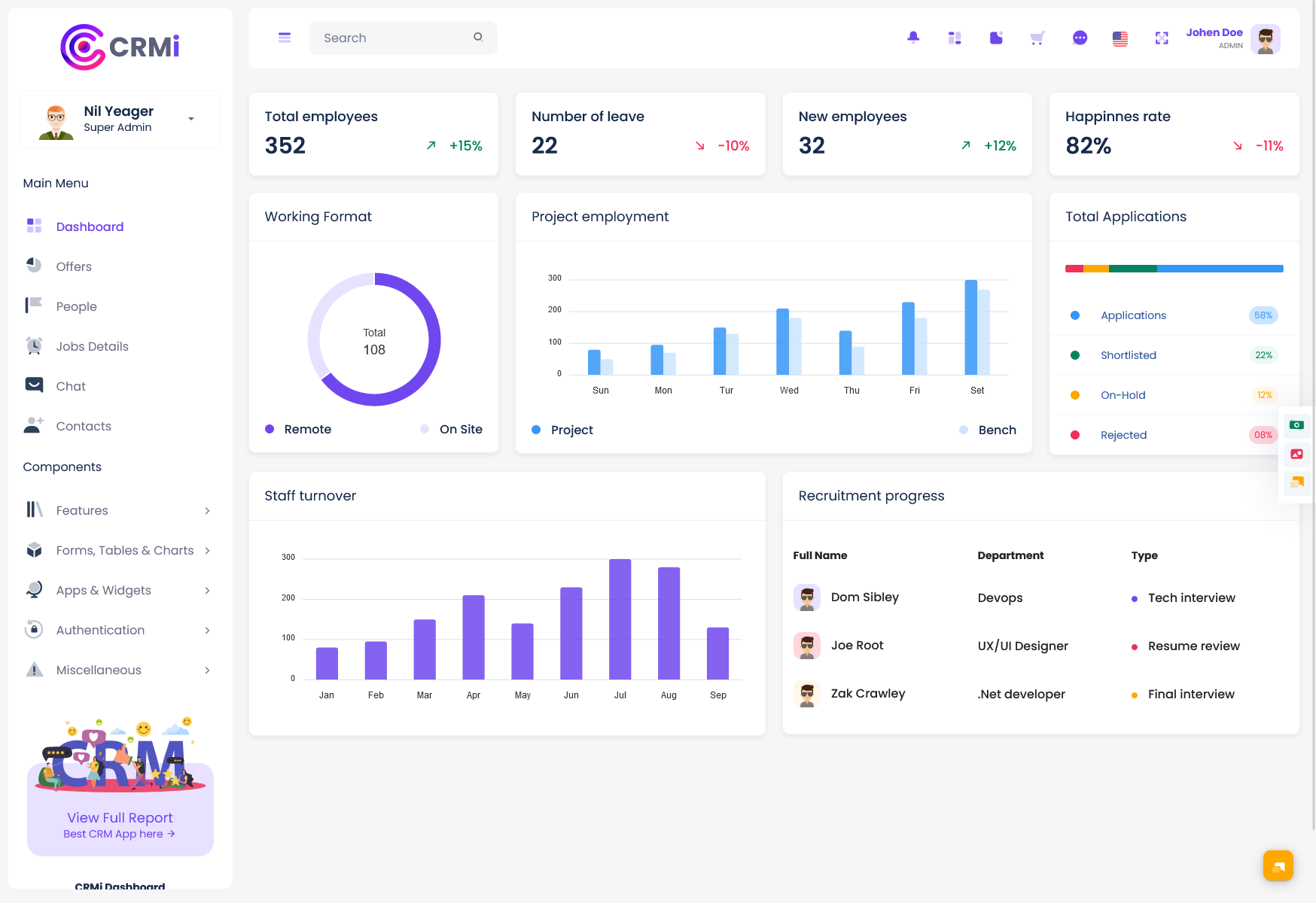
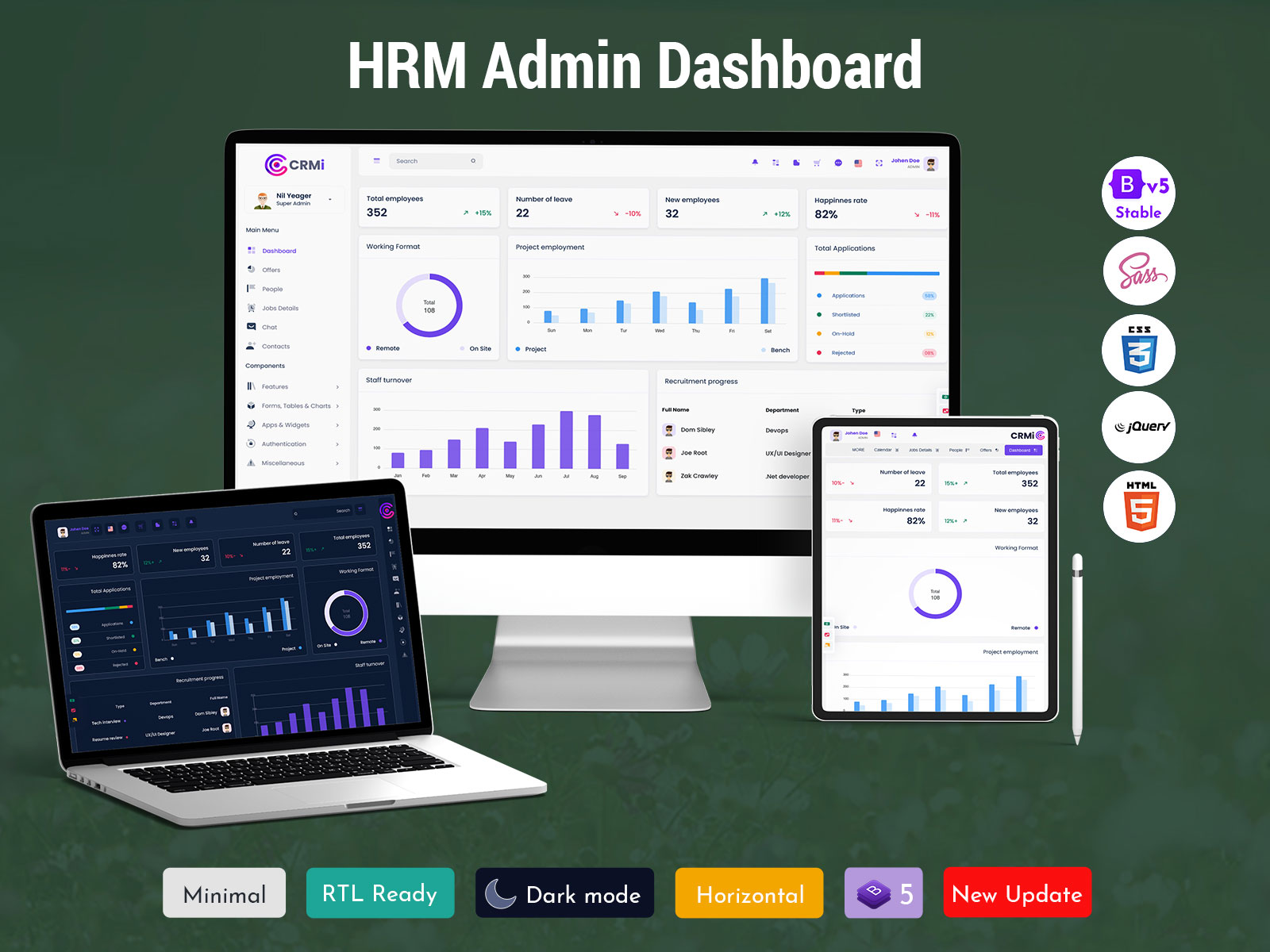
1. CRMi Admin – HRM Dashboard
MORE INFO / BUY NOW DEMO
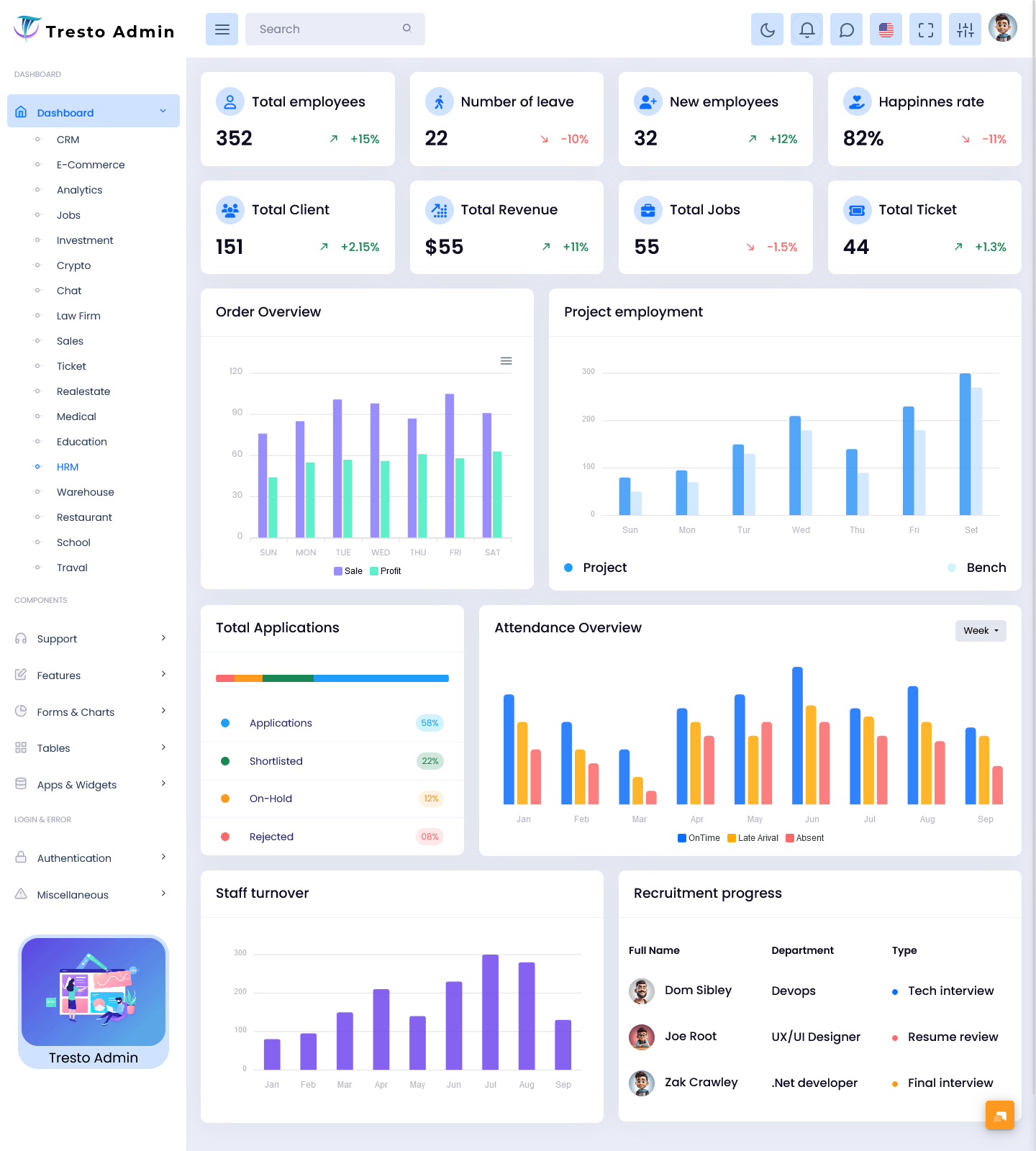
2. Tresto Admin – HRM Dashboard
MORE INFO / BUY NOW DEMO
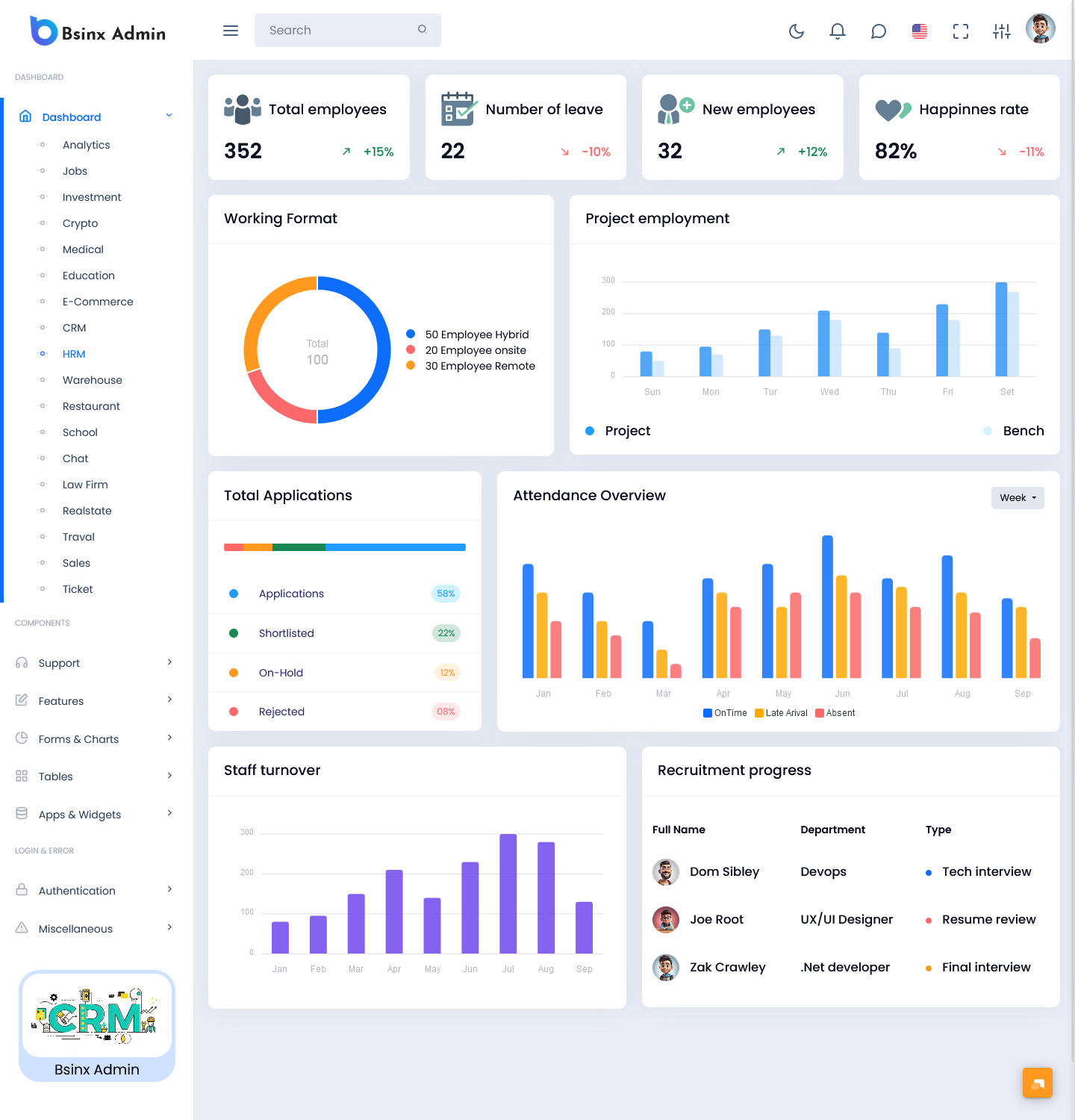
3. BsinX Admin – HRM Dashboard
MORE INFO / BUY NOW DEMO
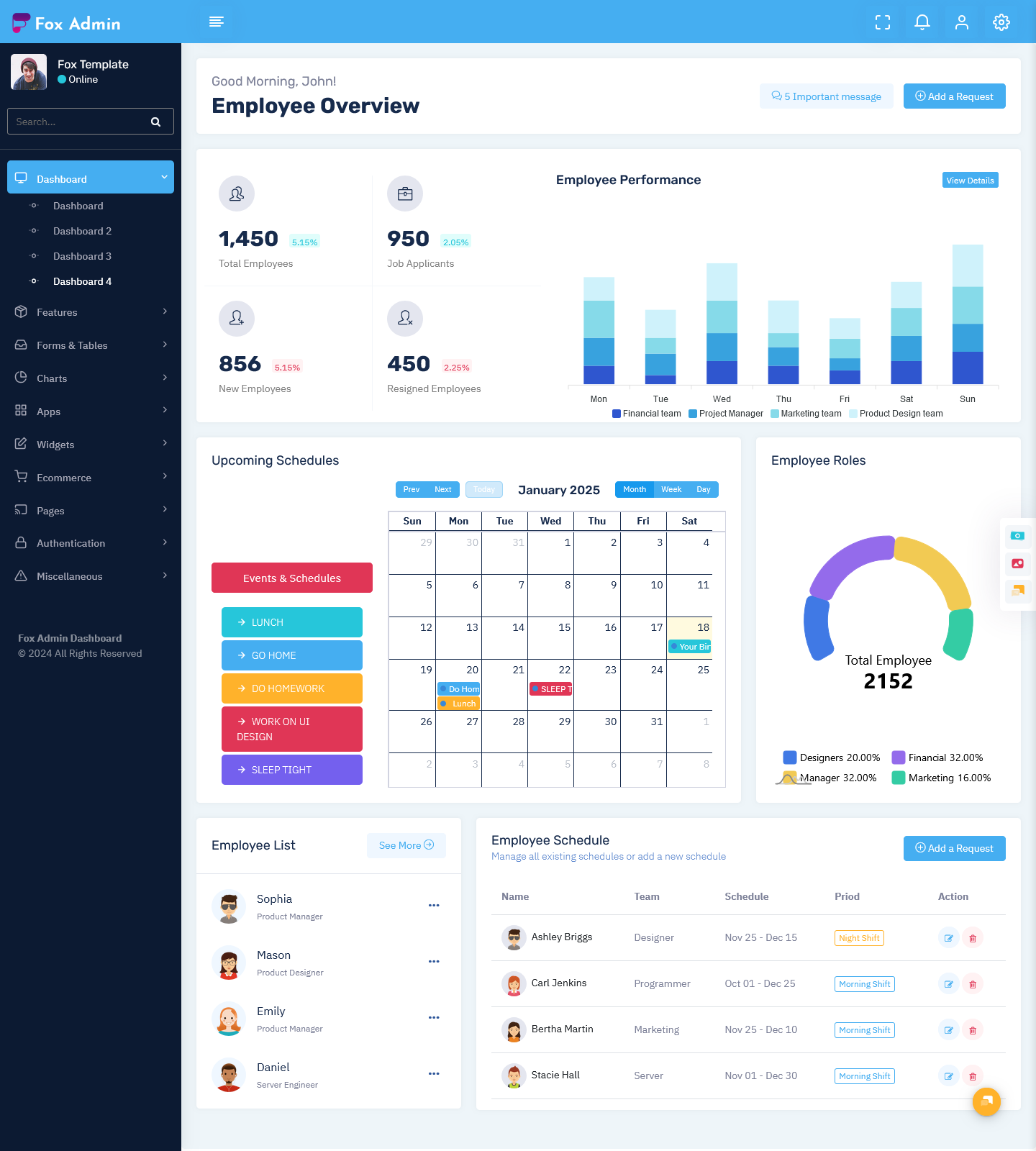
4. Fox Admin – HRM Dashboard
MORE INFO / BUY NOW DEMO
Role of HRM Dashboard in Workforce Management
An HRM Dashboard is an advanced version of an HR Dashboard that focuses on managing all aspects of human resource management. It includes modules for employee records, payroll processing, leave management, and performance evaluation.
With an HRM Dashboard, organizations can automate repetitive HR tasks and reduce manual workload. It provides a structured overview of workforce data, helping HR managers identify patterns such as employee turnover rates, attendance trends, and productivity levels. This makes it easier to implement strategies that improve employee satisfaction and organizational efficiency.
HRMS Dashboard and Its Importance
An HRMS Dashboard is designed to handle comprehensive human resource management system operations. It integrates multiple HR functions into a unified platform, making it easier for organizations to manage their workforce at scale.
An HRMS Dashboard typically includes features such as employee database management, payroll automation, attendance tracking, and recruitment management. It allows HR teams to maintain accurate records and generate reports without requiring complex processes. By using an HRMS Dashboard, businesses can ensure consistency, transparency, and efficiency in HR operations.
Importance of Admin Template in HR Dashboard Development
An Admin Template plays a significant role in building HR Dashboard systems. It provides a pre-designed structure that includes layouts, navigation menus, forms, charts, and UI components required for dashboard development.
Using an Admin Template helps developers save time and effort while ensuring consistency in design and functionality. A Bootstrap 5 Admin Template is particularly popular because it offers a responsive grid system, modern UI components, and flexibility for customization. When combined with Bootstrap Admin HTML, developers can quickly create Dashboard Templates that are both visually appealing and highly functional.
Features of Dashboard Templates in HR Systems
Dashboard Templates used in HR systems come with a wide range of features that make HR management more efficient. One of the most important features is data visualization, which allows users to view employee data in the form of charts, graphs, and tables.
Another key feature is employee management, where HR teams can store and manage detailed employee profiles. Attendance tracking is also an essential part of Dashboard Templates, enabling organizations to monitor working hours, leaves, and absences.
Performance tracking features help HR managers evaluate employee productivity and identify areas for improvement. Additionally, reporting tools provide detailed insights into workforce metrics, helping organizations make data-driven decisions.
Role of Bootstrap 5 Admin Template in HR Dashboard
Bootstrap 5 Admin Template is widely used in the development of HR Dashboard systems due to its responsive design and modern UI components. It allows developers to build dashboards that work seamlessly across different devices, including desktops, tablets, and smartphones.
Bootstrap 5 Admin Template provides pre-built components such as forms, buttons, cards, modals, and navigation menus. These components help in creating a consistent and user-friendly interface for HR systems. By using Bootstrap Admin HTML, developers can structure the layout of the HR Dashboard efficiently and customize it according to business requirements.
Benefits of Using an HR Dashboard
An HR Dashboard offers several benefits that help organizations manage their workforce more effectively. One of the main advantages is centralized data management, where all employee-related information is stored in one place.
Another benefit is improved efficiency, as HR teams can automate routine tasks and focus on more strategic activities. An HRM Dashboard also enhances decision-making by providing real-time insights into workforce data.
Communication within the organization becomes smoother when using an HR Dashboard, as employees and HR teams can access relevant information quickly. Additionally, an HRMS Dashboard improves transparency by maintaining accurate records and generating detailed reports.
HR Dashboard for Recruitment Management
Recruitment is one of the most important functions of human resource management, and an HR Dashboard simplifies this process significantly. It allows HR teams to track job applications, manage candidate profiles, and monitor hiring pipelines.
With the help of an HRM Dashboard, recruiters can analyze candidate data and shortlist applicants based on specific criteria. Dashboard Templates provide visual representations of recruitment metrics such as time-to-hire, source of hire, and candidate conversion rates.
This structured approach ensures that recruitment processes are organized and efficient, helping organizations hire the right talent quickly.
HRMS Dashboard for Employee Performance Tracking
Employee performance tracking is a critical aspect of HR management, and an HRMS Dashboard provides the tools needed to evaluate performance effectively. HR teams can set performance goals, track progress, and generate reports based on employee activities.
Using an HR Dashboard, managers can identify high-performing employees as well as those who may need additional support. Performance data can be visualized through charts and graphs, making it easier to interpret and analyze.
This helps organizations maintain a motivated workforce and improve overall productivity.
Attendance and Leave Management in HR Dashboard
Attendance and leave management are essential features of any HR Dashboard. Employees can log their attendance digitally, and HR teams can track working hours, leave requests, and absences in real time.
An HRM Dashboard simplifies leave approval workflows by allowing managers to review and approve requests directly from the system. This reduces paperwork and ensures that attendance records are accurate and up to date.
Dashboard Templates often include calendars and timelines that help visualize attendance patterns, making it easier to manage workforce scheduling.
Payroll Management Using HR Dashboard
Payroll management is another important function handled by HR Dashboards. An HRMS Dashboard can automate salary calculations, tax deductions, and payment processing.
By integrating payroll systems with an HR Dashboard, organizations can ensure timely and accurate salary distribution. Reports generated from the dashboard help HR teams verify payroll details and maintain financial transparency.
Using a Bootstrap 5 Admin Template, payroll modules can be designed with clear layouts and easy navigation, improving usability for HR professionals.
Customization with Admin Template and Dashboard Templates
One of the biggest advantages of using an Admin Template in HR Dashboard development is customization. Organizations can modify Dashboard Templates to match their branding and functional requirements.
With Bootstrap Admin HTML, developers can adjust layouts, add new modules, and integrate third-party tools to enhance the HR Dashboard. This flexibility allows businesses to create tailored solutions that align with their specific HR processes.
Customization ensures that the HR Dashboard remains relevant and adaptable as the organization grows.
User Experience in HR Dashboard Design
User experience is a key factor in the success of any HR Dashboard. A clean and intuitive interface ensures that HR professionals can navigate the system easily and perform tasks without confusion.
A Bootstrap 5 Admin Template enhances user experience by providing responsive layouts and well-structured components. Consistent design elements, clear typography, and organized navigation menus contribute to a smooth user experience.
An effective HR Dashboard should prioritize simplicity and clarity, allowing users to access information quickly and efficiently.
Integration Capabilities of HR Dashboard
Modern HR Dashboards are designed to integrate with other business systems such as accounting software, email platforms, and project management tools. This integration allows organizations to create a connected ecosystem where data flows seamlessly between different departments.
An HRMS Dashboard can connect with external APIs to synchronize data and automate processes. This ensures that all HR-related activities are aligned with organizational goals and that data remains consistent across systems.
Security in HR Dashboard Systems
Security is a critical aspect of HR Dashboard systems because they contain sensitive employee information. Proper security measures such as data encryption, authentication, and role-based access control are essential to protect data.
A Bootstrap Admin HTML-based HR Dashboard can implement secure login systems and access restrictions to ensure that only authorized users can view or modify data. Regular updates and monitoring also help maintain system security.
Future of HR Dashboard
The future of HR Dashboards is evolving with advancements in technology and automation. Features such as predictive analytics, cloud-based systems, and mobile accessibility are becoming increasingly important.
Organizations are adopting advanced Dashboard Templates and HRM Dashboard solutions to improve workforce management and decision-making. With continuous improvements in Bootstrap 5 Admin Template frameworks, developers can build more efficient and scalable HR systems.
Conclusion
An HR Dashboard is a powerful tool that simplifies human resource management by bringing all essential data and processes into a single platform. Whether it is recruitment, attendance tracking, payroll management, or performance analysis, an HR Dashboard ensures that HR teams can operate efficiently and effectively.
By using an HRM Dashboard or HRMS Dashboard, organizations can automate workflows, improve accuracy, and enhance decision-making. The use of Admin Template, Bootstrap 5 Admin Template, Bootstrap Admin HTML, and Dashboard Templates enables developers to create responsive and user-friendly HR systems that meet modern business requirements.
As businesses continue to grow, the importance of digital HR solutions will only increase. A well-designed HR Dashboard not only improves internal processes but also contributes to better employee satisfaction and overall organizational success.
FAQs
What is an HR Dashboard?
An HR Dashboard is a centralized interface that helps HR teams manage employee data, track performance, and monitor workforce activities in one place.
What is the difference between HRM Dashboard and HRMS Dashboard?
An HRM Dashboard focuses on human resource management functions, while an HRMS Dashboard covers a broader system that includes payroll, attendance, recruitment, and other HR operations.
Why is Bootstrap 5 Admin Template used in HR Dashboard development?
Bootstrap 5 Admin Template is used because it provides responsive design, modern UI components, and flexibility for building user-friendly dashboard interfaces.
How do Dashboard Templates help in HR systems?
Dashboard Templates provide pre-built layouts and components that make it easier to develop structured and visually appealing HR dashboards.
Can HR Dashboard integrate with other systems?
Yes, HR Dashboards can integrate with various tools such as payroll systems, email platforms, and third-party APIs to create a unified workflow.
Is HR Dashboard suitable for small businesses?
Yes, HR Dashboards are suitable for businesses of all sizes as they help streamline HR processes, improve efficiency, and manage employee data effectively.

Related Posts



This Post Has 0 Comments